
Generative Engine Optimization (GEO) is the practice of structuring your content so AI platforms like ChatGPT, Perplexity, and Google’s AI Overviews cite, quote, or recommend your brand when users ask questions. Unlike traditional SEO that focuses on ranking pages in search results, GEO prioritizes becoming the authoritative source AI systems reference when synthesizing answers.
GEO applies across the AI search engines covered in our guide to Google alternatives.
When someone asks ChatGPT about SEO automation tools or Perplexity about content workflow platforms, you want your brand in that answer. Not buried on page two of Google. Not invisible to AI engines. Cited as the expert.
The shift is already measurable. ChatGPT reached 800 million weekly users in early 2025. Google’s AI Overviews now appear in 10.4% of search queries—and that number climbs to 80%+ for comparison and how-to queries. Meanwhile, 58% of searches end without a click, meaning visibility now happens inside AI-generated responses, not just blue links.
This guide walks you through the complete GEO workflow: understanding how AI engines select sources, mapping entities and topical authority, implementing structured data that machines can parse, and measuring whether your content earns citations across platforms. You’ll also see how Keytomic automates the entire process, from keyword clustering to schema deployment to auto-indexing, so you can focus on strategy instead of execution.
Understanding GEO and LLM Citations
What GEO Actually Means for Your Brand
Generative Engine Optimization isn’t about gaming AI. It’s about earning relevance in a world where machines summarize reality for people. When Google’s AI Overviews synthesize an answer, they’re pulling from content that’s structured, cited, and entity-linked. When ChatGPT references a brand, it’s because that brand demonstrated expertise through consistent, quotable content across multiple platforms.
Traditional SEO helped users find websites. GEO helps AI systems find credible answers. And when machines increasingly speak on your behalf, being trusted by them becomes one of the most important advantages a brand can have.
How AI Platforms Select Sources to Cite
AI engines use Retrieval-Augmented Generation (RAG), meaning they query search engines or proprietary databases in real time before generating an answer. The sources they cite depend on:
Authority signals: Backlinks, domain traffic, and brand mentions across the web
Topical depth: Comprehensive coverage that answers related questions, not just surface keywords
Structured clarity: Schema markup, FAQ formatting, and explicit entity relationships
Recency and consistency: Fresh content that’s regularly updated with verifiable data
Citation-readiness: Statistics, quotes from experts, and clear attribution
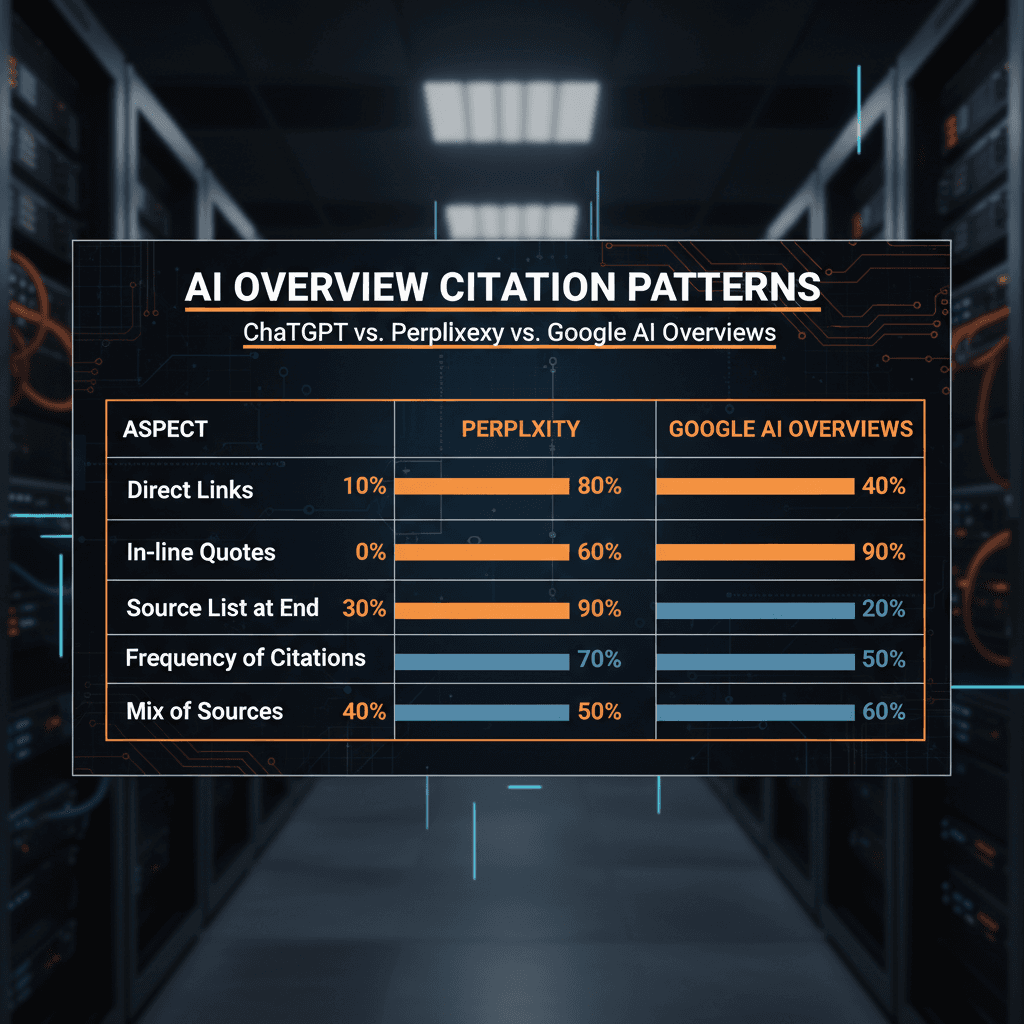
Different platforms favor different source types. ChatGPT leans heavily on Wikipedia, Reddit, and major publications. Perplexity pulls 46.7% of its top citations from Reddit, with YouTube and review platforms like G2 rounding out the mix. Google’s AI Overviews show 85% correlation with pages already ranking in the top 10 organic results.
What’s universal: AI systems prioritize content that reduces ambiguity. If your page explicitly defines entities, connects them to broader knowledge graphs, and presents information in machine-readable formats, you’re far more likely to be cited.
Why Global Brands Need GEO Now
Companies that established GEO strategies in early 2024 are seeing 3.4x more traffic from AI engines compared to competitors who delayed. That gap is widening.
Here’s what’s at stake:
Brand perception without clicks: When AI mentions you in an answer, users form opinions before ever visiting your site. If you’re absent, competitors shape the narrative.
Traffic diversification: Relying solely on traditional SEO means vulnerability to algorithm shifts. GEO creates a buffer by building authority where AI engines look first.
Upstream influence: Citations place you at the discovery stage, not just the decision stage. You’re part of the conversation before users even know they need you.
For B2B SaaS companies, this matters even more. Buyers research tools inside ChatGPT or Perplexity before visiting vendor sites. If your product doesn’t appear in those answers, you’ve lost the deal before the RFP goes out.
The Three Types of LLM Citations
Not all citations are created equal. Understanding the types helps you optimize content accordingly:
Direct attribution: AI quotes your content word-for-word and links to your site. This is the gold standard—it positions you as the definitive expert.
Reference link: Your URL appears in a citation list or dropdown, even if your words aren’t quoted directly. You’re part of the trust framework, which still builds credibility.
Unattributed synthesis: AI blends your insights into its answer without naming you. Harder to track, but it means your content influenced the narrative.
Most brands start by earning reference links. As topical authority grows, direct attribution follows. The key is consistent optimization across the entire content ecosystem, not just a handful of hero pages.
Step-by-Step GEO Workflow
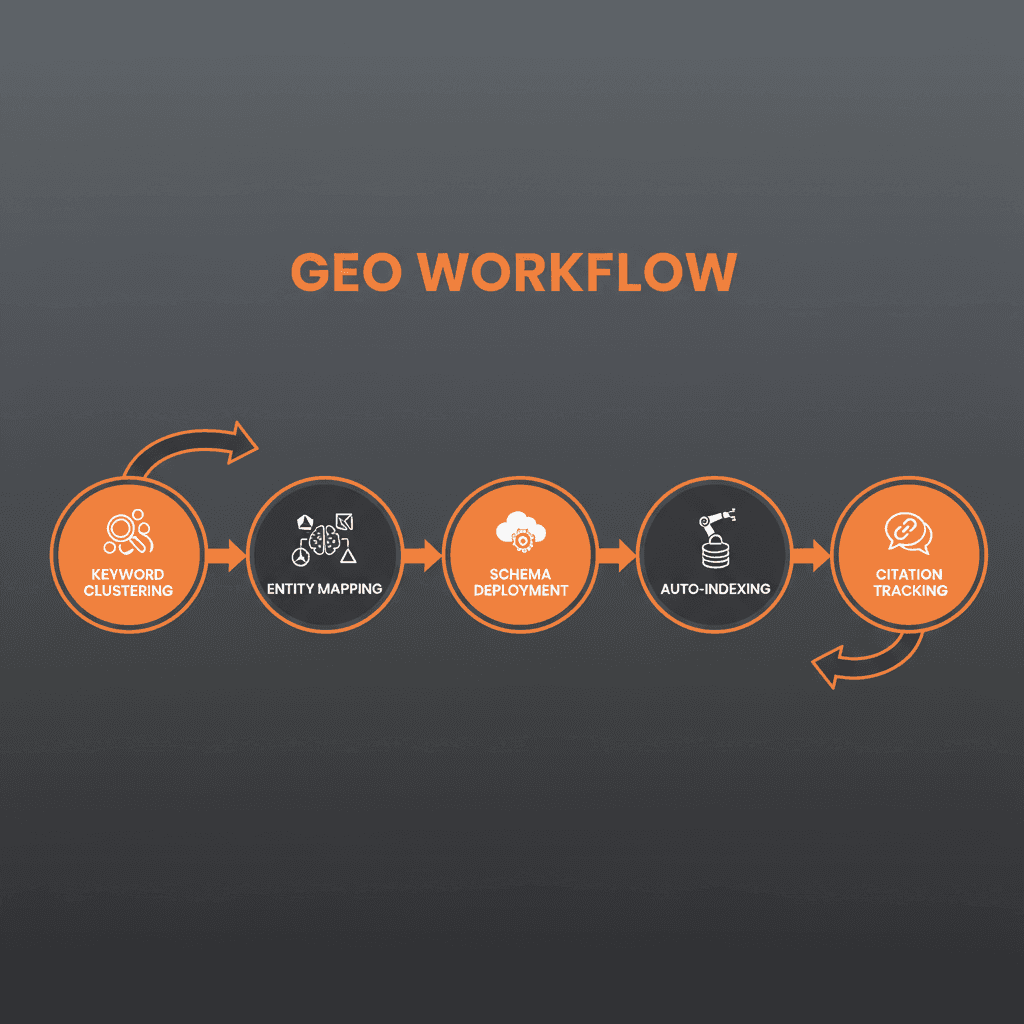
Step 1: Keyword Selection with Entity Mapping
Traditional keyword research stops at volume and difficulty. GEO requires understanding the entities behind those keywords—and how they connect.
Start by identifying your core entities:
Brand entity: Your company name, product names, and key features
Industry entities: Concepts like “SEO automation,” “content workflow,” or “programmatic publishing”
Competitor entities: Tools and platforms users compare you against
Use-case entities: Problems your audience solves (“reduce content production time,” “scale blog output”)
Once you’ve mapped entities, cluster keywords by semantic intent. “AI SEO tool” and “generative engine optimization platform” may target different keywords, but they map to the same entity cluster. Tools like Keytomic automate this clustering by analyzing SERP competition and entity overlap, so you’re not manually mapping hundreds of terms.
For each cluster, identify the questions users ask. Not just “what is GEO,” but “how do I earn ChatGPT citations” or “which schema types improve AI visibility.” AI engines prioritize content that directly answers questions, so your keyword strategy should mirror conversational search patterns.
Step 2: Entity Authority and Topical Depth
AI systems don’t just evaluate individual pages. They evaluate your entire domain’s authority on a topic. If you’ve published one article about SEO automation, you’re a participant. If you’ve published 20 interconnected articles covering keyword research, content briefs, auto-indexing, and workflow integrations, you’re an authority.
Build topic clusters:
Pillar page: Comprehensive guide to your core topic (e.g., “Complete Guide to SEO Automation”)
Cluster pages: Deep dives into subtopics (e.g., “How to Automate Keyword Research,” “Best Practices for Content Briefs,” “Auto-Indexing vs. Manual Submission”)
Internal linking: Connect every cluster page back to the pillar, and link related cluster pages to each other
This structure signals to AI systems that you’re not just answering isolated queries—you’re the definitive resource. Google’s algorithms already reward topical authority. AI engines amplify that signal because they need sources they can trust across multiple queries.
Keytomic’s 30-day content roadmaps automatically generate these topic clusters based on your primary keywords. You don’t have to manually plan the architecture—it’s built into the workflow from day one.
Step 3: Structured Data Implementation
Schema markup is the bridge between your content and AI engines. Without it, you’re asking machines to infer meaning from unstructured text. With it, you’re explicitly telling them what your content represents.
Priority schema types for GEO:
Organization schema: Defines your brand, logo, contact info, and social profiles
Product schema: Marks up pricing, reviews, and availability for your tools
FAQ schema: Structures Q&A content that AI engines love to extract
HowTo schema: Step-by-step instructions that appear in voice search and AI summaries
Article schema: Author, publish date, and topic tags that establish credibility
LocalBusiness schema: Critical if you serve specific regions or have physical locations
Google and Bing confirmed in March 2025 that they use structured data for AI features. ChatGPT also relies on product schema to determine which tools appear in its answers. If you’re not implementing schema, you’re invisible to half the AI ecosystem.
You don’t need to hand-code JSON-LD. Plugins like Yoast or Schema Pro handle basics, but they often miss entity relationships and custom properties. Keytomic generates schema automatically when it publishes content, ensuring every page includes entity-linked markup that connects to your broader knowledge graph.
Step 4: Content Optimization for Citation-Readiness
AI engines cite content that’s easy to extract and re-assemble. That means clear structure, verifiable facts, and explicit attribution.
Formatting rules:
Lead with a bold, 40–60 word definition that can function as a standalone answer
Use H2/H3 headings that mirror common question formats (“How do I…,” “What is…,” “Why does…”)
Break up dense paragraphs: Keep them under 3 lines for scannability
Include data tables: Comparison charts, feature matrices, and pricing breakdowns are citation magnets
Cite your sources: Link to authoritative external sites (Google Search Central, Schema.org, industry studies)
Include quotable statistics with attribution. “According to a 2025 study by Search Engine Journal, 60% of searches now end without a click” is more citable than “most searches end without a click.” Specificity builds trust.
Add expert commentary or first-party data. If you ran an experiment or surveyed users, that’s original research AI systems can’t find elsewhere. It’s the difference between being one of many sources and being the only source.
Step 5: Publish and Index Flow
GEO doesn’t end when you hit publish. AI engines need to discover, crawl, and index your content before they can cite it. Speed matters.
Auto-indexing workflow:
Submit to Google Search Console immediately after publishing (or use IndexNow API for Bing)
Ping your sitemap to notify crawlers of new content
Interlink from existing high-authority pages to pass crawl priority
Share on social platforms to generate early signals
Most CMS platforms don’t automate this. You’re manually submitting URLs, waiting days for indexing, and hoping crawlers notice your new page before competitors publish similar content.
Keytomic’s auto-indexing engine handles this the moment a post goes live. It submits URLs to Google, pings sitemaps, and tracks indexing status in real time. You’re not waiting 48 hours to see if Google noticed—you know within minutes.
Step 6: Measurement and Iteration
You can’t optimize what you don’t measure. GEO requires tracking citation frequency, brand mentions, and referral traffic from AI platforms.
Key metrics:
Citation rate: How often your brand appears in AI-generated answers for target queries
Share of voice: Your visibility compared to competitors across the same questions
Referral traffic: Clicks from ChatGPT, Perplexity, or AI Overviews (trackable in Google Analytics)
Sentiment: Whether AI describes your brand positively, neutrally, or negatively
Manual testing: Run 10–20 target queries monthly across ChatGPT, Perplexity, and Google AI Mode. Document which brands get cited and how often yours appears. This is time-consuming but gives you direct insight.
Automated tracking: Tools like Ahrefs Brand Radar, SE Visible, or LLM Pulse monitor citations at scale. They query AI platforms daily and alert you when your visibility changes.
Keytomic doesn’t just publish content—it tracks GEO performance as part of the workflow. You see which pages earn citations, which competitors dominate specific queries, and where content gaps exist. That data feeds directly into your next 30-day roadmap.
How Keytomic Automates GEO End-to-End
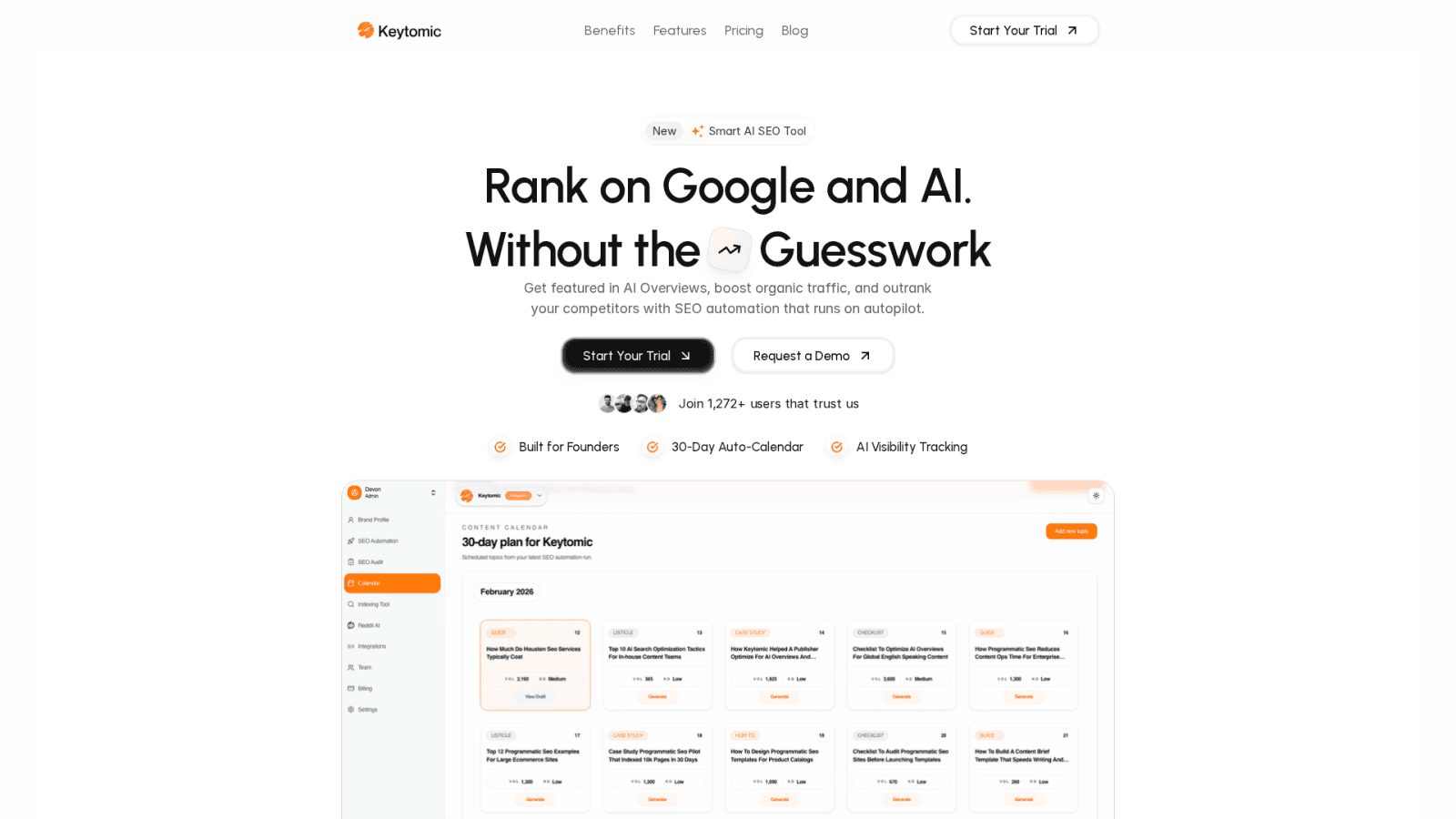
Most GEO workflows require juggling five different tools: keyword research, content briefs, schema generators, CMS publishing, and citation tracking. Each step introduces friction. Each handoff creates delays.
Keytomic collapses that stack into a single autonomous workflow.
Unified GEO Workflow in One Platform
Here’s what happens when you connect Keytomic to your domain:
Keyword discovery: The platform analyzes your niche, identifies entity clusters, and surfaces high-impact GEO opportunities
30-day roadmap: A calendar of interconnected content pieces—pillar pages, cluster articles, FAQ pages—designed to build topical authority
Automated briefs: Each topic gets a content brief with target entities, schema recommendations, and question-based H2/H3 structures
AI-powered drafting: Content is generated with citation-ready formatting, internal links, and external references to authoritative sources
Schema injection: JSON-LD markup is added automatically, linking your brand entity to industry concepts and competitor comparisons
Multi-CMS publishing: Keytomic pushes content directly to WordPress, Webflow, or Shopify—no copy-paste
Auto-indexing: URLs are submitted to Google and Bing within minutes of going live
Citation tracking: The platform monitors which pages earn AI mentions and adjusts future roadmaps accordingly
This isn’t a content calendar tool that stops at ideation. It’s not a writing assistant that leaves you to handle publishing. It’s the entire GEO stack, automated.
Dashboard Screenshot: Before and After Index Uplift
Agencies using Keytomic report 44% faster indexing compared to manual submission workflows. That speed advantage compounds over time—your content is live and citation-eligible while competitors are still queuing theirs for review.
The dashboard shows real-time indexing status, citation frequency, and competitor benchmarking. You’re not guessing whether GEO is working. You’re watching the metrics update as AI engines discover your content.
Why Agencies Choose Keytomic for Multi-Client GEO
If you’re managing 10 clients, you can’t manually run GEO workflows for each one. You need automation that scales without sacrificing quality.
Keytomic’s multi-client architecture lets you:
Deploy roadmaps in parallel: Generate 30-day plans for every client simultaneously
Customize entity mapping: Each client gets industry-specific schema and entity relationships
White-label reporting: Share GEO performance dashboards under your agency brand
API access: Integrate Keytomic into your existing tech stack for seamless handoffs
Agencies report 60–80% reduction in manual content operations after switching to Keytomic. That’s not hyperbole—it’s the difference between assigning a writer, editor, SEO specialist, and dev team versus clicking “publish” and letting the platform handle the rest.
Implementation Checklist
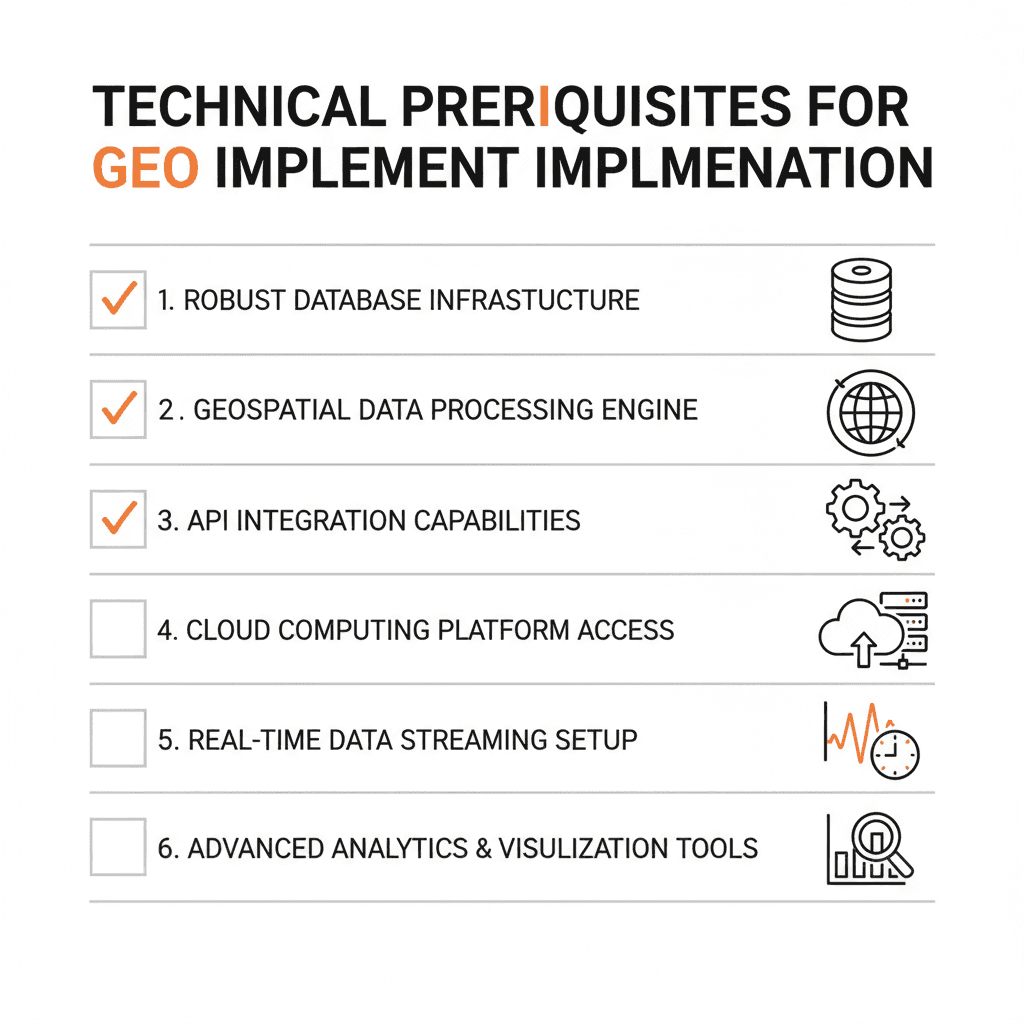
Before you start optimizing for GEO, ensure you have these technical foundations in place:
Technical Prerequisites
Google Search Console access: Required for indexing status and citation tracking
Schema markup plugin or custom implementation: JSON-LD format, not microdata
Google Analytics with UTM tracking: To measure referral traffic from AI platforms
Robots.txt configured: Ensure Googlebot and Bingbot can crawl your content
Sitemap submitted: XML sitemap with lastmod timestamps for fresh content
Core Web Vitals optimized: Fast-loading pages improve citation likelihood
Content Audit Checklist
Identify top 10 entity clusters: Map your brand’s core topics
Audit existing content for schema gaps: Which pages lack markup?
Create pillar + cluster content map: Plan topic hierarchy
Benchmark competitors: Who earns citations for your target queries?
Test manual queries: Run 10 questions in ChatGPT and Perplexity to baseline
Schema Implementation Checklist
Organization schema on homepage: Brand name, logo, social profiles
Product schema on service pages: Pricing, reviews, availability
FAQ schema on support pages: Q&A formatting with structured answers
Article schema on blog posts: Author, publish date, topic tags
HowTo schema on guides: Step-by-step instructions
Indexing and Monitoring Checklist
Auto-submit new URLs to GSC: Use API or manual submission
Enable IndexNow for Bing: Instant indexing for Microsoft ecosystems
Set up citation tracking: Manual or automated tool
Monitor referral traffic: GA4 source tracking for AI platforms
Schedule monthly audits: Re-run test queries to track progress
If this checklist feels overwhelming, that’s because GEO requires coordinating multiple systems. Keytomic handles every item automatically. You don’t audit—schema is deployed by default. You don’t manually submit URLs—indexing happens on publish. The checklist is built into the platform.
Next Steps and Demo CTA
GEO isn’t optional anymore. It’s the difference between showing up in AI-generated answers and being invisible to the next generation of search.
You have two paths:
Manual GEO: Coordinate keyword research, schema deployment, content creation, indexing, and citation tracking across multiple tools. Weeks of planning. Months to see results.
Automated GEO with Keytomic: Connect your domain, generate a 30-day roadmap, and let the platform handle keyword clustering, schema injection, auto-publishing, and indexing. Results in days.
If you’re managing multiple clients or scaling a lean content team, the choice is obvious. See how Keytomic automates GEO workflows for you—from keyword selection to auto-indexing—and schedule a demo today.
Every day you wait is another day competitors earn citations. Every query where your brand is absent is revenue walking to someone else. GEO rewards the first movers. Start building authority now.
Frequently Asked Questions
What’s the difference between GEO and traditional SEO? Traditional SEO focuses on ranking pages in search results. GEO focuses on being cited inside AI-generated answers. Both matter, but GEO prioritizes machine-readable structure, entity authority, and citation-readiness over keyword density and backlinks.
How long does it take to earn LLM citations? Most brands see initial citations within 3–6 months of consistent GEO optimization. Speed depends on existing domain authority, topical depth, and how quickly AI engines crawl and index your content. Auto-indexing workflows reduce that timeline significantly.
Do I need to stop doing traditional SEO? No. GEO complements SEO. Pages that rank well in Google are 85% more likely to be cited in AI Overviews. Strong SEO fundamentals (backlinks, E-E-A-T, technical optimization) create the foundation GEO builds on.
Which AI platforms should I prioritize? ChatGPT (800M weekly users), Google AI Overviews (10.4% of queries), and Perplexity (15M+ monthly users) are the big three. Each has unique citation preferences, but optimizing for one generally improves visibility across all three.
Can I track citations manually without tools? Yes, but it’s time-consuming. Run 10–20 test queries monthly and document which brands appear. Automated tools like Ahrefs Brand Radar or SE Visible save hundreds of hours by querying AI platforms daily and alerting you when your visibility changes.