
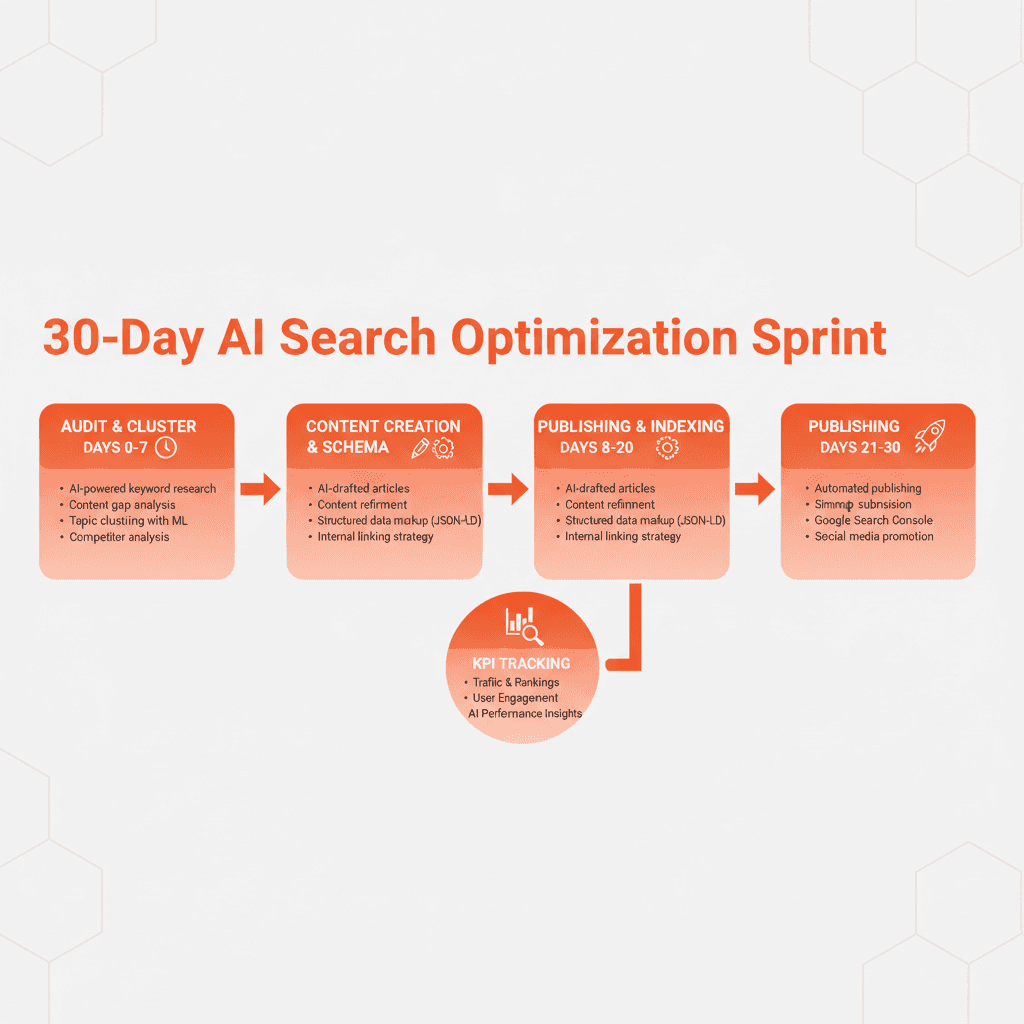
Implementing AI search optimization tools in a 30-day sprint delivers measurable visibility gains across Google, ChatGPT, Perplexity, and AI Overviews when you follow a structured roadmap: audit and cluster keywords (Days 0–7), generate optimized content with schema markup (Days 8–20), then publish and auto-index while tracking AI citation rates (Days 21–30). This phased approach transforms manual SEO workflows into automated systems that scale without additional headcount, reducing content production time from weeks to days while maintaining quality standards.
A durable visibility plan should account for discovery beyond Google. Start with search beyond Google.
You know the moment. Your competitor just showed up in ChatGPT's answer when a prospect asked for tool recommendations. Meanwhile, your site doesn't even crack the first Google AI Overview. Traditional SEO isn't enough anymore because search behavior shifted overnight. AI-referred sessions jumped 527% between January and May 2025, fundamentally changing how people discover solutions. And the quality of that traffic makes it even harder to ignore: visitors from AI platforms spend 68% more time on websites than those from traditional organic search, arriving pre-qualified through the AI conversation.
This guide walks you through a battle-tested 30-day framework for implementing Keytomic's AI search optimization platform across your content ecosystem. You'll move from keyword chaos to automated content roadmaps, schema deployment, and instant indexing across both traditional and AI-powered search engines. Let's break down each sprint.
Days 0–7: Foundation Sprint – Audit and Cluster Your Keywords
The first week establishes your baseline. You can't optimize what you don't measure, and you can't scale what isn't systematized.
Export Your Current Performance Data
Start by pulling your existing search performance from Google Search Console. Download the last 90 days of query data, filtering for queries with at least 10 impressions. This baseline reveals which topics already generate interest and where you're losing ground to competitors.
Connect your Google Search Console API to automate this extraction. Most teams waste hours manually exporting CSVs when a simple API connection updates data automatically every 30 minutes.
Identify Keyword Clusters for AI Search Intent
Traditional keyword research focused on search volume and difficulty scores. AI search optimization requires understanding semantic clusters and entity relationships. When someone asks ChatGPT "best project management software for remote teams," the AI doesn't just match keywords - it evaluates context, use cases, and comparative authority.
Critically, only 12% of URLs cited by ChatGPT, Perplexity, and Copilot even rank in Google's top 10 search results, and 80% of LLM citations come from pages that don't rank in Google's top 100 for the original query. This means ranking in traditional search and being cited by AI are increasingly separate games. Your content needs to be built for both.
Group your keywords into thematic clusters:
Problem-aware clusters: Users describing pain points ("why isn't my content ranking in AI search")
Solution-aware clusters: Users evaluating options ("AI SEO tool comparison")
Feature-specific clusters: Users researching capabilities ("auto-indexing tools for Google")
Comparison clusters: Direct competitor evaluations ("Keytomic vs Semrush")
This clustering determines your content architecture for the next three weeks. Each cluster becomes a content pillar with supporting pages that interlink strategically.
Sync Google Search Console with Your Workflow
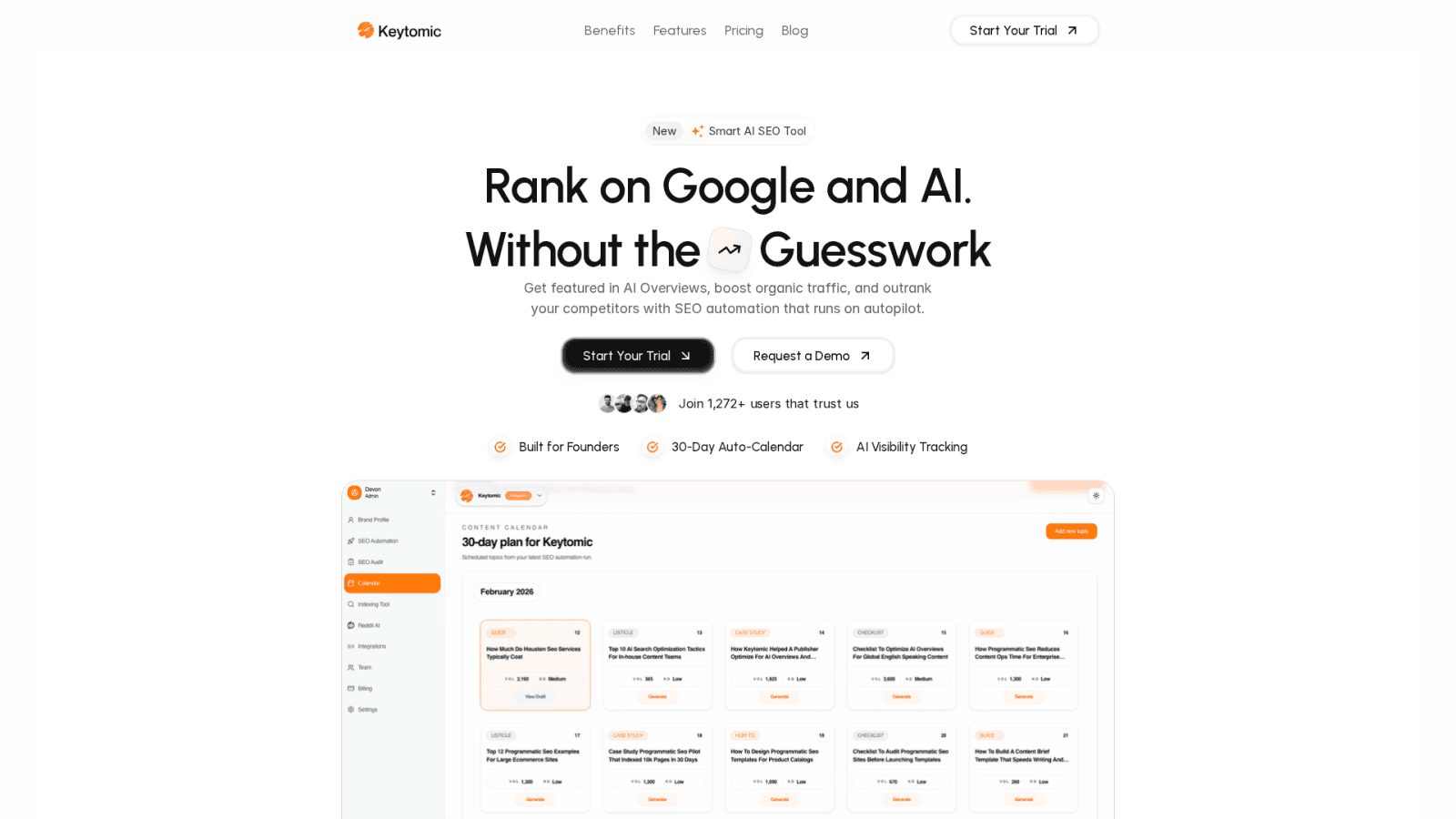
Automation starts here. Configure your GSC integration to pull fresh performance data daily. Track these baseline metrics:
Average position by query cluster
CTR for pages ranking positions 1–10
Impression share for priority keyword groups
Zero-click query percentage (indicates AI Overview appearances)
For agencies managing multiple clients, Keytomic's centralized dashboard consolidates GSC data across properties without switching accounts. This saves 4–6 hours weekly that most teams burn on manual reporting.
Map Competitor Content Gaps
Identify where competitors appear in AI-generated answers but your brand doesn't. Query your priority keywords in ChatGPT, Perplexity, and Google AI Overviews. Document:
Which brands get cited
What content types earn citations (listicles vs guides vs comparison posts)
Which entities and facts appear consistently
Content depth patterns (word count, H2/H3 structure, multimedia usage)
This competitive intelligence shapes your content brief templates starting in Sprint 2.
Deliverable: Your 30-Day Content Roadmap
By day 7, you should have:
Keyword clusters mapped to content types
Priority order based on search volume and competitive gaps
Target AI platforms identified per cluster
Baseline metrics documented for measuring improvement
This roadmap becomes your execution plan for the next 23 days.
Days 8–20: Content Creation and Schema Deployment Sprint
Week two through early week three focuses on generating optimized content at scale while implementing structured data that AI engines actually reference.
Generate Content Briefs Using AI Tools
Traditional content briefs took 2–3 hours per article when built manually. AI-powered brief generation cuts this to 15 minutes while improving quality through semantic analysis.
Your brief template should include:
Primary and secondary keyword targets
Recommended heading structure (H2/H3/H4 hierarchy)
Competitor content analysis highlighting gaps
Suggested word count range
Entity optimization requirements
Internal linking opportunities
Schema markup recommendations
Keytomic automates this entire brief creation process by analyzing top-ranking content across Google and AI platforms, then generating templates that balance traditional SEO with GEO (Generative Engine Optimization) requirements.
Write for Both Google and AI Citation
Content optimized for AI search differs from traditional SEO content in structure and format. Research from Princeton University and Georgia Tech shows specific patterns increase AI citation rates by 40%:
Direct answer format: Place your core answer in the first 40–60 words, bolded. Content updated within 30 days gets 3.2x more AI citations than older material, and 44.2% of all LLM citations come from the first 30% of the text - the intro.
Fact density: Include statistics every 150–200 words with proper source attribution. AI models prioritize factual, citation-worthy content over opinion pieces.
Question-based headings: Structure H2s and H3s as questions users actually ask. Tools like AnswerThePublic reveal common query patterns.
Entity optimization: Mention relevant people, places, organizations, and products with consistent naming conventions. AI engines build knowledge graphs from entity relationships.
Cite authoritative sources: Link to tier-1 sources like Google's documentation, academic research, and official industry reports. This builds topical authority that AI models recognize.
Avoid the trap of keyword stuffing or over-optimizing for density metrics. Modern AI search evaluates semantic relevance and content depth, not keyword frequency.
Implement Schema Markup at Scale
Structured data acts as a translation layer between your content and AI understanding. Without schema markup, you're forcing AI engines to guess at your content's meaning. Pages with clean structure paired with schema markup earn 2.8× higher AI citation rates than poorly structured pages, according to AirOps research. Microsoft's Principal Product Manager Fabrice Canel confirmed at SMX Munich in March 2025 that "Schema markup helps Microsoft's LLMs understand content" — a direct signal from one of the major AI platforms.
Despite this, only 12.4% of all registered web domains currently implement any structured data at all, which makes early adoption a meaningful competitive edge.
Priority Schema Types for AI Search
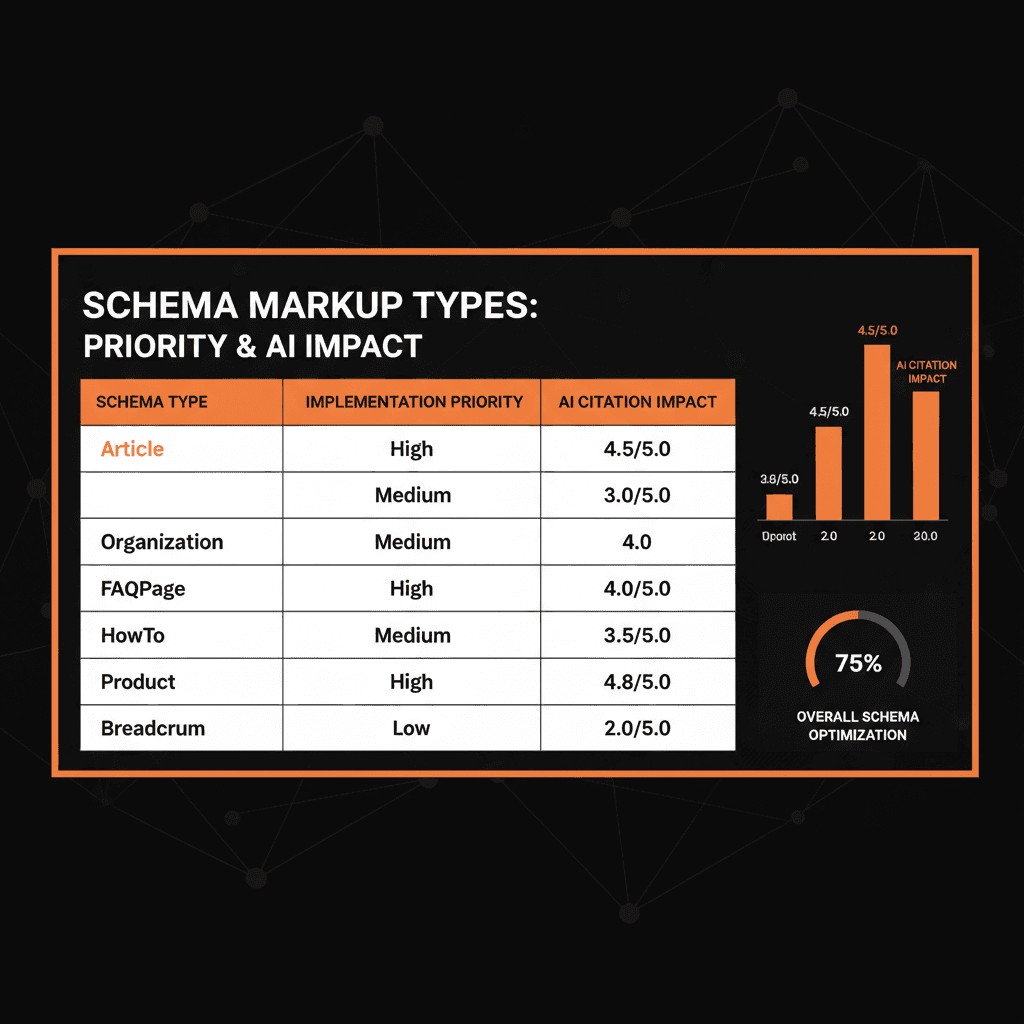
Focus implementation on these high-impact schema types:
Article Schema: Includes headline, author, datePublished, dateModified, and image properties. Essential for blog posts and guides.
Organization Schema: Establishes your brand entity with official name, logo, social profiles, and contact data.
FAQPage Schema: Structures question-answer pairs that AI engines frequently cite in responses.
HowTo Schema: Step-by-step instructions formatted for AI parsing and voice assistant responses.
Product Schema: For SaaS platforms and tools, includes name, description, offers, aggregateRating, and review properties.
Breadcrumb Schema: Helps AI understand site hierarchy and content relationships.
Manual schema implementation across hundreds of pages creates maintenance nightmares. Every price change, product update, or content refresh requires updating the corresponding schema.
Automate Schema Generation and Deployment
Platforms with automated schema markup capabilities generate JSON-LD dynamically from your CMS data. This ensures schema stays synchronized with content changes without manual intervention.
For WordPress sites, plugins like Schema Pro or Rank Math handle basic schema types. For headless CMS or custom builds, server-side schema generation at build time ensures crawlers see structured data without relying on JavaScript rendering.
Validate all schema using Google's Rich Results Test and Schema.org validator before deployment. Errors in structured data prevent AI citation and can trigger manual action penalties.
Optimize for Platform-Specific Requirements
Different AI platforms prioritize different content signals:
ChatGPT: Favors encyclopedic content with clear definitions, comprehensive coverage, and academic-style citations. Content depth matters more than recency.
Perplexity: Rewards recent content with real-world examples. Its users are 80% graduates and 65% high-income professionals - a valuable B2B audience. Despite having a smaller user base, Perplexity delivers a referral efficiency 6.2× higher than its market share would suggest.
Google AI Overviews: Prioritizes existing top-ranking content with strong E-E-A-T signals. Focus on demonstrable expertise, clear authorship, and authoritative backlinks.
Claude and Gemini: Similar to ChatGPT but with stronger emphasis on factual accuracy and source verification.
This doesn't mean creating separate content versions for each platform. Instead, layer universal optimization principles that work across all AI engines while including platform-specific signals where relevant.
Build Internal Linking Architecture
AI engines evaluate content authority partially through internal linking patterns. Strategic internal links signal:
Content hierarchy (pillar pages vs supporting articles)
Semantic relationships between topics
Content freshness and update frequency
Entity co-occurrence patterns
Implement these linking rules:
Every new article links to 3–5 related existing articles
Pillar content receives links from all supporting cluster content
Use descriptive anchor text that includes semantic variations
Link to authoritative external sources (3–7 per article)
Update older content with links to newer supporting articles
Keytomic's internal linking automation identifies linking opportunities across your content library and suggests contextually relevant anchor text, eliminating the manual spreadsheet tracking most teams rely on.
Deliverable: Optimized Content Library
By day 20, you should have:
8–12 fully optimized articles published
Schema markup deployed across all new content
Internal linking architecture connecting content clusters
External citations to tier-1 authoritative sources
Question-based content structure for AI citation
Days 21–30: Publishing, Indexing, and Measurement Sprint
The final sprint focuses on getting your content discovered quickly and tracking performance across both traditional and AI search channels.
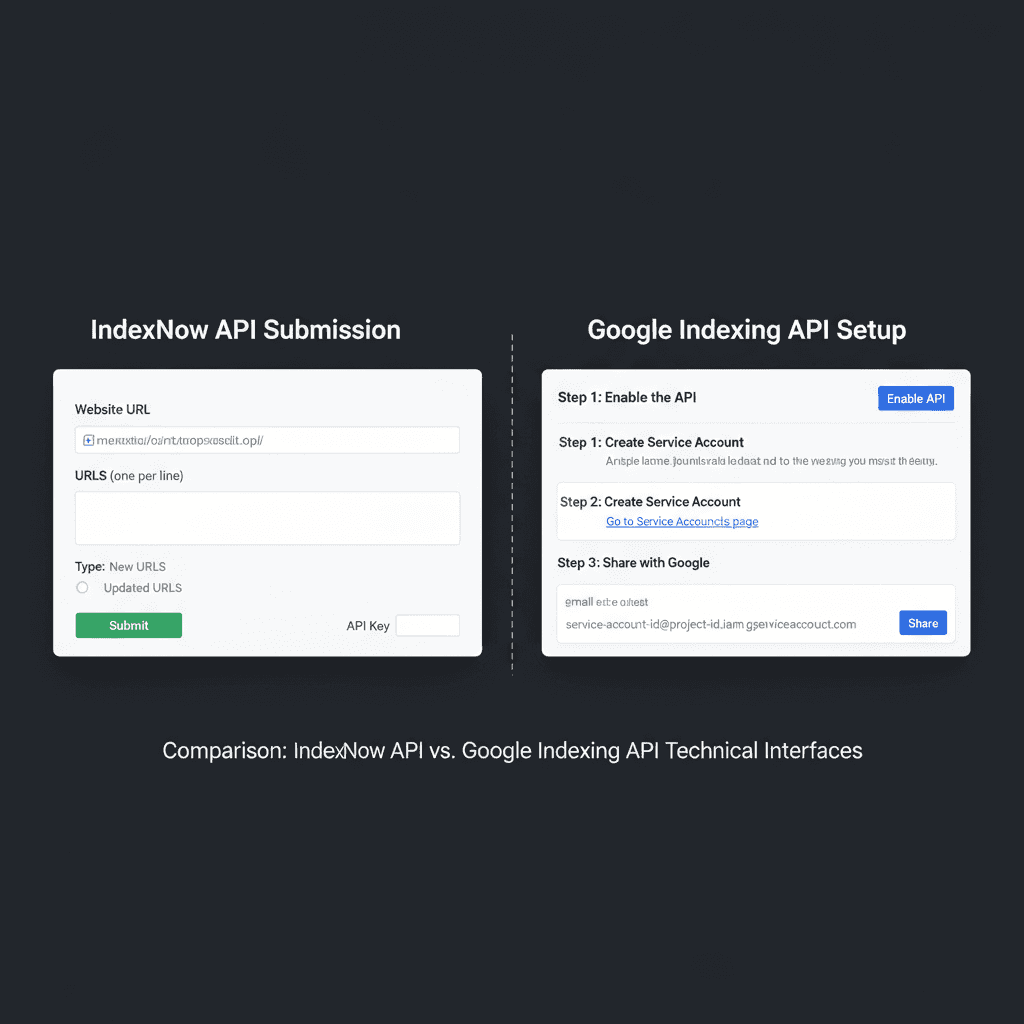
Deploy Auto-Indexing for Instant Discovery
Traditional crawl-based indexing takes days or weeks. For time-sensitive content or competitive keywords, that delay costs traffic and revenue.
IndexNow API Implementation
The IndexNow protocol notifies multiple search engines (Bing, Yandex, Naver, Seznam) instantly when content publishes, updates, or deletes. "Over 60 million sites publish 1.4 billion URLs to IndexNow each day."
Implementation steps:
Generate your IndexNow API key at bing.com/indexnow
Host the key file at your domain root (yoursite.com/your-key.txt)
Configure automatic submission on content publish/update
Monitor submission logs for 202 response codes (accepted)
For WordPress, plugins like Rank Math and SEOPress include IndexNow integration. For custom builds, implement the API endpoint in your deployment pipeline.
Google Indexing API Setup
Google's Indexing API officially supports only JobPosting and BroadcastEvent structured data types. However, teams report success using it for broader content indexing when facing crawl delays.
Setup requires:
Enable Google Indexing API in Google Cloud Console
Create service account credentials
Grant Search Console property access to service account
Implement API calls in your CMS or deployment workflow
Google's API accepts up to 200 URL submissions daily per project. For sites publishing more than that, batch submissions across multiple days.
Multi-Platform Publishing Workflow
Content that performs well should appear wherever your audience searches—not just your website. Implement syndication to:
Medium and LinkedIn Articles for brand awareness
Industry publication guest posts for backlinks
Community forums (Reddit, Indie Hackers) for discussion
YouTube for video content transcripts
Each platform amplifies discovery signals that AI engines monitor when evaluating content authority. A Medium article with 500 claps and 50 comments signals social proof that influences AI citation decisions.
For WordPress users, Keytomic's multi-CMS publishing automatically distributes content to configured channels without manual copying.
Track AI Citation and Visibility Metrics
Traditional SEO metrics (rankings, traffic, backlinks) tell only half the story. AI search optimization requires tracking:
Citation rate: How often your brand appears in AI-generated answers for priority queries. Query your target keywords weekly across ChatGPT, Perplexity, Gemini, and AI Overviews. Document:
Citation frequency (percentage of queries mentioning your brand)
Citation position (1st source cited vs 5th)
Citation context (recommended vs mentioned vs compared)
Competitive share of voice
Tools like Profound, AthenaHQ, and AIclicks.io automate this tracking across multiple AI platforms, though manual spot-checking remains important for nuance.
AI-referred traffic: Configure Google Analytics to track referrals from:
chatgpt.com
perplexity.ai
gemini.google.com
you.com
Create custom segments for AI-referred sessions and measure:
Session duration (typically longer than organic search)
Pages per session
Conversion rate
Goal completions
AI-referred traffic often converts at 2–3x the rate of traditional organic traffic because users arrive pre-qualified through the AI conversation.
Zero-click content performance: Content optimized for AI citation often sees reduced CTR because users get answers without clicking. This isn't failure—it's successful brand awareness.
Track these proxy metrics for zero-click success:
Branded search volume increases (indicates brand awareness growth)
Direct traffic increases (users discover brand via AI, visit directly later)
Assisted conversions in Google Analytics
Social mentions and discussion frequency
Measure Traditional SEO Impact
AI optimization shouldn't sacrifice traditional search performance. Monitor these baseline metrics weekly:
Average position for priority keyword clusters
Impression share changes
CTR improvements from rich results
Page experience metrics (CWV scores)
Crawl efficiency and index coverage
Most teams see traditional rankings improve alongside AI visibility because the optimization principles overlap. Content depth, entity optimization, and schema markup benefit both AI citation and Google rankings.
Iterate Based on Performance Data
By day 30, you have enough data to identify what's working and what needs adjustment. Review:
Content cluster performance: Which topic clusters generate the most AI citations? Which drive the most conversions? Double down on high-performers and revise underperformers.
Platform-specific patterns: Does your content perform better on ChatGPT vs Perplexity? Platform differences suggest content format or depth adjustments.
Schema markup effectiveness: Check Google Search Console for rich result impressions and CTR. Low rich result appearance suggests schema errors or missing required properties.
Indexing speed: Track time-to-index for new content. Delays indicate crawl budget issues or technical barriers that need resolution.
Use these insights to refine your content briefs, schema templates, and publishing workflows for month two.
Deliverable: Full-Cycle Operational System
By day 30, you've built:
Automated content-to-publication pipeline
Instant indexing across Google and Bing/Yandex
Multi-platform content distribution
AI citation tracking across 4+ platforms
Weekly performance reporting dashboard
Documented playbook for scaling to 50+ articles monthly
How Keytomic Condenses 30 Days Into 30 Minutes
Everything described above takes most teams a full month of coordinated effort across content, development, and SEO functions. Keytomic's autonomous SEO engine collapses these four sprints into an automated workflow that runs continuously.
Automated Keyword Discovery and Clustering
Keytomic connects directly to your Google Search Console, analyzes historical performance, identifies semantic clusters, and generates priority rankings automatically. No manual CSV exports, no spreadsheet pivots, no subjective guesswork about which keywords matter.
The platform refreshes this analysis weekly, adapting to search trend shifts and competitive movements without manual intervention.
30-Day Content Roadmaps Generated Automatically
Instead of spending hours mapping clusters to content types, Keytomic's AI analyzes your existing content library, identifies gaps based on SERP analysis, and generates a complete 30-day publishing calendar with:
Recommended titles optimized for both SEO and AI citation
Content brief templates including semantic entities and question patterns
Internal linking opportunities to existing articles
Priority scoring based on traffic potential and competitive gaps
This roadmap updates dynamically as you publish, ensuring you're always working on the highest-value next article.
Integrated Schema Markup Automation
Keytomic generates appropriate schema types automatically based on content analysis. When you publish an article, the platform:
Extracts entities, dates, authors, and structured data
Generates valid JSON-LD for Article, Organization, FAQPage, and relevant schemas
Validates against Schema.org standards
Injects markup into page HTML at publication
Updates schema automatically when content changes
No plugins to configure, no manual coding, no validation errors to debug. Schema stays synchronized with content automatically.
Auto-Publishing and Instant Indexing
Keytomic publishes directly to your WordPress, Webflow, or headless CMS, then triggers both IndexNow and Google Indexing API submissions automatically. Content goes from brief to published and indexed in under an hour.
For agencies managing 20+ client sites, this automation eliminates the coordination overhead of scheduling publications, running technical SEO checks, and manual index submissions.
GEO Optimization for AI Search Visibility
Unlike traditional SEO platforms focused solely on Google rankings, Keytomic optimizes specifically for AI citation across ChatGPT, Perplexity, Google AI Overviews, and Gemini.
The platform analyzes what content these AI engines currently cite for your target keywords, identifies structural and content patterns they prefer, and generates briefs that match those patterns while maintaining your brand voice.
This GEO-first approach ensures your content doesn't just rank in Google—it gets cited when potential customers ask AI tools for recommendations.
Unified Performance Tracking
Keytomic consolidates metrics from Google Search Console, Google Analytics, AI citation tracking, and schema validation into a single dashboard. You see:
Traditional rankings and traffic trends
AI citation frequency and competitive share of voice
Rich result appearance rates
Indexing status across Google and Bing
Content ROI per cluster
This unified view eliminates the tool-switching and data reconciliation that consumes 5–8 hours weekly for most SEO teams.
Common Pitfalls That Derail Implementation
Most teams attempting AI search optimization fail not from lack of knowledge but from execution drift. Watch for these traps:
Trying to Implement Everything Manually
You can't scale manual schema markup across 50+ pages monthly. You can't manually track AI citations across four platforms weekly. You can't coordinate content briefs, publication schedules, and index submissions across spreadsheets.
Automation isn't optional for sustainable AI search optimization—it's the prerequisite. Teams that succeed adopt platforms purpose-built for this workflow rather than duct-taping together 12 different tools.
Optimizing for AI at the Expense of Google
AI search grows fast, but Google still drives 70–80% of most sites' organic traffic. Content optimized exclusively for AI citation often lacks the depth and entity signals Google's algorithms reward.
Balance is the strategy. Use universal optimization principles (entity clarity, factual density, schema markup, authoritative sources) that benefit both AI citation and traditional rankings.
Publishing Without Indexing Automation
Great content that doesn't get indexed doesn't exist from search's perspective. Teams publish 10 articles then wonder why traffic didn't increase—turns out only 3 got indexed because crawl budget ran low.
Automatic index submission via IndexNow and Google's API ensures new content enters search results within hours, not weeks. This acceleration matters most for competitive keywords where first-mover advantage determines traffic share.
Measuring Vanity Metrics Instead of Business Outcomes
AI citations don't pay invoices. Traffic doesn't either unless it converts. Track metrics that connect to revenue:
Demo requests from AI-referred traffic
Trial signups by traffic source
Qualified lead volume from organic search
Sales cycle length for AI-discovered prospects
These business metrics justify continued investment in AI search optimization and guide resource allocation toward high-ROI content clusters.
Frequently Asked Questions
How long before AI engines start citing my content? Most teams see initial citations within 4–8 weeks of publishing optimized content with proper schema markup. Consistent citations typically require 3–6 months of sustained content production and optimization.
Do I need separate content for each AI platform? No. Universal optimization principles (entity clarity, factual density, schema markup, authoritative sourcing) work across all platforms. Platform-specific tweaks provide marginal gains, but core content quality matters most.
Can I automate this entire workflow without technical skills? Yes, with platforms like Keytomic that handle schema generation, multi-CMS publishing, and auto-indexing through visual interfaces. Technical implementation knowledge becomes optional, not required.
Should I stop traditional SEO to focus on AI search? Absolutely not. Traditional search still drives majority traffic for most sites. AI optimization should complement and enhance your existing SEO workflows, not replace them entirely.
What budget do I need for AI search optimization tools? Entry-level platforms start around $100–250 monthly for individual users. Enterprise solutions for agencies managing multiple clients range from $500–2,000+ monthly depending on scale and automation features.