Table of Contents
Share Article
15 Best Google Alternatives in 2026: AI Search, Privacy Engines & No-AI Options
15 Best Google Alternatives in 2026: AI Search, Privacy Engines & No-AI Options
15 Best Google Alternatives in 2026: AI Search, Privacy Engines & No-AI Options

Salam
Product and Growth Lead
Google's share dropped to 89.6% — and it's still falling. The best Google alternatives in 2026 are DuckDuckGo for private and no-AI search and Bing for mainstream AI-powered search but AI LLMs are also climbing the list fast.
People are moving away from Google because Search itself is changing.
AI Overviews, AI Mode, heavier personalization, more answer-first results, privacy concerns, ads, and reduced control over classic blue-link results have made some users look for alternatives.
For brands, the bigger lesson is simple: visibility can no longer depend on Google alone. Buyers now discover companies across Google, Bing, DuckDuckGo, ChatGPT, Perplexity, Brave, Reddit, and other AI/search surfaces.
Google is still the biggest search engine in the world. That has not changed.
What has changed is how search feels.
For years, people searched Google and expected a page of links. In 2026, that experience is shifting toward AI Overviews, AI Mode, generated answers, follow-up prompts, shopping agents, and task completion. Some users love that. Others feel like Google is becoming less of a search engine and more of an AI answer machine.
That is why searches for Google alternatives are no longer just about privacy. They are about control, source transparency, AI fatigue, ad-heavy results, and whether users still want a classic web search experience.
This guide ranks the 15 best Google alternatives in 2026, explains who each one is best for, and shows what this shift means for brands trying to stay visible in Google, AI search, and the broader discovery ecosystem.
Read more: AI search ranking complete guide
Quick Comparison: Top Google Alternatives at a Glance
Search Engine | Best For | AI Features | Privacy Level | Index / Source | Best User Type |
Microsoft Bing | Mainstream Google alternative | Strong | Low to medium | Bing index | General users, Windows users, advertisers |
DuckDuckGo | Private and no-AI search | Optional | High | Mix of sources, including Bing and DuckDuckBot | Privacy-first users |
Brave Search | Independent private search | Strong | High | Brave independent index | Privacy and tech-savvy users |
Perplexity | Cited AI answers | Very strong | Medium | AI answer engine with citations | Researchers, students, professionals |
ChatGPT Search | Conversational research | Very strong | Medium | Conversational AI with web access | Users who prefer asking follow-up questions |
Startpage | Private Google-style results | Limited | Very high | Google-style results through privacy layer | Users who like Google results but not tracking |
Kagi | Paid ad-free search | Optional | Very high | Multiple sources + custom ranking | Power users |
Ecosia | Eco-conscious search | Limited | Medium | Bing-powered results | Users who want searches to fund climate projects |
Qwant | European privacy search | Limited | High | Mix of Qwant/Bing sources | EU privacy-focused users |
Mojeek | Independent crawler | Limited | High | Independent index | Users who value search independence |
Swisscows | Family-safe private search | Limited | Very high | Semantic/private search | Families and safe-search users |
You.com | Customizable AI search | Strong | Medium | AI + search integrations | AI-heavy researchers and builders |
Yahoo Search | Portal-style search | Medium | Low | Bing-powered results | News, finance, sports, email users |
Yandex | Russian-language search | Medium | Low | Yandex index | Russian/CIS markets |
Baidu | China search visibility | Medium | Low | Baidu index | China-focused users and brands |
The important thing to understand: Google still dominates search share.
But users are spreading specific types of searches across different tools. They may use Google for navigation, Perplexity for research, ChatGPT for brainstorming, DuckDuckGo for private search, Brave for independent results, and Reddit for real user opinions.
That is the real shift.
Why Are People Leaving Google Search?
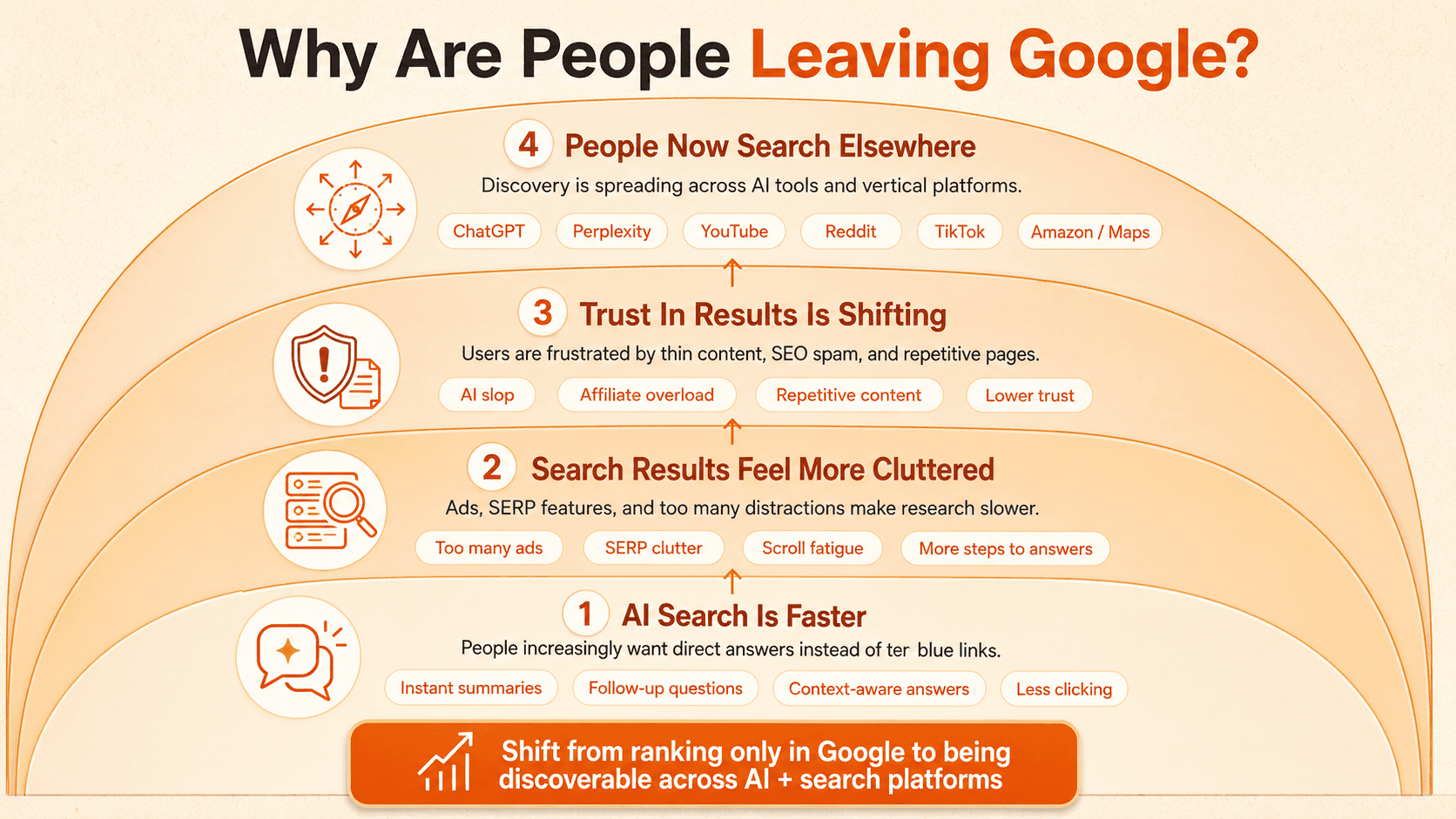
People are not leaving Google for one single reason.
And to be clear, Google is not dying.
According to Statcounter’s global search engine market-share data, Google still controls around 90% of worldwide search share. That is not a dying platform. That is still the default search engine for most of the world.
But the user relationship with Google is changing.
For years, people searched Google because it felt like the fastest way to reach the open web. In 2026, Google increasingly feels like an AI-powered answer layer sitting on top of the web. That is useful for many queries, but it also creates friction for users who want links, source control, privacy, or a less AI-heavy search experience.
So the better question is not “Is Google dying?”
The better question is:
Why are more users testing Google alternatives now?
Here are the biggest reasons.
1. Google Search Is Becoming More AI-First
The biggest shift is Google’s move from classic search results toward AI-first search experiences.
Google has been expanding AI Overviews, AI Mode, follow-up questions, shopping agents, task-completion features, and AI-powered search experiences. At Google I/O 2026, Google described this as a new era for AI Search, with more advanced model capabilities built directly into Search.
For some users, this is helpful. Instead of clicking five links, they can ask one question and get a summarized answer.
But for other users, it feels like Google is no longer simply helping them search the web. It feels like Google is deciding what answer they should see first.
That is why some people are looking for search engines that still feel closer to classic web search, such as DuckDuckGo, Brave Search, Kagi, Startpage, and Mojeek.
Google itself says AI Overviews and AI Mode rely on the same core SEO and ranking systems as regular Search, and that there are no special technical requirements beyond being indexed and eligible for a snippet. But it also says AI systems may use query fan-out, where Google runs multiple related searches across subtopics and sources to build an AI answer. You can read Google’s official guidance here: AI features and your website.
For users, that means Search is becoming more powerful.
For publishers and brands, it means discovery is becoming more complicated.
Read more: AI search ranking complete guide
2. Some Users Want Search Without Forced AI Summaries
A major reason people are testing Google alternatives is simple: they want the option to search without AI.
That is why DuckDuckGo’s No-AI positioning has become so relevant.
DuckDuckGo now has a dedicated No-AI search experience that turns off AI-assisted answers and AI-generated images by default. The positioning is not “AI is bad.” The positioning is user choice.
After Google’s AI-heavy Search announcements, DuckDuckGo saw a reported spike in app installs and traffic to its No-AI search page. TechCrunch reported that DuckDuckGo’s U.S. app installs increased after Google’s AI Search push, and PC Gamer reported that traffic to DuckDuckGo’s No-AI search page tripled after Google’s latest AI search update.
That does not mean DuckDuckGo is replacing Google.
It means a measurable group of users is reacting to AI-first search by looking for something simpler, more private, or less automated.
This is important because the search market is no longer splitting only by privacy preference. It is now splitting by AI preference too.
Some users want AI answers.
Some users want AI answers with citations.
Some users want privacy.
Some users want no AI at all.
That is why DuckDuckGo, Brave, Kagi, Perplexity, and ChatGPT Search can all grow for different reasons at the same time.
Read more: How to improve brand visibility in AI search engines
3. AI Overviews Create Trust and Accuracy Concerns
Another reason people are moving away from Google, or at least testing alternatives, is trust.
AI-generated search summaries can be useful, but they can also be wrong, incomplete, or poorly sourced.
A 2026 study on Google AI Overviews analyzed more than 55,000 trending queries and found that AI Overviews appeared for 13.7% of queries overall and 64.7% of question-form queries. The study also reported that 11% of atomic claims in AI Overview answers were unsupported by the cited pages. You can read the paper here: Measuring Google AI Overviews.
Another 2026 study estimated that exposure to Google AI Overviews reduced daily traffic to English Wikipedia articles by about 15%, especially in topics where a short summarized answer could satisfy the user’s need. You can read that paper here: Impact of AI Search Summaries on Website Traffic.
This does not mean AI Overviews are always wrong.
It means the search experience is changing from “evaluate a list of sources” to “read a generated answer first.”
That changes user behavior.
If a user trusts Google’s AI answer, they may not click anything.
If a user does not trust the AI answer, they may go somewhere else entirely: DuckDuckGo, Reddit, Perplexity, ChatGPT Search, Brave, YouTube, or a niche community.
For brands, this is exactly why AI visibility matters. You do not only need to rank. You need to be cited, mentioned, and represented correctly when AI systems summarize your market.
Read more: LLM citations checklist
4. Users Feel Organic Results Are Getting Pushed Down
For many users, Google results feel more crowded than they used to.
Depending on the query, a search result page can include:
AI Overviews
Sponsored ads
Shopping modules
People Also Ask
Video results
Maps
Product carousels
Reddit/forum results
Featured snippets
Brand panels
Organic links
That can make classic organic results feel buried.
For commercial searches, this is especially noticeable. A user looking for software, products, reviews, or comparisons may have to scroll through ads, AI summaries, shopping modules, and third-party widgets before reaching traditional web links.
This is one reason Kagi’s paid, ad-free model is interesting. Kagi positions itself as search without ads, tracking, and noise. You can see its positioning here: Kagi Search.
Brave Search also appeals to users who want less dependence on Google or Bing. Brave says its Search API is powered by its own independent web index, the same index behind Brave Search. You can read Brave’s explanation here: Brave Search API.
The key point: some users are not leaving Google because results are always bad. They are leaving because the experience feels too busy, too commercial, or too controlled.
Read more: Complete GEO guide
5. Privacy Still Matters
Privacy is still one of the strongest reasons people choose Google alternatives.
Google’s business model is deeply connected to advertising, personalization, accounts, devices, and behavioral signals. That does not automatically mean every user has a privacy problem with Google, but it does mean privacy-conscious users often prefer alternatives.
DuckDuckGo is the easiest example. It is built around private search and less tracking.
Startpage is another option for users who want private search results without personal profiling. Startpage says it delivers search results without tracking, profiling, or storing personal information. You can see its official privacy positioning here: Startpage private search.
Brave Search is another strong privacy option, especially for users already inside the Brave browser ecosystem.
Kagi is different because it is user-funded rather than ad-funded. Its pricing page says Kagi has no ads, no tracking, and is funded by users. You can see that here: Kagi pricing.
Privacy alone may not make someone leave Google completely. But it can make them split their behavior.
They may still use Google for maps, local searches, or quick navigation, but use DuckDuckGo, Brave, Startpage, or Kagi for sensitive searches.
6. People Want More Control Over the Search Experience
The deeper issue is control.
Some users want:
Fewer AI summaries
Less personalization
Fewer ads
More direct links
Better source transparency
More privacy
Less tracking
More independent indexes
More control over ranking preferences
More control over which websites appear
That is why no single Google alternative replaces Google for everyone.
Different users are leaving different parts of the Google experience.
A privacy-conscious user may prefer DuckDuckGo.
A power user may prefer Kagi.
A researcher may prefer Perplexity.
A conversational user may prefer ChatGPT Search.
A browser-first privacy user may prefer Brave.
A user who likes Google-style results but not Google tracking may prefer Startpage.
A user who wants a fully independent crawler may test Mojeek.
That is the real state of search in 2026: not one Google replacement, but a fragmented search stack.
Is Google Dying?
No, Google is not dying.
Google is still the dominant search engine globally, still deeply embedded into browsers and mobile devices, and still the main organic search channel for most brands.
But Google is no longer the only search habit that matters.
Search is fragmenting into:
Search Need | Where Users May Go |
Classic web search | Google, Bing, DuckDuckGo, Brave |
Private search | DuckDuckGo, Brave, Startpage, Kagi |
No-AI search | DuckDuckGo No-AI, Kagi |
Cited AI answers | Perplexity |
Conversational research | ChatGPT Search |
Independent index search | Brave, Mojeek |
Real user opinions | Reddit, forums, YouTube |
Regional search | Baidu, Yandex |
So the real answer is:
Google is not dying. Google-only search behavior is weakening.
For users, that means more choice.
For brands, it means the visibility game is now much bigger than ranking on Google alone.
Soft CTA:
If you still measure visibility only through Google rankings, you are missing the AI and alternative-search layer where buyers increasingly ask questions first. Start a Keytomic trial to track and improve visibility across Google, ChatGPT, Perplexity, and AI search engines.
Google Still Dominates Search
Google is not losing because people suddenly stopped using it.
Google still has structural advantages that no alternative search engine can easily match:
Chrome is one of the world’s most used browsers.
Android puts Google Search in front of billions of mobile users.
Google is deeply connected to Gmail, Maps, YouTube, Google Workspace, Google Lens, and Google Assistant.
Most people never change default search settings.
Google still has one of the strongest web indexes and ranking systems.
Advertisers, publishers, and businesses still optimize heavily around Google.
As of May 2026, Statcounter shows Google holding around 90.39% of global search-engine market share, followed by Bing at 5.03%, Yahoo at 1.4%, Yandex at 0.99%, DuckDuckGo at 0.71%, and Baidu at 0.53%.
So the story is not that Google has disappeared.
The story is that Google’s dominance now sits inside a more complicated search landscape. A user may still “Google” a brand name, but ask ChatGPT for tool recommendations, use Perplexity for research, DuckDuckGo for private searches, and Reddit for real user feedback.
For SEO teams, that means traditional ranking reports are no longer enough.
Read more: Top AI search visibility tracking tools in 2026
The 15 Best Google Alternatives in 2026
1. Microsoft Bing — Best Mainstream Google Alternative
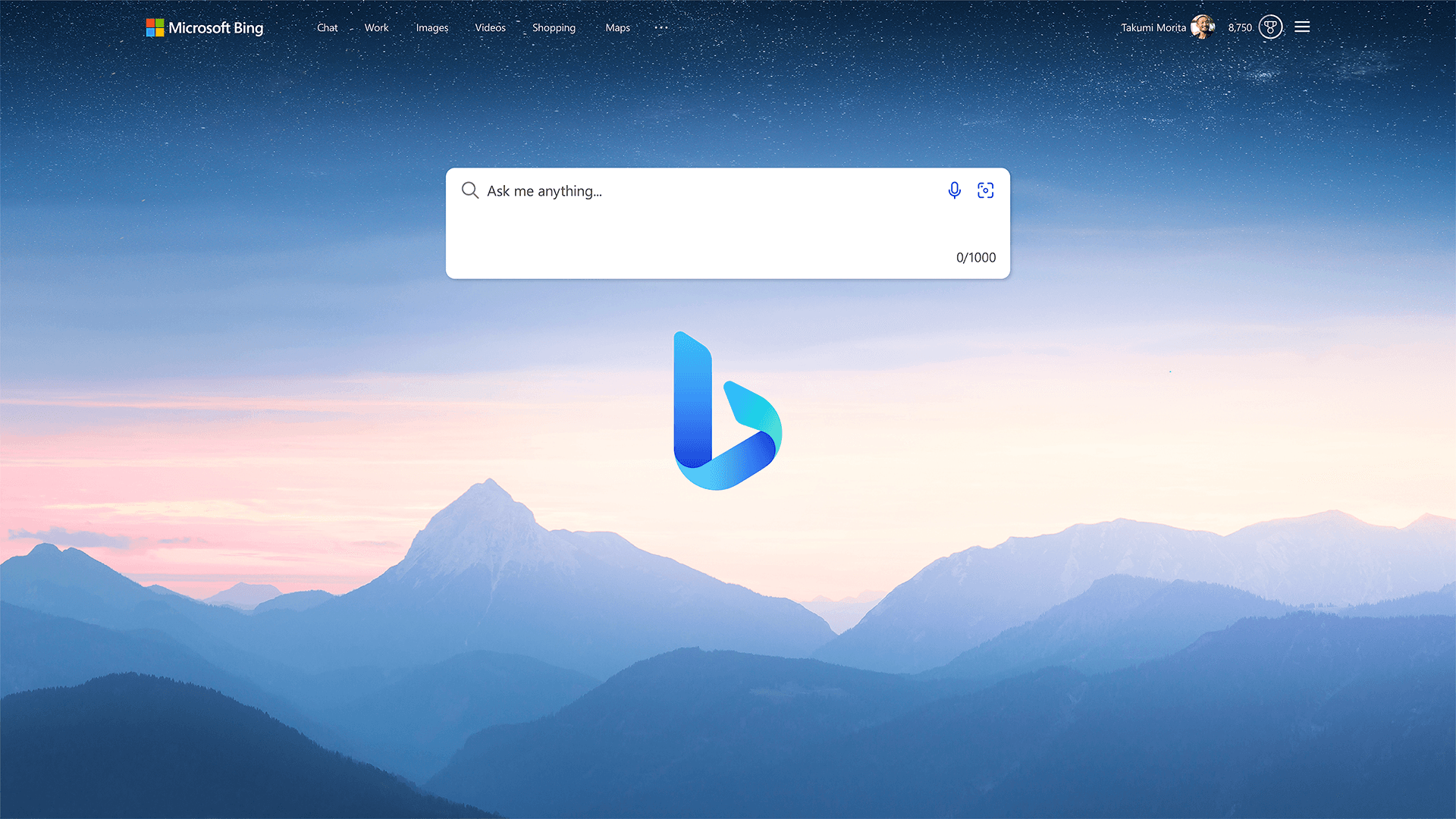
Bing is the closest mainstream alternative to Google because it has real scale, a mature index, Microsoft ecosystem distribution, and strong AI integration through Copilot.
For regular users, Bing works best when you want something familiar but slightly different from Google. It has web results, images, videos, shopping, maps, news, and AI-powered responses. It is also deeply integrated into Windows, Edge, Microsoft 365, and Copilot.
For marketers, Bing matters because it is not just “the second search engine.” It also indirectly powers or influences visibility in search experiences that use Bing-derived results. DuckDuckGo and Yahoo both rely heavily on Bing’s search infrastructure, so improving Bing visibility can sometimes help beyond Bing itself.
Best for:
Windows users
Microsoft ecosystem users
Advertisers looking beyond Google Ads
Brands that want visibility in Bing-powered search surfaces
Users who want AI answers without fully leaving traditional search
SEO note:
If your brand only checks Google rankings, you may be missing Bing visibility. That matters even more when your audience includes B2B buyers, professionals, desktop users, and Microsoft-heavy workplaces.
Read more: How an AI search monitoring platform can improve SEO strategy
2. DuckDuckGo — Best Private and No-AI Google Alternative

DuckDuckGo is the easiest Google alternative to recommend for most people who care about privacy.
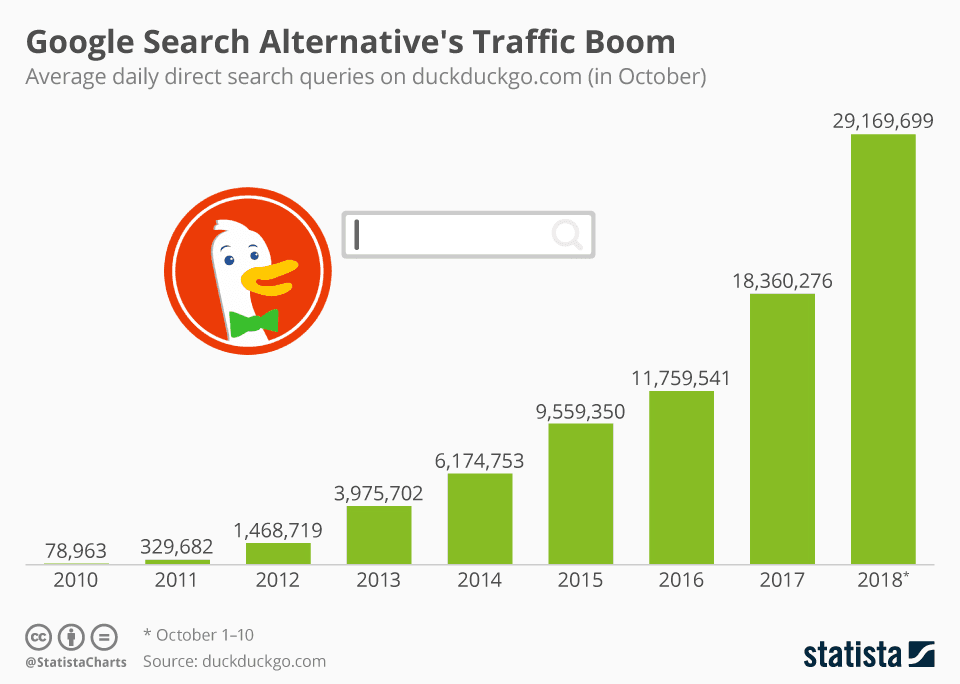
After Google’s AI-heavy I/O 2026 Search announcements, DuckDuckGo reported a measurable spike in U.S. app installs and traffic to its AI-free search page.
According to data shared by DuckDuckGo with media outlets, U.S. app installs increased an average of 18.1% week-over-week from May 20 to May 25, compared with May 13 to May 18. Growth peaked at 30.5% on May 25. On iOS, installs averaged 33% week-over-week growth and peaked at nearly 70%. Visits to DuckDuckGo’s AI-free search page also rose, averaging 22.7% week-over-week growth and peaking at 27.7%.
This does not mean DuckDuckGo is suddenly replacing Google.
DuckDuckGo’s overall share is still tiny compared with Google. But the spike matters because it shows a very specific user reaction: some people want search without AI summaries pushed into every experience.
DuckDuckGo is not anti-AI. It offers AI features. The difference is positioning: it wants to give users more choice over how much AI appears in their search experience.
That is why DuckDuckGo has become more than a privacy alternative. In 2026, it is also becoming a “classic search” and “no-AI search” alternative.
DuckDuckGo is best for:
Private web search
No-AI search
Users tired of personalization
Users who want a clean search interface
People who want a quick Google replacement without paying
The tradeoff is that DuckDuckGo is not always as deep as Google for obscure, technical, or highly local searches. It also uses results from multiple sources, including Bing, so it is not a fully independent index in the same way Brave or Mojeek tries to be.
Still, for everyday searches, DuckDuckGo is one of the strongest alternatives.
Best for:
Privacy-first users
Users who want less AI in search
Users who want a simple default replacement for Google
People who want search without persistent tracking
3. Brave Search — Best Independent Private Search Engine
Brave Search is one of the most important Google alternatives because it is not just a privacy layer on top of another search engine.
Brave has built its own independent search index. In 2026, Brave said its Search API is powered by an independent index of around 40 billion web pages, and that the API is increasingly used for AI applications that need real-time web data.
That makes Brave different from many privacy search engines. It is trying to build search infrastructure, not just a cleaner interface.
Brave Search is best for:
Privacy
Independent results
Users who do not want Google/Bing dependency
Technical users
AI builders who need independent web search data
People already using the Brave browser
Brave also includes AI-powered answers, so it is not a “no-AI” product. But the experience feels more user-controlled and privacy-oriented than Google’s increasingly AI-first search interface.
Best for:
Privacy-focused power users
People who want independent search infrastructure
Users who want AI answers without Big Tech search dependency
Brave browser users
Read more: Complete GEO guide
4. Perplexity — Best AI Search Engine With Citations
Perplexity is not a traditional search engine. It is an AI answer engine built around cited responses.
Instead of giving you a list of links first, Perplexity tries to answer your question directly and show the sources used to build that answer. This makes it especially useful for research, comparisons, summaries, product exploration, and complex questions.
Perplexity is best when you are asking things like:
“What are the best alternatives to Google Search?”
“Compare Brave Search, DuckDuckGo, and Kagi.”
“What are the latest changes in Google AI Mode?”
“Which AI search engines cite sources?”
“What should a brand do to appear in AI search?”
The value is speed. Perplexity can compress several searches into one sourced answer.
The risk is that users may trust summaries too quickly. Always check citations when the topic is important.
For SEO and content teams, Perplexity matters because visibility is no longer only about ranking on a blue-link SERP. It is also about being cited, summarized, and included as a trusted source inside AI-generated answers.
Best for:
Researchers
Students
Analysts
Writers
Professionals comparing tools or markets
Users who want citations with summaries
Read more: LLM citations checklist
5. ChatGPT Search — Best Conversational Search Alternative
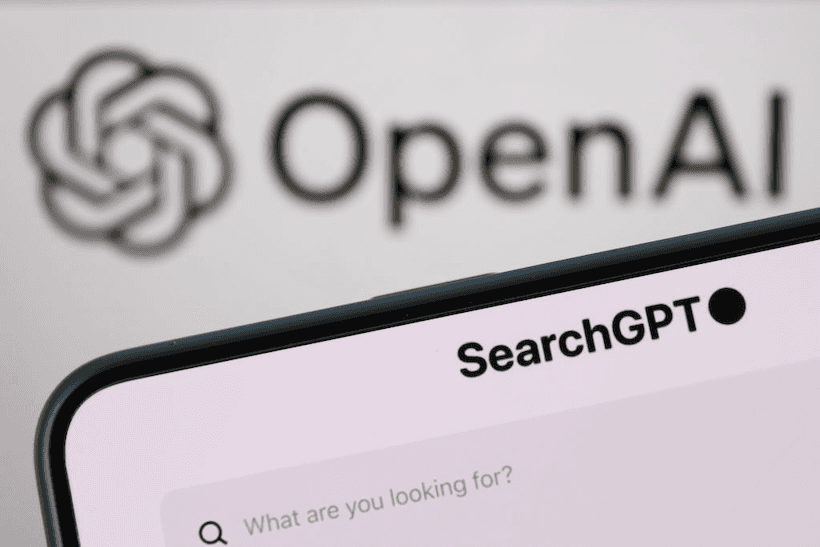
ChatGPT Search is not trying to look like Google. That is the point.
It works best when users want to ask follow-up questions, compare options, summarize information, generate plans, or explore a topic through conversation.
A typical Google query might be:
best Google alternatives
A ChatGPT Search query might be:
I want to stop using Google because I hate AI Overviews and tracking. Compare DuckDuckGo, Brave, Kagi, and Startpage for daily use, privacy, and result quality.
That is a different search behavior.
ChatGPT Search is strong for:
Research conversations
Step-by-step planning
Summarizing topics
Comparing options
Getting explanations
Asking follow-up questions
Turning research into actions
But it is not a perfect replacement for classic search. For fresh facts, niche websites, local results, shopping details, and source verification, users still need to check links.
For brands, ChatGPT Search changes the game. You are not only trying to rank. You are trying to become a brand that the model recognizes, recommends, and cites when users ask category-level questions.
Best for:
Conversational research
Strategy and planning
Learning complex topics
Comparing multiple options
Users who prefer asking instead of browsing
Read more: How to improve brand visibility in ChatGPT
6. Kagi — Best Paid, Ad-Free Search Engine
Kagi is the most interesting Google alternative for power users because it changes the business model.
Instead of being funded by ads, Kagi is funded by users. That means it can offer search without ads, tracking, and the same incentive to maximize clicks or commercial modules.
Kagi positions itself around:
No ads
No tracking
Less noise
User-funded search
Custom ranking controls
Lenses for focusing searches on specific types of sites
That makes Kagi attractive to people who search heavily for work and are willing to pay for better results.
The tradeoff is obvious: Kagi is not free after the trial. But that is also the point. For users who feel ad-funded search has become too noisy, paying for search can feel like paying for focus.
Best for:
Power users
Researchers
Developers
Writers
Analysts
People who want ad-free search
Users who are willing to pay for quality
Kagi is not the best casual replacement for everyone. But for people who spend hours searching every week, it may be one of the strongest alternatives to Google.
7. Startpage — Best Private Google-Style Results
Startpage is best for people who like Google-style search results but do not want Google-style tracking.
It acts as a privacy layer between you and search results. Startpage says it delivers search results without tracking, profiling, or storing personal information.
That makes it useful for users who do not want to fully relearn search behavior. You get a familiar style of result, but with stronger privacy positioning.
Startpage is best for:
Private search
Google-like results
Users who dislike personalization
People who want simple web search without a new learning curve
Users who want anonymous browsing options
The tradeoff is that Startpage is not an independent search engine in the same sense as Brave or Mojeek. If your priority is search-index independence, Brave and Mojeek are stronger. If your priority is privacy with familiar results, Startpage is easier.
Best for:
Privacy-focused users who still like Google-style results
People who want less tracking without changing habits too much
Users who value simplicity
8. Ecosia — Best Eco-Conscious Search Engine
Ecosia is a Google alternative built around environmental impact.
Its core promise is simple: use search revenue to fund climate and reforestation projects.
Search results are not the main differentiator. The mission is.
Ecosia is best for users who want their search behavior to support environmental projects. It is especially popular with users who care about climate, sustainability, and transparent impact reporting.
Best for:
Eco-conscious users
Students and younger audiences
People who want search with a mission
Users who do not need advanced search controls
The tradeoff is that Ecosia is not the strongest option for deep technical research or privacy purists. But for everyday searches with an environmental angle, it remains a meaningful alternative.
9. Qwant — Best European Privacy Search Engine
Qwant is a French search engine focused on European privacy expectations.
It does not position itself as a global Google killer. It is more useful as a regional and privacy-focused alternative for users who want a European search experience with less personalization.
Qwant is best for:
European users
Privacy-conscious searchers
French-language search
Users who dislike filter bubbles
Families using Qwant Junior
For brands, Qwant matters most if you are targeting France or privacy-conscious EU audiences.
Best for:
EU privacy-focused users
French market search
Families looking for safer search options
Users who want less personalized search
Read more: Best CMS for SEO
10. Mojeek — Best Fully Independent Crawler
Mojeek is one of the purest Google alternatives because it operates its own crawler and index.
It is not trying to be the slickest AI search engine. It is not trying to replicate Google results with privacy wrapped around them. Its main value is independence.
That matters because most “alternative search engines” still depend on Google or Bing somewhere in the stack. Mojeek’s argument is different: if you want a genuinely independent search index, you need a search engine that crawls the web itself.
Best for:
Search independence
Privacy
Users who want alternatives to Google/Bing infrastructure
People who care about algorithmic diversity
Researchers comparing different search indexes
The tradeoff is result depth. Mojeek’s index is smaller than Google’s. For obscure or commercial queries, results may not be as complete.
Still, Mojeek deserves a place in this list because true search independence is rare.
11. Swisscows — Best Family-Safe Private Search
Swisscows is a privacy-focused search engine based in Switzerland.
Its strongest positioning is family-safe search. Adult content filtering is on by default, which makes it different from privacy engines that focus only on tracking protection.
Swisscows is best for:
Families
Schools
Safe-search environments
Privacy-focused users
Users who want a cleaner default experience
The search experience is not as broad or powerful as Google. But for users who want safe, private, and family-friendly results, Swisscows is a useful alternative.
Best for:
Parents
Teachers
Families
Privacy-conscious users who want safe search by default
12. You.com — Best Customizable AI Search Experience
You.com combines traditional search with AI assistance and customization.
It is more AI-heavy than privacy engines like DuckDuckGo or Startpage. The appeal is flexibility: users can search, ask AI questions, summarize results, and integrate different sources into their workflow.
You.com is best for:
AI-heavy search
Developers
Researchers
Users who want customization
People who like search plus assistant workflows
The tradeoff is that users who want a pure, classic search experience may find it too AI-centered. But for people who like Google’s AI direction yet want a different interface, You.com is worth testing.
Best for:
AI search users
Productivity-focused researchers
People who want more customization than Google
Users who want search and assistant features together
Read more: What are AI SEO agents?
13. Yahoo Search — Best Portal-Based Search Alternative
Yahoo Search is not the most innovative Google alternative, but it still has a loyal audience because Yahoo is more than search.
Yahoo combines search with:
News
Finance
Sports
Email
Entertainment
Homepage portal behavior
For users who still like a classic portal experience, Yahoo remains useful. Its search results are powered largely through Bing, so it is not an independent search engine in the way Brave or Mojeek is.
Best for:
News and finance users
Portal-style browsing
Users already using Yahoo Mail
People who prefer older web navigation patterns
For SEO teams, Yahoo matters mainly because it is part of the broader Bing-powered ecosystem.
14. Yandex — Best for Russian-Language Search
Yandex is the strongest Google alternative for Russian-language search and several CIS markets.
It is not mainly a privacy alternative. It is a regional search ecosystem with maps, email, cloud storage, taxi services, language tools, and local market understanding.
Yandex is best for:
Russian-language queries
CIS market research
Eastern European localization
Regional SEO
Local business discovery in Yandex-dominant markets
If your business targets Russian-speaking users, Yandex cannot be ignored. Its ranking signals, local ecosystem, and language processing differ from Google.
Best for:
Russian speakers
CIS-market brands
Regional SEO teams
Businesses doing multilingual search expansion
15. Baidu — Best for China Search Visibility
Baidu is the main Google alternative for China because Google is not the default search ecosystem there.
For brands targeting China, Baidu is not optional. It has its own search environment, ranking expectations, content requirements, advertising system, maps, encyclopedia-style content, forums, and local platform ecosystem.
Baidu is best for:
China search visibility
Mandarin-language content
Chinese market entry
Local business discovery
China-focused SEO and paid search
The tradeoff is that Baidu optimization requires a completely different approach from Google SEO. You need Chinese-language content, local hosting considerations, regulatory awareness, and market-specific trust signals.
Best for:
Chinese users
Brands targeting mainland China
Mandarin content teams
International businesses entering China
Google Alternatives by Use Case
Use Case | Best Alternative |
Private search | DuckDuckGo |
No-AI search | DuckDuckGo No-AI or Kagi |
Independent index | Brave Search or Mojeek |
AI answers with citations | Perplexity |
Conversational research | ChatGPT Search |
Paid ad-free search | Kagi |
Google-style results without Google tracking | Startpage |
European privacy | Qwant |
Family-safe search | Swisscows |
Eco-conscious search | Ecosia |
China search visibility | Baidu |
Russia/CIS search visibility | Yandex |
Mainstream Google alternative | Bing |
Portal-style search | Yahoo |
Customizable AI search | You.com |
If you only want one replacement for everyday search, start with DuckDuckGo or Brave.
If you want AI research, test Perplexity and ChatGPT Search.
If you want better quality and no ads, test Kagi.
If you want Google-like results with more privacy, test Startpage.
If you work in SEO or growth, do not think of these as only user tools. Think of them as discovery surfaces where your buyers may already be asking questions.
Read more: AI visibility tools
What Google Alternatives Mean for SEO and Brand Visibility
The biggest mistake brands can make in 2026 is treating this as a consumer preference topic only.
It is bigger than that.
Google alternatives matter because the buyer journey is splitting across more surfaces:
Google organic results
Google AI Mode
Bing and Copilot
DuckDuckGo
Brave Search
Perplexity
ChatGPT Search
Reddit
YouTube
Review sites
Comparison blogs
Industry directories
AI-generated answers
A buyer may first hear about your category in ChatGPT, compare options in Perplexity, check Reddit for real opinions, search Google for your brand, and then click a competitor’s comparison article.
Traditional SEO tools were not built for that entire journey.
That is why modern SEO needs to measure more than rankings. You need to know:
Are we ranking in Google?
Are we cited in AI Overviews?
Are we mentioned by ChatGPT?
Are competitors appearing in Perplexity when we are not?
Are we visible in Bing-powered surfaces?
Are we showing up in Reddit and forum discussions?
Do our pages answer the exact questions AI engines retrieve?
Are our entities clear enough for answer engines to understand us?
This is where AI visibility and GEO become practical, not theoretical.
Read more: How to use generative engine optimization to earn LLM citations
Soft CTA:
Search visibility is no longer limited to Google rankings. Keytomic helps you discover what buyers ask, publish answer-ready content, auto-index pages, and monitor whether your brand appears across Google, ChatGPT, Perplexity, and other AI search surfaces. Start your Keytomic trial here.
How to Optimize for Google Alternatives
You do not need a completely separate SEO strategy for every search engine. But you do need to understand what each platform rewards.
Platform | How Brands Should Optimize |
Helpful content, technical SEO, internal links, structured data, page experience, AI Overview eligibility | |
Bing | IndexNow, schema, clear technical structure, Microsoft ecosystem visibility |
DuckDuckGo | Strong Bing visibility, privacy-friendly brand trust, clean crawlable pages |
Brave | Crawlable content, independent mentions, technical accessibility, useful source pages |
Perplexity | Citation-worthy pages, original data, clear answers, source context |
ChatGPT Search | Entity consistency, third-party mentions, answer-first content, strong topical authority |
Kagi | Quality-first, non-spammy content, useful sources, less clickbait |
Reddit/forum search | Real conversations, user experience, authentic brand mentions |
YouTube | Video answers, product demos, tutorials, transcribed content |
Regional engines | Local language, local hosting, local authority signals, regional compliance |
A good multi-engine SEO strategy has four layers:
Technical accessibility
Your pages must be crawlable, indexable, fast, and internally linked.Entity clarity
Search and AI systems need to understand who you are, what you sell, who you serve, and how you compare.Answer-ready content
Your pages should include direct answers, comparisons, examples, definitions, and useful tables.Cross-platform proof
Your brand should appear in third-party sources, reviews, forums, comparison pages, and industry discussions.
Google’s own AI feature guidance still points back to fundamentals: helpful content, crawlability, internal links, structured data that matches visible content, and strong page experience. So the answer is not to abandon SEO. It is to expand SEO into the answer layer.
Read more: Indexed but not ranking: reasons and fixes
Classic Search vs AI Search vs Privacy Search vs No-AI Search
Search is no longer one category.
Search Type | User Goal | Examples |
Classic search | Browse links and choose sources manually | Google Web tab, Bing, Yahoo |
AI search | Get synthesized answers and follow-up help | Google AI Mode, Perplexity, ChatGPT Search |
Privacy search | Avoid tracking and personalization | DuckDuckGo, Brave, Startpage, Qwant |
No-AI search | Avoid AI summaries and AI-generated results | DuckDuckGo No-AI, Kagi, classic web filters |
Regional search | Search within a specific market/language ecosystem | Baidu, Yandex |
Vertical/community search | Find real user experiences | Reddit, YouTube, forums |
For users, this gives more choice.
For brands, it creates more work.
You now need content that can rank, get cited, earn mentions, appear in snippets, answer questions, and support buyers across multiple discovery paths.
Read more: Keyword difficulty: what it means and how to use it
Where Keytomic Fits Into Multi-Engine Search Visibility
Most SEO teams know what needs to be done. The hard part is execution.
To stay visible across Google alternatives and AI search, you need to:
Research the questions buyers ask
Build topical maps
Create answer-ready content
Add internal links
Publish consistently
Submit pages for indexing
Track Google visibility
Track AI search visibility
Refresh pages when impressions or clicks decay
Monitor whether competitors are getting cited instead of you
That is too much to manage manually at scale.
Keytomic is built for this new search environment. It helps teams move from manual SEO planning to an automated execution workflow across traditional and AI search.
With Keytomic, you can:
Build an SEO content calendar
Generate content briefs
Publish to CMS platforms
Auto-index new and refreshed pages
Track GSC performance
Monitor AI visibility
Improve internal linking
Refresh decaying content
Build authority across Google and AI search engines
The goal is not to replace Google SEO. The goal is to make your brand visible wherever buyers search.
Read more: Keytomic auto-indexing case study
Soft CTA:
If your SEO workflow still stops at Google rankings, you are missing the layer where buyers increasingly ask questions first. Try Keytomic here and build visibility across Google, Bing, ChatGPT, Perplexity, and AI search.
FAQs About Google Alternatives
What is the best alternative to Google in 2026?
The best Google alternative depends on what you want. DuckDuckGo is best for private and no-AI search. Brave Search is best for an independent privacy-focused index. Perplexity is best for AI answers with citations. ChatGPT Search is best for conversational research. Kagi is best for paid, ad-free search. Startpage is best for private Google-style results.
Why are people moving away from Google?
People are moving away from Google because search is becoming more AI-first, personalized, and answer-heavy. Some users dislike AI Overviews, AI Mode, ads, privacy tradeoffs, reduced control over classic results, and the feeling that organic web links are being pushed further down the page.
Is DuckDuckGo growing because of Google AI Mode?
DuckDuckGo reported a spike in U.S. app installs and visits to its AI-free search page after Google’s AI-heavy I/O 2026 Search announcements. This does not mean DuckDuckGo is replacing Google, but it does show that some users are actively looking for search experiences with more control over AI features.
What is DuckDuckGo No-AI search?
DuckDuckGo’s No-AI search experience is a version of search where AI-assisted answers and AI-generated images are turned off by default. It is designed for users who want a more classic search experience without AI features appearing automatically.
Can you turn off Google AI Overviews?
Google provides ways to view more traditional web results, such as web filters, but AI Overviews are part of the default Search experience when Google decides they are useful for a query. That lack of a simple universal opt-out is one reason some users are testing alternatives.
Is Bing a real Google competitor?
Yes, Bing is the strongest mainstream Google competitor by scale. It has a mature index, Microsoft ecosystem distribution, and Copilot AI integration. It is still much smaller than Google, but it is large enough to matter for users, advertisers, and SEO teams.
Is Perplexity a search engine?
Perplexity is better described as an AI answer engine or AI search engine. It answers questions directly and shows citations instead of only providing a list of links. It is especially useful for research, comparisons, and source-backed summaries.
Is ChatGPT Search a Google alternative?
Yes, but not in the traditional sense. ChatGPT Search is a conversational search alternative. It is useful when users want explanations, comparisons, summaries, planning, and follow-up questions. It is less like a search results page and more like a research assistant.
Which search engine is best for privacy?
DuckDuckGo, Brave Search, Startpage, Qwant, Kagi, Mojeek, and Swisscows are among the strongest privacy-focused search engines. DuckDuckGo is the easiest default replacement for most users. Brave is stronger for independent index privacy. Kagi is best if you are willing to pay for ad-free private search.
Which search engine has its own independent index?
Brave Search and Mojeek are two of the clearest Google alternatives with independent search indexes. Brave has also become important for AI search infrastructure because its Search API is powered by its own independent web index.
What does Google AI Mode mean for SEO?
Google AI Mode means SEO is moving beyond classic rankings into answer visibility. Brands need content that is technically accessible, internally linked, helpful, structured, and clear enough to be selected as a supporting source for AI-generated responses.
Should brands still optimize for Google?
Yes. Google still dominates global search share. But brands should not optimize only for Google. They should also track AI visibility, Bing visibility, Perplexity citations, ChatGPT mentions, Reddit/forum presence, and other alternative discovery surfaces.
Read more: Top AI SEO tools for content automation
Final Verdict: Google Is Still Dominant, But Search Is Fragmenting
Google is still the biggest search engine in the world. That is not changing overnight.
But Google Search is changing.
AI Overviews, AI Mode, answer-first results, ads, personalization, and reduced control over classic web results are pushing some users to test alternatives. DuckDuckGo is benefiting from no-AI search interest. Brave is building independent search infrastructure. Perplexity and ChatGPT are changing how users research. Kagi is proving that some people will pay for ad-free search. Startpage, Qwant, Mojeek, Swisscows, Ecosia, Yahoo, Yandex, and Baidu each serve different search needs.
So the smartest strategy is not to bet against Google.
The smartest strategy is to stop depending on Google alone.
For users, that means choosing the search engine that matches the task.
For brands, it means building visibility across the entire search ecosystem: Google organic, AI Overviews, AI Mode, Bing, DuckDuckGo, Brave, ChatGPT, Perplexity, Reddit, and other discovery surfaces.
If your traffic still depends on one search engine, now is the time to diversify. Start your Keytomic trial and build visibility across Google, Bing, ChatGPT, Perplexity, and the AI-search layer.
Read more: Programmatic SEO tools, SEOBot.ai vs Keytomic, and MarketMuse vs Keytomic.
People are moving away from Google because Search itself is changing.
AI Overviews, AI Mode, heavier personalization, more answer-first results, privacy concerns, ads, and reduced control over classic blue-link results have made some users look for alternatives.
For brands, the bigger lesson is simple: visibility can no longer depend on Google alone. Buyers now discover companies across Google, Bing, DuckDuckGo, ChatGPT, Perplexity, Brave, Reddit, and other AI/search surfaces.
Google is still the biggest search engine in the world. That has not changed.
What has changed is how search feels.
For years, people searched Google and expected a page of links. In 2026, that experience is shifting toward AI Overviews, AI Mode, generated answers, follow-up prompts, shopping agents, and task completion. Some users love that. Others feel like Google is becoming less of a search engine and more of an AI answer machine.
That is why searches for Google alternatives are no longer just about privacy. They are about control, source transparency, AI fatigue, ad-heavy results, and whether users still want a classic web search experience.
This guide ranks the 15 best Google alternatives in 2026, explains who each one is best for, and shows what this shift means for brands trying to stay visible in Google, AI search, and the broader discovery ecosystem.
Read more: AI search ranking complete guide
Quick Comparison: Top Google Alternatives at a Glance
Search Engine | Best For | AI Features | Privacy Level | Index / Source | Best User Type |
Microsoft Bing | Mainstream Google alternative | Strong | Low to medium | Bing index | General users, Windows users, advertisers |
DuckDuckGo | Private and no-AI search | Optional | High | Mix of sources, including Bing and DuckDuckBot | Privacy-first users |
Brave Search | Independent private search | Strong | High | Brave independent index | Privacy and tech-savvy users |
Perplexity | Cited AI answers | Very strong | Medium | AI answer engine with citations | Researchers, students, professionals |
ChatGPT Search | Conversational research | Very strong | Medium | Conversational AI with web access | Users who prefer asking follow-up questions |
Startpage | Private Google-style results | Limited | Very high | Google-style results through privacy layer | Users who like Google results but not tracking |
Kagi | Paid ad-free search | Optional | Very high | Multiple sources + custom ranking | Power users |
Ecosia | Eco-conscious search | Limited | Medium | Bing-powered results | Users who want searches to fund climate projects |
Qwant | European privacy search | Limited | High | Mix of Qwant/Bing sources | EU privacy-focused users |
Mojeek | Independent crawler | Limited | High | Independent index | Users who value search independence |
Swisscows | Family-safe private search | Limited | Very high | Semantic/private search | Families and safe-search users |
You.com | Customizable AI search | Strong | Medium | AI + search integrations | AI-heavy researchers and builders |
Yahoo Search | Portal-style search | Medium | Low | Bing-powered results | News, finance, sports, email users |
Yandex | Russian-language search | Medium | Low | Yandex index | Russian/CIS markets |
Baidu | China search visibility | Medium | Low | Baidu index | China-focused users and brands |
The important thing to understand: Google still dominates search share.
But users are spreading specific types of searches across different tools. They may use Google for navigation, Perplexity for research, ChatGPT for brainstorming, DuckDuckGo for private search, Brave for independent results, and Reddit for real user opinions.
That is the real shift.
Why Are People Leaving Google Search?
People are not leaving Google for one single reason.
And to be clear, Google is not dying.
According to Statcounter’s global search engine market-share data, Google still controls around 90% of worldwide search share. That is not a dying platform. That is still the default search engine for most of the world.
But the user relationship with Google is changing.
For years, people searched Google because it felt like the fastest way to reach the open web. In 2026, Google increasingly feels like an AI-powered answer layer sitting on top of the web. That is useful for many queries, but it also creates friction for users who want links, source control, privacy, or a less AI-heavy search experience.
So the better question is not “Is Google dying?”
The better question is:
Why are more users testing Google alternatives now?
Here are the biggest reasons.
1. Google Search Is Becoming More AI-First
The biggest shift is Google’s move from classic search results toward AI-first search experiences.
Google has been expanding AI Overviews, AI Mode, follow-up questions, shopping agents, task-completion features, and AI-powered search experiences. At Google I/O 2026, Google described this as a new era for AI Search, with more advanced model capabilities built directly into Search.
For some users, this is helpful. Instead of clicking five links, they can ask one question and get a summarized answer.
But for other users, it feels like Google is no longer simply helping them search the web. It feels like Google is deciding what answer they should see first.
That is why some people are looking for search engines that still feel closer to classic web search, such as DuckDuckGo, Brave Search, Kagi, Startpage, and Mojeek.
Google itself says AI Overviews and AI Mode rely on the same core SEO and ranking systems as regular Search, and that there are no special technical requirements beyond being indexed and eligible for a snippet. But it also says AI systems may use query fan-out, where Google runs multiple related searches across subtopics and sources to build an AI answer. You can read Google’s official guidance here: AI features and your website.
For users, that means Search is becoming more powerful.
For publishers and brands, it means discovery is becoming more complicated.
Read more: AI search ranking complete guide
2. Some Users Want Search Without Forced AI Summaries
A major reason people are testing Google alternatives is simple: they want the option to search without AI.
That is why DuckDuckGo’s No-AI positioning has become so relevant.
DuckDuckGo now has a dedicated No-AI search experience that turns off AI-assisted answers and AI-generated images by default. The positioning is not “AI is bad.” The positioning is user choice.
After Google’s AI-heavy Search announcements, DuckDuckGo saw a reported spike in app installs and traffic to its No-AI search page. TechCrunch reported that DuckDuckGo’s U.S. app installs increased after Google’s AI Search push, and PC Gamer reported that traffic to DuckDuckGo’s No-AI search page tripled after Google’s latest AI search update.
That does not mean DuckDuckGo is replacing Google.
It means a measurable group of users is reacting to AI-first search by looking for something simpler, more private, or less automated.
This is important because the search market is no longer splitting only by privacy preference. It is now splitting by AI preference too.
Some users want AI answers.
Some users want AI answers with citations.
Some users want privacy.
Some users want no AI at all.
That is why DuckDuckGo, Brave, Kagi, Perplexity, and ChatGPT Search can all grow for different reasons at the same time.
Read more: How to improve brand visibility in AI search engines
3. AI Overviews Create Trust and Accuracy Concerns
Another reason people are moving away from Google, or at least testing alternatives, is trust.
AI-generated search summaries can be useful, but they can also be wrong, incomplete, or poorly sourced.
A 2026 study on Google AI Overviews analyzed more than 55,000 trending queries and found that AI Overviews appeared for 13.7% of queries overall and 64.7% of question-form queries. The study also reported that 11% of atomic claims in AI Overview answers were unsupported by the cited pages. You can read the paper here: Measuring Google AI Overviews.
Another 2026 study estimated that exposure to Google AI Overviews reduced daily traffic to English Wikipedia articles by about 15%, especially in topics where a short summarized answer could satisfy the user’s need. You can read that paper here: Impact of AI Search Summaries on Website Traffic.
This does not mean AI Overviews are always wrong.
It means the search experience is changing from “evaluate a list of sources” to “read a generated answer first.”
That changes user behavior.
If a user trusts Google’s AI answer, they may not click anything.
If a user does not trust the AI answer, they may go somewhere else entirely: DuckDuckGo, Reddit, Perplexity, ChatGPT Search, Brave, YouTube, or a niche community.
For brands, this is exactly why AI visibility matters. You do not only need to rank. You need to be cited, mentioned, and represented correctly when AI systems summarize your market.
Read more: LLM citations checklist
4. Users Feel Organic Results Are Getting Pushed Down
For many users, Google results feel more crowded than they used to.
Depending on the query, a search result page can include:
AI Overviews
Sponsored ads
Shopping modules
People Also Ask
Video results
Maps
Product carousels
Reddit/forum results
Featured snippets
Brand panels
Organic links
That can make classic organic results feel buried.
For commercial searches, this is especially noticeable. A user looking for software, products, reviews, or comparisons may have to scroll through ads, AI summaries, shopping modules, and third-party widgets before reaching traditional web links.
This is one reason Kagi’s paid, ad-free model is interesting. Kagi positions itself as search without ads, tracking, and noise. You can see its positioning here: Kagi Search.
Brave Search also appeals to users who want less dependence on Google or Bing. Brave says its Search API is powered by its own independent web index, the same index behind Brave Search. You can read Brave’s explanation here: Brave Search API.
The key point: some users are not leaving Google because results are always bad. They are leaving because the experience feels too busy, too commercial, or too controlled.
Read more: Complete GEO guide
5. Privacy Still Matters
Privacy is still one of the strongest reasons people choose Google alternatives.
Google’s business model is deeply connected to advertising, personalization, accounts, devices, and behavioral signals. That does not automatically mean every user has a privacy problem with Google, but it does mean privacy-conscious users often prefer alternatives.
DuckDuckGo is the easiest example. It is built around private search and less tracking.
Startpage is another option for users who want private search results without personal profiling. Startpage says it delivers search results without tracking, profiling, or storing personal information. You can see its official privacy positioning here: Startpage private search.
Brave Search is another strong privacy option, especially for users already inside the Brave browser ecosystem.
Kagi is different because it is user-funded rather than ad-funded. Its pricing page says Kagi has no ads, no tracking, and is funded by users. You can see that here: Kagi pricing.
Privacy alone may not make someone leave Google completely. But it can make them split their behavior.
They may still use Google for maps, local searches, or quick navigation, but use DuckDuckGo, Brave, Startpage, or Kagi for sensitive searches.
6. People Want More Control Over the Search Experience
The deeper issue is control.
Some users want:
Fewer AI summaries
Less personalization
Fewer ads
More direct links
Better source transparency
More privacy
Less tracking
More independent indexes
More control over ranking preferences
More control over which websites appear
That is why no single Google alternative replaces Google for everyone.
Different users are leaving different parts of the Google experience.
A privacy-conscious user may prefer DuckDuckGo.
A power user may prefer Kagi.
A researcher may prefer Perplexity.
A conversational user may prefer ChatGPT Search.
A browser-first privacy user may prefer Brave.
A user who likes Google-style results but not Google tracking may prefer Startpage.
A user who wants a fully independent crawler may test Mojeek.
That is the real state of search in 2026: not one Google replacement, but a fragmented search stack.
Is Google Dying?
No, Google is not dying.
Google is still the dominant search engine globally, still deeply embedded into browsers and mobile devices, and still the main organic search channel for most brands.
But Google is no longer the only search habit that matters.
Search is fragmenting into:
Search Need | Where Users May Go |
Classic web search | Google, Bing, DuckDuckGo, Brave |
Private search | DuckDuckGo, Brave, Startpage, Kagi |
No-AI search | DuckDuckGo No-AI, Kagi |
Cited AI answers | Perplexity |
Conversational research | ChatGPT Search |
Independent index search | Brave, Mojeek |
Real user opinions | Reddit, forums, YouTube |
Regional search | Baidu, Yandex |
So the real answer is:
Google is not dying. Google-only search behavior is weakening.
For users, that means more choice.
For brands, it means the visibility game is now much bigger than ranking on Google alone.
Soft CTA:
If you still measure visibility only through Google rankings, you are missing the AI and alternative-search layer where buyers increasingly ask questions first. Start a Keytomic trial to track and improve visibility across Google, ChatGPT, Perplexity, and AI search engines.
Google Still Dominates Search
Google is not losing because people suddenly stopped using it.
Google still has structural advantages that no alternative search engine can easily match:
Chrome is one of the world’s most used browsers.
Android puts Google Search in front of billions of mobile users.
Google is deeply connected to Gmail, Maps, YouTube, Google Workspace, Google Lens, and Google Assistant.
Most people never change default search settings.
Google still has one of the strongest web indexes and ranking systems.
Advertisers, publishers, and businesses still optimize heavily around Google.
As of May 2026, Statcounter shows Google holding around 90.39% of global search-engine market share, followed by Bing at 5.03%, Yahoo at 1.4%, Yandex at 0.99%, DuckDuckGo at 0.71%, and Baidu at 0.53%.
So the story is not that Google has disappeared.
The story is that Google’s dominance now sits inside a more complicated search landscape. A user may still “Google” a brand name, but ask ChatGPT for tool recommendations, use Perplexity for research, DuckDuckGo for private searches, and Reddit for real user feedback.
For SEO teams, that means traditional ranking reports are no longer enough.
Read more: Top AI search visibility tracking tools in 2026
The 15 Best Google Alternatives in 2026
1. Microsoft Bing — Best Mainstream Google Alternative
Bing is the closest mainstream alternative to Google because it has real scale, a mature index, Microsoft ecosystem distribution, and strong AI integration through Copilot.
For regular users, Bing works best when you want something familiar but slightly different from Google. It has web results, images, videos, shopping, maps, news, and AI-powered responses. It is also deeply integrated into Windows, Edge, Microsoft 365, and Copilot.
For marketers, Bing matters because it is not just “the second search engine.” It also indirectly powers or influences visibility in search experiences that use Bing-derived results. DuckDuckGo and Yahoo both rely heavily on Bing’s search infrastructure, so improving Bing visibility can sometimes help beyond Bing itself.
Best for:
Windows users
Microsoft ecosystem users
Advertisers looking beyond Google Ads
Brands that want visibility in Bing-powered search surfaces
Users who want AI answers without fully leaving traditional search
SEO note:
If your brand only checks Google rankings, you may be missing Bing visibility. That matters even more when your audience includes B2B buyers, professionals, desktop users, and Microsoft-heavy workplaces.
Read more: How an AI search monitoring platform can improve SEO strategy
2. DuckDuckGo — Best Private and No-AI Google Alternative
DuckDuckGo is the easiest Google alternative to recommend for most people who care about privacy.
After Google’s AI-heavy I/O 2026 Search announcements, DuckDuckGo reported a measurable spike in U.S. app installs and traffic to its AI-free search page.
According to data shared by DuckDuckGo with media outlets, U.S. app installs increased an average of 18.1% week-over-week from May 20 to May 25, compared with May 13 to May 18. Growth peaked at 30.5% on May 25. On iOS, installs averaged 33% week-over-week growth and peaked at nearly 70%. Visits to DuckDuckGo’s AI-free search page also rose, averaging 22.7% week-over-week growth and peaking at 27.7%.
This does not mean DuckDuckGo is suddenly replacing Google.
DuckDuckGo’s overall share is still tiny compared with Google. But the spike matters because it shows a very specific user reaction: some people want search without AI summaries pushed into every experience.
DuckDuckGo is not anti-AI. It offers AI features. The difference is positioning: it wants to give users more choice over how much AI appears in their search experience.
That is why DuckDuckGo has become more than a privacy alternative. In 2026, it is also becoming a “classic search” and “no-AI search” alternative.
DuckDuckGo is best for:
Private web search
No-AI search
Users tired of personalization
Users who want a clean search interface
People who want a quick Google replacement without paying
The tradeoff is that DuckDuckGo is not always as deep as Google for obscure, technical, or highly local searches. It also uses results from multiple sources, including Bing, so it is not a fully independent index in the same way Brave or Mojeek tries to be.
Still, for everyday searches, DuckDuckGo is one of the strongest alternatives.
Best for:
Privacy-first users
Users who want less AI in search
Users who want a simple default replacement for Google
People who want search without persistent tracking
3. Brave Search — Best Independent Private Search Engine
Brave Search is one of the most important Google alternatives because it is not just a privacy layer on top of another search engine.
Brave has built its own independent search index. In 2026, Brave said its Search API is powered by an independent index of around 40 billion web pages, and that the API is increasingly used for AI applications that need real-time web data.
That makes Brave different from many privacy search engines. It is trying to build search infrastructure, not just a cleaner interface.
Brave Search is best for:
Privacy
Independent results
Users who do not want Google/Bing dependency
Technical users
AI builders who need independent web search data
People already using the Brave browser
Brave also includes AI-powered answers, so it is not a “no-AI” product. But the experience feels more user-controlled and privacy-oriented than Google’s increasingly AI-first search interface.
Best for:
Privacy-focused power users
People who want independent search infrastructure
Users who want AI answers without Big Tech search dependency
Brave browser users
Read more: Complete GEO guide
4. Perplexity — Best AI Search Engine With Citations
Perplexity is not a traditional search engine. It is an AI answer engine built around cited responses.
Instead of giving you a list of links first, Perplexity tries to answer your question directly and show the sources used to build that answer. This makes it especially useful for research, comparisons, summaries, product exploration, and complex questions.
Perplexity is best when you are asking things like:
“What are the best alternatives to Google Search?”
“Compare Brave Search, DuckDuckGo, and Kagi.”
“What are the latest changes in Google AI Mode?”
“Which AI search engines cite sources?”
“What should a brand do to appear in AI search?”
The value is speed. Perplexity can compress several searches into one sourced answer.
The risk is that users may trust summaries too quickly. Always check citations when the topic is important.
For SEO and content teams, Perplexity matters because visibility is no longer only about ranking on a blue-link SERP. It is also about being cited, summarized, and included as a trusted source inside AI-generated answers.
Best for:
Researchers
Students
Analysts
Writers
Professionals comparing tools or markets
Users who want citations with summaries
Read more: LLM citations checklist
5. ChatGPT Search — Best Conversational Search Alternative
ChatGPT Search is not trying to look like Google. That is the point.
It works best when users want to ask follow-up questions, compare options, summarize information, generate plans, or explore a topic through conversation.
A typical Google query might be:
best Google alternatives
A ChatGPT Search query might be:
I want to stop using Google because I hate AI Overviews and tracking. Compare DuckDuckGo, Brave, Kagi, and Startpage for daily use, privacy, and result quality.
That is a different search behavior.
ChatGPT Search is strong for:
Research conversations
Step-by-step planning
Summarizing topics
Comparing options
Getting explanations
Asking follow-up questions
Turning research into actions
But it is not a perfect replacement for classic search. For fresh facts, niche websites, local results, shopping details, and source verification, users still need to check links.
For brands, ChatGPT Search changes the game. You are not only trying to rank. You are trying to become a brand that the model recognizes, recommends, and cites when users ask category-level questions.
Best for:
Conversational research
Strategy and planning
Learning complex topics
Comparing multiple options
Users who prefer asking instead of browsing
Read more: How to improve brand visibility in ChatGPT
6. Kagi — Best Paid, Ad-Free Search Engine
Kagi is the most interesting Google alternative for power users because it changes the business model.
Instead of being funded by ads, Kagi is funded by users. That means it can offer search without ads, tracking, and the same incentive to maximize clicks or commercial modules.
Kagi positions itself around:
No ads
No tracking
Less noise
User-funded search
Custom ranking controls
Lenses for focusing searches on specific types of sites
That makes Kagi attractive to people who search heavily for work and are willing to pay for better results.
The tradeoff is obvious: Kagi is not free after the trial. But that is also the point. For users who feel ad-funded search has become too noisy, paying for search can feel like paying for focus.
Best for:
Power users
Researchers
Developers
Writers
Analysts
People who want ad-free search
Users who are willing to pay for quality
Kagi is not the best casual replacement for everyone. But for people who spend hours searching every week, it may be one of the strongest alternatives to Google.
7. Startpage — Best Private Google-Style Results
Startpage is best for people who like Google-style search results but do not want Google-style tracking.
It acts as a privacy layer between you and search results. Startpage says it delivers search results without tracking, profiling, or storing personal information.
That makes it useful for users who do not want to fully relearn search behavior. You get a familiar style of result, but with stronger privacy positioning.
Startpage is best for:
Private search
Google-like results
Users who dislike personalization
People who want simple web search without a new learning curve
Users who want anonymous browsing options
The tradeoff is that Startpage is not an independent search engine in the same sense as Brave or Mojeek. If your priority is search-index independence, Brave and Mojeek are stronger. If your priority is privacy with familiar results, Startpage is easier.
Best for:
Privacy-focused users who still like Google-style results
People who want less tracking without changing habits too much
Users who value simplicity
8. Ecosia — Best Eco-Conscious Search Engine
Ecosia is a Google alternative built around environmental impact.
Its core promise is simple: use search revenue to fund climate and reforestation projects.
Search results are not the main differentiator. The mission is.
Ecosia is best for users who want their search behavior to support environmental projects. It is especially popular with users who care about climate, sustainability, and transparent impact reporting.
Best for:
Eco-conscious users
Students and younger audiences
People who want search with a mission
Users who do not need advanced search controls
The tradeoff is that Ecosia is not the strongest option for deep technical research or privacy purists. But for everyday searches with an environmental angle, it remains a meaningful alternative.
9. Qwant — Best European Privacy Search Engine
Qwant is a French search engine focused on European privacy expectations.
It does not position itself as a global Google killer. It is more useful as a regional and privacy-focused alternative for users who want a European search experience with less personalization.
Qwant is best for:
European users
Privacy-conscious searchers
French-language search
Users who dislike filter bubbles
Families using Qwant Junior
For brands, Qwant matters most if you are targeting France or privacy-conscious EU audiences.
Best for:
EU privacy-focused users
French market search
Families looking for safer search options
Users who want less personalized search
Read more: Best CMS for SEO
10. Mojeek — Best Fully Independent Crawler
Mojeek is one of the purest Google alternatives because it operates its own crawler and index.
It is not trying to be the slickest AI search engine. It is not trying to replicate Google results with privacy wrapped around them. Its main value is independence.
That matters because most “alternative search engines” still depend on Google or Bing somewhere in the stack. Mojeek’s argument is different: if you want a genuinely independent search index, you need a search engine that crawls the web itself.
Best for:
Search independence
Privacy
Users who want alternatives to Google/Bing infrastructure
People who care about algorithmic diversity
Researchers comparing different search indexes
The tradeoff is result depth. Mojeek’s index is smaller than Google’s. For obscure or commercial queries, results may not be as complete.
Still, Mojeek deserves a place in this list because true search independence is rare.
11. Swisscows — Best Family-Safe Private Search
Swisscows is a privacy-focused search engine based in Switzerland.
Its strongest positioning is family-safe search. Adult content filtering is on by default, which makes it different from privacy engines that focus only on tracking protection.
Swisscows is best for:
Families
Schools
Safe-search environments
Privacy-focused users
Users who want a cleaner default experience
The search experience is not as broad or powerful as Google. But for users who want safe, private, and family-friendly results, Swisscows is a useful alternative.
Best for:
Parents
Teachers
Families
Privacy-conscious users who want safe search by default
12. You.com — Best Customizable AI Search Experience
You.com combines traditional search with AI assistance and customization.
It is more AI-heavy than privacy engines like DuckDuckGo or Startpage. The appeal is flexibility: users can search, ask AI questions, summarize results, and integrate different sources into their workflow.
You.com is best for:
AI-heavy search
Developers
Researchers
Users who want customization
People who like search plus assistant workflows
The tradeoff is that users who want a pure, classic search experience may find it too AI-centered. But for people who like Google’s AI direction yet want a different interface, You.com is worth testing.
Best for:
AI search users
Productivity-focused researchers
People who want more customization than Google
Users who want search and assistant features together
Read more: What are AI SEO agents?
13. Yahoo Search — Best Portal-Based Search Alternative
Yahoo Search is not the most innovative Google alternative, but it still has a loyal audience because Yahoo is more than search.
Yahoo combines search with:
News
Finance
Sports
Email
Entertainment
Homepage portal behavior
For users who still like a classic portal experience, Yahoo remains useful. Its search results are powered largely through Bing, so it is not an independent search engine in the way Brave or Mojeek is.
Best for:
News and finance users
Portal-style browsing
Users already using Yahoo Mail
People who prefer older web navigation patterns
For SEO teams, Yahoo matters mainly because it is part of the broader Bing-powered ecosystem.
14. Yandex — Best for Russian-Language Search
Yandex is the strongest Google alternative for Russian-language search and several CIS markets.
It is not mainly a privacy alternative. It is a regional search ecosystem with maps, email, cloud storage, taxi services, language tools, and local market understanding.
Yandex is best for:
Russian-language queries
CIS market research
Eastern European localization
Regional SEO
Local business discovery in Yandex-dominant markets
If your business targets Russian-speaking users, Yandex cannot be ignored. Its ranking signals, local ecosystem, and language processing differ from Google.
Best for:
Russian speakers
CIS-market brands
Regional SEO teams
Businesses doing multilingual search expansion
15. Baidu — Best for China Search Visibility
Baidu is the main Google alternative for China because Google is not the default search ecosystem there.
For brands targeting China, Baidu is not optional. It has its own search environment, ranking expectations, content requirements, advertising system, maps, encyclopedia-style content, forums, and local platform ecosystem.
Baidu is best for:
China search visibility
Mandarin-language content
Chinese market entry
Local business discovery
China-focused SEO and paid search
The tradeoff is that Baidu optimization requires a completely different approach from Google SEO. You need Chinese-language content, local hosting considerations, regulatory awareness, and market-specific trust signals.
Best for:
Chinese users
Brands targeting mainland China
Mandarin content teams
International businesses entering China
Google Alternatives by Use Case
Use Case | Best Alternative |
Private search | DuckDuckGo |
No-AI search | DuckDuckGo No-AI or Kagi |
Independent index | Brave Search or Mojeek |
AI answers with citations | Perplexity |
Conversational research | ChatGPT Search |
Paid ad-free search | Kagi |
Google-style results without Google tracking | Startpage |
European privacy | Qwant |
Family-safe search | Swisscows |
Eco-conscious search | Ecosia |
China search visibility | Baidu |
Russia/CIS search visibility | Yandex |
Mainstream Google alternative | Bing |
Portal-style search | Yahoo |
Customizable AI search | You.com |
If you only want one replacement for everyday search, start with DuckDuckGo or Brave.
If you want AI research, test Perplexity and ChatGPT Search.
If you want better quality and no ads, test Kagi.
If you want Google-like results with more privacy, test Startpage.
If you work in SEO or growth, do not think of these as only user tools. Think of them as discovery surfaces where your buyers may already be asking questions.
Read more: AI visibility tools
What Google Alternatives Mean for SEO and Brand Visibility
The biggest mistake brands can make in 2026 is treating this as a consumer preference topic only.
It is bigger than that.
Google alternatives matter because the buyer journey is splitting across more surfaces:
Google organic results
Google AI Mode
Bing and Copilot
DuckDuckGo
Brave Search
Perplexity
ChatGPT Search
Reddit
YouTube
Review sites
Comparison blogs
Industry directories
AI-generated answers
A buyer may first hear about your category in ChatGPT, compare options in Perplexity, check Reddit for real opinions, search Google for your brand, and then click a competitor’s comparison article.
Traditional SEO tools were not built for that entire journey.
That is why modern SEO needs to measure more than rankings. You need to know:
Are we ranking in Google?
Are we cited in AI Overviews?
Are we mentioned by ChatGPT?
Are competitors appearing in Perplexity when we are not?
Are we visible in Bing-powered surfaces?
Are we showing up in Reddit and forum discussions?
Do our pages answer the exact questions AI engines retrieve?
Are our entities clear enough for answer engines to understand us?
This is where AI visibility and GEO become practical, not theoretical.
Read more: How to use generative engine optimization to earn LLM citations
Soft CTA:
Search visibility is no longer limited to Google rankings. Keytomic helps you discover what buyers ask, publish answer-ready content, auto-index pages, and monitor whether your brand appears across Google, ChatGPT, Perplexity, and other AI search surfaces. Start your Keytomic trial here.
How to Optimize for Google Alternatives
You do not need a completely separate SEO strategy for every search engine. But you do need to understand what each platform rewards.
Platform | How Brands Should Optimize |
Helpful content, technical SEO, internal links, structured data, page experience, AI Overview eligibility | |
Bing | IndexNow, schema, clear technical structure, Microsoft ecosystem visibility |
DuckDuckGo | Strong Bing visibility, privacy-friendly brand trust, clean crawlable pages |
Brave | Crawlable content, independent mentions, technical accessibility, useful source pages |
Perplexity | Citation-worthy pages, original data, clear answers, source context |
ChatGPT Search | Entity consistency, third-party mentions, answer-first content, strong topical authority |
Kagi | Quality-first, non-spammy content, useful sources, less clickbait |
Reddit/forum search | Real conversations, user experience, authentic brand mentions |
YouTube | Video answers, product demos, tutorials, transcribed content |
Regional engines | Local language, local hosting, local authority signals, regional compliance |
A good multi-engine SEO strategy has four layers:
Technical accessibility
Your pages must be crawlable, indexable, fast, and internally linked.Entity clarity
Search and AI systems need to understand who you are, what you sell, who you serve, and how you compare.Answer-ready content
Your pages should include direct answers, comparisons, examples, definitions, and useful tables.Cross-platform proof
Your brand should appear in third-party sources, reviews, forums, comparison pages, and industry discussions.
Google’s own AI feature guidance still points back to fundamentals: helpful content, crawlability, internal links, structured data that matches visible content, and strong page experience. So the answer is not to abandon SEO. It is to expand SEO into the answer layer.
Read more: Indexed but not ranking: reasons and fixes
Classic Search vs AI Search vs Privacy Search vs No-AI Search
Search is no longer one category.
Search Type | User Goal | Examples |
Classic search | Browse links and choose sources manually | Google Web tab, Bing, Yahoo |
AI search | Get synthesized answers and follow-up help | Google AI Mode, Perplexity, ChatGPT Search |
Privacy search | Avoid tracking and personalization | DuckDuckGo, Brave, Startpage, Qwant |
No-AI search | Avoid AI summaries and AI-generated results | DuckDuckGo No-AI, Kagi, classic web filters |
Regional search | Search within a specific market/language ecosystem | Baidu, Yandex |
Vertical/community search | Find real user experiences | Reddit, YouTube, forums |
For users, this gives more choice.
For brands, it creates more work.
You now need content that can rank, get cited, earn mentions, appear in snippets, answer questions, and support buyers across multiple discovery paths.
Read more: Keyword difficulty: what it means and how to use it
Where Keytomic Fits Into Multi-Engine Search Visibility
Most SEO teams know what needs to be done. The hard part is execution.
To stay visible across Google alternatives and AI search, you need to:
Research the questions buyers ask
Build topical maps
Create answer-ready content
Add internal links
Publish consistently
Submit pages for indexing
Track Google visibility
Track AI search visibility
Refresh pages when impressions or clicks decay
Monitor whether competitors are getting cited instead of you
That is too much to manage manually at scale.
Keytomic is built for this new search environment. It helps teams move from manual SEO planning to an automated execution workflow across traditional and AI search.
With Keytomic, you can:
Build an SEO content calendar
Generate content briefs
Publish to CMS platforms
Auto-index new and refreshed pages
Track GSC performance
Monitor AI visibility
Improve internal linking
Refresh decaying content
Build authority across Google and AI search engines
The goal is not to replace Google SEO. The goal is to make your brand visible wherever buyers search.
Read more: Keytomic auto-indexing case study
Soft CTA:
If your SEO workflow still stops at Google rankings, you are missing the layer where buyers increasingly ask questions first. Try Keytomic here and build visibility across Google, Bing, ChatGPT, Perplexity, and AI search.
FAQs About Google Alternatives
What is the best alternative to Google in 2026?
The best Google alternative depends on what you want. DuckDuckGo is best for private and no-AI search. Brave Search is best for an independent privacy-focused index. Perplexity is best for AI answers with citations. ChatGPT Search is best for conversational research. Kagi is best for paid, ad-free search. Startpage is best for private Google-style results.
Why are people moving away from Google?
People are moving away from Google because search is becoming more AI-first, personalized, and answer-heavy. Some users dislike AI Overviews, AI Mode, ads, privacy tradeoffs, reduced control over classic results, and the feeling that organic web links are being pushed further down the page.
Is DuckDuckGo growing because of Google AI Mode?
DuckDuckGo reported a spike in U.S. app installs and visits to its AI-free search page after Google’s AI-heavy I/O 2026 Search announcements. This does not mean DuckDuckGo is replacing Google, but it does show that some users are actively looking for search experiences with more control over AI features.
What is DuckDuckGo No-AI search?
DuckDuckGo’s No-AI search experience is a version of search where AI-assisted answers and AI-generated images are turned off by default. It is designed for users who want a more classic search experience without AI features appearing automatically.
Can you turn off Google AI Overviews?
Google provides ways to view more traditional web results, such as web filters, but AI Overviews are part of the default Search experience when Google decides they are useful for a query. That lack of a simple universal opt-out is one reason some users are testing alternatives.
Is Bing a real Google competitor?
Yes, Bing is the strongest mainstream Google competitor by scale. It has a mature index, Microsoft ecosystem distribution, and Copilot AI integration. It is still much smaller than Google, but it is large enough to matter for users, advertisers, and SEO teams.
Is Perplexity a search engine?
Perplexity is better described as an AI answer engine or AI search engine. It answers questions directly and shows citations instead of only providing a list of links. It is especially useful for research, comparisons, and source-backed summaries.
Is ChatGPT Search a Google alternative?
Yes, but not in the traditional sense. ChatGPT Search is a conversational search alternative. It is useful when users want explanations, comparisons, summaries, planning, and follow-up questions. It is less like a search results page and more like a research assistant.
Which search engine is best for privacy?
DuckDuckGo, Brave Search, Startpage, Qwant, Kagi, Mojeek, and Swisscows are among the strongest privacy-focused search engines. DuckDuckGo is the easiest default replacement for most users. Brave is stronger for independent index privacy. Kagi is best if you are willing to pay for ad-free private search.
Which search engine has its own independent index?
Brave Search and Mojeek are two of the clearest Google alternatives with independent search indexes. Brave has also become important for AI search infrastructure because its Search API is powered by its own independent web index.
What does Google AI Mode mean for SEO?
Google AI Mode means SEO is moving beyond classic rankings into answer visibility. Brands need content that is technically accessible, internally linked, helpful, structured, and clear enough to be selected as a supporting source for AI-generated responses.
Should brands still optimize for Google?
Yes. Google still dominates global search share. But brands should not optimize only for Google. They should also track AI visibility, Bing visibility, Perplexity citations, ChatGPT mentions, Reddit/forum presence, and other alternative discovery surfaces.
Read more: Top AI SEO tools for content automation
Final Verdict: Google Is Still Dominant, But Search Is Fragmenting
Google is still the biggest search engine in the world. That is not changing overnight.
But Google Search is changing.
AI Overviews, AI Mode, answer-first results, ads, personalization, and reduced control over classic web results are pushing some users to test alternatives. DuckDuckGo is benefiting from no-AI search interest. Brave is building independent search infrastructure. Perplexity and ChatGPT are changing how users research. Kagi is proving that some people will pay for ad-free search. Startpage, Qwant, Mojeek, Swisscows, Ecosia, Yahoo, Yandex, and Baidu each serve different search needs.
So the smartest strategy is not to bet against Google.
The smartest strategy is to stop depending on Google alone.
For users, that means choosing the search engine that matches the task.
For brands, it means building visibility across the entire search ecosystem: Google organic, AI Overviews, AI Mode, Bing, DuckDuckGo, Brave, ChatGPT, Perplexity, Reddit, and other discovery surfaces.
If your traffic still depends on one search engine, now is the time to diversify. Start your Keytomic trial and build visibility across Google, Bing, ChatGPT, Perplexity, and the AI-search layer.
Read more: Programmatic SEO tools, SEOBot.ai vs Keytomic, and MarketMuse vs Keytomic.
Salam
Salam Qadir
Product and Growth Lead
Product and Growth Lead
Salam Qadir is a Product and Growth Lead at Keytomic, an AI SEO automation platform. He has worked in SEO and digital marketing for over seven years across SaaS products, service businesses, and content operations.
Salam Qadir is a Product and Growth Lead at Keytomic, an AI SEO automation platform. He has worked in SEO and digital marketing for over seven years across SaaS products, service businesses, and content operations.
FREE AI Visibility Audit
Is Your Brand Visible in AI Searches?
Free AI Visibility Audit → See where you appear (and where competitors appear).
Read More From Our Blog...

Multilingual SEO Best Practices In 2026
12 Best AI Tools for Ecommerce SEO and AI Visibility in 2026
Ecommerce Category Page SEO: Best Practices for 2026

Start Getting Cited By Google
and AI Searches on Auto-Pilot


AI SEO agents research keywords, write & publish ranking content, track AI citations, and grow your brand visibility — while you focus on the business.


Trusted by 300+ users
4.5
Start Getting Cited By Google
and AI Searches on Auto-Pilot
Automate your SEO to rank faster, and showing up in AI search, without the guesswork.
Trusted by 300+ users
4.5
Start Getting Cited By Google
and AI Searches on Auto-Pilot
AI SEO agents research keywords, write & publish ranking content, track AI citations, and grow your brand visibility — while you focus on the business.
Trusted by 300+ users