Share Article

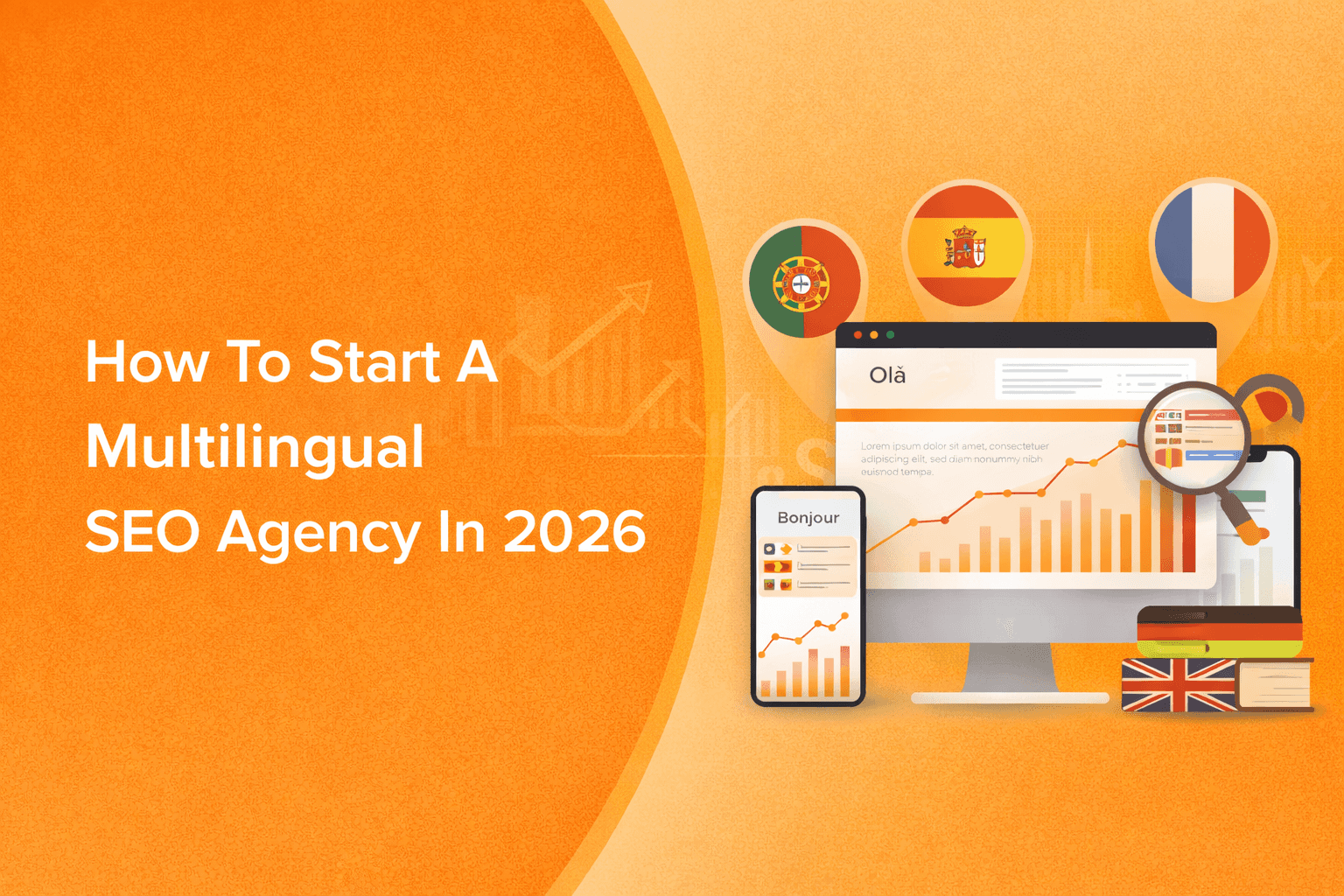
Launch your multilingual SEO agency in 2026 with this step-by-step guide covering technical setup, client acquisition, pricing strategies, and scaling internationally.
Starting a multilingual SEO agency in 2026 requires more than translation skills. It demands technical SEO expertise, cultural localization knowledge, and automation workflows that scale across languages and markets.
Modern multilingual agencies combine native-speaker collaboration with AI-powered tools to deliver international keyword research, hreflang implementation, and content optimization that drives measurable organic growth in 50+ countries.
Here's the reality most aspiring agency founders miss: your English-market SEO skills won't transfer directly to international expansion. A client ranking #1 for "personal injury lawyer" in Chicago will face completely different search behavior patterns when targeting "abogado de lesiones personales" in Mexico City or "avocat préjudice corporel" in Montreal.
The multilingual SEO market reached $11.2 billion in 2025, with agencies charging between $1,499-$25,000 monthly depending on language complexity and market count.
You're competing against 1,300+ specialized international SEO providers, but most still rely on outdated manual processes that Keytomic's AI-powered workflow can help you replace.
This guide covers everything from defining your service offering to implementing technical infrastructure, acquiring clients, and scaling operations across multiple languages without proportionally scaling headcount.
Understanding the Multilingual SEO Service Model
Multilingual SEO differs fundamentally from traditional SEO in three ways: technical complexity, cultural adaptation requirements, and the need for native-language expertise at every stage.
What Makes International SEO Different
When you optimize a Spanish-language website, you're not simply translating English keywords. Search behavior varies dramatically by region; "abogado" dominates searches in Spain while "licenciado" appears more frequently in Mexican queries for legal services.
The technical requirements multiply fast:
Hreflang tags signal language and regional targeting to search engines
URL structure decisions between ccTLDs, subdirectories, or subdomains affect domain authority distribution
International site architecture must support crawl budget allocation across language versions
Local search engine optimization for Baidu (China), Yandex (Russia), or Naver (South Korea) requires platform-specific strategies
According to research from Clutch's multilingual SEO directory, the most successful agencies combine technical precision with deep cultural knowledge—not one or the other.
Core Services Your Agency Should Offer
Your service stack should address the complete international SEO lifecycle:
Technical Implementation
Hreflang tag setup and validation across all language versions
International site structure consultation (subdirectory vs. subdomain vs. ccTLD)
Technical SEO audits identifying crawl issues, duplicate content, and indexing problems
Schema markup localization for rich snippets in target markets
Keyword Research & Strategy
Native-speaker keyword research using tools like Ahrefs, SEMrush, or Keytomic's AI-powered clustering
Search intent analysis accounting for cultural differences
Competitor analysis across target markets
Keyword gap identification between English and target language opportunities
Content Optimization & Creation
SEO-optimized translation (not literal translation)
Content localization adapting messaging to cultural context
Meta tag optimization for title tags and descriptions in each language
Internal linking strategy across language versions
Link Building & Authority
Local link acquisition from relevant domains in target markets
International digital PR outreach
Competitor backlink analysis by market
Citation building for local SEO where applicable
Don't try to offer every service immediately. Start with technical setup and keyword research, then expand into content and link building as you build native-speaker partnerships.
Pricing Models That Actually Work
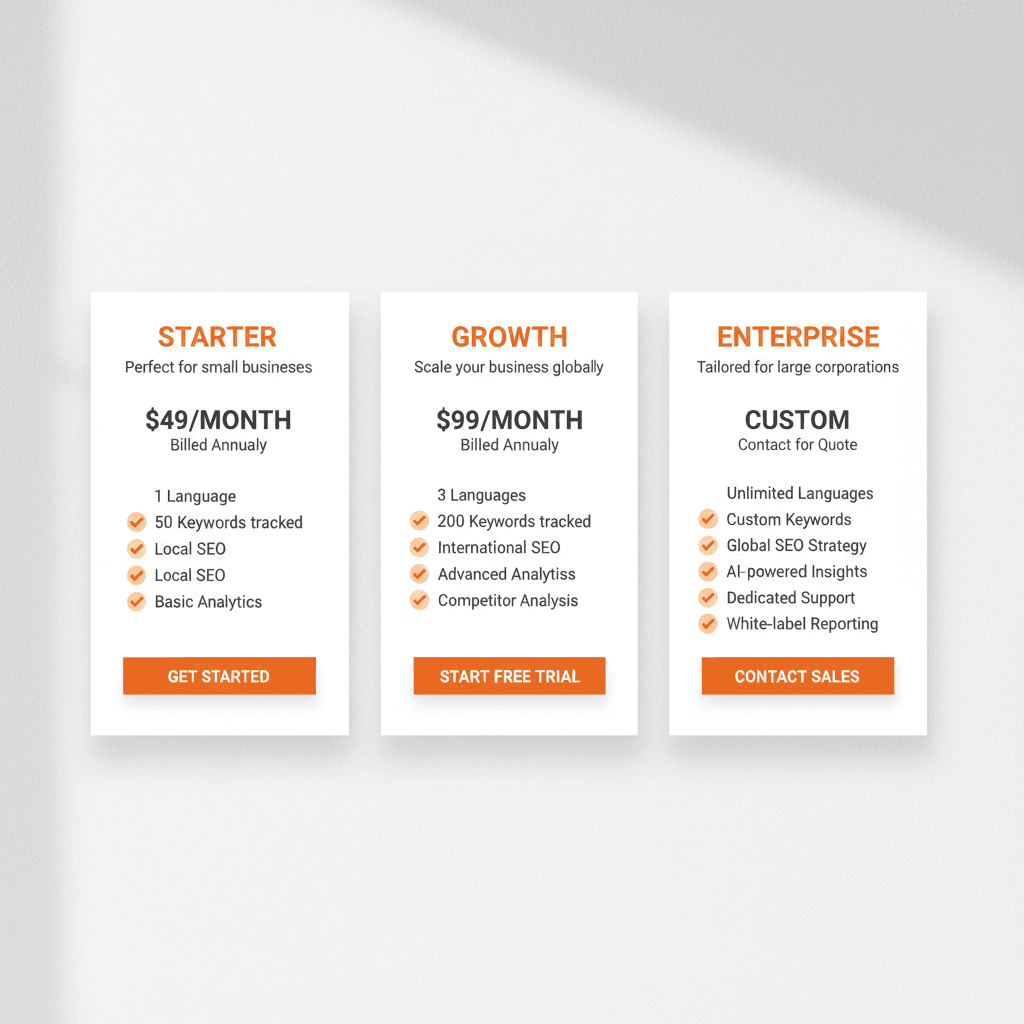
Multilingual SEO services typically fall into three pricing tiers:
Service Level | Monthly Retainer | What's Included | Best For |
|---|---|---|---|
Starter | $1,499-$3,000 | 2-3 target markets, basic technical setup, keyword research, monthly reporting | Small businesses testing international expansion |
Growth | $3,000-$8,000 | 5-7 markets, technical implementation, content optimization, basic link building | Mid-market companies with proven domestic SEO success |
Enterprise | $8,000-$25,000+ | 10+ markets, comprehensive technical management, content creation, link building, dedicated account team | Large organizations scaling globally |
Project-based pricing works for one-time technical implementations (hreflang setup, site migration) ranging from $2,500-$15,000 depending on site complexity and language count.
The retainer model provides predictable revenue while allowing you to demonstrate long-term value. According to pricing data from international SEO agencies, most successful agencies price per market or language pair rather than flat rates across all regions.
Building Your Technical Foundation
Your technical capabilities separate professional multilingual agencies from amateurs offering "translation + hope."
Mastering Hreflang Implementation
Hreflang tags tell search engines which language version to serve users based on their location and language preferences. Implementing them incorrectly tanks international rankings.
Here's what you need to know:
Three Implementation Methods
You can add hreflang tags via HTML head tags, XML sitemaps, or HTTP headers. XML sitemaps scale best for sites with hundreds of pages across multiple languages.
Example hreflang implementation:
The x-default tag specifies a fallback for unmatched users—critical for avoiding content duplication penalties.
Common Hreflang Mistakes to Avoid
Missing bidirectional links (if page A references page B, page B must reference page A)
Incorrect language/region codes (using "en-uk" instead of "en-gb")
Self-referencing hreflang missing from each page
Pointing to non-canonical URLs or redirects
Mixing hreflang and canonical tags incorrectly
Google Search Console's International Targeting report surfaces hreflang errors. Check it religiously during initial setup.
URL Structure: Making the Right Call
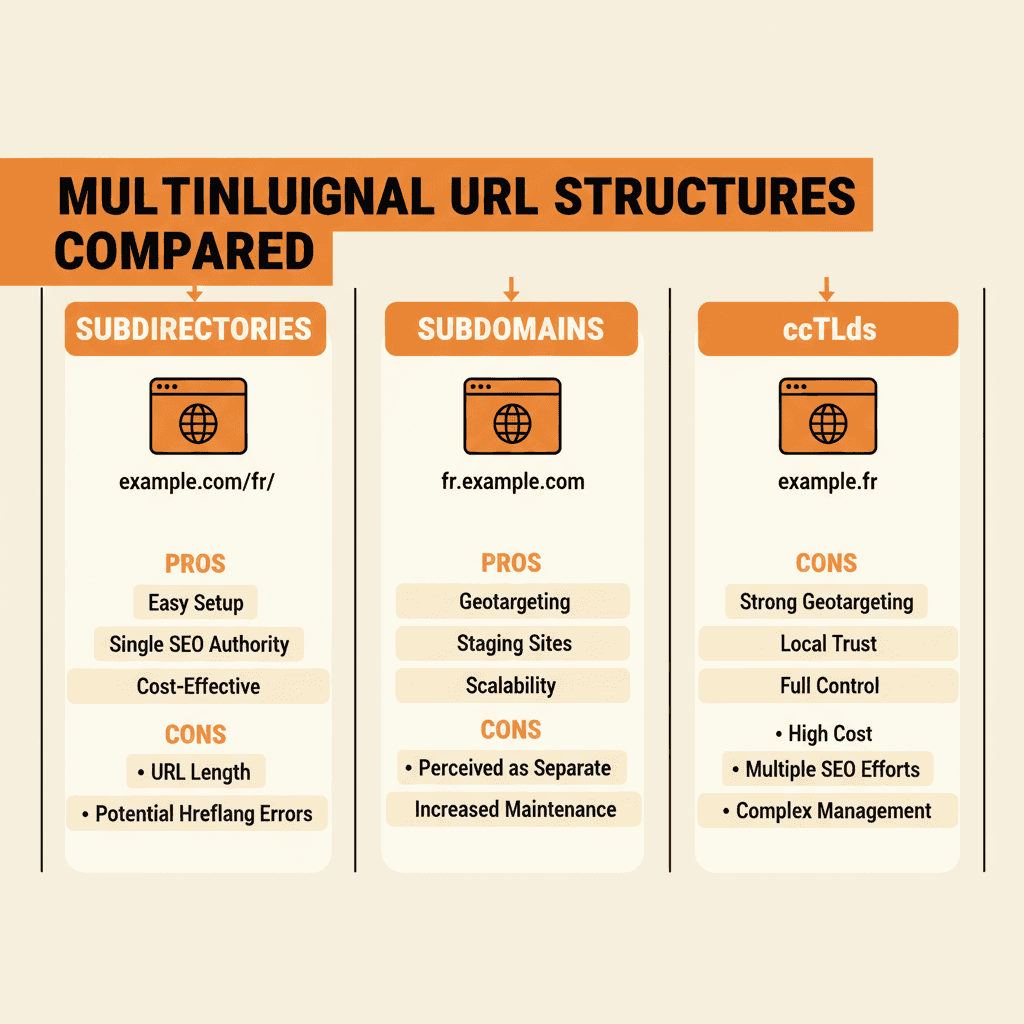
Your URL structure decision impacts technical SEO, user experience, and operational complexity.
Three Main Options
Subdirectories (example.com/es/, example.com/fr/)
Consolidates domain authority under one root domain
Easiest to manage and most cost-effective
Best for language targeting rather than specific countries
Subdomains (es.example.com, fr.example.com)
Allows separate hosting environments per language
Google treats subdomains more independently
Requires building authority for each subdomain
ccTLDs (example.es, example.fr)
Strongest geolocation signal to search engines
Required in some countries (e.g., China's .cn)
Most expensive and complex to manage
Splits domain authority completely
For most new agencies, recommend subdirectories to clients. They provide technical simplicity and SEO benefits without the cost overhead of managing multiple domains.
Essential Multilingual SEO Tools
Your agency needs these tools to deliver professional-grade international SEO:
Keyword Research
Ahrefs offers keyword data for 170+ countries with native-language interface
SEMrush provides position tracking across 140+ databases
Google Keyword Planner remains free and reliable for search volume by country
Keytomic automates multilingual keyword clustering and content brief generation
Technical SEO
Screaming Frog crawls sites to identify hreflang errors, broken links, and duplicate content
Sitebulb provides visual site architecture analysis
Google Search Console shows international targeting issues and indexing status
Translation & Localization
Weglot or WPML handle automatic translation and hreflang for WordPress
Smartling provides translation management for larger content volumes
Native-speaker partnerships for quality assurance (essential)
Don't attempt multilingual SEO with Google Translate alone. According to multilingual keyword research best practices, machine translation accuracy for keywords sits around 60-70%—native speakers catch the remaining 30-40% of nuance that drives conversions.
Why Agencies Choose Keytomic for Multilingual SEO Automation
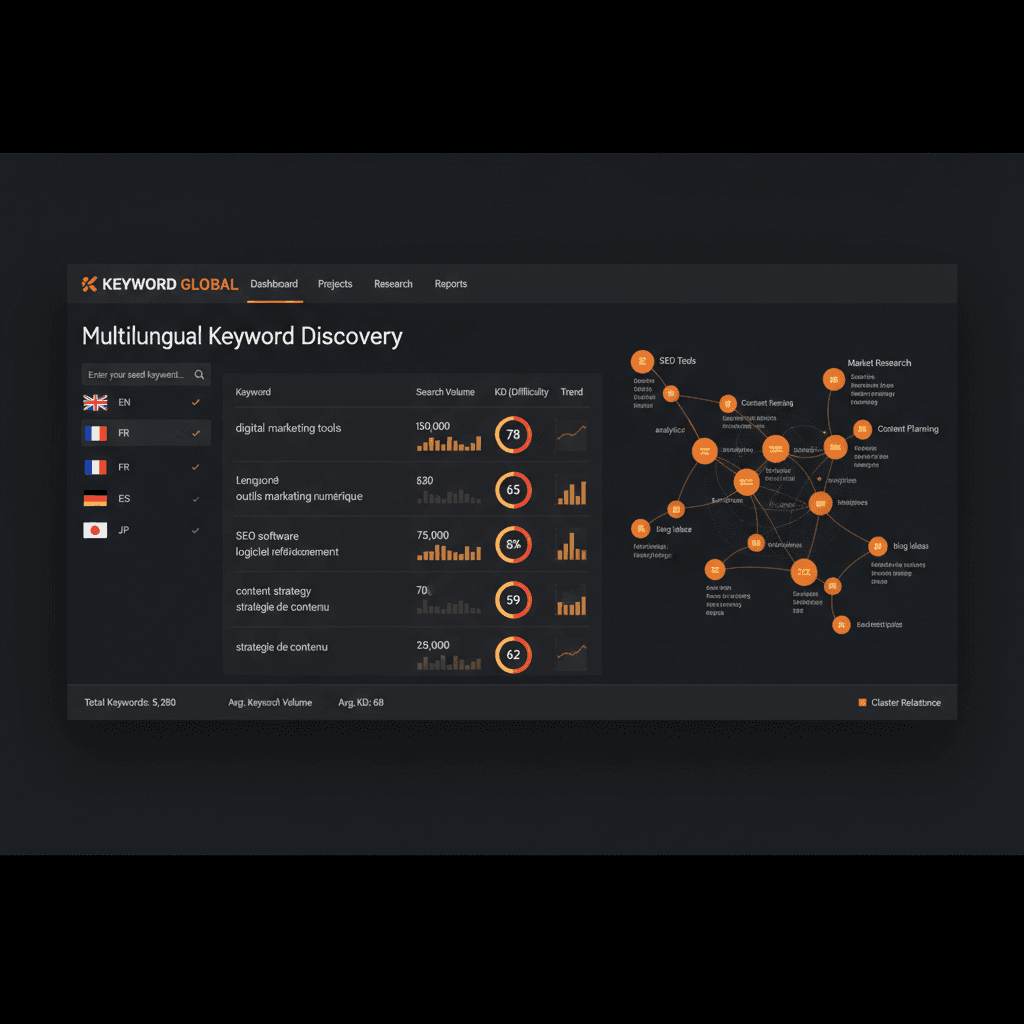
Scaling multilingual keyword research and content creation becomes impossible without automation. Here's where most agencies hit a ceiling.
You're managing keyword research across 5 languages. Each market needs:
200-500 seed keywords analyzed
Competitor SERP analysis for top-ranking content
Semantic keyword clustering for content planning
Brief creation for 50+ articles per language
Monthly performance tracking and optimization
Doing this manually means 40+ hours per market per month. With 5 markets, that's 200 hours monthly—an entire team devoted to research and planning before writing a single word.
How Keytomic Streamlines International SEO Workflows
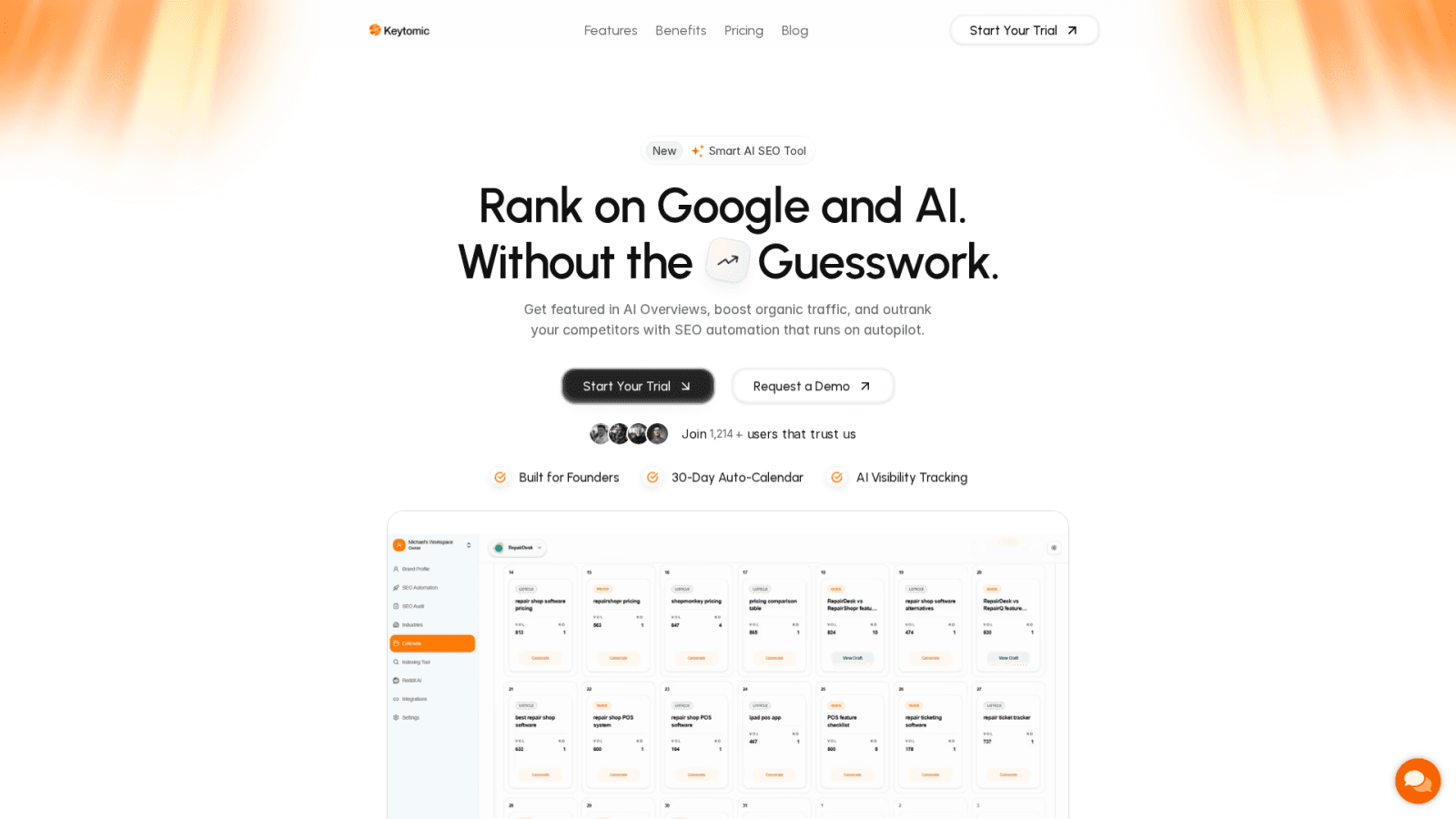
Keytomic handles the entire keyword research and content planning workflow across multiple languages:
AI-Powered Keyword Discovery: Import seed keywords for any market; Keytomic expands them into thousands of semantic variations using native-language data
Automatic Clustering: The platform groups keywords into topical clusters that can be targeted with single articles—no manual spreadsheet work
Multilingual Content Briefs: Generate SEO-optimized content briefs that include target keyword placement, semantic entities, and competitor insights
Multi-CMS Publishing: Publish content directly to WordPress, Webflow, or custom CMS platforms with proper hreflang implementation
Auto-Indexing: Submit new pages to Google and IndexNow automatically, reducing time-to-ranking
One Keytomic client managing French, German, and Spanish content cut keyword research time from 12 hours per market to 45 minutes total—95% time reduction while maintaining quality.
The platform's AI visibility tracking also monitors performance across search engines and AI overviews (ChatGPT, Perplexity), giving you a complete picture of international organic performance.
Explore Keytomic's multilingual SEO automation to see how agencies scale international research without proportionally scaling headcount.
Conducting Multilingual Keyword Research the Right Way
Keyword research for international markets requires understanding search behavior differences, not just translation.
The Native Speaker Requirement
You cannot deliver quality multilingual keyword research without native speakers. Full stop.
Here's why: The English keyword "cheap flights" translates to Spanish as "vuelos baratos." But in Mexico, users search "vuelos económicos" (economical flights) far more frequently. In Argentina, "pasajes aéreos baratos" dominates. Miss these regional differences and you're optimizing for keywords nobody searches.
Build relationships with native-speaker SEO specialists in your target markets. Pay them for consultation during keyword research phases—their input justifies higher client fees.
Step-by-Step International Keyword Research Process
Here's the workflow that works:
Step 1: Identify Seed Keywords Start with 10-20 primary English keywords your client already targets successfully.
Step 2: Cultural Translation Work with native speakers to identify how target market users actually search for these concepts. Don't translate literally—localize.
Step 3: Tool-Based Expansion Use Ahrefs, SEMrush, or Keytomic to expand seed keywords into hundreds of related terms with search volume data for target countries.
Step 4: Search Intent Analysis Review SERPs for top keywords. What content types rank? Blog posts, product pages, videos? What user intent do they satisfy?
Step 5: Competitive Gap Analysis Identify keywords competitors rank for that your client doesn't. These represent quick-win opportunities.
Step 6: Clustering & Prioritization Group keywords into topical clusters. Prioritize based on search volume, difficulty, and business value.
Keytomic automates steps 3-6, reducing manual research time by 85-95% while maintaining native-speaker quality through AI trained on international search patterns.
Common International Keyword Research Mistakes
Avoid these pitfalls that sink agencies:
Direct Translation: Spanish "ropa" means "clothes" but in Tagalog means "rag"—cultural context matters
Ignoring Regional Differences: UK users search "trousers" while US users search "pants"
Overlooking Local Search Engines: Baidu dominates China (70% market share), Yandex leads Russia (55%)
Keyword Stuffing Translated Content: Search engines detect unnatural keyword density in any language
Missing Question-Based Queries: "How to" queries vary dramatically by language and culture
Finding and Closing Your First Multilingual SEO Clients
Client acquisition for multilingual agencies follows different patterns than domestic SEO.
Ideal Client Profile for International SEO
Target businesses that already succeeded domestically and now face international expansion pressure:
E-commerce brands expanding into European or Latin American markets
SaaS companies launching localized product versions
Professional services firms (legal, financial, healthcare) with multilingual customer bases
Manufacturing companies selling B2B products internationally
Tourism and hospitality businesses targeting international visitors
These companies have proven business models and understand SEO value—they just lack international execution capabilities.
Client Acquisition Channels That Work
Partnership with Existing SEO Agencies
White-label partnerships provide the fastest path to clients. Domestic SEO agencies frequently face client international expansion requests they can't fulfill. Position yourself as their international specialist partner.
Reach out offering:
White-label international SEO services they can resell
Revenue sharing on referred clients
Co-branded service offerings
Industry-Specific Outreach
Specialize in 2-3 industries and become known for international expertise there. Reach out via:
LinkedIn direct messages to heads of marketing at companies expanding internationally
Industry conference attendance and speaking opportunities
Case studies demonstrating international SEO results in their specific vertical
Content Marketing & SEO (Obviously)
Rank for terms like:
"[Industry] international SEO agency"
"Multilingual SEO for [specific market]"
"Expand to [country] SEO strategy"
Publish comprehensive guides demonstrating your international SEO expertise. Practice what you preach.
Networking & Referrals
Your initial clients become your best sales team. Ask satisfied clients for:
Introductions to peers in their industry facing similar international challenges
LinkedIn recommendations highlighting your international expertise
Case study participation showcasing measurable results
According to agency-building experts, referrals close at 3-5x higher rates than cold outreach while requiring minimal sales effort.
The Multilingual SEO Sales Process
Your sales process must demonstrate technical competence and cultural understanding simultaneously.
Initial Consultation Call
Ask qualifying questions:
Which markets are you targeting? (languages and countries)
What's your existing domestic SEO performance?
Do you have translated content already?
What's your international revenue target?
Who manages translation and localization currently?
Technical Audit & Proposal
Deliver a brief technical audit showing:
Current hreflang implementation status (usually broken or missing)
International organic visibility across target markets
3-5 quick-win keyword opportunities in priority markets
Competitive landscape in target markets
Provide a clear scope: which markets, which services, timeline, and investment required.
Pricing Presentation
Present monthly retainer pricing based on:
Number of target languages/markets
Technical complexity (existing site issues)
Content volume requirements
Link building scope
Include a ramp-up phase (months 1-3) focusing on technical foundation before scaling content production.
Handling Common Objections
"Can't we just use Google Translate?"
Show search volume differences between translated vs. localized keywords
Explain that 76% of consumers prefer buying in their native language
Demonstrate competitor rankings using proper localization
"Why does multilingual SEO cost more than regular SEO?"
Break down technical complexity (hreflang, international site architecture)
Explain native-speaker requirements for keyword research and content QA
Show ROI potential from international market expansion
Scaling Your Multilingual SEO Agency Operations
Growing from 5 clients to 25 without 5x-ing headcount requires operational systems.
The Team Structure That Scales
Phase 1: Solo + Contractors (Clients 1-10)
You handle sales, strategy, and client communication
Contract native-speaker SEO consultants for keyword research
Use white-label content providers for writing
Outsource technical implementation to specialized contractors
Phase 2: Core Team + Specialists (Clients 10-25)
Hire account manager to handle client communication
Bring on technical SEO specialist for implementations
Build network of reliable native-speaker contractors per language
Consider white-label partnerships for link building
Phase 3: Departmentalized Agency (Clients 25+)
Separate sales, account management, and delivery teams
In-house technical SEO team
Content managers coordinating native-speaker writers
Link building team or white-label partner
Don't rush hiring. Most successful agencies maintain lean operations through strategic partnerships rather than building everything in-house.
Automation & Systems for Efficiency
Manual processes kill profitability in multilingual SEO. Automate aggressively:
Keyword Research & Planning
Use Keytomic to automate keyword expansion, clustering, and brief generation
Build templates for different content types across languages
Create standardized competitive analysis reports
Technical Implementation
Develop hreflang implementation checklists
Create site migration runbooks for different CMS platforms
Build automated testing scripts for common technical issues
Reporting & Communication
Automate monthly performance reports pulling data from Google Search Console, Analytics, and rank tracking
Create client dashboards showing international performance at a glance
Schedule quarterly strategy reviews rather than constant ad-hoc calls
Project Management
Use tools like Monday.com or Asana with templates for standard deliverables
Implement clear handoff processes between sales, onboarding, and delivery
Create documentation libraries for internal training
Common Scaling Challenges and Solutions
Challenge: Finding Reliable Native Speakers Solution: Build relationships with translation agencies or language service providers who can QA keyword research and content. Pay premium rates for consistent quality.
Challenge: Technical Complexity Across Different CMS Platforms Solution: Specialize in 2-3 CMS platforms (WordPress, Shopify, Webflow) rather than supporting everything. Refer clients on other platforms or charge premium rates.
Challenge: Client Expectations for Immediate International Rankings Solution: Set clear timelines showing technical setup (months 1-2), content deployment (months 2-4), and expected ranking improvements (months 4-6+). International SEO takes longer than domestic optimization.
Measuring Success and Proving ROI
Multilingual SEO success metrics differ from standard SEO KPIs.
The Metrics That Matter
Track performance at three levels:
Market-Level Performance
Organic sessions by country and language
Rankings for priority keywords per market
Conversion rate by market (often varies 2-3x between markets)
Revenue per market
Technical Health
Hreflang error rate (target: <2%)
Indexation rate per language version
Crawl efficiency across language versions
Page load time by market (varies based on hosting)
Content Performance
Pages ranking in top 10 by language
Click-through rate by market
Engagement metrics (time on page, bounce rate) by language
Conversion rate by content type and market
Don't make the mistake of combining all international traffic into single reports. Your client needs market-specific insights to make expansion decisions.
Reporting Best Practices
Create separate monthly reports for each priority market showing:
Month-over-month organic session growth
Keyword ranking improvements (focus on top 50 → top 10 movements)
Content published and indexed
Links acquired from local domains
Conversions and revenue (when available)
Include specific recommendations for the next month based on performance data.
Frequently Asked Questions
Do I need to speak multiple languages to start a multilingual SEO agency?
No, but you need reliable native-speaker partnerships. Many successful international agencies operate in English while coordinating native-speaker contractors for research and content QA. Your core competency is technical SEO and project management.
How long does it take to see results from international SEO?
Expect 4-6 months minimum for meaningful organic traffic growth in new markets. Technical setup takes 1-2 months, content deployment 2-3 months, and ranking improvements begin showing 3-4 months post-launch. Set client expectations accordingly.
Should I charge per language or per market?
Charge per market when targeting specific countries (e.g., German SEO for Germany vs. Austria vs. Switzerland). Charge per language when targeting language broadly (e.g., Spanish SEO for all Spanish-speaking markets). Market-specific pricing ranges higher ($2,500-4,000/month vs. $1,500-2,500/language).
What's the minimum technical knowledge required?
You must understand hreflang implementation, URL structure implications, and how search engines handle international content. If you can successfully implement hreflang across a 100-page site and troubleshoot common errors, you have sufficient technical foundation. Partner with specialists for complex technical migrations.
How do I handle content creation across multiple languages?
Never rely solely on machine translation. Use native-speaking content writers coordinated through translation agencies or content platforms like Upwork. Budget $0.08-0.15 per word for quality multilingual SEO content vs. $0.05-0.08 for basic translation.
Is multilingual SEO still worth it with AI search engines emerging?
Absolutely. AI search engines (ChatGPT, Perplexity) also prioritize content in users' native languages. In fact, a 2024 Weglot study found websites with translations gain 327% more visibility in AI overviews. Multilingual optimization improves performance across traditional and AI-powered search simultaneously.
Starting a multilingual SEO agency in 2026 offers significant opportunities for entrepreneurs willing to master technical complexity and cultural nuance. The market continues expanding as businesses realize domestic success translates poorly to international markets without proper localization.
Your competitive advantage comes from combining technical precision, native-speaker collaboration, and smart automation. Focus on building systems that scale across languages without proportional cost increases. Partner with platforms like Keytomic that automate research and content workflows while maintaining quality standards.
The agencies that succeed long-term specialize deeply in 2-3 industries or language pairs rather than attempting to serve every market. Choose your focus, build repeatable processes, and prove ROI through transparent market-specific reporting.
Ready to build the technical foundation for international SEO at scale? Explore how Keytomic automates multilingual keyword research, content planning, and publishing workflows so your agency can deliver results across 50+ markets without building a 50-person team.

Kashaf Khan
SEO Manager
Kashaf Khan is a veteran SEO specialist with deep expertise in AI SEO, generative engine optimization, and ORM. Armed with a Master's in Computer Science, he leverages his algorithmic knowledge to help brands dominate both traditional and AI-powered search landscapes.
Limited Offer

Get Ranked, and Cited Where Matters!
Turn your website into organic growth and leads on auto-pilot!
Keyword research
CMS integrations
AI visibility tracking
SEO health audit