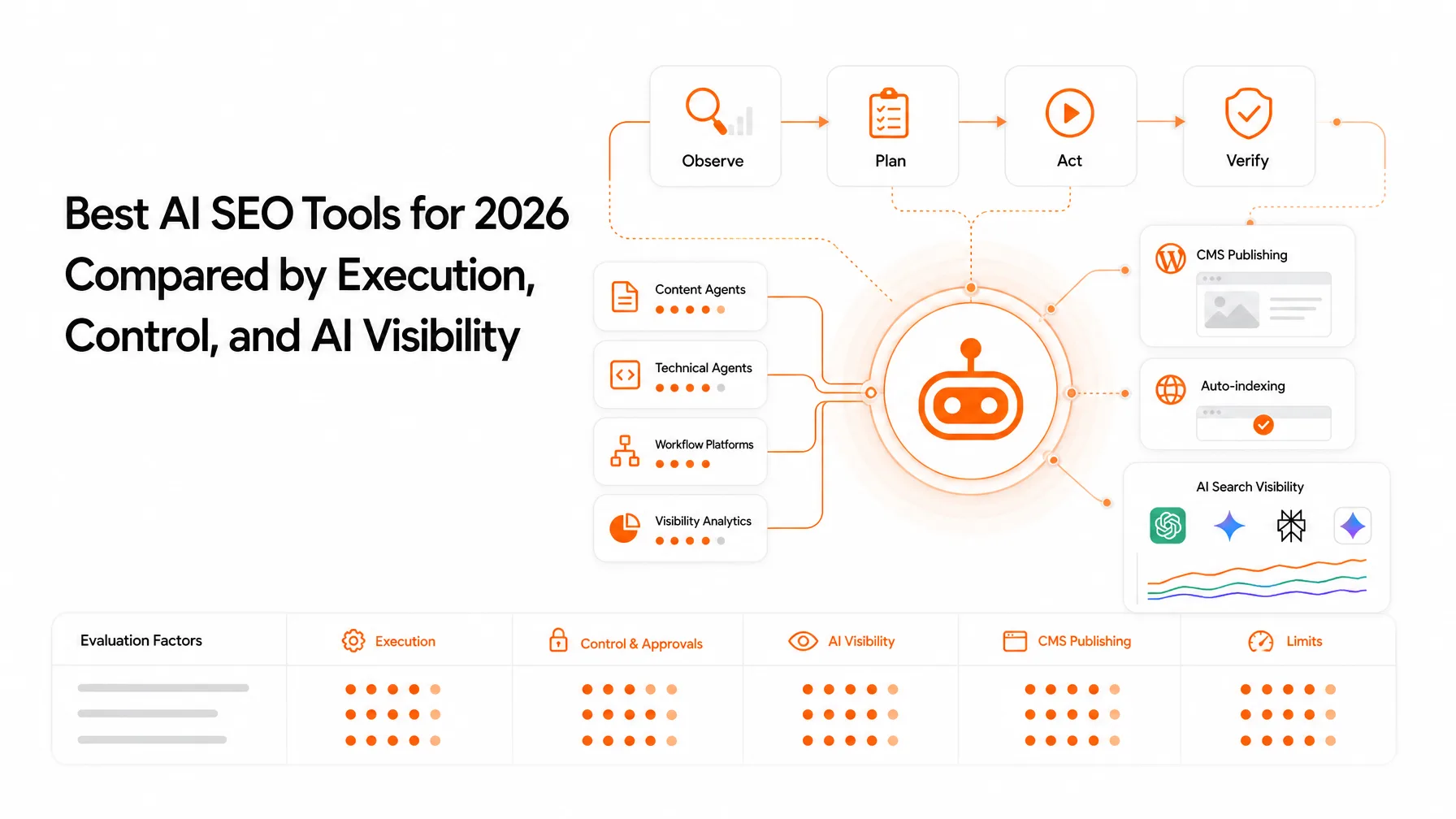
AI search ranking evaluates content based on relevance, authority, and utility for generative responses in tools like Google AI Overviews, ChatGPT, and Perplexity. Key factors include E-E-A-T signals, semantic understanding, and citation potential rather than traditional backlinks alone. Success requires creating original, structured content that AI systems can easily parse and reference.
Search discovery now includes classic engines and answer tools. This overview of Google alternatives.
AI search has transformed how users discover information, shifting from ranked lists to synthesized answers. Traditional SEO focuses on page rankings, but AI ranking prioritizes being cited in direct responses. This means optimizing for machines that interpret queries conversationally and pull insights from multiple sources.
You're likely noticing fewer clicks even when content performs well organically. That's because AI handles 30-40% of queries without redirects, per recent studies. The opportunity lies in visibility: a single citation can expose your brand to millions, building trust without the click.
This guide covers core concepts, step-by-step strategies, advanced tactics, tools, Keytomic's approach, common pitfalls, and FAQs. You'll learn actionable ways to adapt your workflow for AI dominance in 2026.
Understanding AI Search Ranking
What is AI Search Ranking
AI search ranking determines how content appears in generative engine outputs. Systems like Google's AI Mode use large language models to analyze queries, retrieve sources, and generate responses. Unlike traditional search, it scores based on information gain – how much unique value a page adds – alongside relevance and trustworthiness.
Factors include query intent matching, content freshness, and structural elements like schema markup. For example, Google's systems weigh pages with clear headings, lists, and data tables higher for summarization.
Why AI Search Ranking Matters
In 2026, AI handles over 33% of organic searches, reducing traditional click-through rates by 20-30%. Ranking here means brand exposure in zero-click environments, where users get answers without visiting sites.
High AI visibility correlates with 15-25% more qualified leads, as citations build authority. Ignoring it risks invisibility: if your content isn't cited, competitors dominate the conversation.
Common Challenges
Parsing complex queries remains tricky; AI might misinterpret nuance without strong semantic signals. Tracking performance is harder without standard metrics – tools like Ahrefs' Brand Radar help, but data gaps persist.
Maintaining E-E-A-T requires ongoing updates, and over-optimization can trigger spam filters. Manual oversight is essential for brand voice, as AI-generated content often lacks depth.
Strategies to Rank in AI Search
Step 1: Optimize for Conversational Queries
Target long-tail phrases that mimic natural language, like "how does AI affect SEO rankings in 2026." Use tools to identify fan-out queries – those expanding on core topics.
Incorporate semantic variations: instead of repeating keywords, use related terms like "generative engine optimization" and "AI citations." Analyze top-cited pages for patterns in structure and depth.
Research with query intent tools.
Cluster topics for comprehensive coverage.
Test with AI simulators for response inclusion.
Step 2: Build E-E-A-T Through Content
Create original insights backed by data, expert quotes, and case studies. Google's Quality Rater Guidelines emphasize experience and expertise – include author bios with credentials.
Structure content for easy extraction: use H2/H3 for key sections, bullets for lists, and tables for comparisons. Refresh older posts quarterly to maintain freshness signals.
Cite primary sources internally.
Add multimedia like custom visuals.
Aim for 1,500-2,500 words per guide for depth.
Step 3: Implement Structured Data
Add schema markup via JSON-LD for entities, FAQs, and how-tos. This helps AI parse relationships, increasing citation chances by 40%, per Ahrefs data.
Test with Google's Rich Results Tool. For products or services, use Review schema to highlight trustworthiness.
Mark up key elements like dates and authors.
Integrate with sitemaps for faster indexing.
Monitor errors in Search Console.
Step 4: Earn Citations and Authority
Focus on media mentions and high-DA backlinks from sites like Search Engine Journal or Moz. PR efforts boost "information gain" scores.
Track competitors' citations using semantic search tools. Collaborate on industry reports for natural references.
Guest post on authority blogs.
Share data-driven studies.
Engage in forums like Reddit with value-add replies.
Advanced Techniques
Technique 1: Generative Engine Optimization (GEO)
GEO tailors content for AI retrieval: use authoritative language, statistics, and unique angles. Experiments show adding quotes increases citations by 22%.
Adapt for specific engines – ChatGPT favors concise answers, while Google prioritizes comprehensive sources.
Technique 2: AI Visibility Tracking
Use dashboards to monitor mentions across LLMs. Set benchmarks: aim for 12-15% overlap with Google's top 10, as per recent studies.
Integrate with analytics to correlate citations with traffic spikes. Adjust based on trends like rising complex queries.
Tools and Resources
Here's a table of essential tools for AI search ranking:
Tool | Description | Best For | Pricing |
|---|---|---|---|
Ahrefs | Tracks AI citations and semantic keywords. | Visibility monitoring. | Starts at $99/month. |
Semrush | Analyzes query intent and GEO opportunities. | Content optimization. | From $119/month. |
Google's Search Console | Monitors indexing and schema errors. | Technical setup. | Free. |
Perplexity AI | Tests response inclusion. | Simulation. | Free basic. |
Keytomic | Automates AI keyword research and content calendars. | Workflow efficiency. | $99/month. |
For deeper dives, check Google's guide to ranking systems and Ahrefs' AI visibility guide.
How Keytomic Optimizes AI Search Workflows End-to-End
Agencies and SEOs use Keytomic to streamline AI ranking by automating keyword discovery for conversational queries and generating E-E-A-T-optimized content. The platform reduces manual research by 70%, creating 30-day calendars with LLM-ready articles that boost citations.
Insert screenshot of Keytomic's AI visibility tracking dashboard here, showing citation metrics and query clusters.
While Keytomic handles automation, human review ensures alignment with business goals – it scores content for readability but recommends editorial tweaks for voice. See how it integrates with your CMS via one-click publishing.
This approach has helped users achieve 82% first-page AI citations, per internal data. Compare it to manual methods in our SEO automation guide.
Common Mistakes to Avoid
Relying solely on traditional SEO metrics without tracking AI mentions.
Producing generic content that lacks unique insights, reducing information gain.
Neglecting schema, which drops parseability by 30-50%.
Overlooking freshness: stale pages get deprioritized in dynamic AI responses.
Ignoring user intent shifts toward complex, image-based queries.
Frequently Asked Questions
What is the difference between SEO and AI search ranking?
SEO targets organic rankings, while AI ranking focuses on citations in generative answers. Both require quality content, but AI emphasizes structure and uniqueness.
How can I measure AI search performance?
Use tools like Ahrefs Brand Radar for citation tracking. Monitor overlap with top organic results – aim for 12% minimum.
Does Keytomic support AI optimization?
Yes, through AI keyword research and semantic content generation. Start a free trial to test it.
Can I opt out of AI features?
No, but following Google's AI content guidance ensures positive inclusion.
What role do backlinks play in AI ranking?
They signal authority, but quality matters more than quantity. Focus on relevant, high-trust sites.
For more on pricing, visit Keytomic pricing. Ready to implement? Request a demo. Explore related topics like GEO strategies or backlink building.