The best AI SEO tools in 2026 are Keytomic (connected research-to-publishing workflow), Frase (SERP-based briefs), Alli AI and Search Atlas (live-site execution), and Peec AI and Profound (AI visibility analytics). The right one depends on which handoff costs your team the most time.
You probably already own a keyword tool, a brief template, a writer, a CMS, and a rank tracker. Each one works on its own. Nobody owns the handoffs between them, and that's usually where publishing stalls.
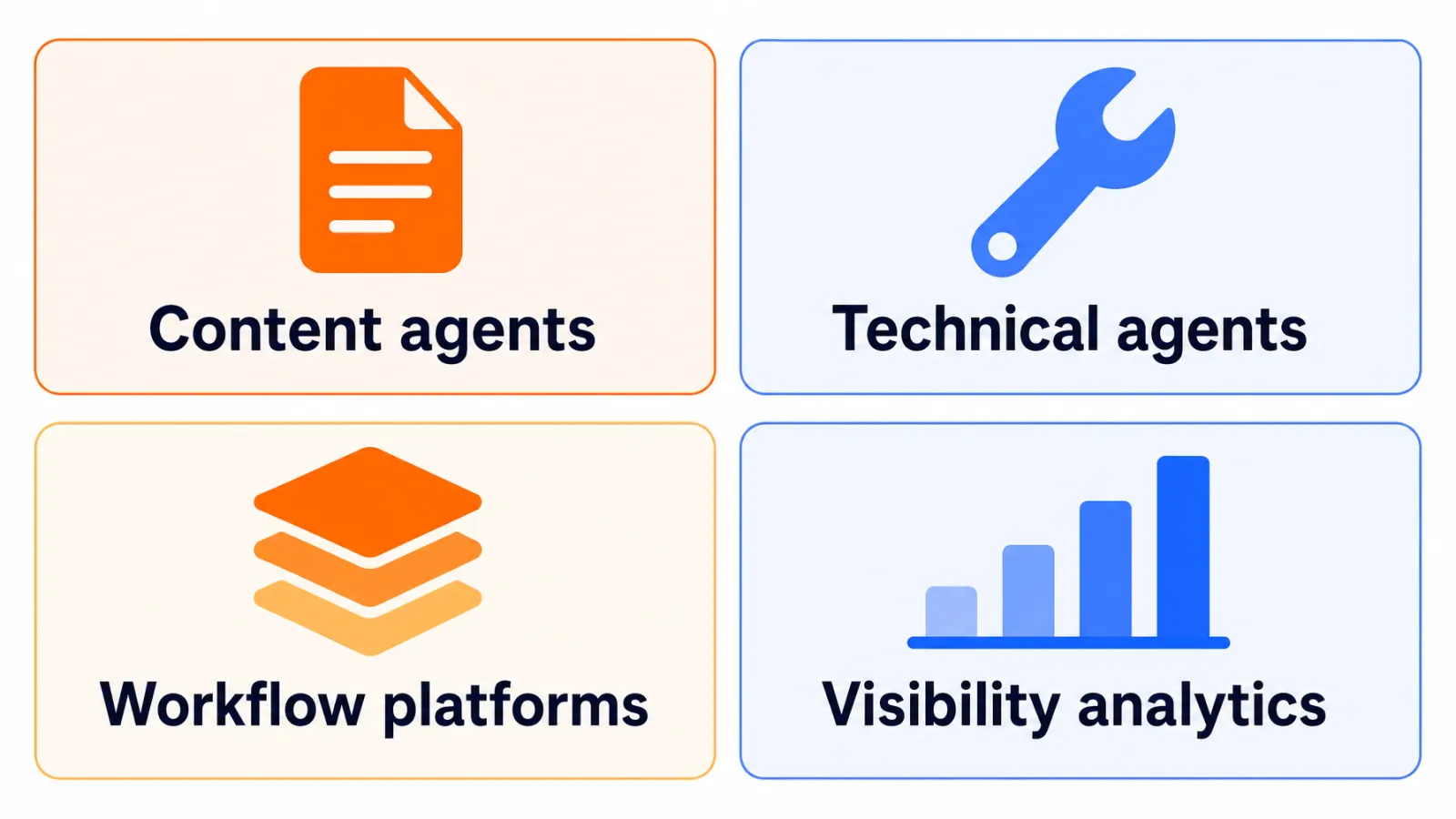
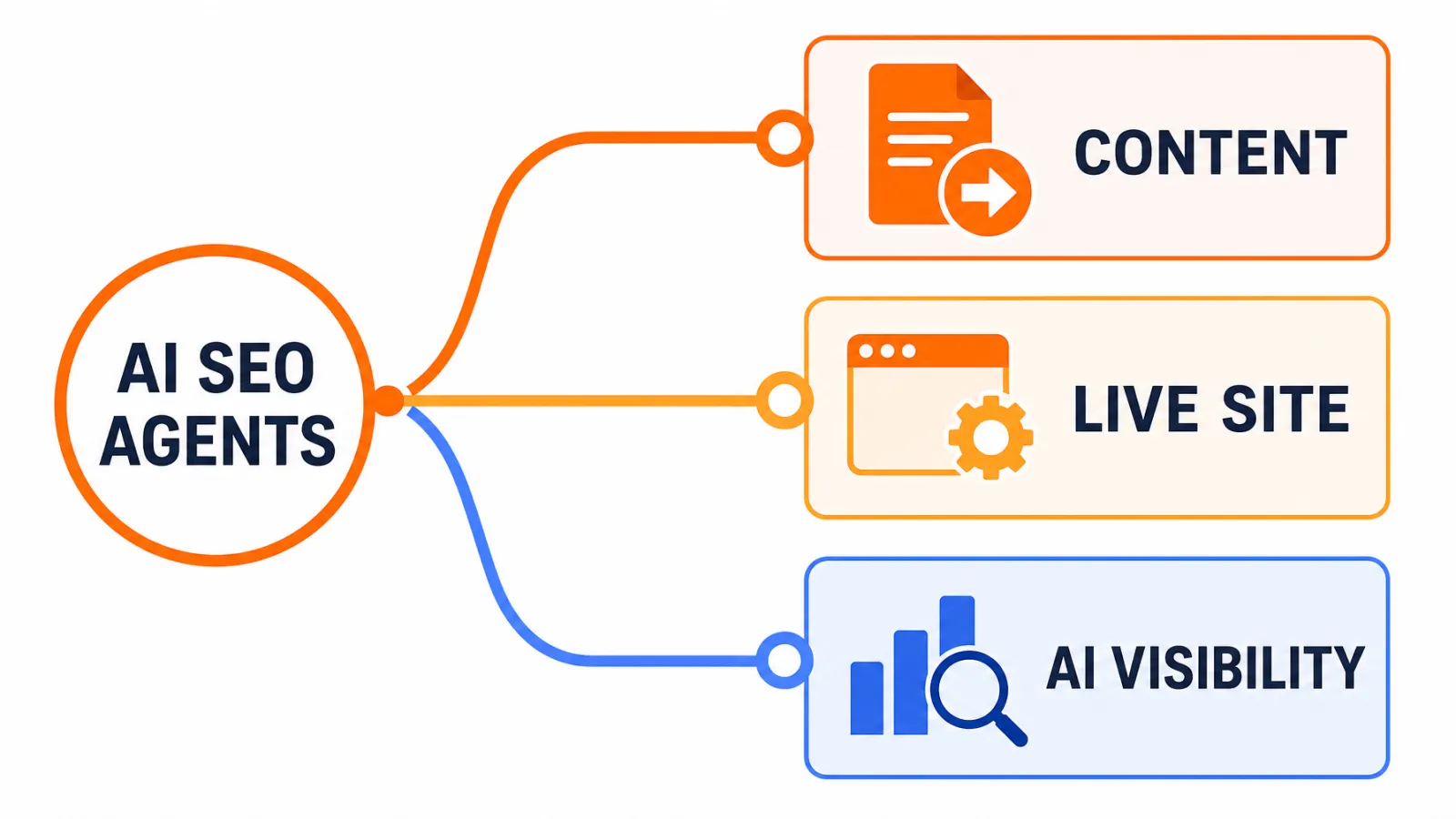
The agents fall into four groups: content-loop agents, technical execution agents, workflow platforms, and visibility analytics. Comparing them as equals leads to bad purchases. For each one I ask what it reads, what it changes, what still needs approval, and how it checks the result.
What actually makes an AI SEO agent different from an AI SEO tool?
An AI SEO agent reads your SEO data, decides what to do next, does it, and checks the result, on a repeating schedule. An AI SEO tool handles one of those steps and hands the rest back to you. The test is simple: once a problem is found, who does the work? If it’s you, it’s a tool.
The agents in this list fall into four groups:
Content-loop agents plan, draft and publish articles: Keytomic, Writesonic, Outrank, Frase, Distribb, RankYak and SEObot.
Technical execution agents change live pages or how crawlers see them: Alli AI.
Workflow platforms bundle several jobs under one login: Search Atlas and BabyLoveGrowth.
Visibility analytics measure AI answers and citations: Peec AI and Profound. outwrite.ai spans both content and citation tracking.
How we evaluated the best AI SEO agents for 2026
I use a public rubric built on official product pages, official documentation, and pricing pages, plus editorial judgment. It isn't a lab test. Here's what goes into it.
Execution, grounding, control, and verification
I score each platform on four things, plus workflow coverage:
Execution: what the platform changes without you copying work between tabs.
Grounding: whether decisions use real data such as Search Console, SERPs, or crawl results.
Control: approval gates, draft modes, and reversibility.
Verification: whether it checks the result after acting.
I also count handoffs. A feature-rich platform that needs five manual transfers can remove less work than a smaller one that finishes a single workflow.
AI search matters here too. Google says AI Overviews and AI Mode can show links from a wider range of sources. Yet Pew Research Center's 2025 browsing study of 900 U.S. adults found users clicked a traditional result in 8% of visits with an AI summary, versus 15% without.
Only 1% of visits included a click on a link inside the summary. So I look for prompt monitoring, citations, and competitor comparison, like AI visibility tracking across ChatGPT, Perplexity, and Gemini.
Pricing, integrations, and plan limits
I rely on official pricing pages only. I list a starting price when I could confirm one; otherwise the table says to check the vendor page or marks it not publicly verified. Prices vary by billing cycle, taxes, and vendor changes.
I use the phrase official integration only when vendor documentation says so. Otherwise I write connection, export, webhook, or deployment, whichever the source describes.
What we did not claim
This isn't a numbered ranking of the best AI SEO agents. I use best-for labels because a universal winner would be invented. I also don't claim traffic lifts, citation rates, or hours saved, and I leave out vendor testimonials as evidence.
Quick comparison of the best AI SEO agents
The table groups every tool by class so you don't compare an analytics product with a publishing agent as if they solve the same job.
Comparison table by best fit and automation depth
Tool | Best for | Class | Publishing or deployment | Notable limitation | Starting price |
|---|---|---|---|---|---|
Keytomic | Connected research-to-tracking workflow | Content-loop agent | WordPress, Shopify, Webflow, Framer, webhooks | Not a forensic crawler or deep backlink database | $99/mo (Pro) |
Writesonic | High-volume drafting | Content-loop agent | WordPress, Search Console connection | Needs editorial and SEO review | $79/mo (Starter, billed annually) |
Outrank | Planning and publishing automation | Content-loop agent | Publishing integrations | Backlink exchange is a vendor claim | $99/mo (Organic Growth) |
BabyLoveGrowth | Bundled SEO, GEO, and authority work | Workflow platform | Documented content workflows | Claims need trial validation | $49/mo (Grow, billed yearly) |
Frase | SERP briefs and scoring | Content-loop agent | WordPress, Webflow, Sanity, Wix | Not a full technical or backlink suite | $49/mo (Starter)* |
AEO content and citation tracking | Content plus visibility | Exports and plan-based options | Tracks observed outputs only | $97/mo (Essentials)* | |
SEObot | Lower-cost automation | Content-loop agent | CMS integrations | Scope and price references conflict | $19/mo (Basic)* |
Peec AI | Prompt and citation analytics | Visibility analytics | None (measurement) | Doesn’t execute fixes | $95/mo (Starter)* |
Profound | Citation analytics | Visibility analytics | None (measurement) | Brand plans are demo-only (custom pricing) | Agency Growth: $99/mo + $399/mo per client |
RankYak | Agency per-client delivery | Content-loop agent | CMS publishing, draft mode | Backlink and performance claims are vendor-reported | $99/mo per site |
Alli AI | Live-site changes | Technical agent | Site-level deployment | Changes need a rollback plan | $249/mo (Business, billed annually) |
Distribb | Approval-led publishing | Content-loop agent | Publishing after approval | Research and indexing coverage undocumented | $79/mo (Pro, billed yearly) |
Search Atlas | Broad execution and agency packaging | Workflow platform | CMS publishing | Features vary by plan and credits | $79/mo (Starter) |
The strongest choice depends on which SEO loop your team needs the platform to close, not on the number of features listed.
How to read the table
Start with the class column, then the limitation column. Only Keytomic's price is listed because it's the one I can state from my own company's plans; see Keytomic pricing and the 3-day trial for current terms. For every other tool, confirm the plan that contains the feature you need.
What the table shows
Of the 13 agents, seven close a content loop, two are workflow platforms, one is a technical execution layer, two measure AI answers, and one spans content and citation tracking. If you’re choosing an AI SEO tool, that split matters more than any feature count.
Keytomic: Best for connected SEO workflow automation
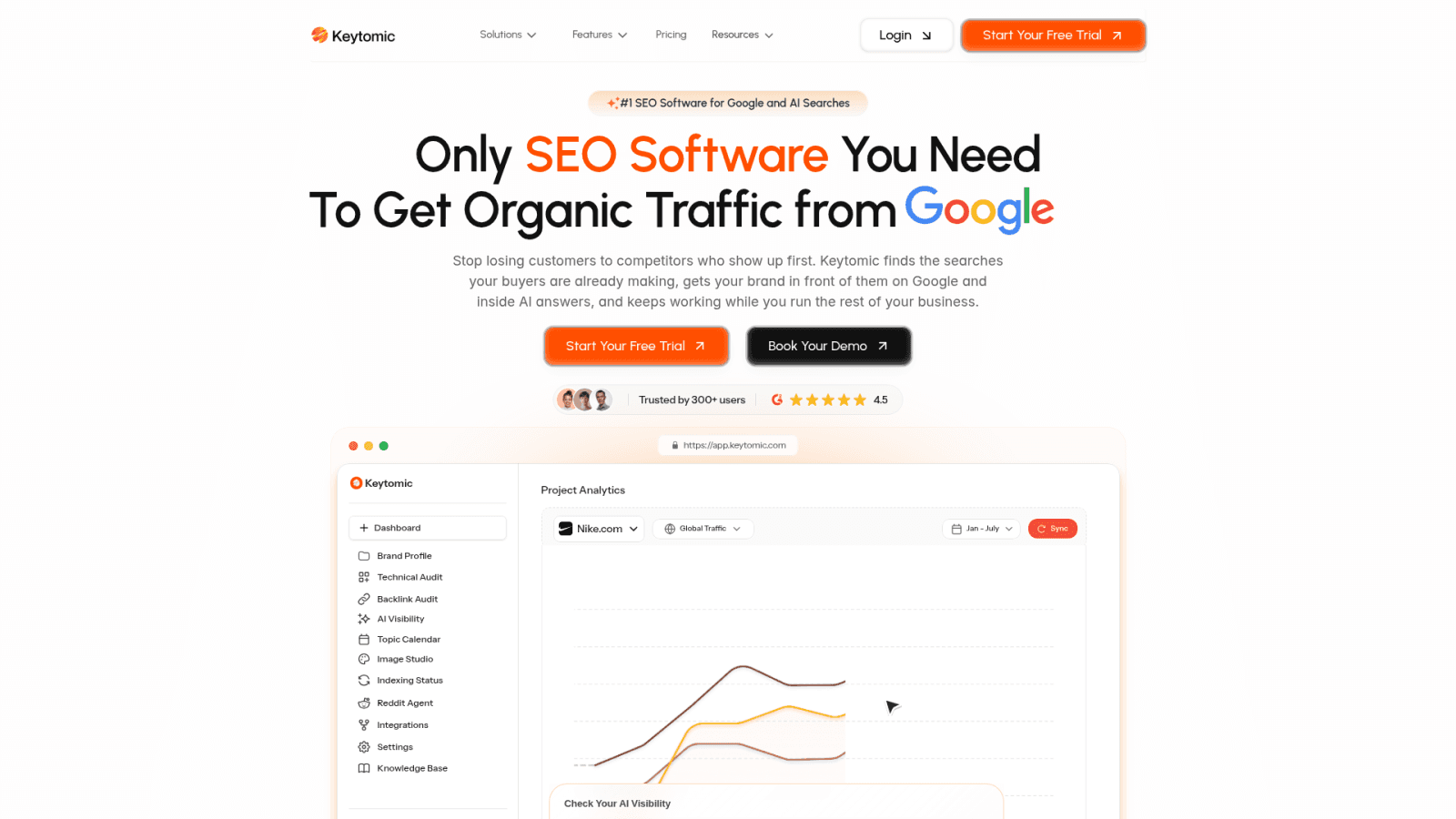
Keytomic is the option I'd choose for a small team that wants research, a 30-day plan, drafting, publishing, indexing, and AI visibility tracking in one workflow, with a human approving what goes live. Disclosure: Keytomic publishes this comparison, and I've applied the same criteria to it as to every other tool.
Where the workflow fits
The documented workflow covers these steps:
Keyword research using live volume, difficulty, and SERP data plus your Search Console data.
A topical map built from your central entity, and a 30-day calendar with a brief for each article.
Drafts in your brand voice with internal links, sources, and an author profile.
Keytomic's CMS publishing and draft approval workflow for WordPress, Shopify, Webflow, Framer, and other CMSs via webhook.
URL submission to Google, plus Bing, Yandex, DuckDuckGo, and Brave through IndexNow, with index status tracked per URL.
Technical crawls and AI visibility tracking.
Plans start at $99/month with a 3-day trial.
What to verify in a trial
Check each draft's facts against its cited sources. Confirm the output matches your brand voice and that nothing publishes without your approval. Then compare tracked prompts with the questions your buyers actually ask.
Honest limitation and publisher disclosure
Keytomic isn't a forensic crawler or a deep backlink database, and every draft needs a human check for facts, brand voice, and regulated claims. Indexing is the same story: Google describes sitemap submission as a discovery hint, not a guarantee of crawling or indexing.
Writesonic: Best for AI content production with SEO and AI search workflows
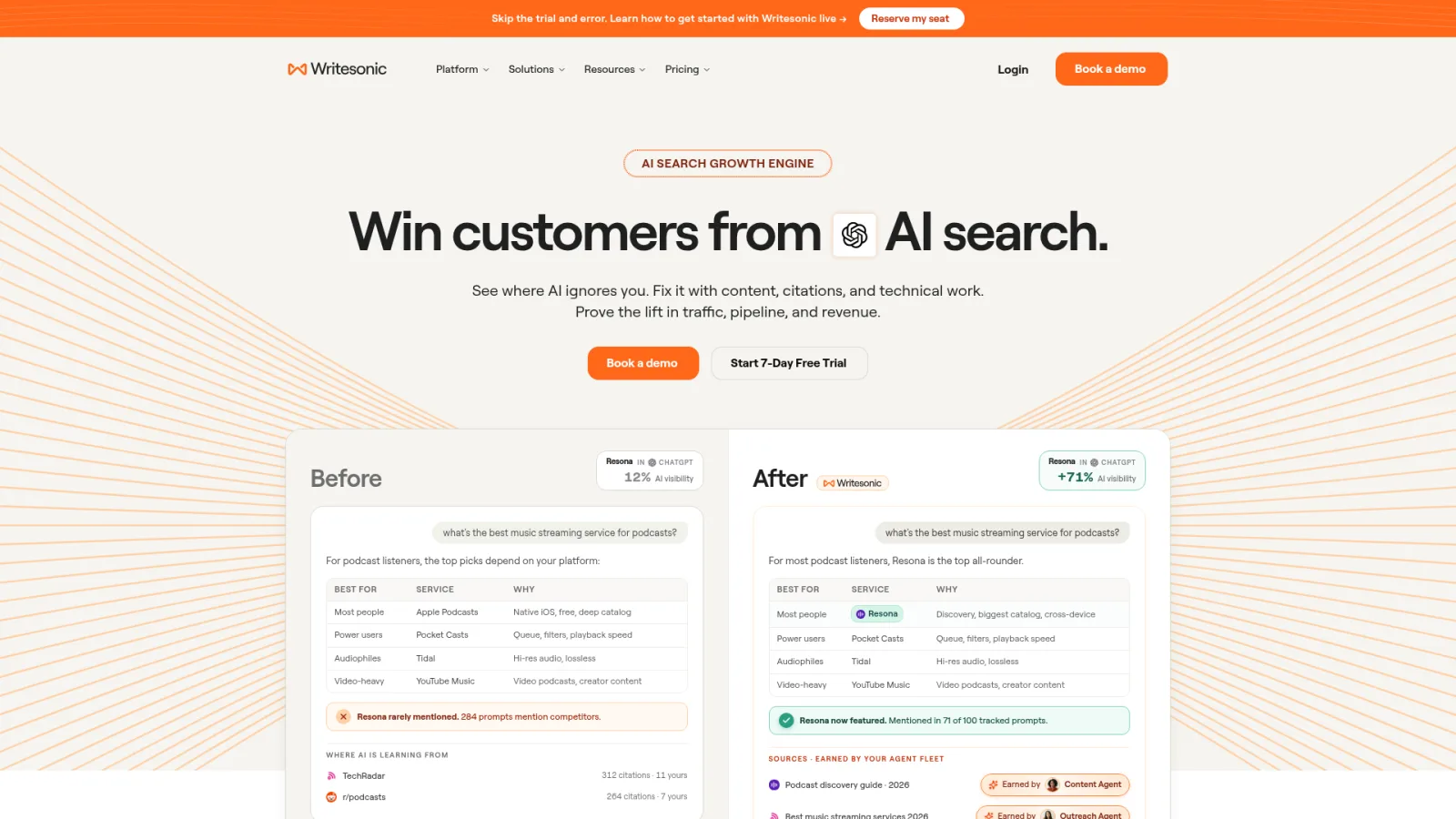
Writesonic suits teams whose bottleneck is drafting volume, with SEO and AI search workflows layered on top. I'd shortlist it among AI content optimization agents when output speed is the main constraint.
Documented strengths
Writesonic's official pricing page lists an SEO and Content AI Agent, an AI Article Writer, brand voice, and Google Search Console and WordPress connections. Don't infer technical depth from an agent label; read what each plan visibly includes.
Approval and editorial checks to confirm
High-volume generation multiplies review work. Plan for fact checks, search-intent review, internal-link review, and a human edit, and check whether you can require approval before anything reaches WordPress.
Pricing and plan limits
Article limits and agent features vary by tier, so compare the tier that holds the features you need. I wouldn't treat it as a full technical SEO stack unless the official documentation says it is.
Outrank: Best for automated content planning and publishing
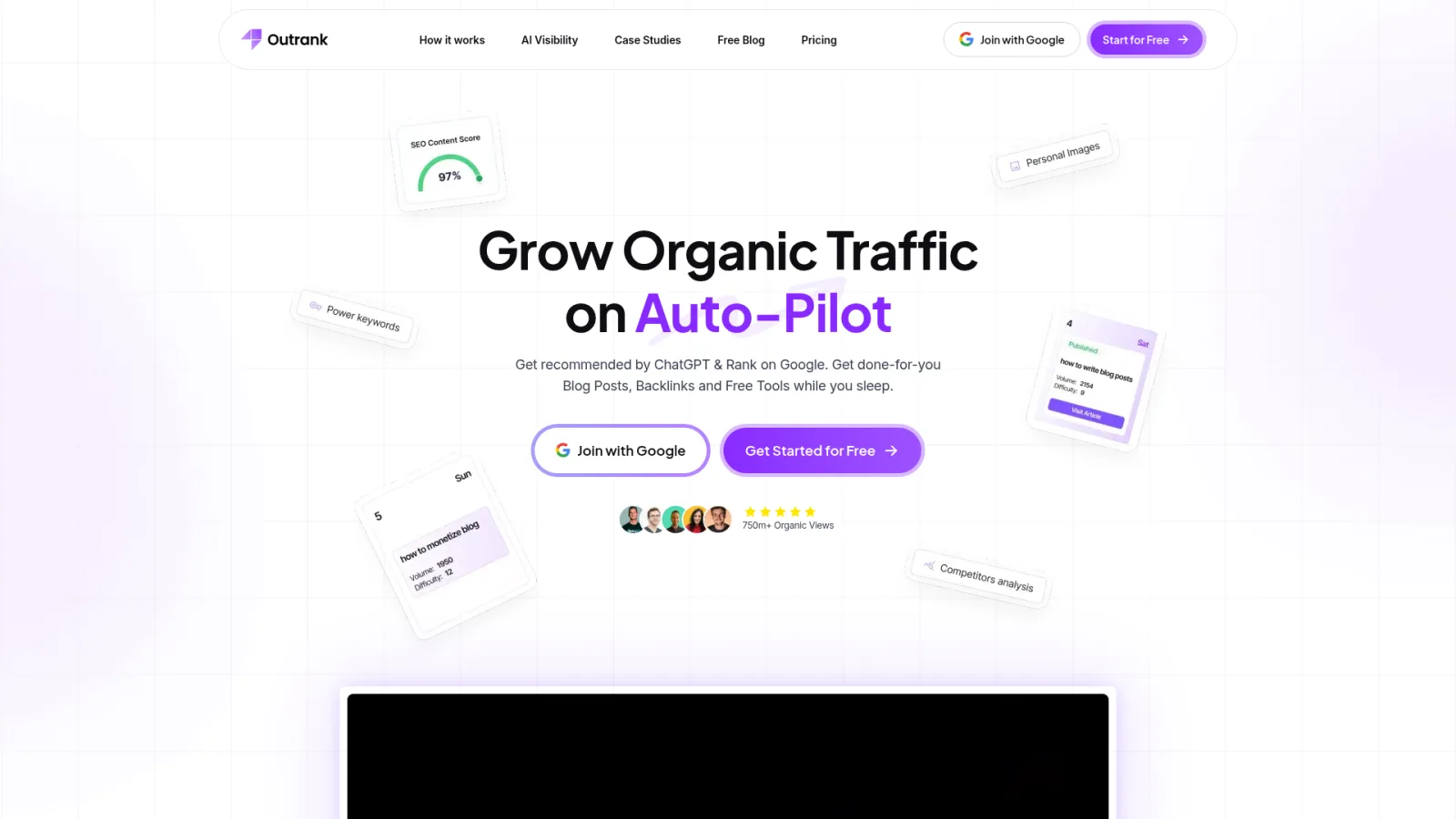
Outrank fits teams that want keyword discovery, article generation, and publishing handled in one automated pipeline.
Documented workflow
Outrank's pricing and product pages document automated keyword research, article generation, publishing integrations, and plan-based output limits. Publishing automation isn't quality assurance, so budget editing time.
Backlink exchange and governance questions
Outrank documents a backlink exchange. I treat it as a vendor offer, not evidence of link quality or ranking impact. Before using any exchange, check placement controls, relevance, disclosure, and risk.
Pricing and output limits
Output caps depend on the plan, so match the tier to your monthly article volume. Ask whether human review can sit before publish, because that setting decides how autonomous the pipeline really is.
BabyLoveGrowth: Best for bundled SEO, GEO, and authority workflows
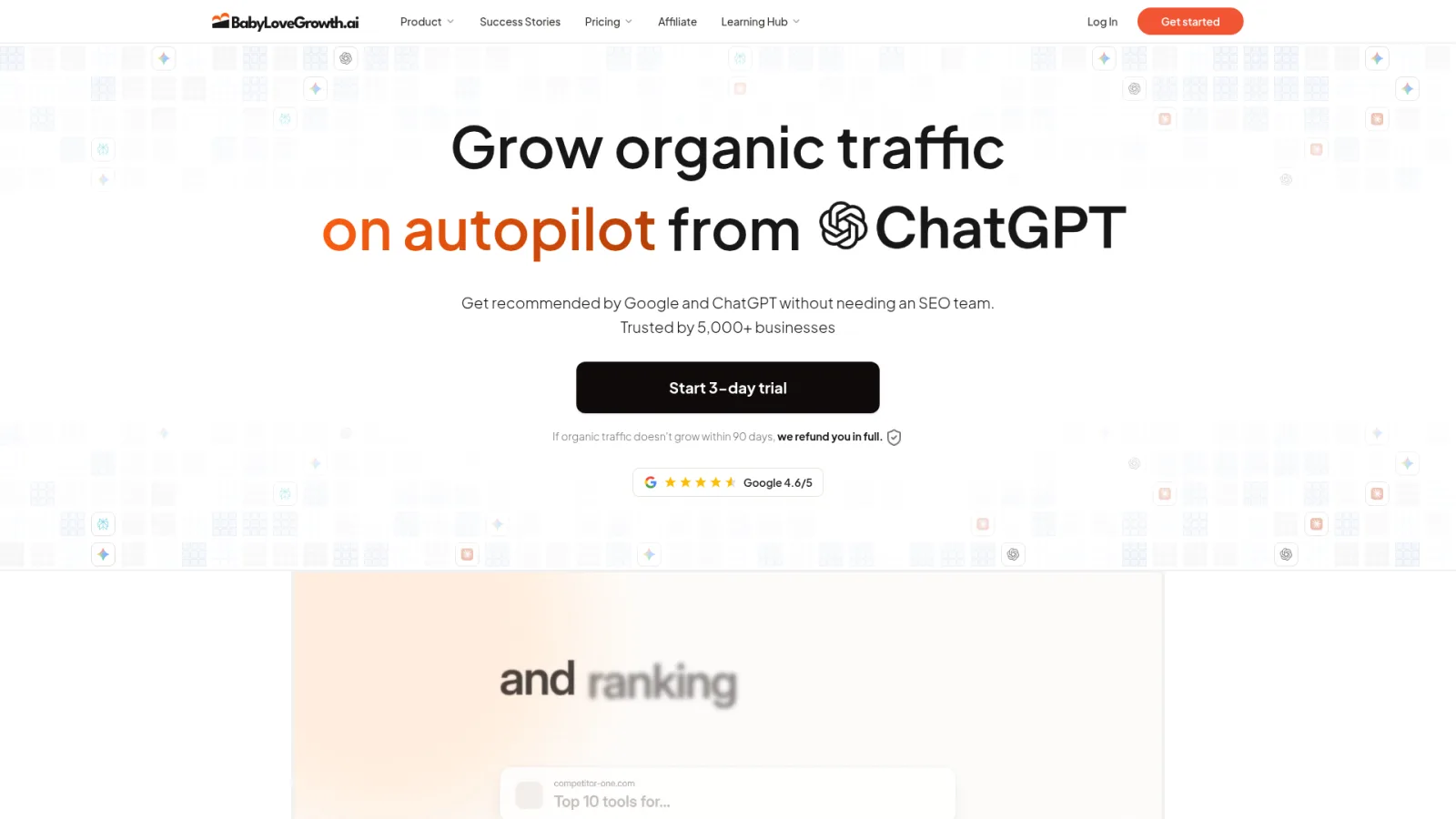
BabyLoveGrowth bundles several jobs, so I'd call it a workflow platform. Its documentation is the only source I'd trust for what it covers.
What the official documentation supports
BabyLoveGrowth's documentation describes content generation, backlinks, technical checks, and social workflows. I report only those, labeled as vendor-documented.
What requires trial validation
Test how much approval control you get and whether content stays consistent with your brand voice. Also pin down what automated means for each workflow.
Limitations to state carefully
No platform can promise rankings or AI recommendations, so I'd ignore that kind of language. Keep editorial review on, especially for anything that posts to third-party platforms.
Frase: Best for SERP-based content briefs and governed optimization
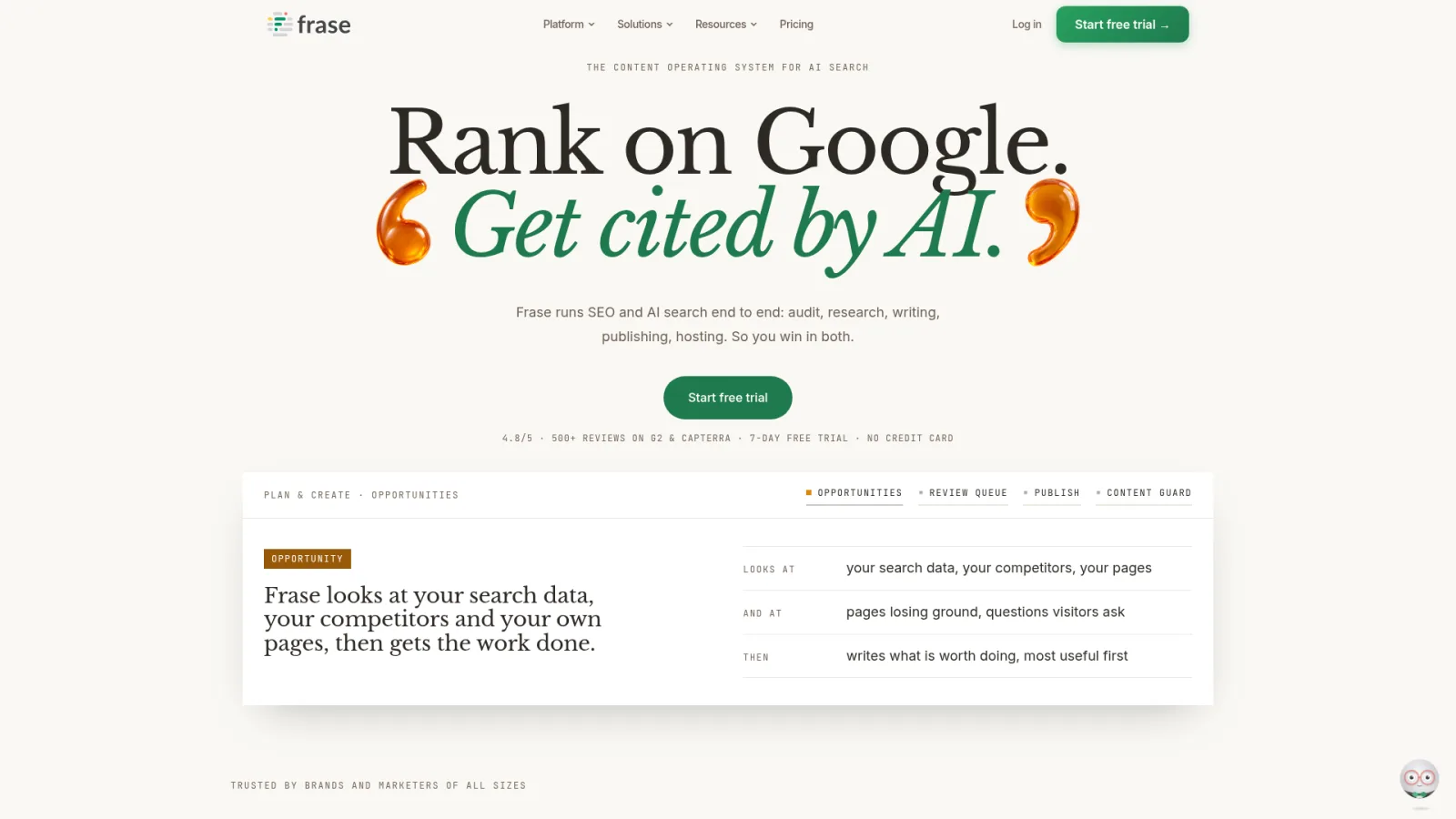
Frase fits teams that want content grounded in SERP research, with scoring and approvals before anything goes out.
Content research and scoring
Frase's pricing and product pages document SERP research, brand voice, content scoring, SEO and GEO scoring, decay monitoring, and CMS publishing to options such as WordPress, Webflow, Sanity, and Wix. That makes it one of the stronger AI content optimization agents for briefs.
GEO and AI visibility coverage
Frase documents AI visibility alongside GEO scoring. Check which AI models and how many prompts your plan covers, and whether approval settings let you lower autonomy.
Where a technical SEO specialist may still be needed
I wouldn't call it a complete technical SEO or backlink platform. Pair it with a crawler or specialist if site-level fixes are your bottleneck.
outwrite.ai: Best for AEO content and AI citation workflows
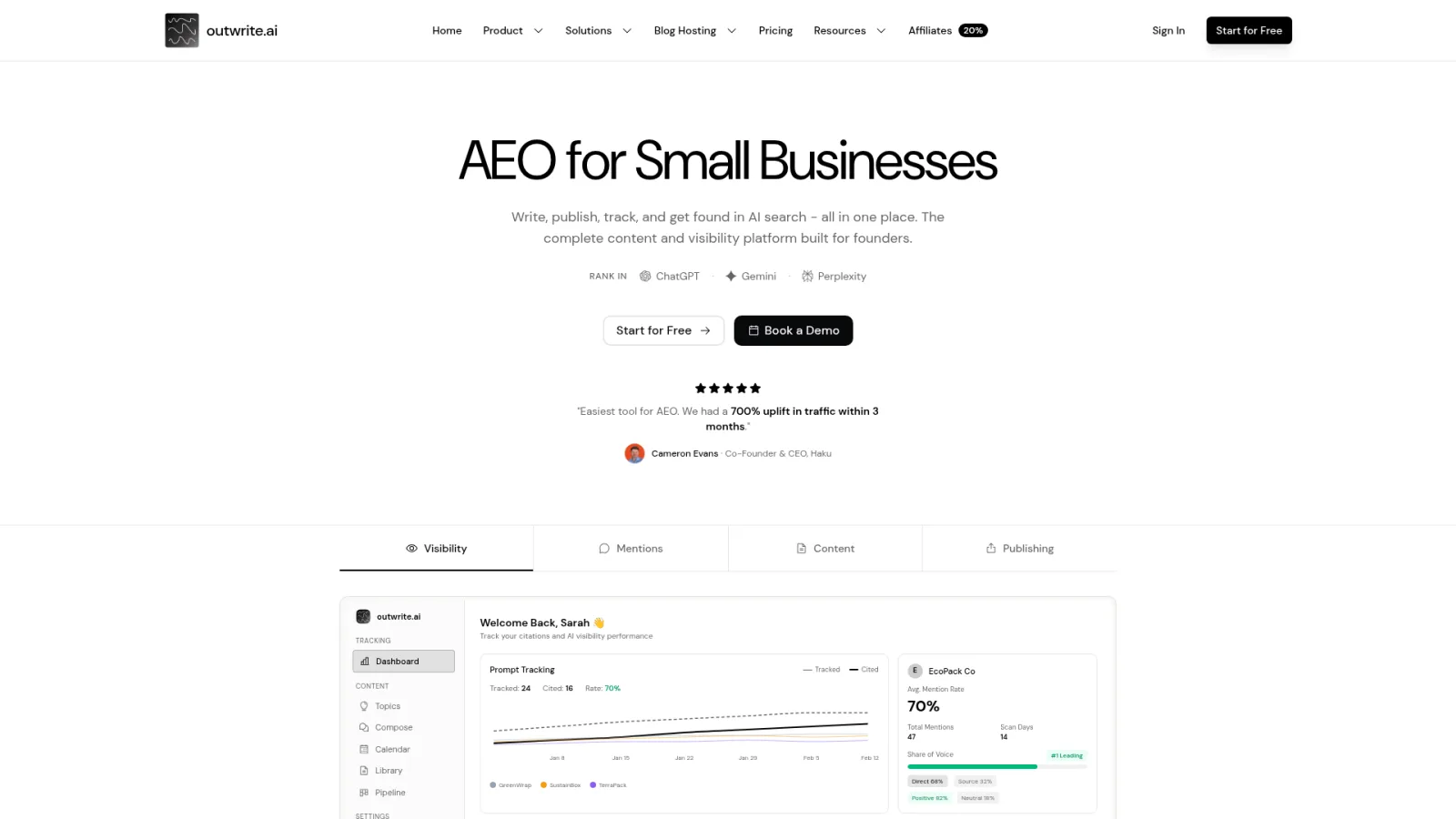
outwrite.ai suits teams that want answer engine optimization (AEO) content and citation tracking in one product. It is separate from the writing assistant at outwrite.com.
Content and brand kit capabilities
outwrite.ai's product pages document AEO content creation, brand kits, and plan-based content credits. Check which claims about research-backed content are supported on the page before you rely on them.
AI model tracking and export options
The platform documents AI citation tracking across models such as ChatGPT, Gemini, and Perplexity, plus export options. Tracking measures observed outputs and doesn't guarantee future citations.
Product naming and pricing clarification
Make sure you're reading outwrite.ai pricing and terms, not the other product. Confirm credit limits and model coverage by plan.
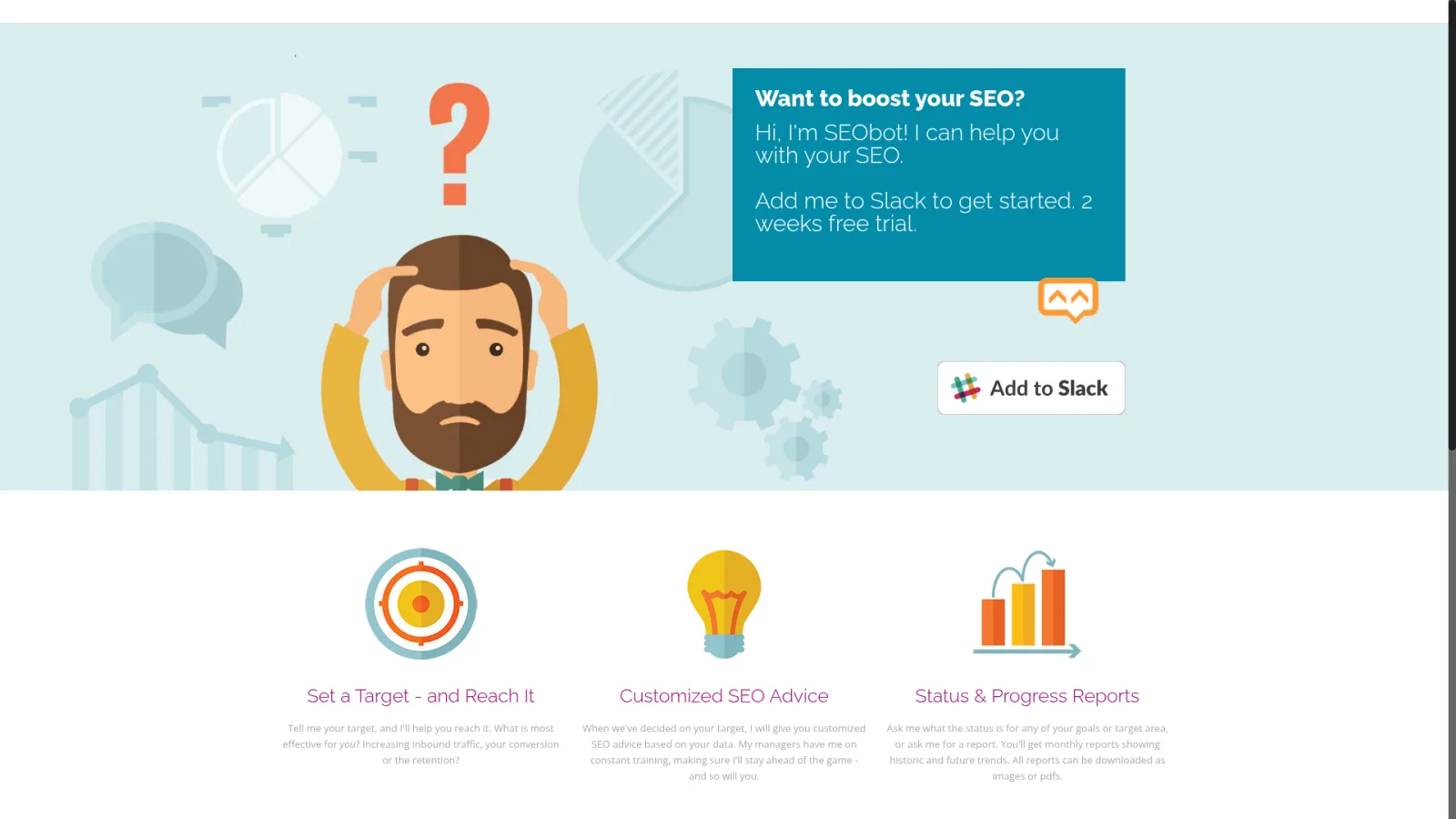
SEObot: Best for teams seeking a lower-cost autonomous workflow, if current scope is confirmed
SEObot may suit budget-conscious teams, but I wouldn't buy before confirming exactly which product and plan you're getting.
Publicly documented capabilities
SEObot's official site points to SEO automation, content workflows, reporting, and article plans, with CMS integrations and Slack mentioned in its materials. I describe only what the page you're reading shows.
Pricing discrepancy to resolve
The official site and help documentation I reviewed show different product descriptions and price references. Until that's resolved, I've left the price out.
Quality and internal-link review requirements
Automated internal links and generated articles both need review. Check link relevance and factual accuracy on a sample before enabling any recurring publishing.
Peec AI and Profound: Best for AI search visibility analytics
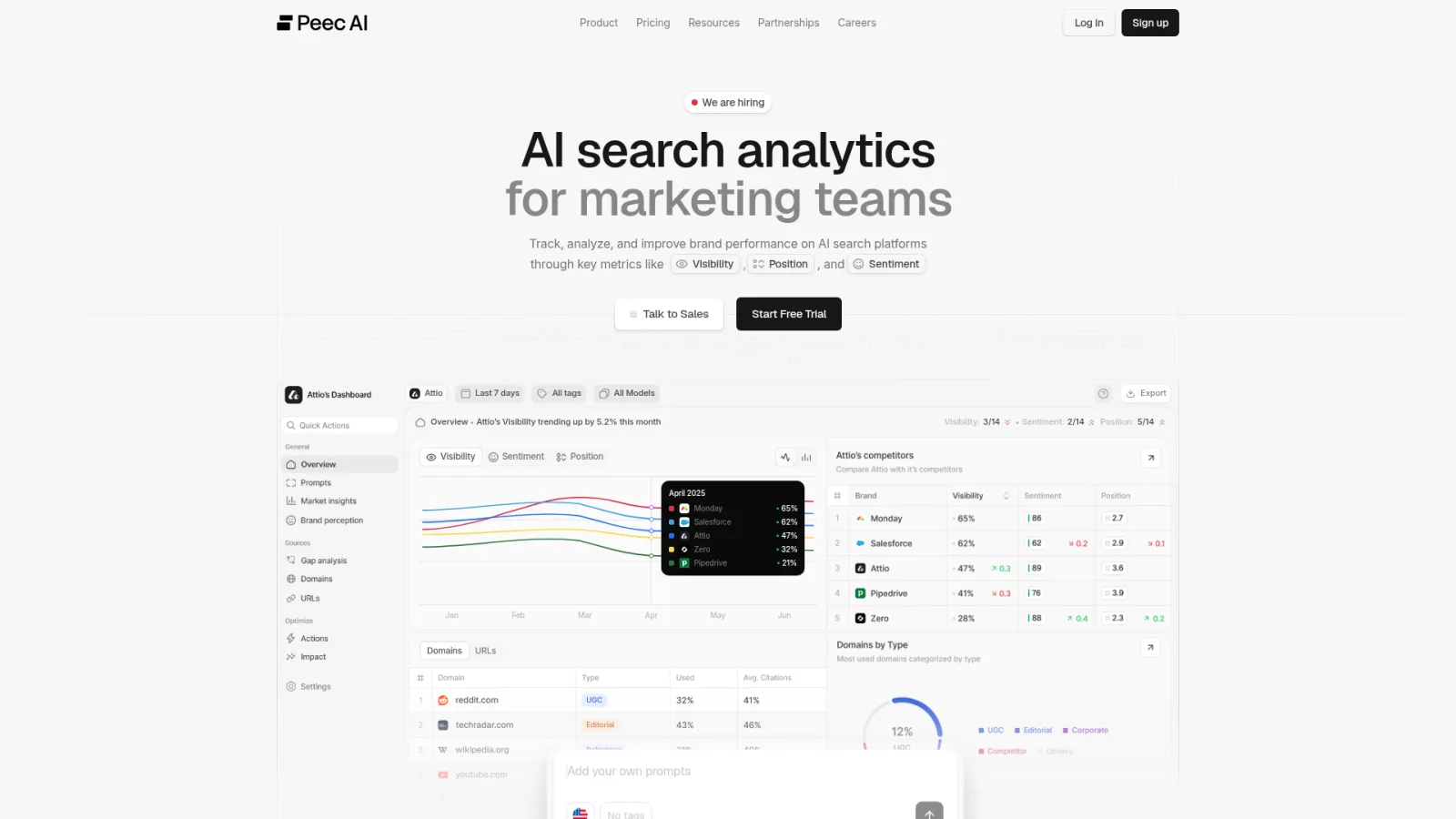
Peec AI and Profound measure AI answers; they don't publish content or fix pages. If you're building a shortlist of the best AI SEO agents, treat them as an analytics layer, not an execution suite. Peec AI documents its pricing and capabilities publicly.
What analytics platforms measure
These platforms track prompts, models, mentions, citations, sentiment, competitors, and share of voice. Profound's product pages also describe prompt volumes, citation analytics, and agent workflows.
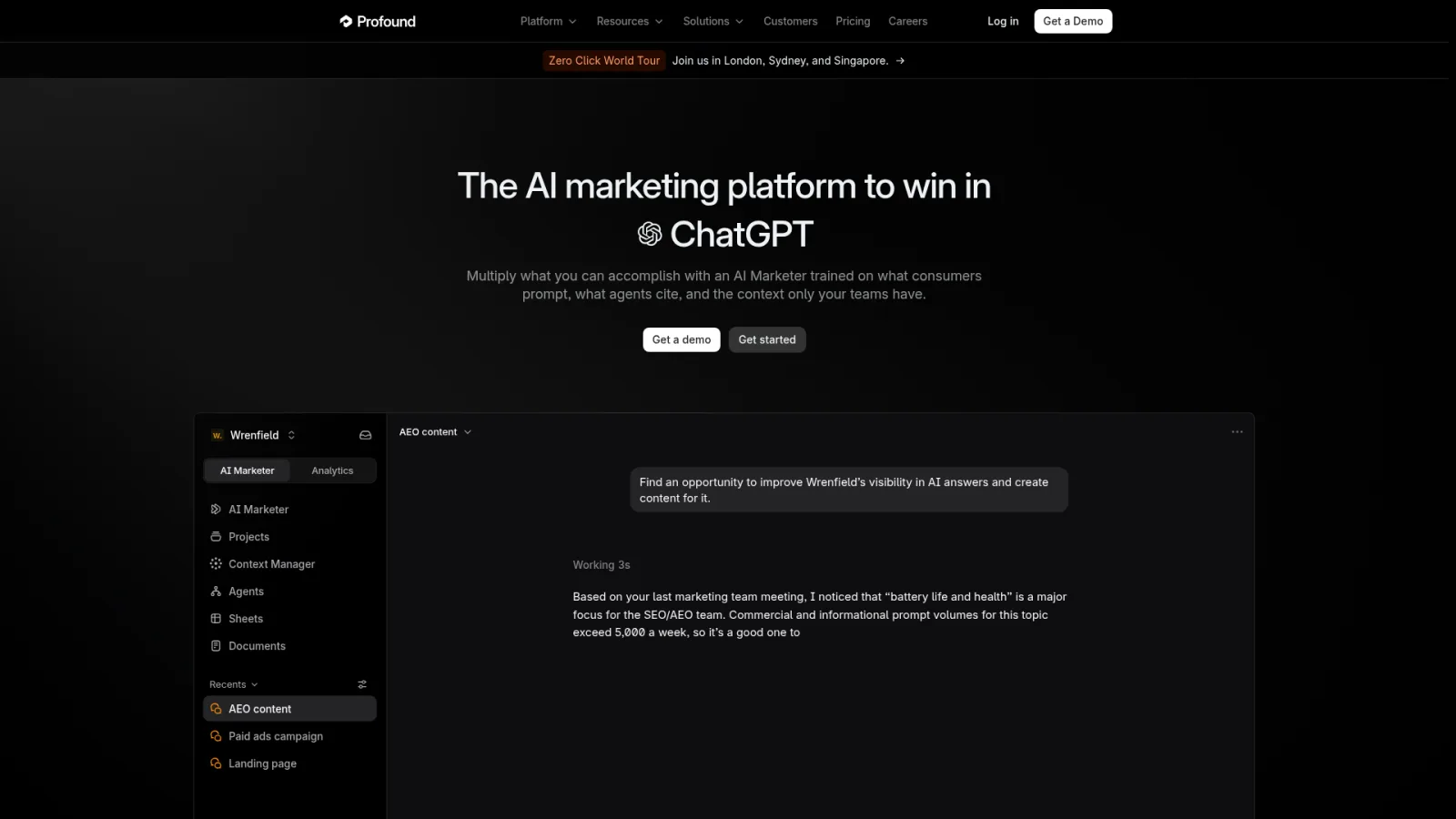
Measurement doesn't create visibility by itself. Someone still has to publish and fix the pages that the data points to.
Where they differ from execution agents
Platform | What to know |
|---|---|
Peec AI | Documents prompt tracking, model coverage, projects, and reporting; pricing is on its official page |
Profound | Documents prompt volumes, citation analytics, and agent workflows; public pricing not verified in pages reviewed |
Analytics platforms tell you where AI systems mention competitors, while execution agents change what you publish.
When analytics should be paired with an SEO execution platform
Pair analytics with execution when you already know which prompts matter and need output to respond. If you don't have a publishing workflow yet, start there first.
RankYak, Alli AI, Distribb, and Search Atlas: Best for broader SEO automation
These four cover more ground than a single content loop, but broader coverage doesn't mean deeper capability in every category. Each gets one limitation and one question to ask.
RankYak for agency delivery and per-client workflows
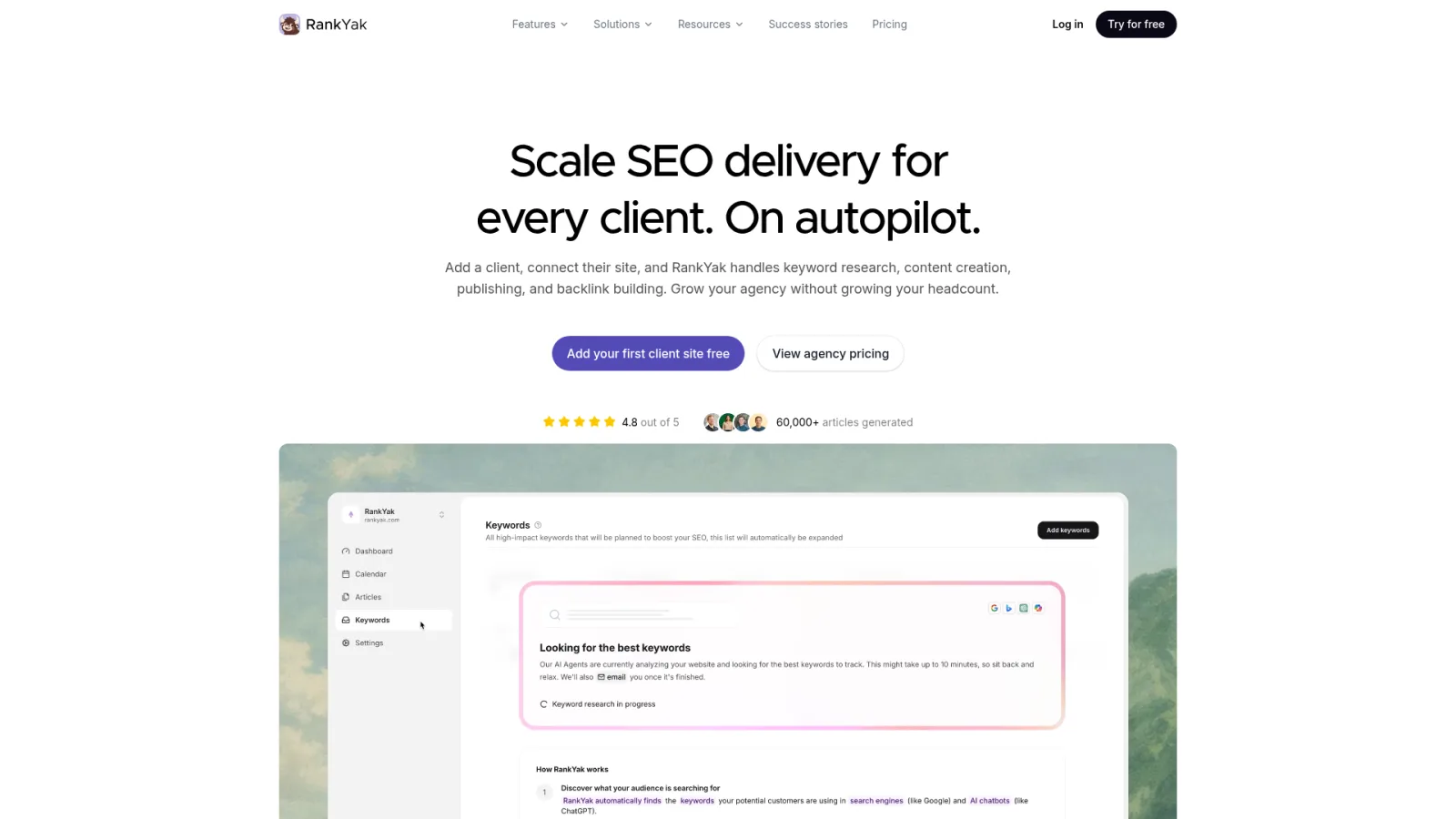
RankYak's agency page documents per-client pricing, keyword research, topic clustering, CMS publishing, internal linking, Search Console, and a draft mode. Treat backlink and performance claims as vendor-reported, and ask how client permissions work.
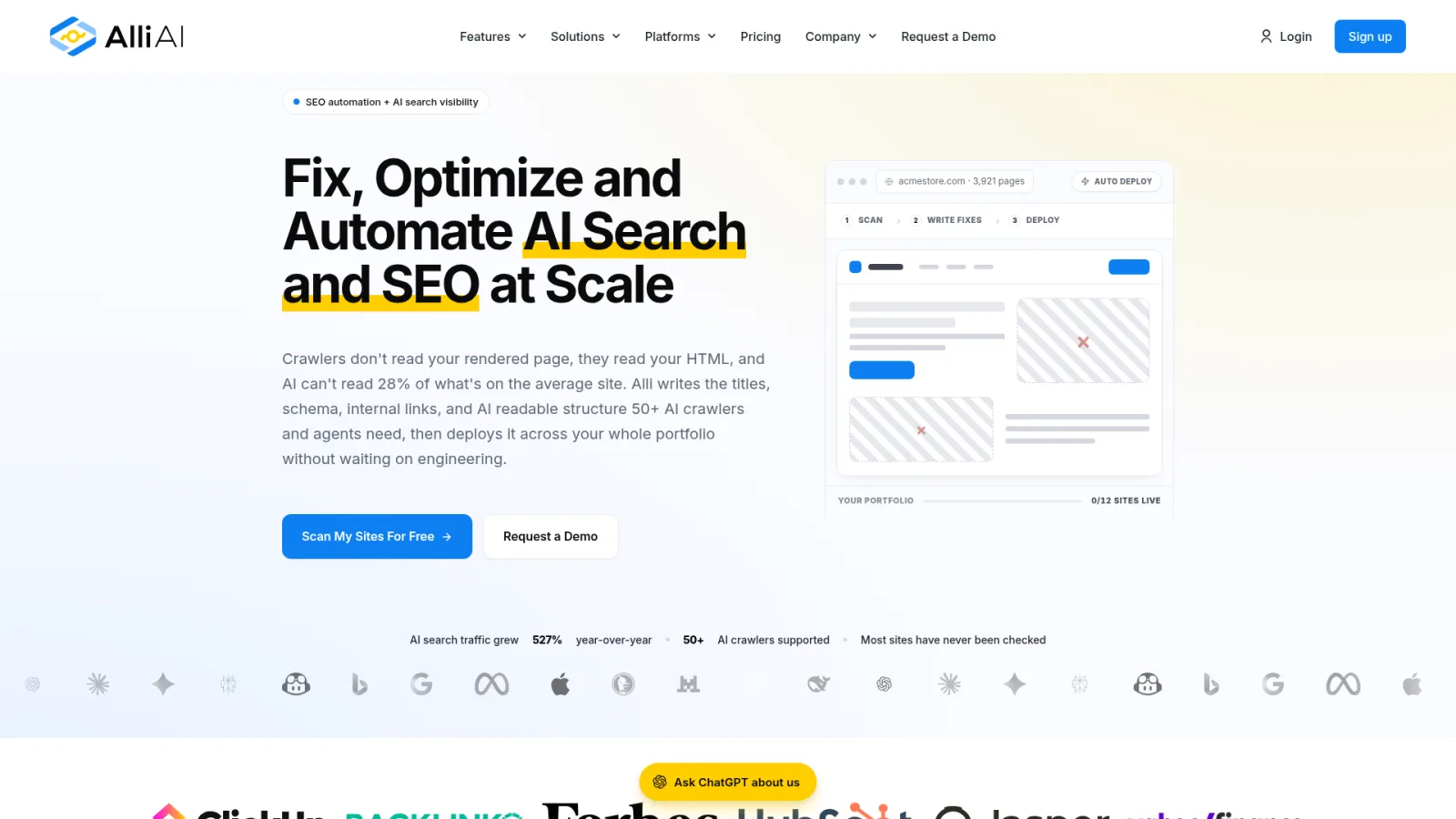
Alli AI for live-site and AI crawler deployment
Alli AI's pricing and help pages document AI search visibility, pre-rendering for AI crawlers, technical SEO automation, keyword tracking, and plan limits. It acts at the site level, so ask how changes are reviewed and rolled back.
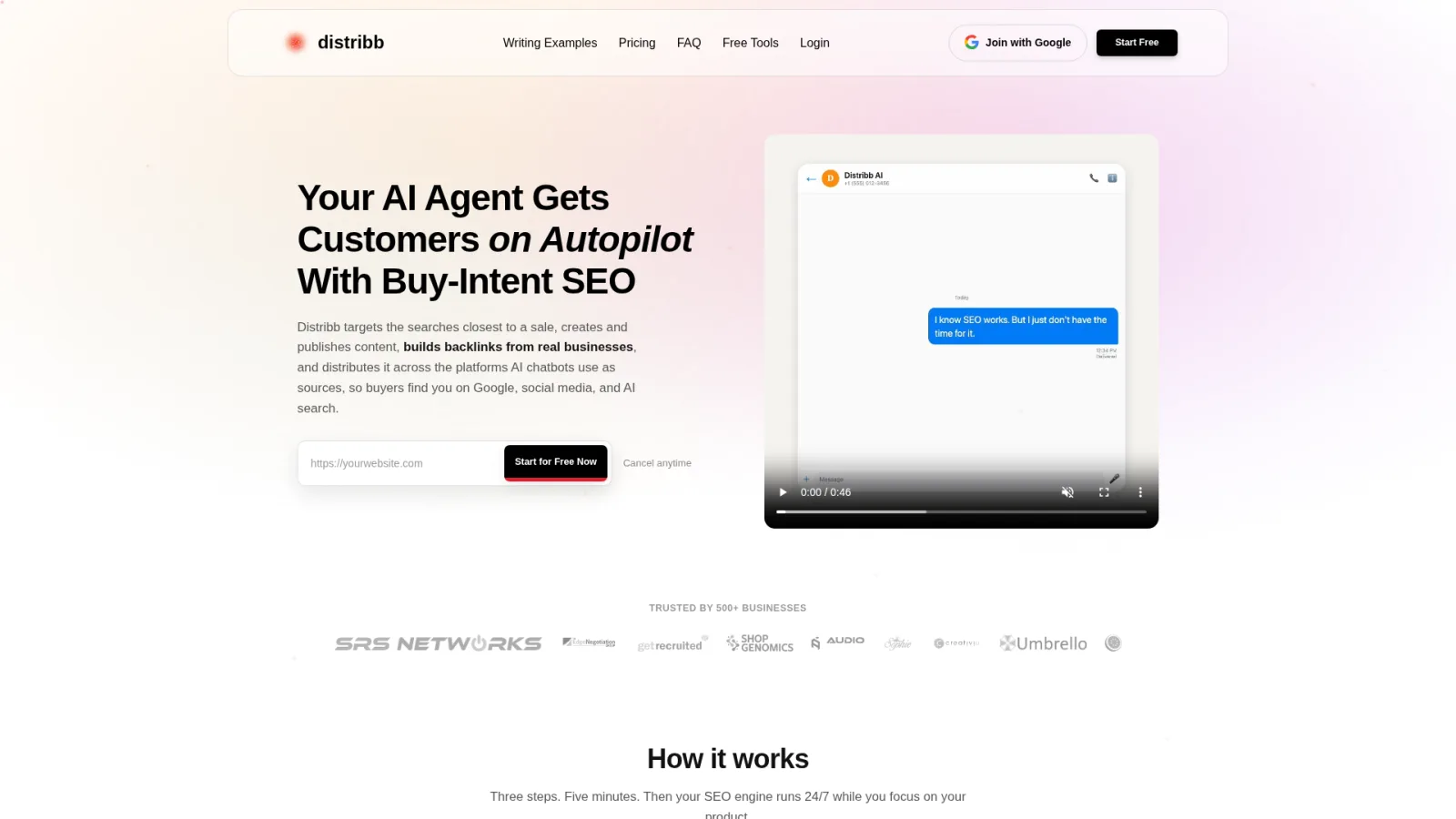
Distribb for approval-led content publishing
Distribb's product page documents an SEO AI agent with approval before publishing, long-form articles, images, internal links, and FAQ schema. I couldn't confirm research quality, indexing, or analytics coverage, so ask about those directly.
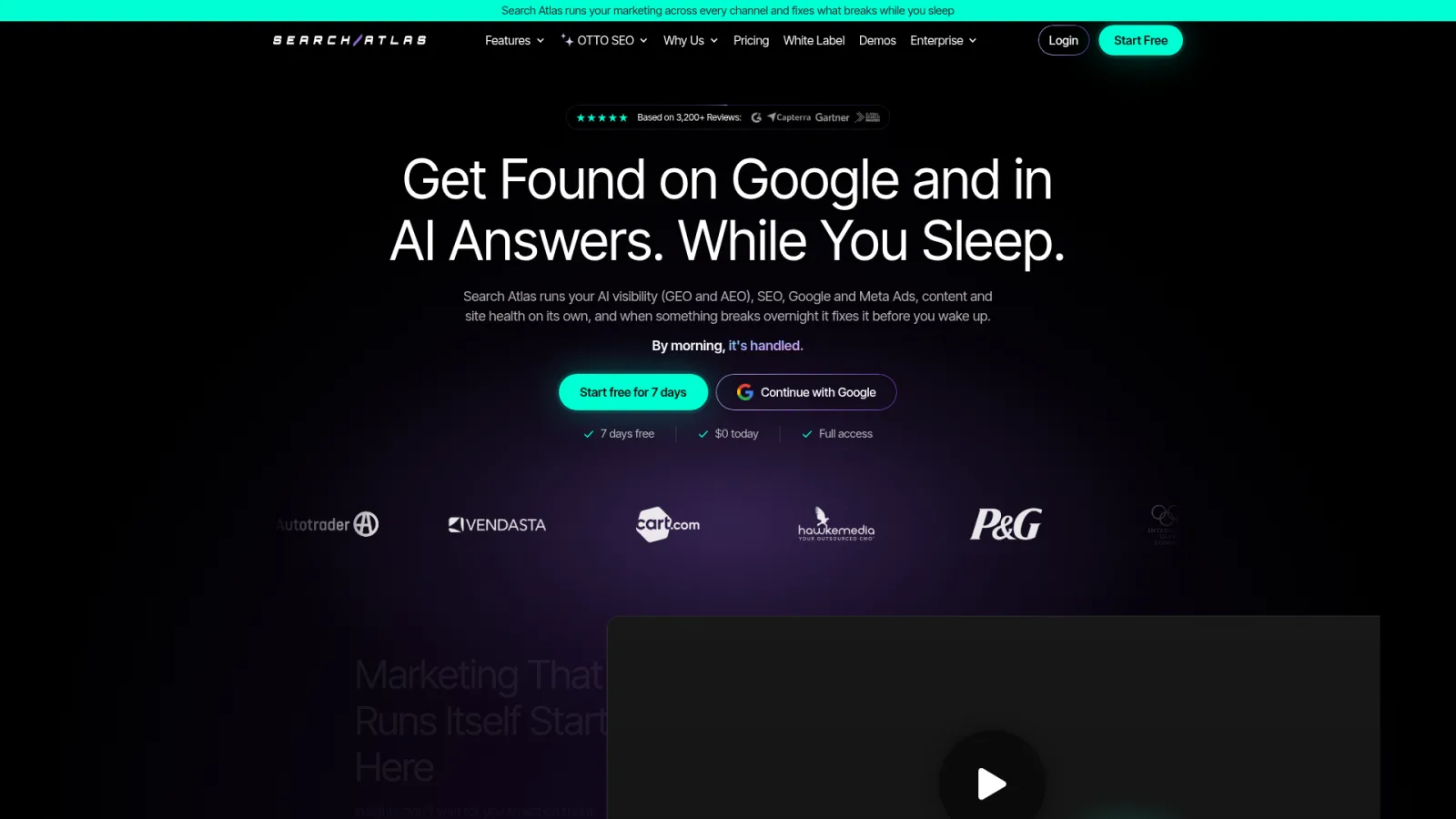
Search Atlas for broader execution, visibility, and agency packaging
Search Atlas's pricing page documents OTTO SEO, AI content, CMS publishing, AI visibility by plan, universal credits, and agency packaging. Compare the plan that contains the feature you need, and ask how credits are consumed.
Which AI SEO agent is right for your team?
Use a cost-of-handoff rule: choose the platform that removes your most expensive recurring handoff, not the one with the longest feature list. Then match it to your team type below.
Which AI SEO agent is best for a founder or small marketing team?
If your bottleneck is research, drafting, and publishing with no SEO hire, choose a content-loop platform with draft approval. Keytomic, Frase, Distribb, and Outrank all sit here, so compare approval gates and the plan you'd actually buy.
Which AI SEO agent is best for an agency managing multiple sites?
If you run many client sites, choose a platform with per-client structure, permissions, and reporting. RankYak and Search Atlas document agency packaging, and Keytomic for agency client workflows is another option; the public Pro plan lists one project, so confirm agency terms first.
Which platform fits an AI visibility analytics need?
If the question is where competitors get cited, start with Peec AI or Profound. Add an execution platform once you know which pages to create or fix.
Which platform fits live-site technical execution?
If the bottleneck is deploying changes across many pages, look at Alli AI or Search Atlas. Require a change log and a rollback path before you go live.
How Keytomic connects keyword discovery to AI visibility
Here's the method I'd use to evaluate any connected workflow, with Keytomic as the worked example. The goal is fewer handoffs between agents and tools, with a human approving the steps where a mistake costs real money. If you want the best AI SEO agents for that goal, the test is whether each stage feeds the next one.
Fragmented AI SEO agents versus one connected process
A fragmented stack usually means seven separate steps: a keyword tool, a brief tool, a writing tool, a CMS, an indexing step, a rank tracker, and an AI visibility tracker. The connected version runs these stages in order:
Discover: find keywords using live volume, difficulty, and SERP data plus Search Console.
Map: assign each keyword to a page through a topical map.
Plan: build a 30-day calendar and brief each article.
Draft: write answer-first sections around entities and query fan-out.
Review: a human checks facts, brand voice, and sources.
Publish: send to the CMS or push a draft for approval.
Submit: send URLs for discovery and track index status.
Monitor: track Google results and AI answer mentions and citations.
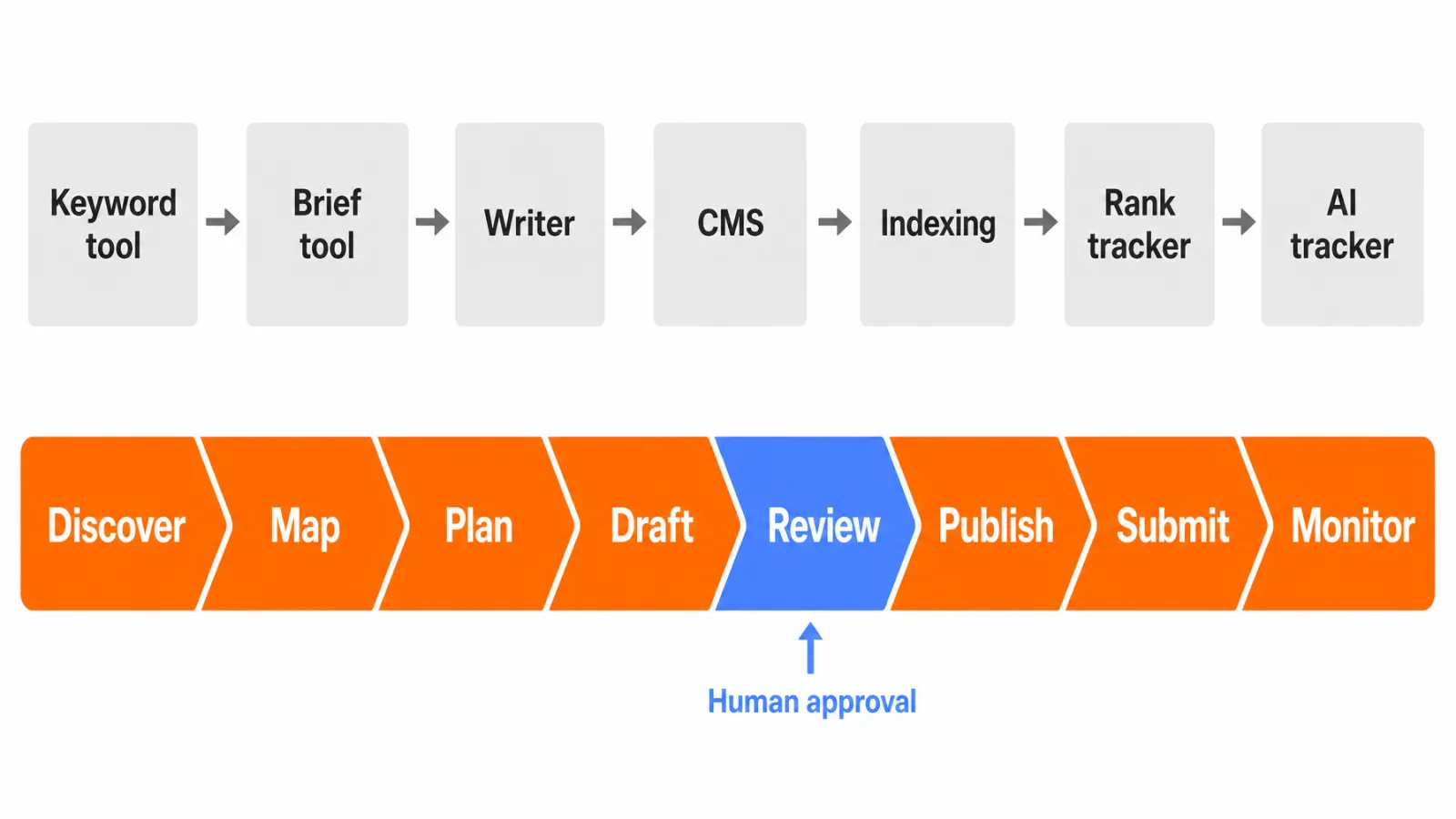
Where human approval remains necessary
I'd keep a person on topic selection, fact checking, brand voice, and the publish decision. Strategic topic choices still depend on business goals, and regulated topics need qualified review.
When Keytomic is not the right fit
Choose something else if you need a forensic crawler, a deep backlink database, or specialist technical implementation. Keytomic can sit alongside those agents, but it doesn't replace them.
What AI SEO agents still need humans to govern
Agents reduce repetitive work. Strategy, accountability, and editorial judgment stay with people, and each rule below answers a common buyer concern.
Factual accuracy and brand voice
Google says AI-generated content is acceptable when it's accurate, useful, and original, and it treats scaled content abuse as spam. Review facts, sources, and positioning before publishing, and add schema only when visible page content supports it, since structured data doesn't guarantee rich results.
CMS permissions, indexing, and reversibility
Give agents the least access they need, keep change logs, and make rollback possible. Here's the autonomy ladder I'd use:
Recommendation only.
Draft for approval.
Scheduled publishing.
Low-risk automatic changes.
High-risk changes requiring explicit approval.
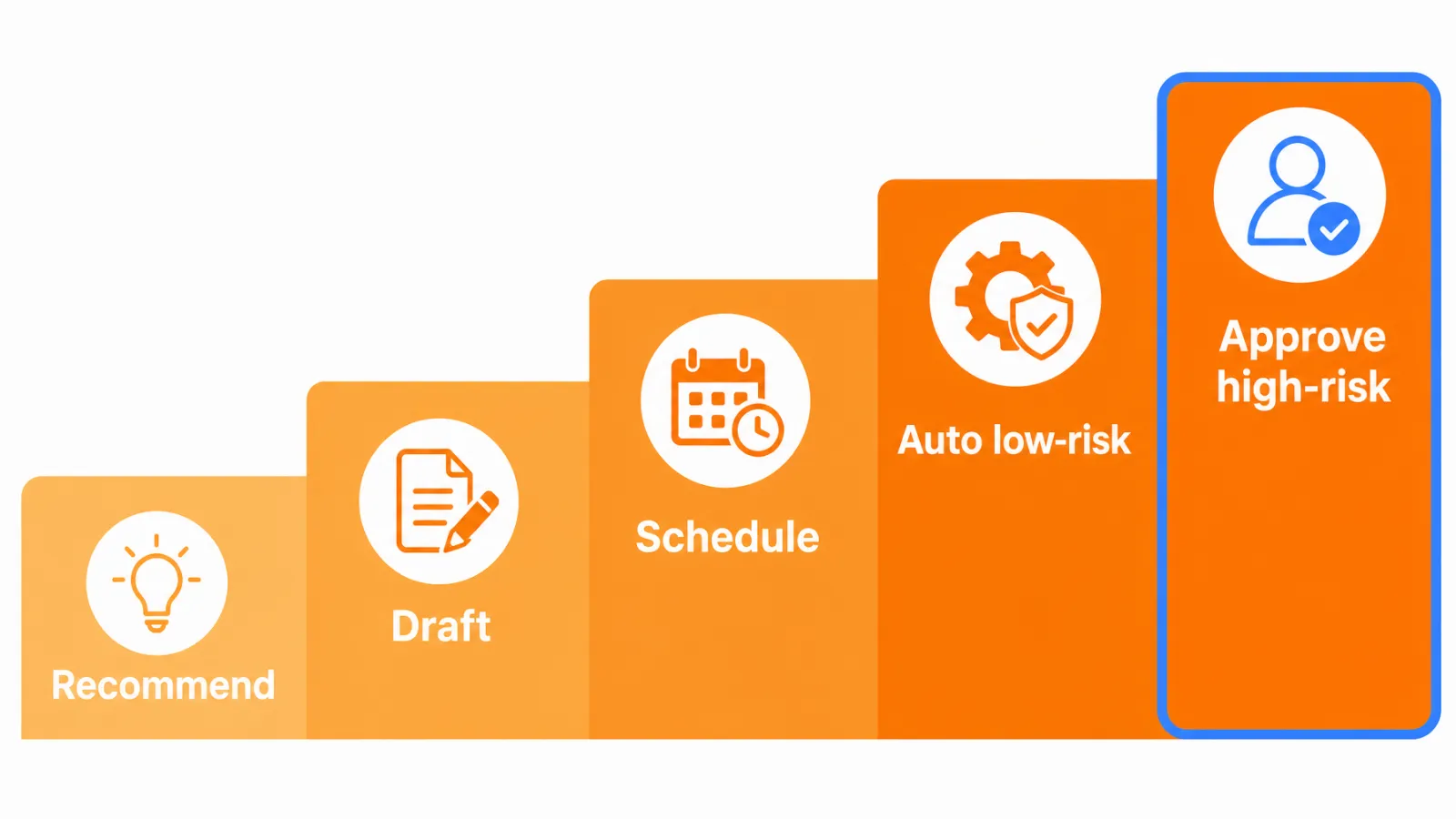
Submitting a URL supports discovery; it doesn't guarantee indexing.
AI visibility measurement and citation variability
AI answers change between runs and between models. Track trends over time on a fixed prompt set, and treat any single result as a snapshot.
Backlink acquisition and third-party platform risk
Over-automating link acquisition is the riskiest shortcut on this list. Require relevance, disclosure, and manual approval for anything that places links or posts on third-party sites.
Questions buyers ask before choosing an AI SEO agent
What is an AI SEO agent?
Software that connects SEO data, decisions, actions, recurring work, and verification. It reads your data, performs tasks like drafting or publishing, and checks the results.
Can an AI SEO agent publish content automatically?
Some can publish or push drafts to a CMS. Controls differ, so check for draft mode, approval gates, and scheduled publishing before connecting it.
Do AI SEO agents replace SEO specialists?
No. They automate repeatable work, while people keep strategy, judgment, accountability, and review of facts and regulated claims.
Can AI SEO agents improve visibility in ChatGPT and Perplexity?
They can help create or measure visibility, but no tool can guarantee a citation. Tracking observes current outputs; it doesn't control them.
Do AI SEO agents connect to Google Search Console?
Some do. Verify the exact integration and permissions in vendor documentation, because Search Console support can mean read-only reporting or deeper workflow use.
How much do AI SEO agents cost?
It varies by product and plan. Keytomic Pro starts at $99/month; for others, check official pricing pages, since limits, billing cycles, and taxes differ.
Are AI SEO agents safe for Google Search?
Safety depends on output quality. Google allows AI-assisted content that's accurate, useful, and original, and treats scaled content abuse as spam. Review before publishing.
Is it better to build or buy an SEO agent?
Build when your workflow is unique and you can maintain connectors, approval gates, and verification. Buy when speed matters more. MCP can connect Claude to SEO data.
What should an AI SEO agent verify after it acts?
Page rendering, indexability, links, schema, publishing status, and Search Console data, plus human acceptance criteria. Schema should match visible content.
What is the best AI SEO agent for a small team?
The best AI SEO agent for a small team depend on your bottleneck: connected content execution, live-site deployment, or AI visibility analytics. There's no universal winner.
Choose the agent that closes your most expensive SEO handoff
Pick based on the recurring bottleneck, then test it on a real workflow before committing.
A 30-day buyer test
Connect a real site with the least access required.
Baseline one article and one technical task.
Assign one low-risk recurring workflow.
Record every human correction and the approval time.
Verify publishing status, rendering, and index status.
Review AI visibility reporting against your buyer questions.
Decision rule by team type
Founders and small teams: connected content execution with draft approval.
Agencies: per-client structure, permissions, and reporting.
Analytics-first teams: Peec AI or Profound, paired with an execution tool.
Technical teams: live-site deployment with rollback.
Among the best AI SEO agents, choose the one that closes the loop costing your team the most time, then limit autonomy to the level of risk you can accept.
If your costliest handoff sits between keyword research and a published, indexed page, try Keytomic's connected AI SEO workflow on a real site and keep human approval on what goes live. If you need a forensic crawler or deep backlink data, plan to use another tool alongside it.