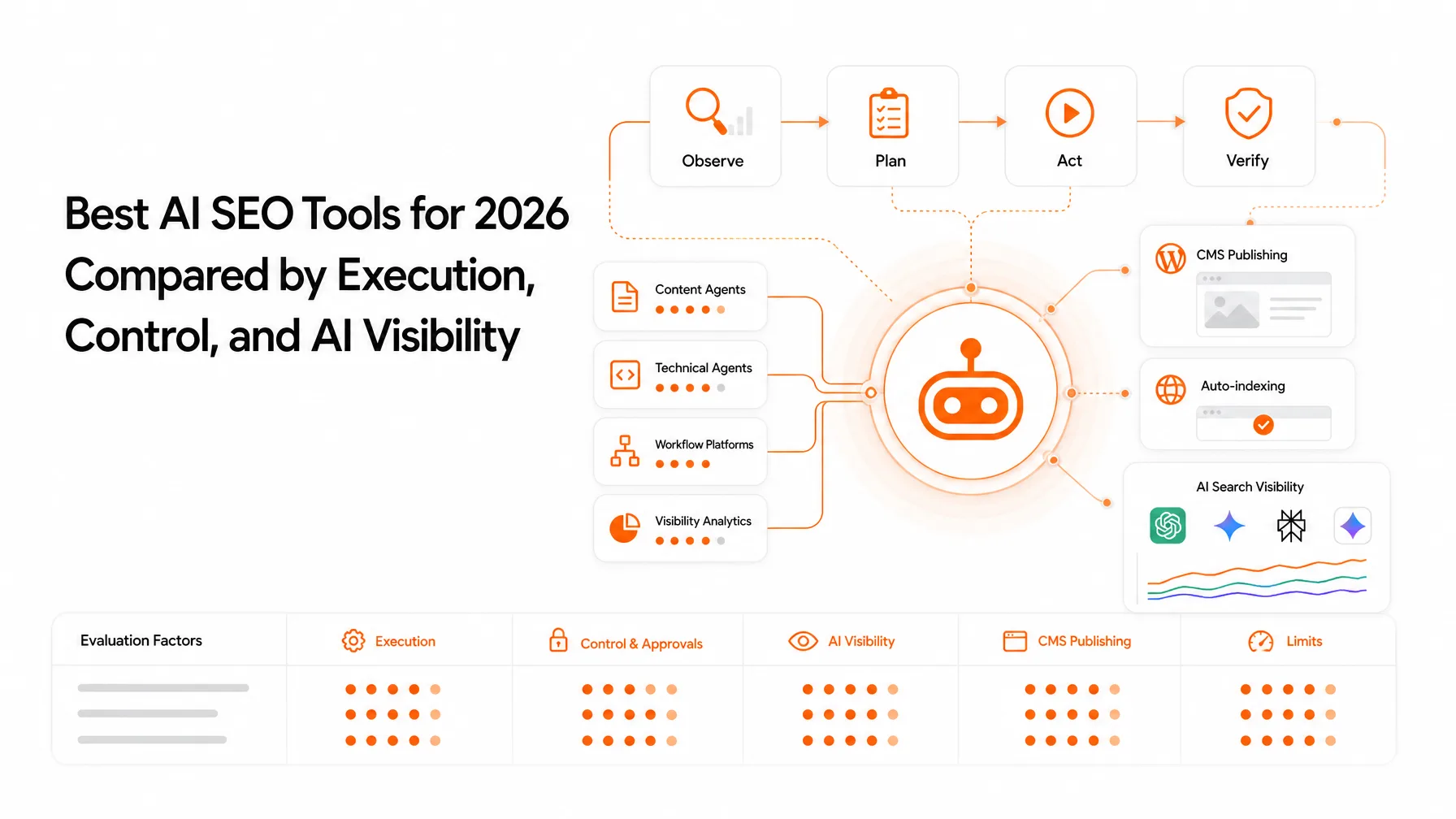
Distribb and Keytomic both automate keyword research, content creation, CMS publishing and AI visibility tracking, but they are built around different workflows. Distribb is an agent-led tool focused on buyer-intent content and backlink outreach. Keytomic is an approval-based workspace that connects topical planning, technical audits, publishing and visibility in one place. Distribb Pro costs $97 per month and Keytomic Pro costs $99 per month (prices checked October 19, 2026).
Bottom line: Pick Distribb if you want hands-off publishing volume and link outreach. Pick Keytomic if you want planning, technical audits and human approval before anything goes live.
The price tags are nearly identical, so the real decision comes down to three things: how much review control you want, which CMS you publish to, and how you plan to build links.
Distribb vs Keytomic: A Quick Overview
Dimension | Distribb | Keytomic |
|---|---|---|
Best for | Hands-off, agent-led execution with link outreach | Teams that want planning, audits and approval in one workspace |
Workflow model | An AI agent researches, writes, publishes and runs outreach | Approval-based: plan, review, then publish and monitor |
Keyword research and planning | Buyer-intent keyword research and topical maps (vendor-stated) | Keyword research, topical planning and an SEO Calendar (up to 60 active topics on Pro) |
Content volume | Pro: 30 articles per month; Accelerator: 90 | Pro: 30 blog credits per month |
Human approval | Not documented; ask in a demo | Built in: drafts wait for approval before publishing |
CMS publishing | WordPress plugin, webhooks and API (documented) | 12+ direct integrations, including WordPress, Shopify, Webflow and Framer |
Technical SEO audits | Not listed | Included |
Backlinks | High-DR backlinks, link exchange and outreach (vendor-stated) | Backlink opportunity discovery |
AI visibility | ChatGPT, Gemini, Perplexity, Google AI Overviews and AI Mode (plan coverage not stated) | Pro: ChatGPT and Gemini, 20 prompts, tracked 3 times a week; Agency adds Claude and Perplexity |
Pricing | Pro $97/month ($79/month billed annually); Accelerator $495/month ($399/month billed annually) | Pro $99/month, billed monthly |
Free trial | 7 days | 3 days |
Seats and sites | Not stated | Pro: up to 3 seats, 1 project |
A comparison like this shows what each vendor offers on paper. It can't predict output quality or ranking results, so run a trial on your own site before you commit.
Distribb Overview: Agent-Led SEO and Link Acquisition
What Distribb automates
According to Distribb's official homepage, Distribb is an AI agent that handles buy-intent keyword research, content creation, publishing, backlink acquisition, outreach and analytics. It is built for execution: the agent does the work, and you check the output.
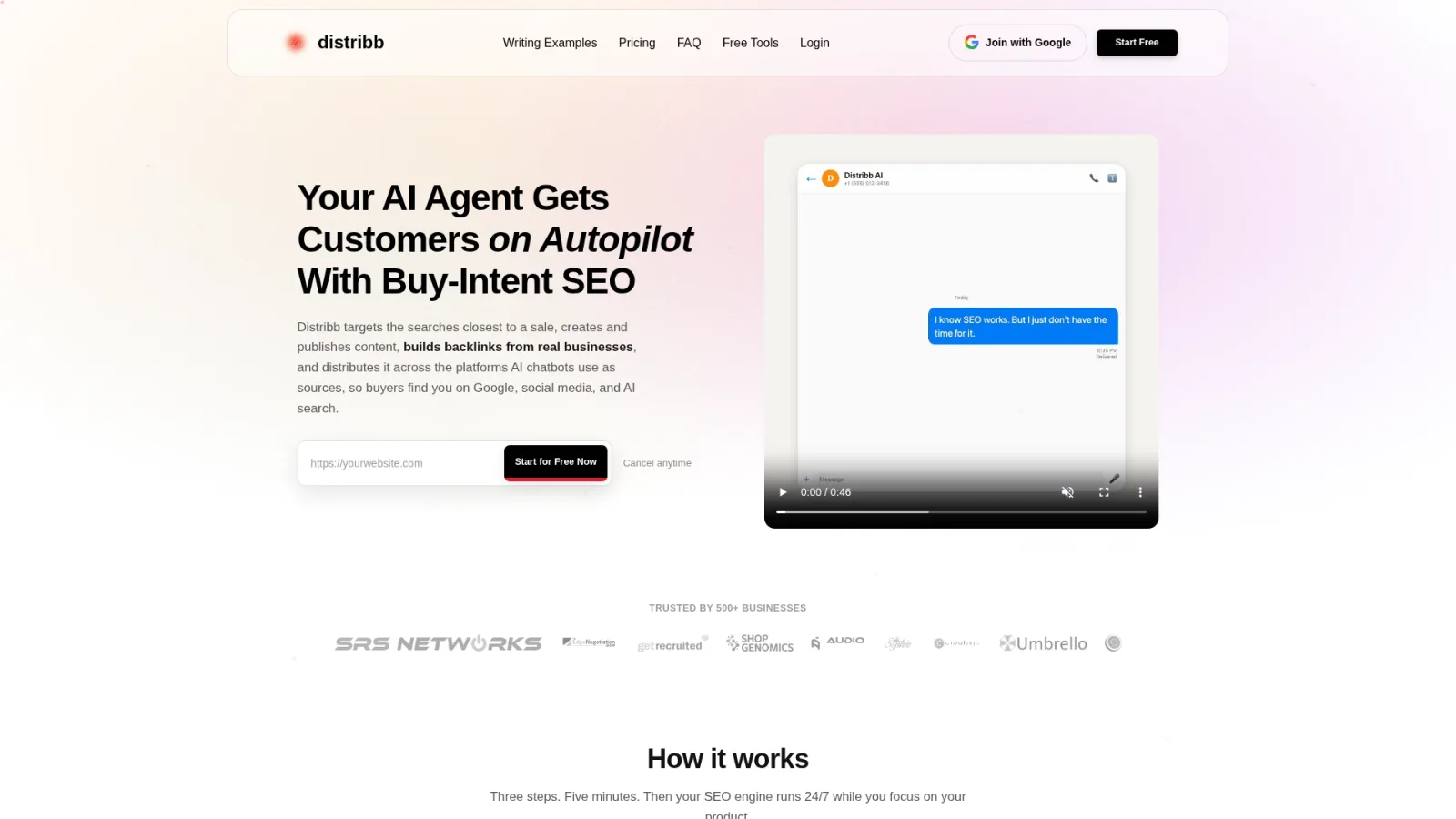
Distribb says its AI visibility tracking covers ChatGPT, Gemini, Perplexity, Google AI Overviews and AI Mode, alongside Search Console data. Its pricing page doesn't say which plans include it, so confirm that before you buy.
Distribb pros and cons
Pros
An agent-led workflow that runs research, writing, publishing and outreach with little input
Backlink acquisition and outreach built in, with done-for-you campaigns on Accelerator
Higher content volume available, up to 90 articles per month
A 7-day free trial
Broad AI visibility coverage, including Google AI Overviews
Cons
Human review and approval controls aren't documented
Only WordPress publishing is documented; other CMSs need confirming
No technical SEO audits listed
Link exchanges need a policy review before you rely on them
CMS and review controls
Distribb's official documentation covers a WordPress plugin, API webhooks and WordPress syncing. If you publish on Shopify, Webflow or another CMS, check the current docs first. Also ask where a person approves drafts and whether auto-publishing can be turned off per site.
Keytomic Overview: One Workspace for Planning, Publishing and Visibility
How Keytomic works
Keytomic's SEO automation software connects keyword research, topical planning, AI-assisted writing, an SEO Calendar and direct CMS publishing in one approval-based workspace. It replaces the spreadsheet-plus-five-tabs routine without taking people out of the loop: every draft is approved before it goes live.
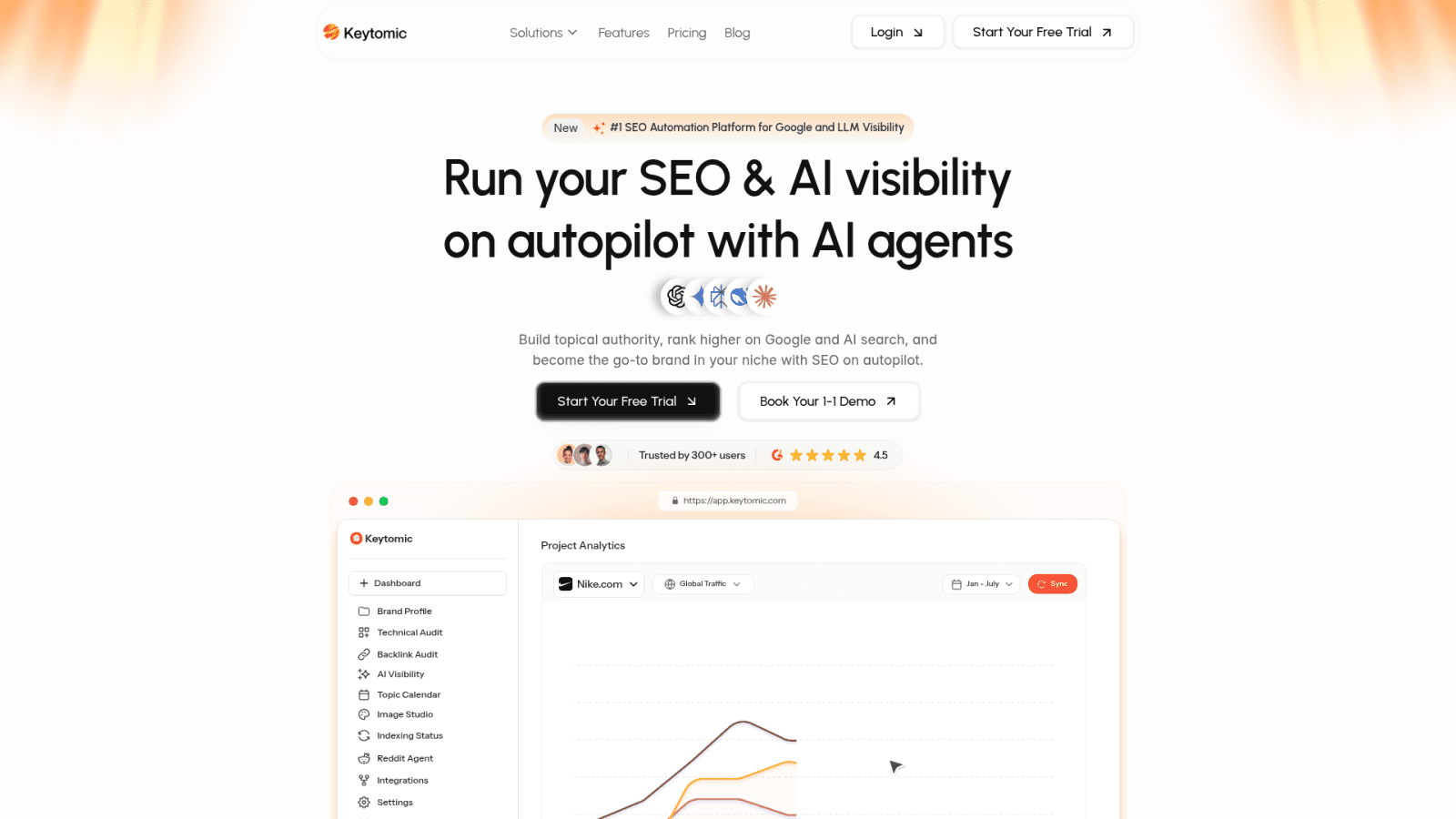
Beyond content, Keytomic runs technical SEO audits, surfaces backlink opportunities, connects to Google Search Console and tracks visibility in AI answer engines. That data feeds your next decision, such as refreshing a page that is losing clicks or covering a topic AI answers keep skipping.
Keytomic pros and cons
Pros
Planning, writing, audits, publishing and monitoring in one workspace
Drafts wait for human approval, so nothing goes live unreviewed
12+ direct CMS integrations, including WordPress, Shopify, Webflow and Framer
Technical SEO audits included
An SEO Calendar that keeps research, plan and schedule together
Cons
Pro tracks AI visibility in ChatGPT and Gemini only; Claude and Perplexity need the Agency plan
Pro covers one project, so multi-site teams should check plan options
Backlink support is opportunity discovery, not done-for-you outreach
A shorter trial (3 days)
Keytomic plans and limits
Keytomic pricing and plan limits currently include:
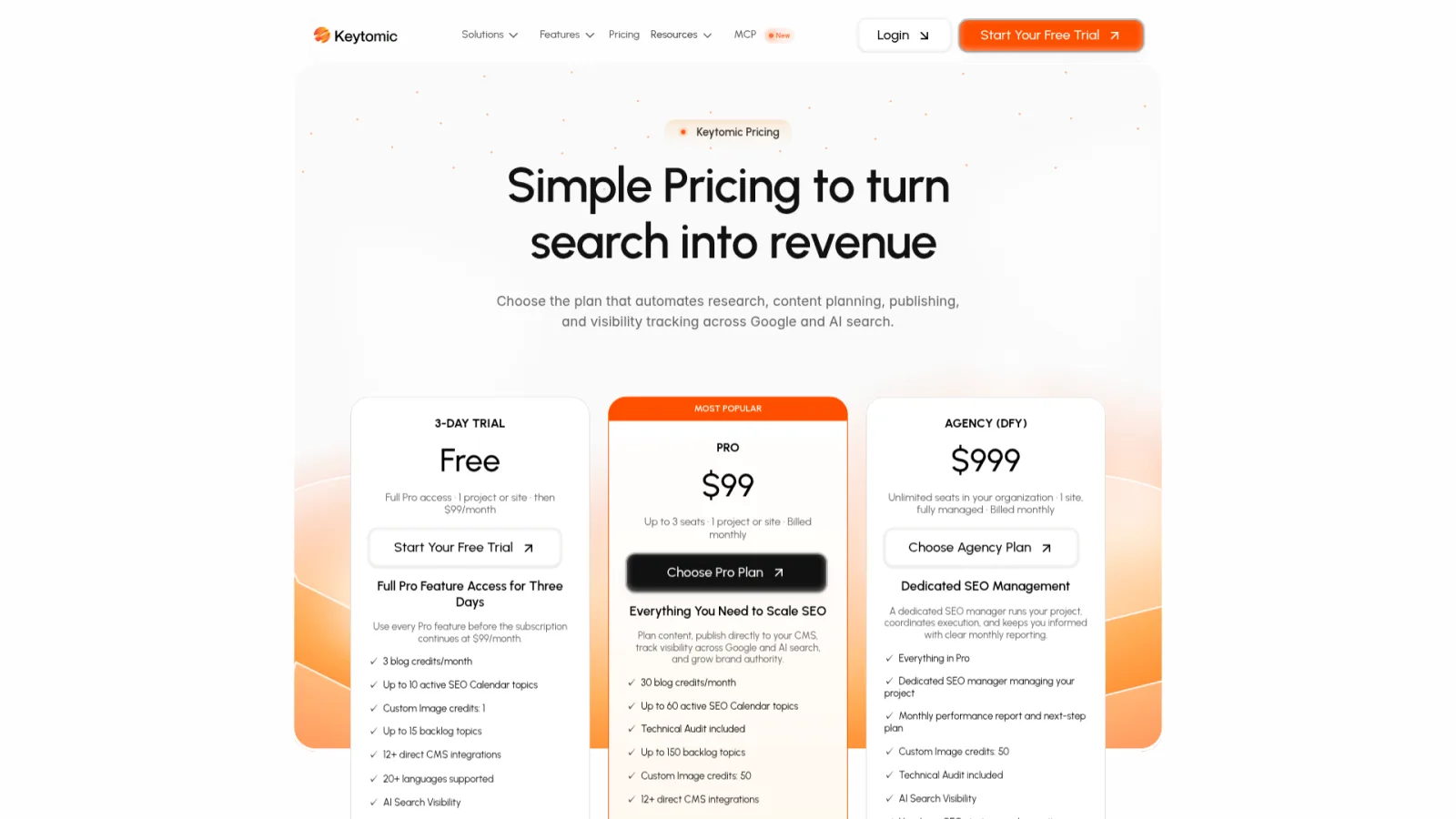
Pro at $99 per month, billed monthly, with a 3-day trial
30 blog credits and 50 custom image credits per month
Up to 60 active SEO Calendar topics and 150 backlog topics
Up to 3 seats and 1 project
12+ direct CMS integrations and 20+ languages
AI visibility on Pro: ChatGPT and Gemini, 20 tracked prompts, updated 3 times a week
Agency (done-for-you) at $999 per month, with a dedicated SEO manager, unlimited seats and AI visibility across ChatGPT, Gemini, Claude and Perplexity
Distribb vs Keytomic: Feature-by-Feature Comparison
Which platform covers more of the SEO workflow?
Both span keyword discovery to publishing. Distribb leans toward execution: buyer-intent keywords, content, publishing, links and outreach. Keytomic leans toward structure: planning, calendar, audits and approval, then publishing and monitoring. If links are your bottleneck, Distribb covers more. If planning, technical health and review are, Keytomic does.
How do content creation and approval differ?
Both generate about 30 pieces a month on their entry plans, but the units differ: Distribb Pro lists 30 articles, while Keytomic Pro lists 30 blog credits. Keytomic is approval-first, so drafts wait for review. Distribb's public pages emphasize publishing, so ask about editing controls, brand instructions, images and internal linking in a demo.
How do technical SEO, backlinks and AI visibility compare?
Technical SEO: Keytomic includes technical audits. Distribb doesn't list an audit feature.
Backlinks: Distribb offers high-DR backlinks, a link exchange and outreach. Keytomic finds backlink opportunities, and your team handles outreach and placement.
AI visibility: Distribb lists five AI surfaces, including Google AI Overviews. Keytomic Pro tracks ChatGPT and Gemini three times a week, and the Agency plan adds Claude and Perplexity.
Is a backlink exchange safe for SEO?
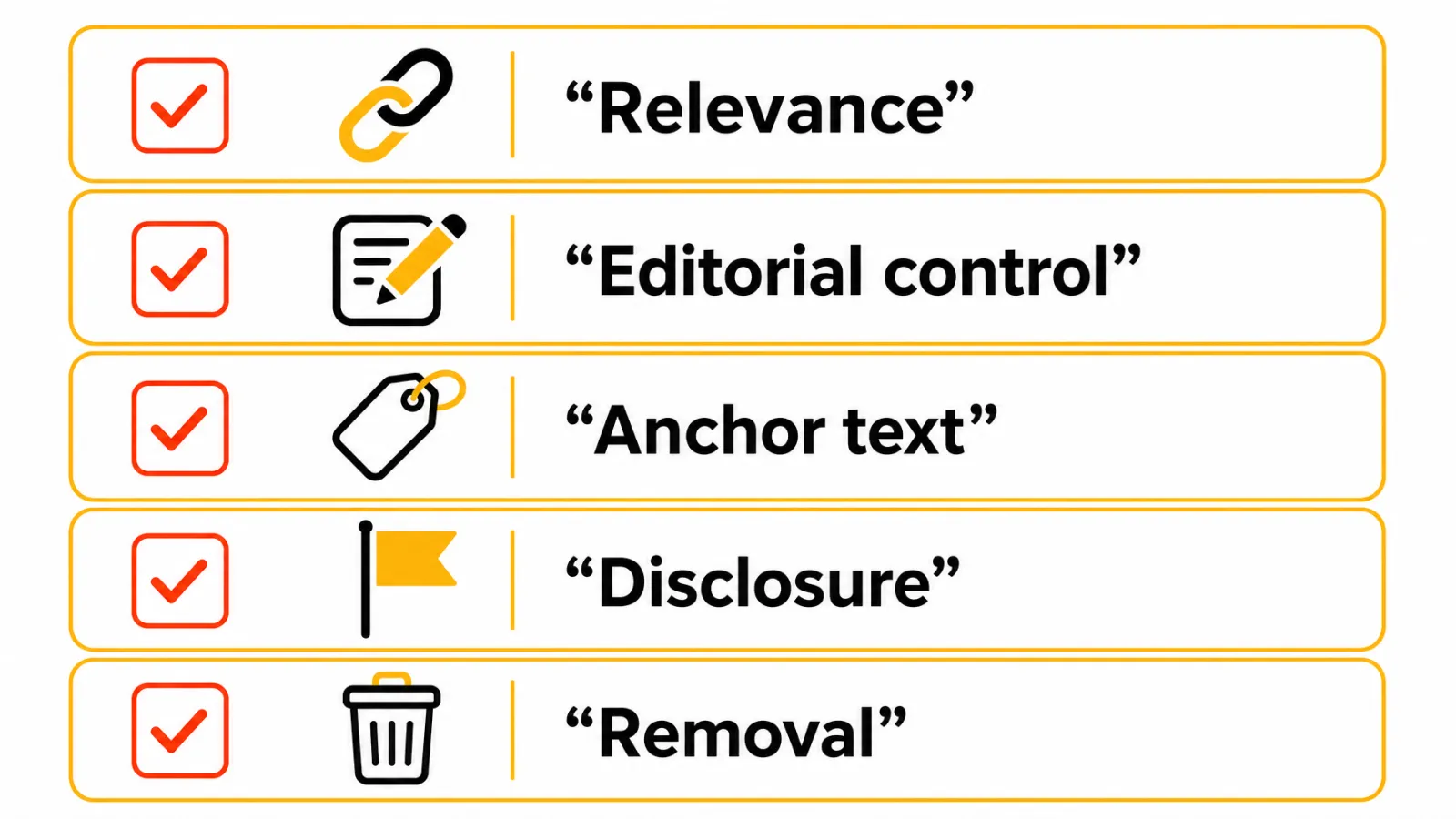
Google's spam policies list excessive link exchanges and automated link services as potential link spam. That isn't a verdict on Distribb, but check these points before you rely on any exchange:
Relevance: do linking pages genuinely fit your topic?
Editorial control: can you approve each placement?
Anchor text: who chooses it, and does it look natural?
Disclosure: are paid or exchanged links labeled appropriately?
Removal: can you pull a link that looks risky?
Which integrations and team workflows are documented?
Distribb documents WordPress, webhooks and API workflows. Keytomic documents WordPress, Shopify, Webflow, Framer, Notion, GoHighLevel, Contentful, Next.js, webhooks and custom APIs. For WordPress teams, Keytomic WordPress SEO automation shows how approval-based publishing works there.
Keytomic Pro includes up to 3 seats and one project. Distribb's pricing page doesn't state seat or site limits, so ask before you commit.
Which Platform Means Fewer Manual SEO Handoffs?
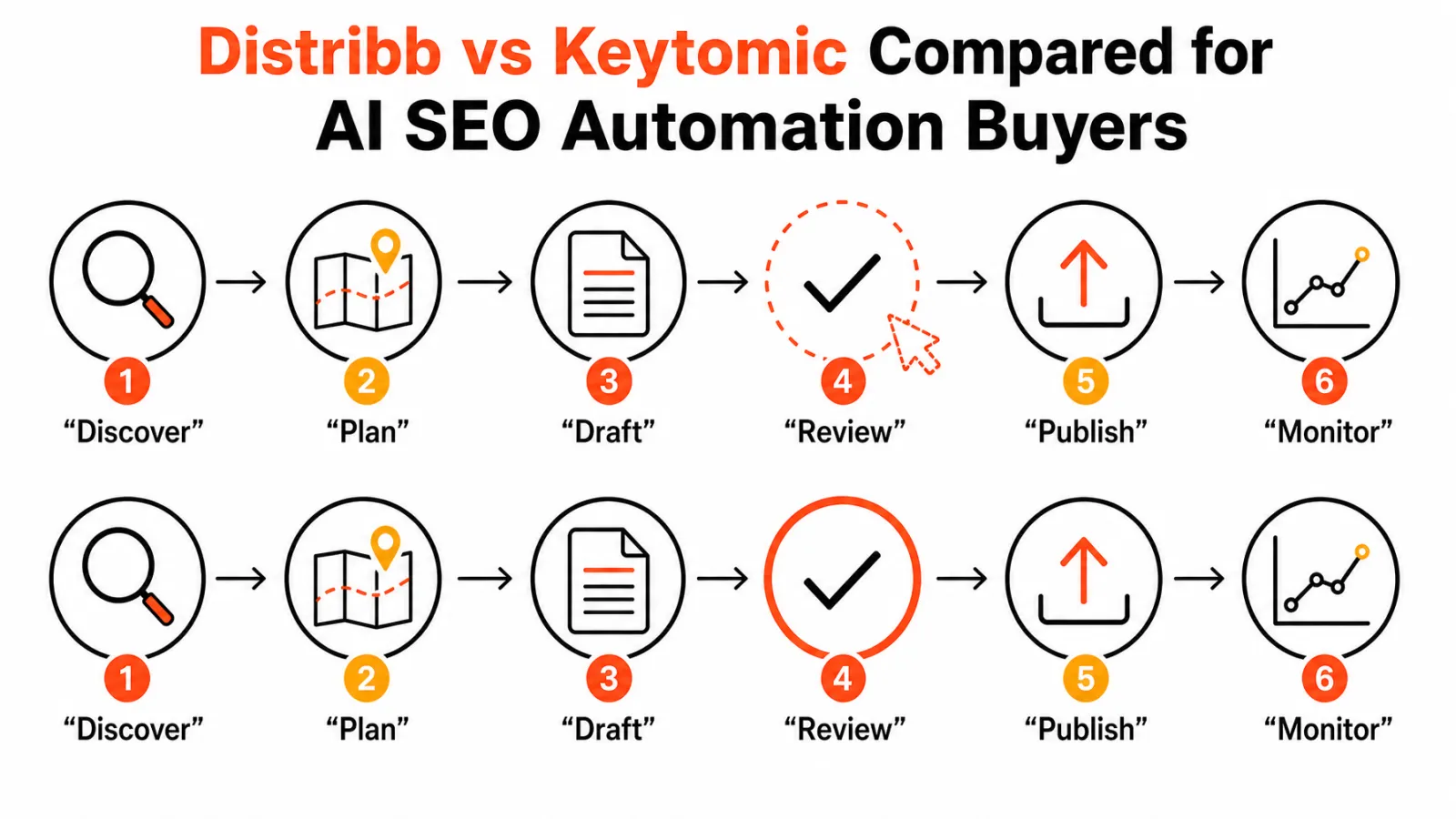
Here is how each step of the SEO loop maps across the two platforms:
Discover: Distribb offers buyer-intent research; Keytomic offers keyword research.
Plan: Keytomic adds topical planning and the SEO Calendar. Distribb mentions topical maps but documents less of its planning layer.
Draft and review: Both draft. Keytomic requires approval; Distribb's review controls need confirming.
Publish: Both publish directly, with broader documented CMS coverage on Keytomic.
Monitor and refresh: Both use Search Console data and AI visibility tracking. Keytomic adds technical audits.
Whichever you pick, keep an editor in the loop. Google's guidance on generative AI content focuses on accuracy, quality and relevance, no matter how content is made. Use Search Console's performance metrics, such as clicks, impressions, CTR and average position, to decide which pages to refresh next.
Pricing, Content Volume and Total Cost
Current pricing (checked October 19, 2026)
Vendor | Plan | Monthly price | Annual billing | Trial | Volume | Seats and sites |
|---|---|---|---|---|---|---|
Distribb | Pro | $97 | $79/month ($948/year) | 7 days | 30 articles/month | Not stated |
Distribb | Accelerator | $495 | $399/month ($4,788/year) | 7 days | 90 articles/month | Not stated |
Keytomic | Pro | $99 | Monthly billing only | 3 days | 30 blog credits; 60 active calendar topics | 3 seats, 1 project |
Keytomic | Agency (done-for-you) | $999 | Monthly billing only | None | 30 blog credits, managed by a dedicated SEO manager | Unlimited seats, 1 project |
Prices can change, so check Distribb's pricing page and Keytomic's pricing page before you buy.
What the included volume really means
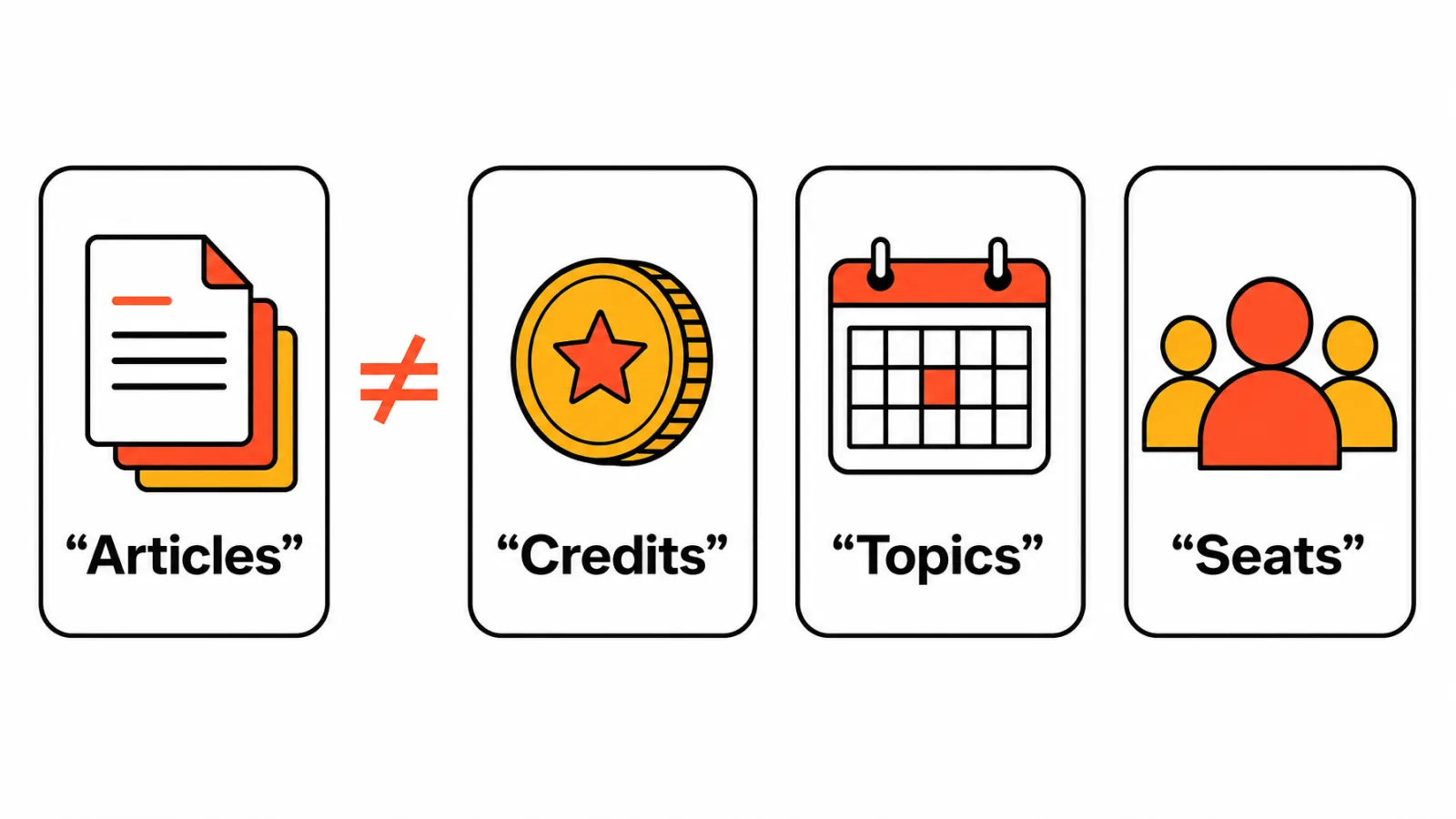
Thirty articles and 30 blog credits look identical, but they are different units:
Articles: finished deliverables a plan generates.
Blog credits: a usage unit; check what each credit covers.
Active topics: planned items sitting in a calendar.
Seats, projects and sites: who can work and how many properties fit.
Costs beyond the subscription
The subscription is only part of the bill. Budget for editorial review, fact-checking, CMS setup, technical fixes, link-risk review, reporting, extra sites and migration. Price your own team's hours against the manual steps each platform removes.
Which Platform Is Right for You?
Choose Distribb if...
You want an AI agent to run research, writing and publishing with minimal input.
Publishing volume matters most: 30 articles a month on Pro, 90 on Accelerator.
You want backlink outreach handled for you and will run a link-policy review first.
You publish on WordPress, where Distribb's plugin is documented.
You need AI visibility tracking that includes Google AI Overviews.
Choose Keytomic if...
You want planning, audits, publishing and visibility tracking in one workspace.
You want every draft approved before it goes live.
You publish on Shopify, Webflow, Framer or another CMS beyond WordPress. Keytomic Shopify SEO automation covers product-linked content and Shopify publishing.
You're an agency or consultant; see Keytomic SEO workflows for agencies for client projects, reporting and publishing.
You're a small marketing team that wants review steps before anything goes live.
When neither is the right fit
You may need a specialist crawler, an enterprise rank-tracking suite, regulated-industry editorial review or a manual digital PR process. Both platforms automate SEO operations, but neither replaces specialist tools for those jobs.
Frequently Asked Questions About Distribb and Keytomic
Platform and workflow questions
What is the main difference between Distribb and Keytomic?
Distribb is an agent-led tool focused on buyer-intent content and backlink outreach. Keytomic is an approval-based workspace that combines planning, technical audits, publishing and AI visibility tracking.
Is Keytomic a good Distribb alternative?
Yes, if you want more control. Keytomic adds human approval, technical audits and 12+ direct CMS integrations, while Distribb offers more done-for-you link building.
Which platform is better for automated content publishing?
Distribb suits teams that want volume with minimal input. Keytomic suits teams that want every draft reviewed before it goes live.
Do both platforms track AI search visibility?
Yes. Distribb lists ChatGPT, Gemini, Perplexity, Google AI Overviews and AI Mode. Keytomic Pro tracks ChatGPT and Gemini, and the Agency plan adds Claude and Perplexity.
Do AI SEO platforms replace human editorial review?
No. Fact-checking, brand knowledge and approval still need a person, because Google's guidance stresses accuracy and quality however content is produced.
Pricing, integrations and risk questions
How much do Distribb and Keytomic cost?
As of October 19, 2026, Distribb Pro is $97 a month ($79 billed annually) and Accelerator is $495 a month ($399 billed annually). Keytomic Pro is $99 a month, and the done-for-you Agency plan is $999 a month.
Do Distribb and Keytomic offer free trials?
Distribb offers a 7-day free trial. Keytomic offers a 3-day trial with full Pro access.
Can Distribb publish to WordPress and Shopify?
Distribb documents WordPress publishing, webhooks and API workflows. Confirm Shopify support with Distribb before relying on it.
Can Keytomic publish to WordPress, Shopify and Webflow?
Yes. Keytomic publishes directly to all three, plus Framer, Notion, GoHighLevel, Contentful, Next.js, webhooks and custom APIs.
Are automated backlink exchanges safe for SEO?
Only with careful review. Google lists excessive link exchanges and automated link services as potential link spam, so check relevance, editorial control and removal options first.
What should I check before switching SEO platforms?
Check data export, CMS permissions, content ownership, existing links, pricing units, approval controls and reporting. Run a small pilot before moving every site.
Decision Framework: How to Choose
Name your main bottleneck: research, content volume, publishing, technical SEO, visibility tracking or link building.
Pick a workflow model: agent-led execution (Distribb) or an approval-based workspace (Keytomic).
Compare plan units: articles, credits, projects, seats and tracked prompts.
Confirm CMS access, data ownership and export options.
Start a trial and test the platform on your own site before committing.
Final verdict: Distribb is the stronger pick for hands-off volume and link outreach. Keytomic is the stronger pick for teams that want one workspace with planning, technical audits and human approval before anything publishes.