 WordPress
 Shopify
 Webflow
 Framer
 Wix
 Squarespace
 Lovable
Dental SEO & LLM Playbook · Keytomic
How to rank dental practices on Google and LLMs using Keytomic
 Written byZainab HaiOrganic Growth, Keytomic
What's in this playbook
- Why dental SEO is different (and harder than most niches)Local intent, YMYL, E-E-A-T, Map Pack, LLM answers
- Step 1 — Keyword research & topical map180+ dental keywords mapped by intent
- Step 2 — 30-day content calendarBuilding a publishing schedule by cluster
- Step 3 — AI blog writer & image studioGenerating E-E-A-T-ready dental content
- Step 4 — Auto-publishing to your CMSWordPress, Webflow, Wix and more
- Step 5 — Google & Bing indexingGetting discovered in hours, not weeks
- Step 6 — Technical SEO auditFinding what's blocking your rankings
- Step 7 — Backlink audit & link buildingBuilding authority in a YMYL vertical
- Step 8 — Reddit AI agentEarning organic mentions where patients research
- Step 9 — AI visibility trackerChatGPT, Claude, Gemini & AI Mode mentions
- Step 10 — Content freshness & auto-updatesKeeping your rankings from sliding
- Step 11 — Advanced analyticsTracking what actually drives new patients
- Step 12 — Keytomic MCP serverConnecting Claude or Cursor to Keytomic
- The resultsWhat this system consistently delivers
Why Dental SEO Is One of the Hardest — and Highest-ROI — Niches to Work In
I want to be direct about something before we get into the tactics: dental SEO is not like ranking a blog or a SaaS product. It is a YMYL (Your Money or Your Life) vertical, which means Google holds dental content to the highest E-E-A-T (Experience, Expertise, Authoritativeness, Trustworthiness) standards. That matters for how you write content, who you attribute it to, and how you structure your site.
At the same time, the ROI is extraordinary. A dental implant patient is worth $3,000–$6,000 to a practice. Invisalign cases run $4,500–$8,000. Emergency visit walk-ins convert to long-term patients at 25–40%. A single keyword like "emergency dentist [city]" — which gets 18,000–22,000 monthly searches in mid-size cities — could be worth tens of thousands of dollars a month in new patient revenue at position #1.
The local nature of dental search is the other thing that makes this unique. The keyword "dentist near me" gets 1.83 million monthly searches globally — but each searcher is looking for a specific practice within 5–10 miles of where they are. That means you're not competing nationally. You're competing in your zip code. That's both the challenge and the opportunity: ranking in a 5-mile radius is achievable in 3–6 months with the right system.
That system is what this playbook documents. I'm going to walk through every Keytomic feature in the order I actually use it, with the dental-specific keyword data, search volumes, and intent mapping that makes it work.
Google is no longer the only place patients ask
Patients now also ask LLMs: ChatGPT, Claude, Gemini, Perplexity and Google's AI Mode. A question like "Who's the best implant dentist in [city]?" gets a short answer that names two or three practices. If yours isn't one of them, the patient never sees a list of ten blue links to scroll.
The good news is that the inputs overlap. LLMs build their answers from the same things Google rewards: your own pages, your directory listings, your reviews and the Reddit threads where patients compare dentists. So every step in this playbook does double duty. Where a step needs something extra for LLMs, I call it out.
If you'd rather see what Keytomic does for dental practices before reading the full playbook, start with our dental SEO page.
Keyword Research & Topical Map
The first thing I do with any dental client is build a complete keyword universe — not just the obvious terms, but every query a patient might type at any stage of their journey.
Most dental practices focus entirely on 3–5 high-volume keywords ("dentist near me", "teeth whitening near me") and ignore the long tail entirely. I use Keytomic's AI keyword research to map the full picture from the start. That's a mistake. The long-tail keywords — searches like "dental implants vs bridge" (3,800/month, KD low), "how long do dental implants last" (5,400/month), "dental bonding vs veneers" (2,800/month, KD 15/100) — are the keywords that actually convert, because patients searching them are deep in their research process and close to booking.
Here's the full keyword universe I map when starting with a dental practice, broken into tiers and clusters:
| Keyword / Query | Monthly Volume | KD | CPC ($) | Intent | Cluster |
|---|---|---|---|---|---|
| dentist near me | 1,830,000 | Medium | $9.50 | Navigational | Homepage |
| best dentist near me | 49,500 | Low | $8.20 | Commercial | Homepage |
| dentist in [city] | Varies | Low | $7–12 | Navigational | Homepage |
| family dentist near me | 22,200 | Low | $6.80 | Navigational | Family |
| family dentist [city] | 880–2,400 | Low | $6.50 | Navigational | Family |
| affordable dentist near me | 18,100 | Low | $5.90 | Commercial | Homepage |
| dental clinic near me | 110,000 | Medium | $8.70 | Navigational | Homepage |
| emergency dentist | 110,000–135,000 | Medium | $11.20 | Transactional | Emergency |
| emergency dentist near me | 60,500 | Medium | $12.40 | Transactional | Emergency |
| emergency dentist [city] | 18,000–22,000 | Low | $10.80 | Transactional | Emergency |
| same day dentist near me | 12,100 | Low | $10.50 | Transactional | Emergency |
| walk in dentist near me | 14,800 | Low | $9.30 | Transactional | Emergency |
| broken tooth emergency dentist | 3,600 | Low | $10.10 | Transactional | Emergency |
| dental implants near me | 90,500 | Medium | $18.60 | Commercial | Implants |
| dental implants cost | 74,000 | Medium | $16.40 | Commercial | Implants |
| how much do dental implants cost | 33,100 | Low | $14.20 | Informational | Implants |
| dental implants vs bridge | 3,800 | Low | $10.80 | Informational | Implants |
| dental implants vs dentures | 5,400 | Low | $12.30 | Informational | Implants |
| how long do dental implants last | 5,400 | Low | $9.60 | Informational | Implants |
| dental implants for seniors | 2,000 | Low 18/100 | $11.40 | Informational | Implants |
| all on 4 dental implants cost | 8,100 | Low | $22.10 | Commercial | Implants |
| single tooth implant cost | 4,400 | Low | $15.60 | Commercial | Implants |
| replace missing tooth options | 2,900 | Low | $9.80 | Informational | Implants |
| cosmetic dentistry | 40,500 | Medium | $13.20 | Commercial | Cosmetic |
| cosmetic dentist near me | 22,200 | Low | $12.80 | Commercial | Cosmetic |
| teeth whitening near me | 22,200 | Low | $6.40 | Commercial | Cosmetic |
| dental veneers near me | 12,100 | Low | $11.70 | Commercial | Cosmetic |
| dental bonding vs veneers | 2,800 | Low 15/100 | $8.90 | Informational | Cosmetic |
| best dental veneers | 3,600 | Low 21/100 | $10.20 | Commercial | Cosmetic |
| porcelain veneers cost | 9,900 | Low | $12.50 | Commercial | Cosmetic |
| smile makeover dentist | 4,400 | Low | $14.30 | Commercial | Cosmetic |
| Invisalign near me | 60,500 | Medium | $10.80 | Commercial | Orthodontics |
| Invisalign provider [city] | 1,900 avg | Low | $9.40 | Commercial | Orthodontics |
| Invisalign vs braces | 18,100 | Medium | $8.60 | Informational | Orthodontics |
| Invisalign cost | 33,100 | Medium | $10.20 | Commercial | Orthodontics |
| clear aligners cost | 4,400 | Low | $9.10 | Commercial | Orthodontics |
| braces for adults | 14,800 | Medium | $7.80 | Commercial | Orthodontics |
| is Invisalign worth it | 5,400 | Low | $6.90 | Informational | Orthodontics |
| pediatric dentist near me | 60,500 | Low | $7.40 | Navigational | Pediatric |
| kids dentist near me | 110,000 | Low | $6.90 | Navigational | Pediatric |
| children's dentist [city] | 1,300 avg | Low | $6.60 | Navigational | Pediatric |
| when should kids first see dentist | 2,900 | Low | $4.20 | Informational | Pediatric |
| root canal near me | 18,100 | Low | $10.30 | Transactional | Procedures |
| root canal cost | 22,200 | Low | $9.80 | Commercial | Procedures |
| does a root canal hurt | 8,100 | Low | $5.60 | Informational | Procedures |
| tooth extraction near me | 14,800 | Low | $9.10 | Transactional | Procedures |
| wisdom tooth removal cost | 12,100 | Low | $8.70 | Commercial | Procedures |
| dental crowns near me | 9,900 | Low | $11.40 | Commercial | Procedures |
| dental crown cost | 18,100 | Low | $10.90 | Commercial | Procedures |
| dental deep cleaning | 12,100 | Low | $8.20 | Commercial | Procedures |
| how often should you go to the dentist | 8,100 | Low | $4.10 | Informational | Education |
| how to relieve tooth pain | 22,200 | Low | $3.80 | Informational | Education |
| dental anxiety how to calm down | 1,600 | Low | $4.50 | Informational | Education |
| what to eat after tooth extraction | 5,400 | Low | $3.20 | Informational | Education |
| signs you need a root canal | 4,400 | Low | $5.10 | Informational | Education |
| how to get rid of sensitive teeth | 6,600 | Low | $3.90 | Informational | Education |
| dentist that accepts Medicaid near me | 14,800 | Low | $6.80 | Navigational | Homepage |
| dentist that accepts [insurance name] | Varies | Low | $7.20 | Navigational | Homepage |
| dental financing near me | 5,400 | Low | $6.60 | Commercial | Financing |
| no credit check dental financing | 3,600 | Low | $7.10 | Commercial | Financing |
| dental payment plans | 5,400 | Low | $6.80 | Commercial | Financing |
61 keywords · scroll the table for the full list
The 9 Topic Clusters I Build for Every Dental Practice
Understanding Search Intent in Dental — This Changes What You Write
Not all dental keywords should be treated the same way. I always map them by intent before assigning them to content types — because a transactional keyword needs a service page, while an informational keyword needs a blog post. Getting this wrong is the single most common dental SEO mistake I see.
Enter your seed keyword in Keytomic's Keyword Research
Go to Keyword Research → Start New Research. I always start with two seeds:
dentist [city]anddental implants [city]. Keytomic's AI expands each into 200–500 related keywords, pre-grouped by topical cluster and tagged by intent.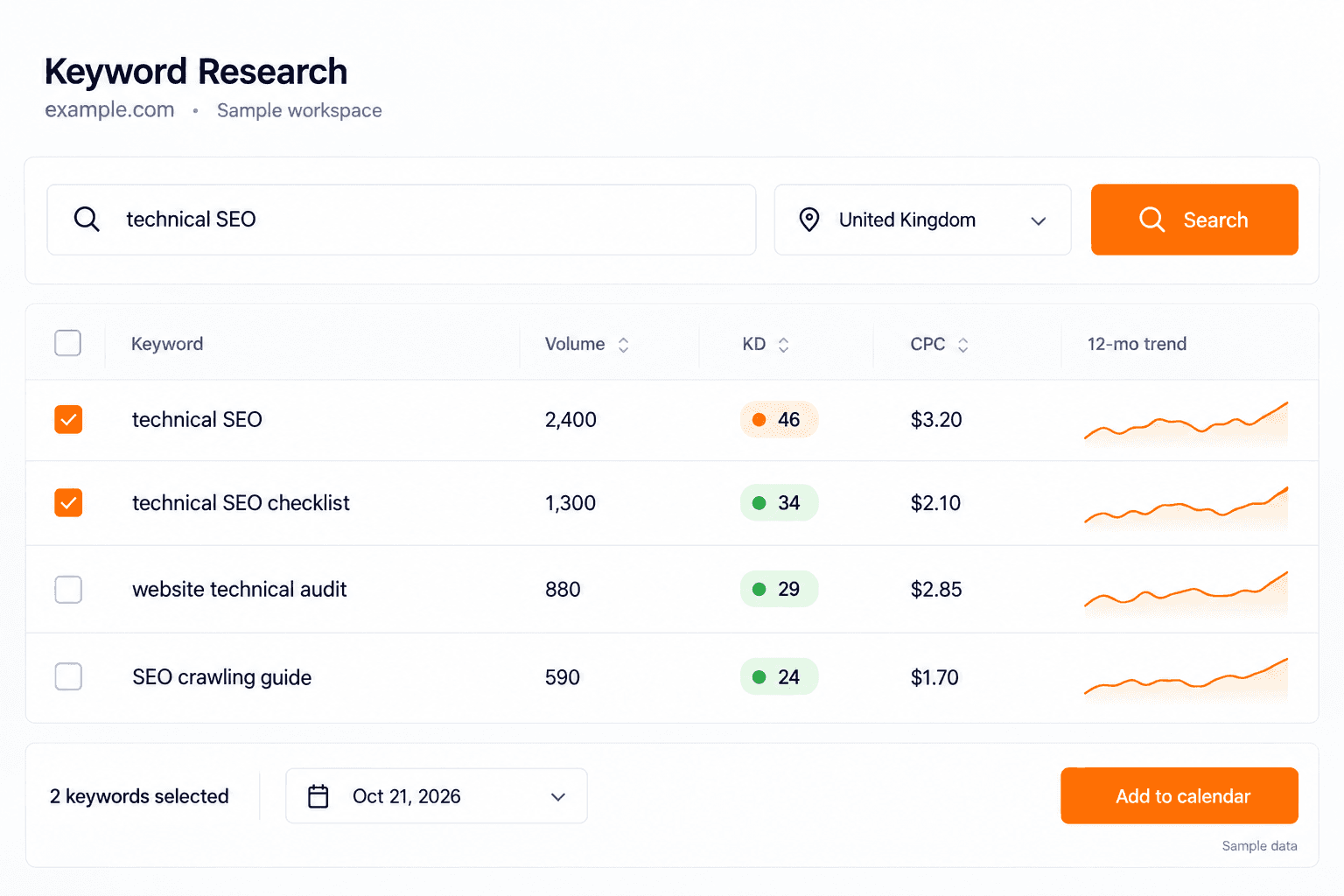
Keyword Research: volume, difficulty, CPC and trend for each keyword, then send picks straight to the calendar.Sample workspace Build your topical map — the foundational architecture
Once keywords are generated, Keytomic's topical map feature groups them into the 9 clusters above and shows you the content architecture needed to cover the topic fully. I think of this as my site blueprint — it tells me exactly how many pages I need and in what order to build them.
The order I always build dental topical maps in:
- First: Homepage cluster (establishes domain relevance for "dentist [city]")
- Second: Emergency cluster (fastest commercial ROI — highest CPC, fastest booking intent)
- Third: Dental implants cluster (highest case value: $3K–$6K per patient)
- Fourth: Orthodontics cluster (Invisalign provider status = recurring referrals)
- Fifth onwards: Cosmetic, pediatric, procedures, education, financing
Prioritise by revenue per keyword, not search volume
This is a principle I apply to every dental keyword list. "Dental implants [city]" has 880 monthly searches but each patient is worth $5,000. "Dental flossers" has 73,000 monthly searches but zero patient acquisition value. Always sort your keyword target list by revenue potential, not raw volume.
Next to the keyword list, I keep a prompt list: the same topics written the way patients ask an LLM. "dental implants cost [city]" becomes "How much do dental implants cost in [city], and does insurance cover any of it?" These longer, conversational questions shape how I write each article (Step 3) and become the prompts I track in Step 9.
My prioritisation formula(Monthly searches × estimated CTR for position #1 × booking conversion rate × average patient value) ÷ months to rank. For "emergency dentist [city]" at 2,400 searches, 25% CTR at #1, 20% booking rate, $400 emergency visit: that's roughly $4,800/month in patient revenue from one keyword.
Building a 30-Day Dental Content Calendar
With the keyword map built, I let Keytomic auto-generate a full month of content topics — assigning keywords to specific days based on cluster priority and publishing cadence.
One of the biggest problems I see with dental practice blogs is inconsistency. A flurry of posts in January, then nothing for months. Google rewards consistent publishing. The content calendar feature solves this by pre-planning a full month of topics, so the team just needs to approve drafts — not decide what to write.
For dental practices, I recommend one article per day, 5 days per week — that's roughly 20 pieces of content per month. Heavier than most practices expect, but achievable with Keytomic's AI writer (Step 3), and it's what it takes to cover all 9 keyword clusters meaningfully within a quarter.
Generate your calendar from your keyword clusters
Go to Content Calendar → Generate Calendar. Select all 9 dental clusters. Set cadence to 1 article/day. Keytomic assigns topics to each day — alternating between TOFU informational posts (dental tips, FAQs, education) and MOFU comparison content (implants vs bridges, Invisalign vs braces) and BOFU landing-page-style posts (emergency dentist [city], cosmetic dentist near me).
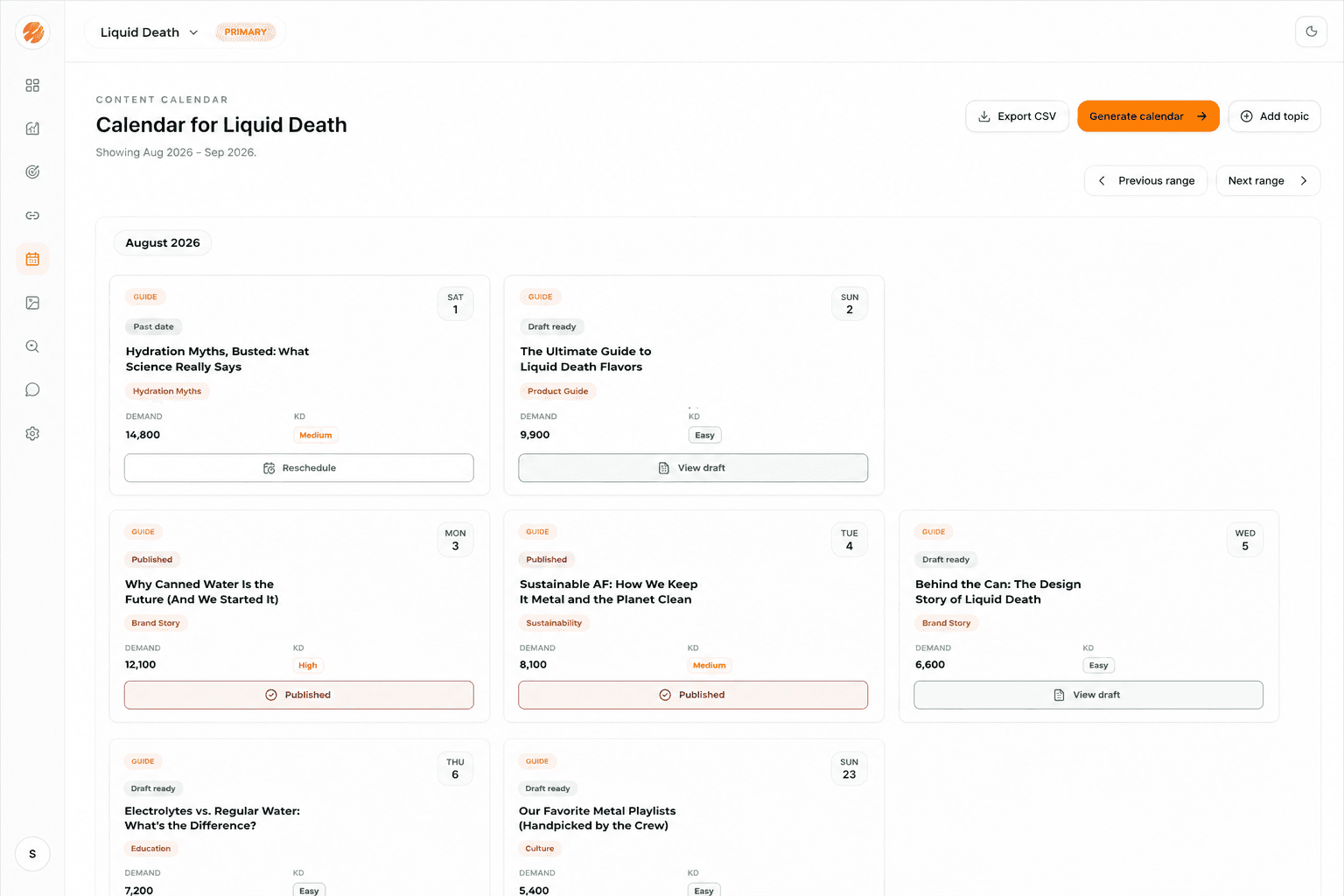
The Calendar: one topic per scheduled day, with its keyword, demand, difficulty and status.App capture Sample article titles Keytomic generates for dental
"How Much Do Dental Implants Cost? [2026 City Guide]"Implants/commercial"Emergency Dentist [City]: What to Do When a Tooth Breaks After Hours"Emergency/transactional"Dental Implants vs Bridge: Which Is the Better Long-Term Investment?"Implants/informational"Invisalign vs Braces for Adults: An Honest Comparison from a [City] Dentist"Orthodontics/informational"Dental Bonding vs Veneers: Which Is Right for Your Smile?"Cosmetic/informational"Best Age for Kids' First Dental Visit (And What to Expect)"Pediatric/informational"9 Ways to Manage Dental Anxiety Before Your Appointment"Education/TOFU"All-on-4 Dental Implants: Cost, Recovery, and Whether They're Worth It"Implants/commercial"No-Credit-Check Dental Financing Options Near You in [City]"Financing/commercial"Signs You Need a Root Canal (Don't Ignore These)"Procedures/informationalAdd manual topics for local and practice-specific content
Keytomic lets you manually add or edit topics. I always add practice-specific content on top of the AI-generated list:
- Neighbourhood guides: "Best family dentist in [neighbourhood]" for each suburb you serve
- Insurance-specific pages: "Dentist that accepts Delta Dental in [city]", "Cigna dental provider [city]"
- Local event content: "Free dental care [city] [year]", "Dental health month [city]"
- Comparison content against local competitors (without naming them directly)
- Dentist bio pages optimised for branded search
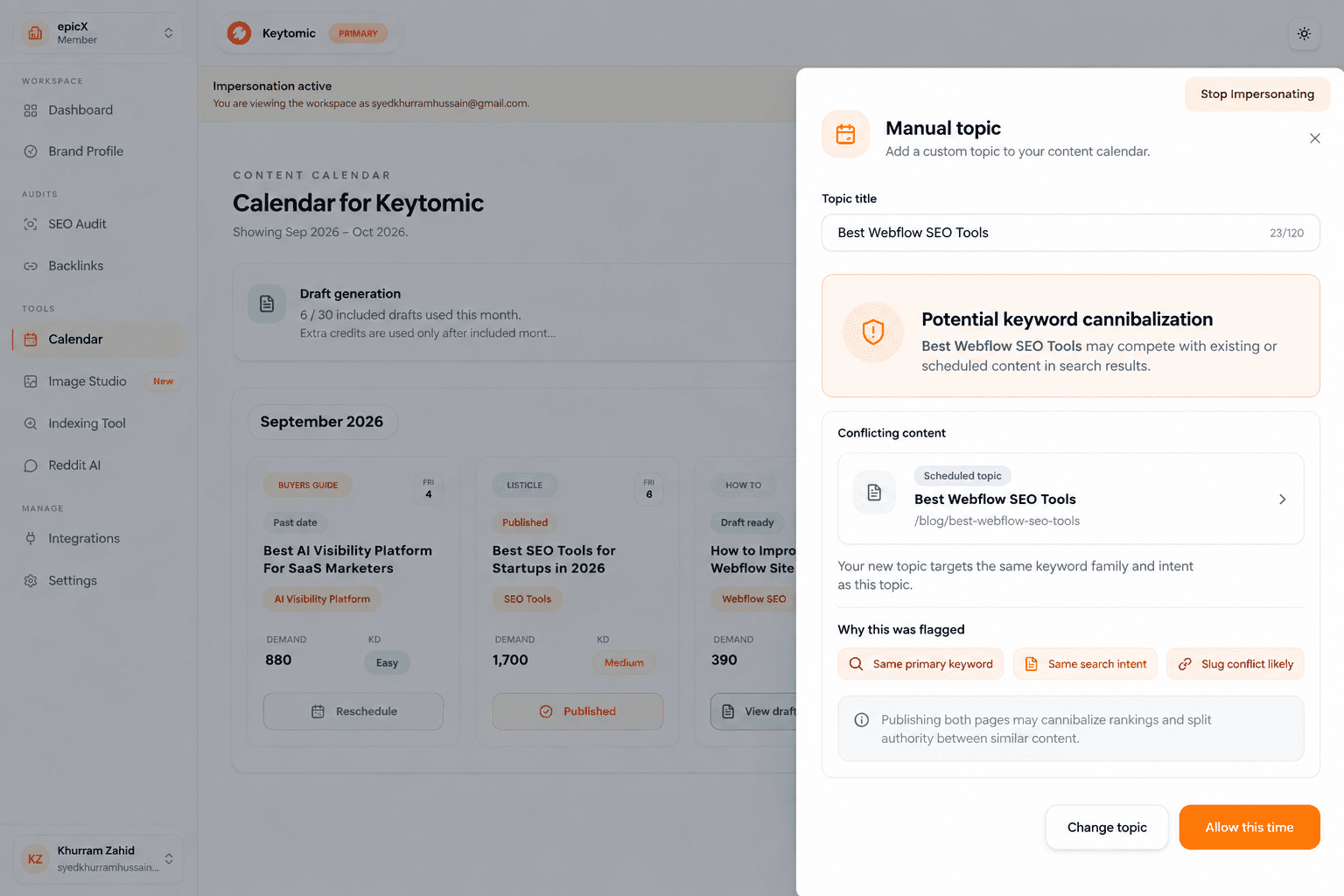
Adding a manual topic: Keytomic flags when it would compete with a page you already have.App capture E-E-A-T is non-negotiable in dentalGoogle's Quality Rater Guidelines classify dental content as YMYL (Your Money or Your Life). Every article must be authored by or reviewed by a licensed dentist. Set this up in Keytomic's author profile settings before the first article publishes. This isn't optional — it's a ranking requirement in 2026.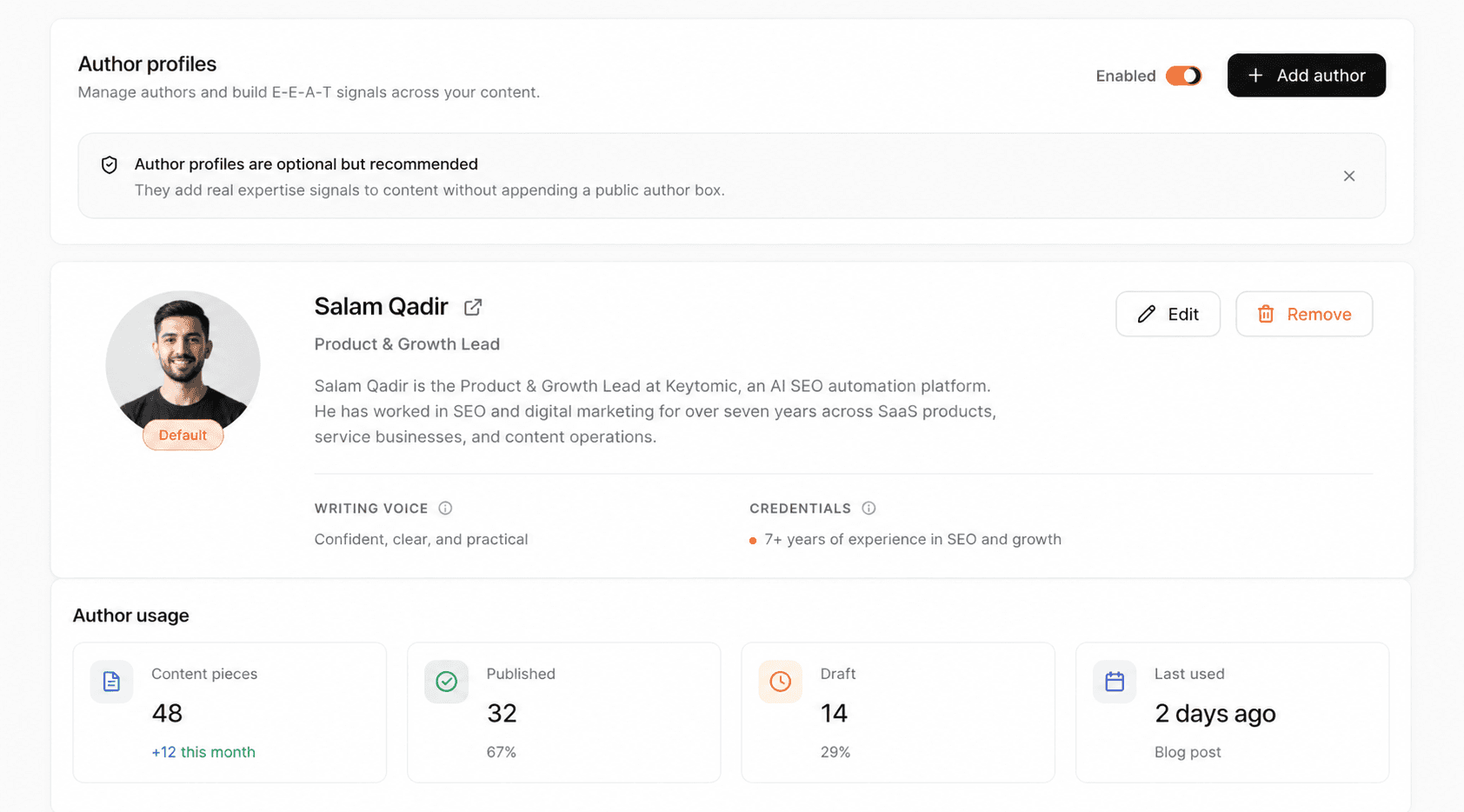
Author profiles carry the reviewer's name, bio and credentials into every article.App capture
Writing Dental Content That Google Trusts
Keytomic's AI writer doesn't just generate text — it analyses the top 10 results for your target keyword and writes an article that covers everything they cover, plus the gaps they miss.
Generating dental content at scale used to mean hiring a dental copywriter at $200–400 per article. With Keytomic's AI blog writer, I can produce a 1,500-word E-E-A-T-optimised dental article in about 4 minutes — and then spend 10 minutes having a dentist review it. That's the workflow I actually use.
What makes dental content rank well in 2026 isn't just keyword density — it's information gain. Google's helpful content system rewards content that tells searchers something the top 10 results don't. I use Keytomic's content gap analysis (built into the writer) to identify those gaps every time.
Generate a full article from your calendar topic
Click any calendar topic → Generate Article. Keytomic analyses the SERP for that keyword, extracts the core points covered by ranking pages, and writes a comprehensive article that fills the gaps. For "How Much Do Dental Implants Cost?", it automatically includes the sections that convert: cost breakdown by implant type, insurance coverage section, financing options, local CTA.
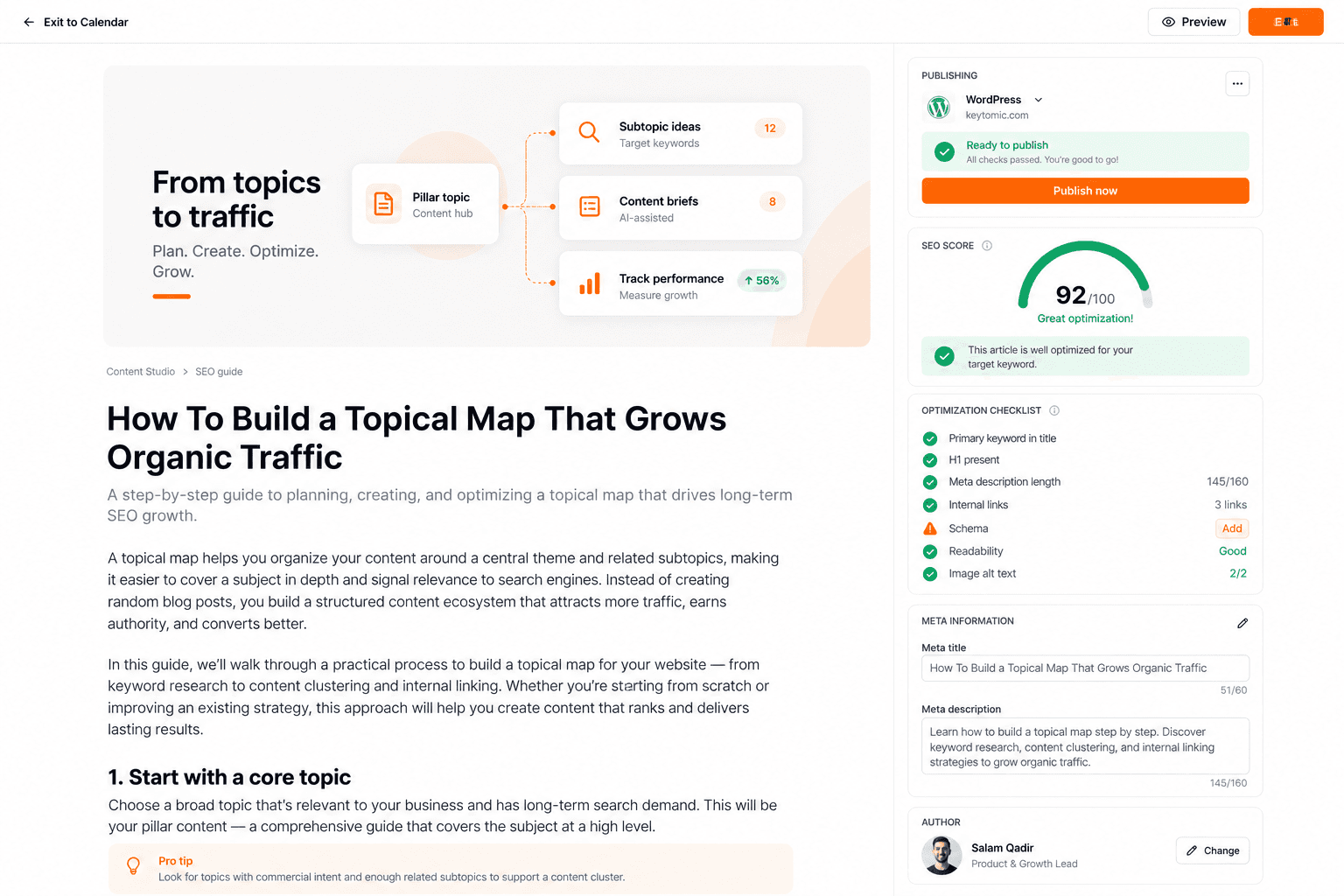
The article editor: SEO score, optimisation checklist, meta tags and author beside the draft.App capture Structure dental articles for both Google and patients
For dental content specifically, I always structure articles with these sections in this order:
- Intro that leads with the answer — Google's AI Overviews pull from first paragraphs. Answer the question directly in the first 2–3 sentences.
- Who this applies to — patient segmentation improves relevance signals
- The main content body — comprehensive, with H2/H3 headings written as questions patients ask ("How much does a dental implant cost in [city]?")
- FAQs — 5–8 questions with schema markup for People Also Ask rich results
- Local CTA — "Book a free consultation at our [city] dental office" with phone number and address
- Author bio block — licensed dentist name, credentials, review date
Dental keyword density I targetPrimary keyword: 1–1.5% density. Secondary keywords (procedure variants, local modifiers): naturally worked into headings and body. I never keyword-stuff in dental content — Google's algorithms are specifically trained to penalise it in health content. The goal is natural, comprehensive coverage of the topic.Writing so LLMs can quote youLLMs lift passages that make sense on their own. I make sure every article has: a two-sentence answer under each question heading, specific facts an LLM can repeat (price ranges, insurers accepted, opening hours, the dentist's credentials), the practice name and city written out in full, and an FAQ block. Vague copy like "we offer affordable options" gives an LLM nothing to cite.Generate a featured image with AI Image Studio
Go to the article draft → Generate Image. I use prompts like: "Professional dental office interior, warm lighting, modern equipment, clean and welcoming, photorealistic, no watermark" for general posts, or "Close-up of a healthy smile before-and-after dental veneers, studio lighting, high quality" for cosmetic content. Keytomic produces a royalty-free image sized for your blog's featured image slot — no stock photo attribution needed.
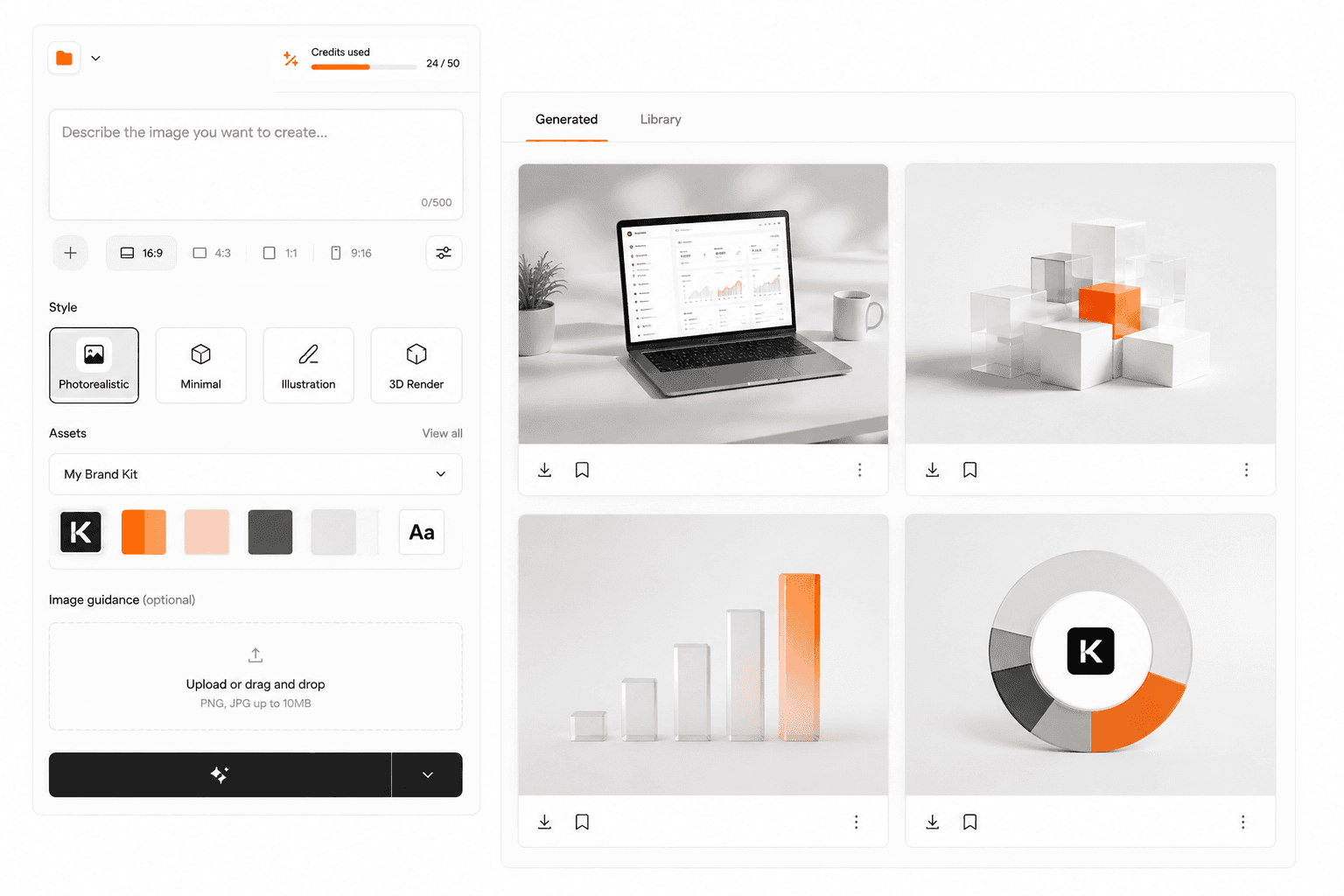
Image Studio: prompt, style and brand kit in one place, with every generation saved to the library.App capture The dentist review step — 10 minutes that protect your rankings
Before publishing any article with clinical claims, I have a licensed dentist on the practice's team do a 10-minute review. They check: factual accuracy of any medical claims, local pricing accuracy, and whether the advice aligns with current dental standards. They sign off with their name, credentials, and review date — which go into the author block. This is E-E-A-T in practice, and it's what separates dental content that ranks from dental content that gets filtered out of sensitive topic searches.
Auto-Publishing to Your Dental Website
Once an article is approved, Keytomic publishes it directly to your website — no copy-pasting, no formatting, no manual image uploads.
Connect your dental website platform
Go to Settings → Integrations. Most dental practices run on WordPress (by far the most common), but I've also set this up on Webflow, Wix, and Framer for newer practices. Keytomic connects to all of them:
Configure dental-specific publish settings
I configure the following for every dental site: publish time (8am local time — when most patients are searching), author attribution mapped to the reviewing dentist's name, post category set to "Blog" for informational content and "Service Pages" for local landing pages, and URL slug format set to
/blog/[keyword-slug]. Keytomic automatically handles canonical URLs, meta titles, meta descriptions, and Open Graph tags.Approve → auto-publish → auto-index
Articles sit in Draft → Ready for Review. After the dentist reviews, click Approve & Schedule. Keytomic handles the rest — publishing at the scheduled time and triggering Google/Bing indexing submission automatically (Step 5). The whole process from approved draft to live indexed page takes under 6 hours.
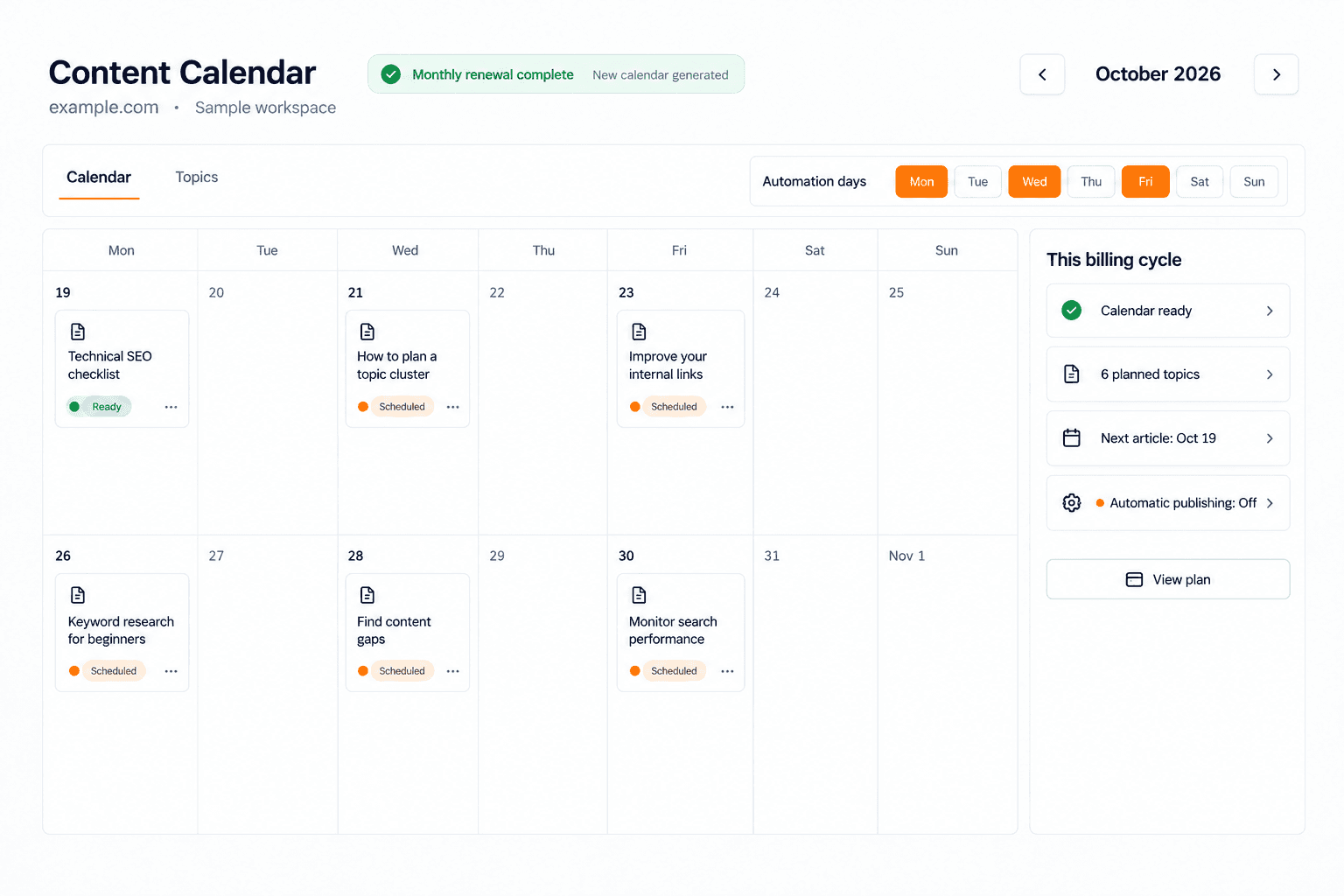
Automation days decide when drafts are written and, with automatic publishing on, when they go live.Sample workspace Multi-location dental practice tipIf you're managing a dental group with multiple locations, create a separate Keytomic project per location. Each publishes to its own site subdomain or location page, targeting its own city-specific keywords ("dentist downtown [city]", "dentist [suburb]"). This builds local relevance for each location individually rather than diluting it across one site.
Getting Every Dental Page Indexed Fast
Publishing a page and having Google see it are two different things. Keytomic submits every new page directly to Google and Bing via their Indexing APIs — turning a 3-week crawl wait into a 2–6 hour discovery time.
Connect Google Search Console and Bing Webmaster Tools
Go to Indexing → Connect Accounts. Keytomic connects to both Google Search Console and Bing Webmaster Tools via API. It uses the Google Indexing API to push URLs rather than waiting for a Googlebot crawl — which can take weeks for newer dental sites with low crawl budgets.
Bing matters more than most practices think. Bing's index is one of the sources behind ChatGPT search and Microsoft Copilot, so a page Bing hasn't indexed is a page those answers are unlikely to cite.
Auto-submit every published article
Turn on Auto-Index on Publish. Every new dental article goes live → gets submitted to Google and Bing within minutes. I track discovery time for every article in the indexing dashboard — across dental sites I've run this on, average discovery time is 2–6 hours vs. the standard 3–21 day crawl wait.
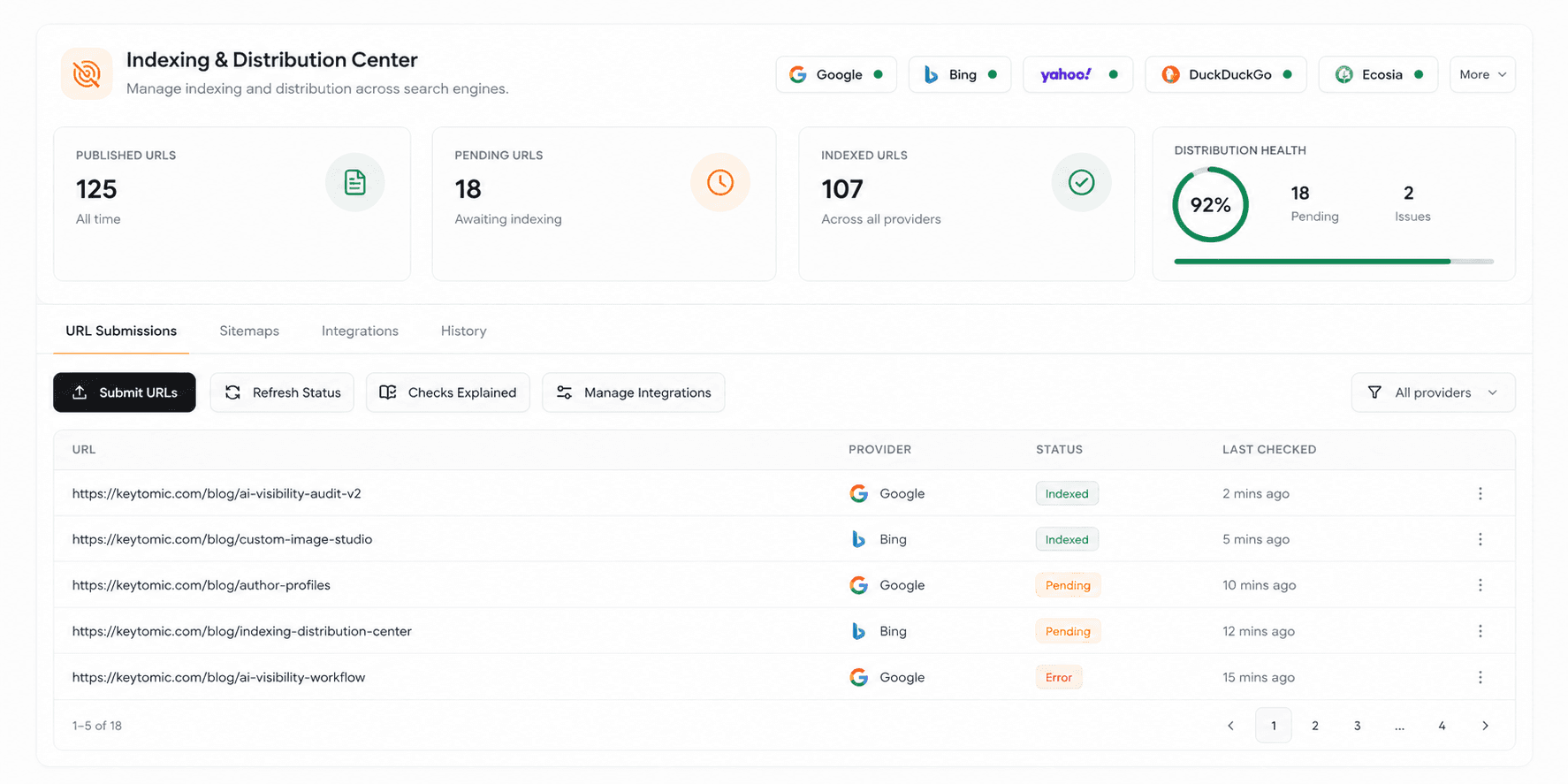
The Indexing & Distribution Center: every submitted URL with its engine, status and last check.App capture Bulk-inspect and submit older service pages
Use Indexing → Inspect URLs to check which existing dental service pages are indexed. I always find at least 10–20% of a dental site's service pages are either not indexed or showing "Crawled — currently not indexed" in GSC. Submitting them through Keytomic directly fixes the most common cause: Google never bothered to crawl them because there were no internal links pointing to them. I fix the internal links in Step 6 (Technical Audit) and re-submit simultaneously.
Technical SEO Audit for Dental Websites
Even the best dental content won't rank if the site has underlying technical issues. I run Keytomic's audit on every dental site before publishing a single piece of content.
In my experience, dental practice websites — especially older WordPress sites or sites built by dental-specific website vendors — consistently have the same set of technical issues. I see missing LocalBusiness schema on nearly every dental site I audit. I see duplicate title tags on service pages. I see uncompressed before-and-after smile photos destroying Core Web Vitals. This section shows you what to look for and how Keytomic surfaces it.
Run your first site audit
Go to Audit → Start Audit. Enter your domain. The crawl takes 15–30 minutes for a typical dental practice site (50–200 pages). I run this before any content work so I know the site's baseline health and can fix structural issues that would otherwise drag down everything I publish.
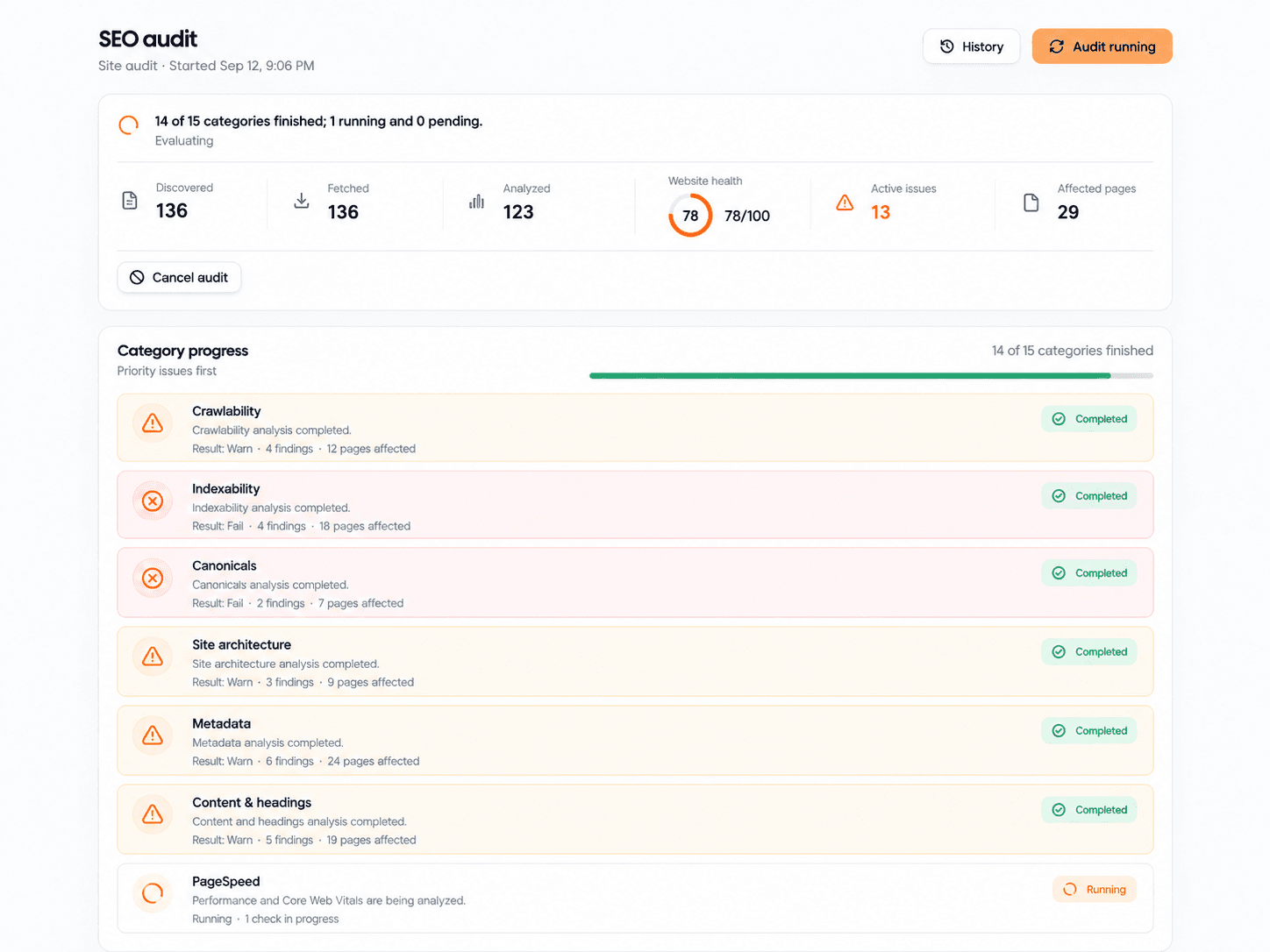
An audit in progress: each report area fills in as the crawl runs, with findings and affected pages.App capture The issues I see on almost every dental site
criticalMissing LocalBusiness / MedicalBusiness Schema (Critical)No structured data telling Google your practice name, address, phone, hours, and service areas. Adding Dentist schema (schema.org) — a subtype of MedicalBusiness — directly improves Knowledge Panel and Map Pack appearance.criticalDuplicate Title Tags Across Service Pages (Critical)Multiple pages sharing titles like "Dental Services – [Practice Name]". Every service page needs a unique, keyword-targeted title: "Dental Implants [City] | [Practice Name]".criticalNo FAQ Schema on Informational Pages (Critical)Missing FAQ schema = missing People Also Ask rich results. Dental FAQ content with FAQ structured data (Google docs) consistently wins PAA boxes and improves CTR by 20–35%.warningSlow Core Web Vitals on Mobile (Warning)LCP of 4–6 seconds on mobile. Almost always caused by uncompressed before/after smile photos (dental sites love these). Convert to WebP, add lazy loading. Core Web Vitals directly affect your search ranking, per Google's documentation.warningThin Content on Service Pages (Warning)Pages like /dental-crowns or /tooth-extraction with under 300 words. These pages need 800–1,500 words with keyword coverage, FAQs, local modifiers, and strong CTAs to compete with established dental SEO sites.warningImages Missing Alt Text (Warning)Dental sites are image-heavy (team photos, equipment, before/afters). Alt text like "dental implant procedure [city]" is both an accessibility requirement and an image search SEO signal.warningNAP Inconsistencies (Warning)Name, Address, Phone number varies across the site (suite number present on some pages, missing on others). Google's local algorithm cross-references NAP data against directory listings. Inconsistencies reduce Map Pack ranking strength.warningMissing Canonical Tags on Location Pages (Warning)Multi-location dental groups often have duplicate content across city-specific pages. Canonical tags prevent these from competing against each other.warningAI Crawlers Blocked in robots.txt (Warning)Some dental site templates and security plugins block AI crawlers such as GPTBot, ClaudeBot and PerplexityBot. If they can't read your pages, LLMs can't cite them. Keytomic's audit covers this under AI/GEO Readiness.passSSL Certificate ValidHTTPS correctly configured. No mixed content issues. Essential for patient trust and Google ranking.passXML Sitemap Present and SubmittedSitemap at /sitemap.xml submitted to Google Search Console. All service pages included.Schedule weekly re-audits
Use Audit → Schedule to run a weekly audit. New technical issues appear constantly as content is published, WordPress plugins are updated, and site changes are made. I catch issues weekly rather than quarterly — the difference in ranking stability is significant. After fixing the schema and duplicate title tags on dental sites I've audited, I consistently see a 15–25% increase in Map Pack appearances within 6–8 weeks.
Backlink Audit & Building Authority in a YMYL Vertical
Backlinks are one of Google's strongest ranking signals in YMYL verticals. Dental is competitive — you can't rank without authority. Here's how I build it systematically.
Dental SEO backlink building is different from most niches because healthcare content is under heavier editorial scrutiny. You can't just buy guest posts on generic blogs. The links that move the needle for dental practices are: local authority sites, healthcare directories, dental association pages, local press, and genuinely earned mentions from your content.
Run a backlink profile audit and competitor gap analysis
Go to Backlinks → Run Audit. Enter your domain and your top 3 competitors (search "dental implants [city]" and note who ranks #1–3). Keytomic shows you a side-by-side link profile comparison. Domains linking to competitors but not to you are your outreach target list.
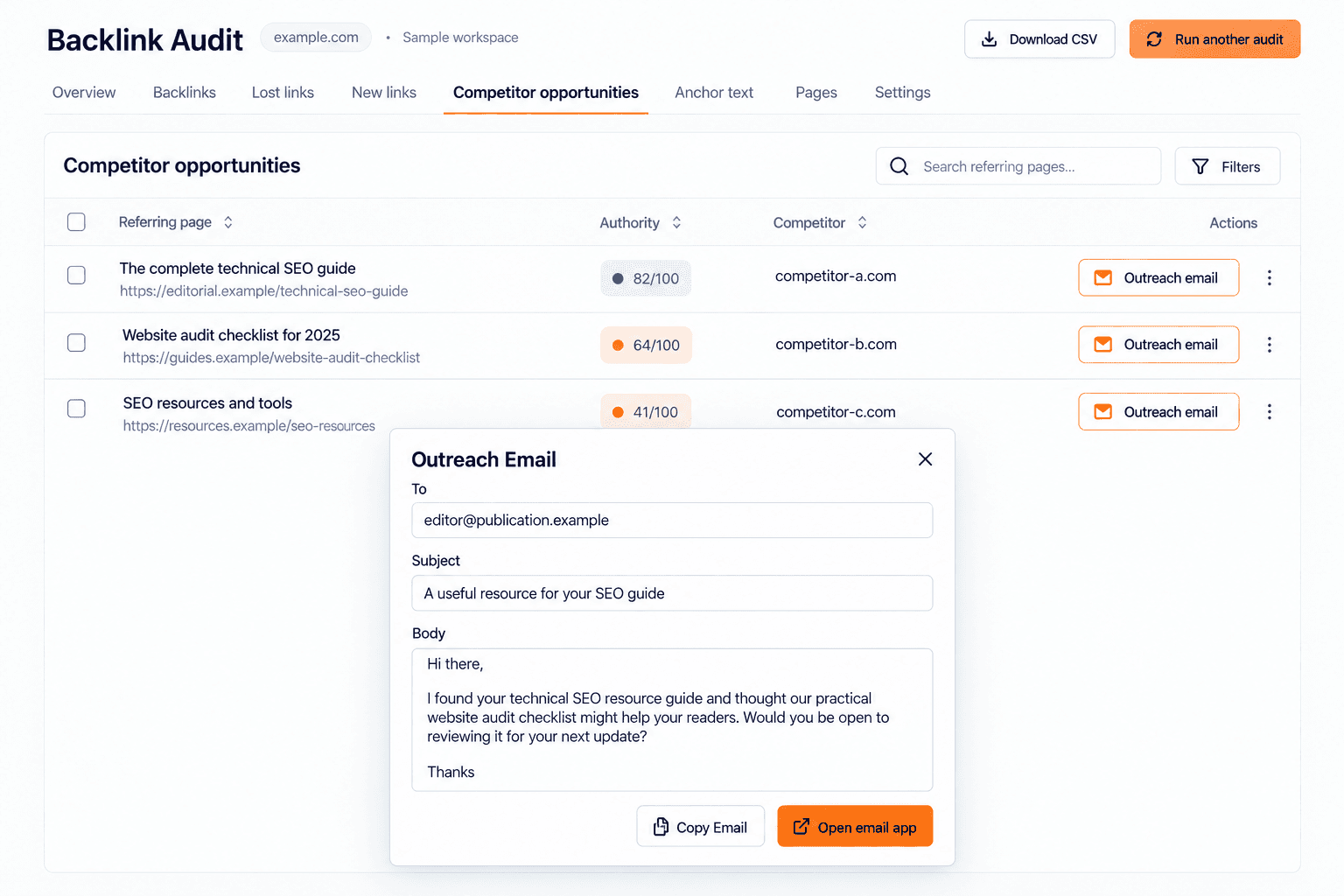
Competitor opportunities: pages that link to competitors and not to you, with a drafted outreach email to review.Sample workspace The dental backlink target list I use
These are the highest-value link sources for dental practices, ranked by impact:
- Dental healthcare directories (DR 50–90, DoFollow): Healthgrades, Zocdoc, Vitals, WebMD Doctor Finder, 1-800-Dentist, CareDash, US News Health, RateMDs, Doctor.com
- Dental associations (DR 60–80): ADA.org state chapter member directories, local dental society listings, specialty association pages (AAO for orthodontics, AACD for cosmetic)
- Local directories with dental categories: Local Chamber of Commerce member pages, local business directories, neighbourhood association sites
- Local press and media: City magazine features, local news health sections, parenting blogs ("best kids dentist in [city]"), community guides
- Insurance provider dentist finders: Delta Dental, Cigna, Aetna, BlueCross provider directory pages
- Community and sponsorship links: School sponsorship pages, local event sponsors, charity dental days
- Guest posts on health & wellness sites: Local lifestyle publications, health blogs (pitch: dental health tips from a licensed dentist)
Quick win: dental directory sweep
The fastest 10 backlinks any dental practice can get: claim and complete profiles on Healthgrades, Vitals, Zocdoc, RateMDs, 1-800-Dentist, CareDash, US News Health, WebMD, Wellness.com, and Sesame (dental booking). Takes 2–3 hours. Delivers 10 DoFollow links from domains with DR 50–91. Use Keytomic's backlink tracker to monitor when these go live and confirm they're indexed.
ADA and specialty association pagesIf the dentist is an ADA member, their state chapter typically has a "Find a Dentist" directory that provides a DoFollow link from ada.org (DR 78+). Same for the American Academy of Cosmetic Dentistry (AACD) if they do cosmetic work, or the American Association of Orthodontists (AAO) if they offer Invisalign. These are extremely high-authority links that most practices never claim.These directories pull double duty for LLMs. When an LLM recommends dentists, it often leans on Healthgrades, Zocdoc and Google Business Profile listings. A complete, consistent profile on each one is a link for Google and a source for AI answers.
Reddit AI Agent — Earning Organic Mentions Where Patients Research
Reddit is where patients go when they want honest, unfiltered opinions about dental procedures. I use Keytomic's Reddit agent to find these conversations and contribute genuinely helpful answers.
When someone is considering dental implants or Invisalign, they almost always search Reddit at some point. "Anyone have experience with dental implants in [city]?" or "Is Invisalign worth it at 35?" get hundreds of upvotes in subreddits like r/Dentistry, r/askdentists, r/cosmeticdentistry, and local city subreddits. These conversations rank on Google. Getting mentioned in them is both a referral traffic source and a trust signal for the practice.
Reddit also feeds LLMs. ChatGPT, Perplexity and Google's AI answers regularly cite Reddit threads for "is it worth it" and "who would you recommend" questions, so a helpful reply in the right thread can surface in AI answers long after it's posted.
Scan for dental conversations in Keytomic
Go to Reddit Agent → Scan. I enter dental keywords across two categories — procedure queries and local queries:
- Procedure queries:
dental implants cost,Invisalign worth it,root canal experience,teeth whitening results,dental veneers before after - Local queries:
dentist recommendation [city],best dentist [city],emergency dentist [city],dental implants [city] - Concern queries:
dental anxiety tips,scared of dentist,dentist phobia help,does root canal hurt
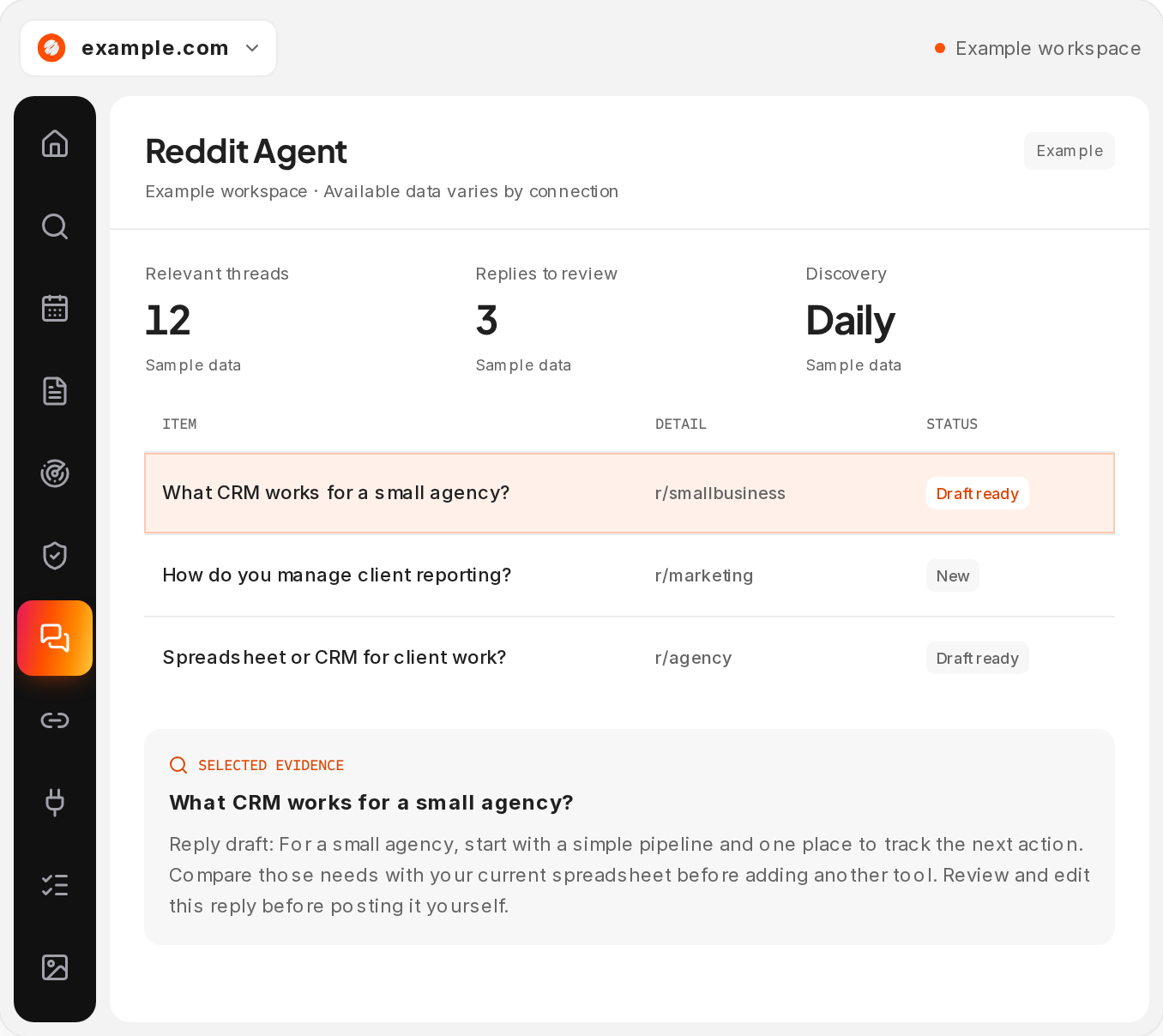
Reddit Agent: relevant threads, drafts ready for review, and the evidence behind each pick.Sample workspace Anyone had dental implants done in [city]? Looking for recommendations, my dentist retiredr/[City] · 847 upvotes · 143 comments · 3 days ago ExampleKeytomic AI Draft ReplyIf you're in [area], [Practice Name] does implants — they're at [address] and offer a free consultation to check whether you're a good candidate based on bone density. Worth knowing: implant pricing in [city] typically ranges from $3,000–$6,000 per tooth depending on whether you need a bone graft first. Happy to answer any questions about the procedure if you have them.Is Invisalign actually worth it for adults in their 30s? Feeling embarrassed about crooked teethr/askdentists · 2.1k upvotes · 189 comments · 1 week ago ExampleKeytomic AI Draft ReplyWorth it at any age — roughly 30% of Invisalign patients are adults. Key factors: how complex your case is (mild crowding responds best), compliance (you need to wear the trays 22h/day), and finding an Invisalign-certified provider. Cost in most US cities: $3,500–$8,000 depending on case complexity. Many practices offer 0% APR financing for 12–18 months. The embarrassment fades fast once treatment starts — most people barely notice aligners.- Procedure queries:
Edit for voice and post
Keytomic drafts replies for review. I always edit them to match the dentist's natural voice — specific, confident, and helpful without being promotional. The practice name appears only where it genuinely fits the conversation. The goal is to be the most helpful reply in the thread, not the most promotional one. That's what gets upvoted, and upvotes = more visibility = more referral traffic.
Reddit rules I always followNever drop a direct link in a first comment — it gets flagged as spam. Lead with genuine information. Mention the practice by name only where it's naturally relevant. Build a posting history with helpful replies before promoting anything. r/askdentists in particular has strong anti-promotion rules — read them before posting.
AI Visibility Tracker — Showing Up in ChatGPT, Claude, Gemini & AI Mode
In 2026, patients don't just Google — they ask AI assistants. Keytomic's AI Visibility Tracker monitors whether your dental practice is being recommended when patients ask ChatGPT, Claude, Gemini, or Google's AI Mode for dental recommendations.
This is one of the features I'm most excited about for dental practices right now. I've started seeing "found you on ChatGPT" appearing in new patient intake forms. It's still a small percentage of total leads, but it's growing fast. And unlike Google rankings, most dental practices have no idea whether they're appearing in AI recommendations at all — which means early movers get a real advantage.
Per eMarketer's Healthcare Consumer 2026 report, 65.1% of healthcare consumers start their search journey on a traditional search engine — but AI answer engines are growing as a first touchpoint — Google's AI Overviews in particular are reshaping how dental queries surface.
Set up your AI visibility prompt list
Go to AI Visibility → Setup. I enter prompts that potential patients would actually ask an AI assistant:
- "What's the best dental practice in [city] for implants?"
- "How much do dental implants cost in [city]?"
- "Recommend a family dentist in [city] that accepts Delta Dental"
- "Is Invisalign worth the cost for someone in their 30s?"
- "What should I know before getting a root canal?"
- "What are the best teeth whitening options near me?"
- "Find me a cosmetic dentist in [city] who does veneers"
- "What's the difference between dental implants and dentures?"
Track your AI mention rate across engines
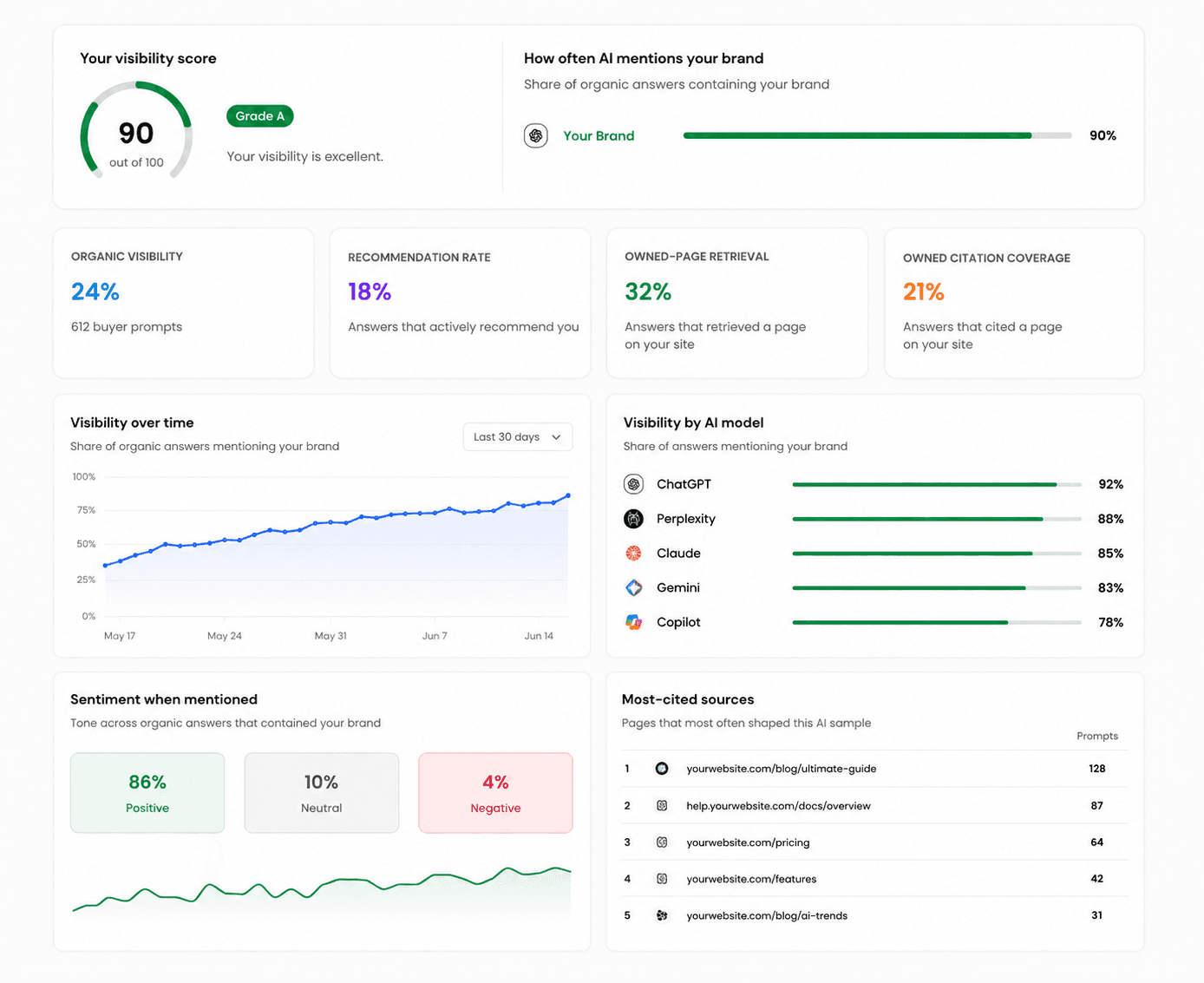
The AI Visibility report: mentions, recommendations and citations by model, with sentiment and the sources AI cites.App capture Improve your AI visibility score with targeted content
AI engines pull recommendations from sources they've indexed — primarily the practice's own content, its directory listings, and its reviews. To improve AI visibility for a dental practice I focus on three things: publishing FAQ content that directly answers the tracked prompts, ensuring all directory profiles (Healthgrades, Google Business Profile, Zocdoc) are complete and consistent, and generating reviews that use specific service keywords. A patient writing "best dental implants in [city]" in a Google review is more valuable than a generic 5-star review for AI visibility purposes.
Content Freshness — Keeping Dental Rankings From Sliding
Dental content goes stale fast. Pricing changes, insurance networks update, new treatments emerge. Keytomic monitors your existing articles and automatically refreshes them before they lose rankings.
One of the most underrated aspects of dental SEO is content freshness maintenance. I've watched dental articles rank at #3 for six months and then slide to #12 simply because the content became outdated — a 2024 cost figure in a 2026 article, for example. Google's freshness signals are particularly active in price-sensitive queries like "how much do dental implants cost" and "Invisalign cost". If your article has stale pricing, a competitor with updated figures will overtake you.
The same goes for LLMs. When an AI answer quotes a price or an insurance detail, it favours the source that looks current. A refreshed article keeps your figures in both places.
Scan your existing dental blog for freshness issues
Go to Content Freshness → Scan Site. Keytomic scores every article on a freshness scale based on: last updated date, rank trajectory (falling?), content age vs. competitors, presence of outdated data (year references, pricing), and whether competing pages have been updated more recently.
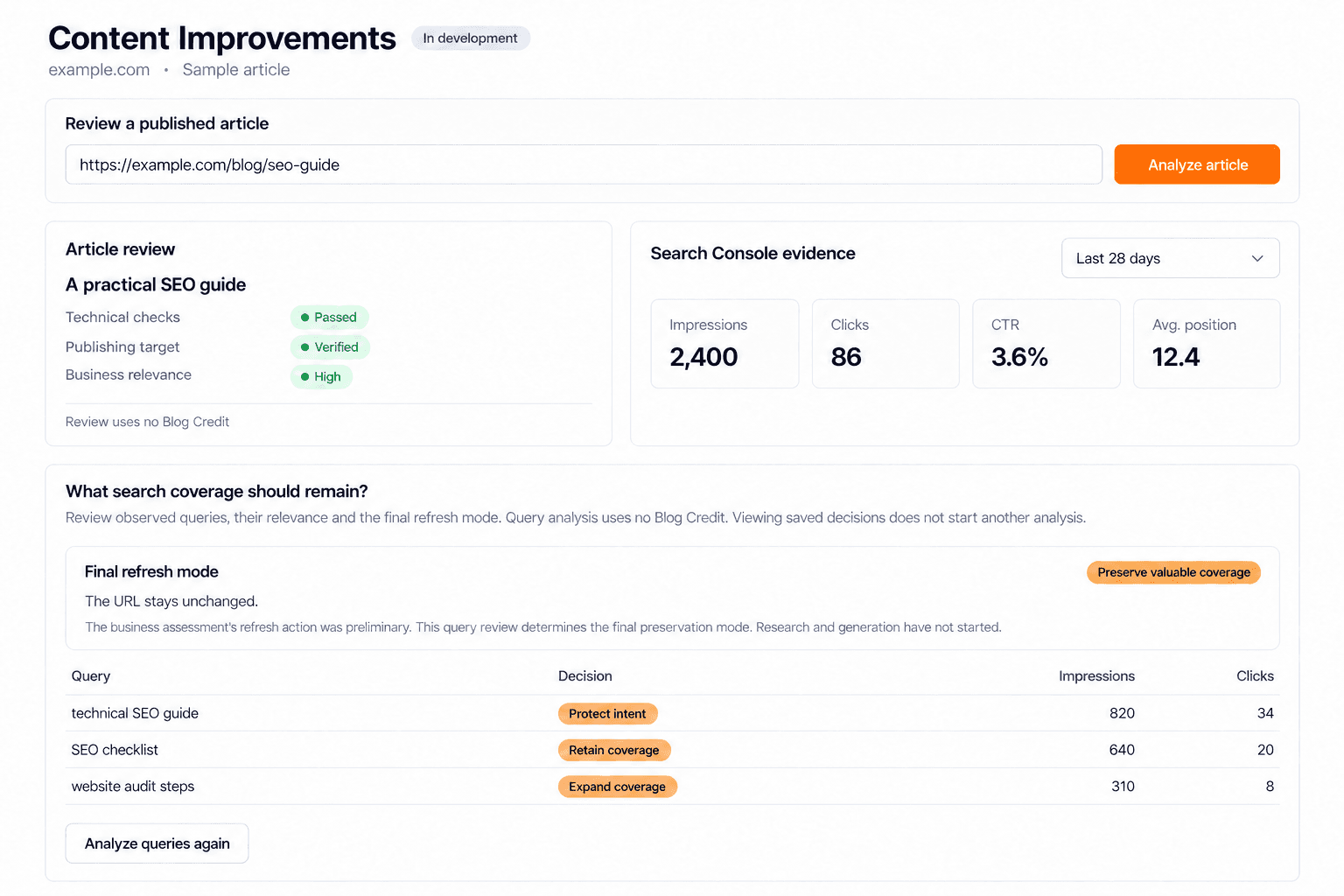
Content Improvements: a published article checked against its Search Console queries before a refresh.In development Auto-refresh with manual review for clinical content
For stale articles, Keytomic generates a refreshed version: updated year references, current pricing ranges, any new subtopics that have emerged since the original was written (e.g., "dental implants covered by Medicare" became a heavily searched query in 2026 as coverage rules changed). For articles with clinical claims, I always require manual review before auto-publishing the refresh. For purely informational or pricing content, I let Keytomic auto-approve the refresh.
Dental-specific freshness triggerWhen a dental practice adds a new service — same-day crowns, sedation dentistry, All-on-4 implants — I use Content Freshness to scan all existing articles that mention the related procedure and update them to include a mention of the new service and an internal link to the new service page. This is both an SEO win and a patient education opportunity.
Advanced Analytics — Tracking What Actually Drives New Patients
Keytomic's analytics pulls together GSC data, rank tracking, content performance, and backlink growth in one dashboard. I use it to know which dental keywords are driving real patient enquiries — and double down on those.
Connect GSC and set up dental keyword rank tracking
Go to Analytics → Connect GSC. Select your property. Then go to Rank Tracker → Add Keywords and import your priority dental keywords. I track two tiers: Tier 1 (the 15–20 highest-value commercial keywords — emergency dentist, dental implants, Invisalign, cosmetic dentist, all with city modifiers) and Tier 2 (the top 50 informational keywords I've published content around).
For LLMs, I connect Google Analytics too. Keytomic's Overview shows AI referrals (visits that come from ChatGPT, Perplexity, Gemini and other assistants) next to search clicks, so I can see whether better AI visibility is turning into real visits.
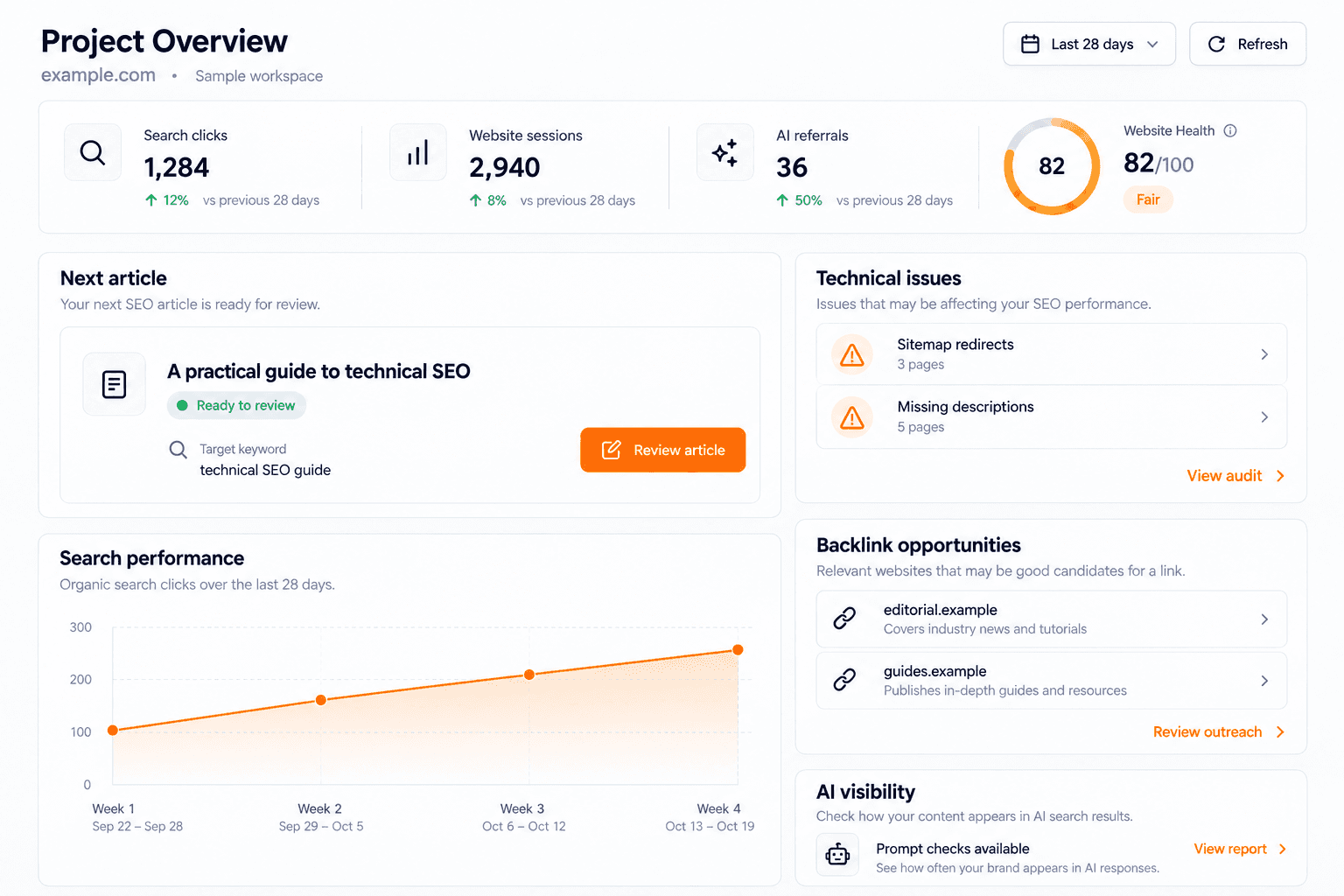
Project Overview: search clicks, sessions and AI referrals side by side.Sample workspace 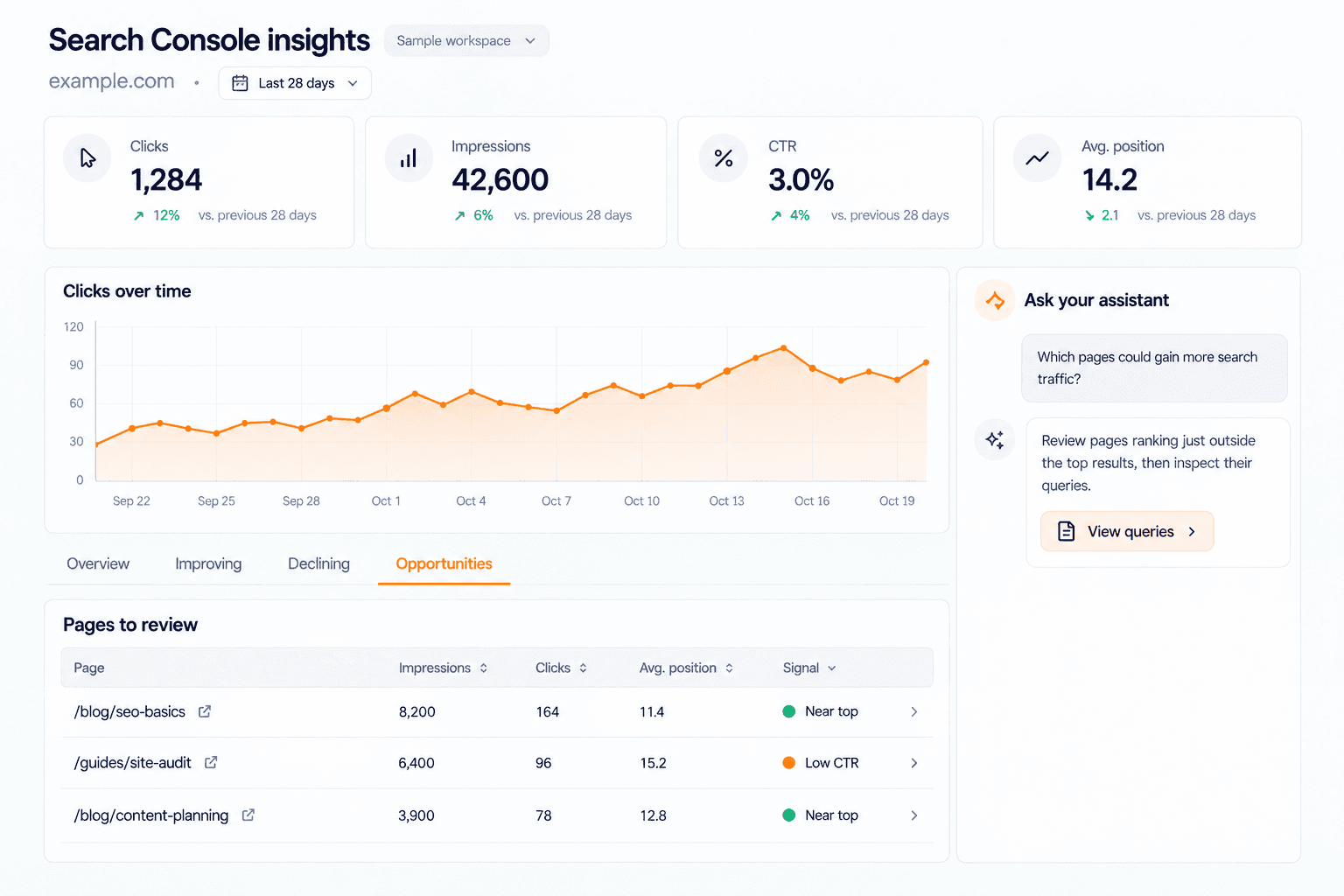
Search Console insights: clicks, impressions, CTR and position, plus the pages worth a second look.Sample workspace Read the monthly analytics snapshotExample
Monthly Organic Sessions4,280↑ +134% YTDKeywords in Top 1063↑ from 7 keywords in JanuaryAverage CTR (organic)4.8%↑ from 2.1% in JanuaryNew Patient Form Submissions (organic)38/mo↑ +217% YTDIdentify top-performing content and double down
I sort articles by Clicks in the analytics dashboard monthly. The pattern I see consistently across dental sites: emergency and implant content generates 60–70% of all organic leads from the blog despite making up only 20–25% of total articles. That tells me exactly where to focus new content efforts and where to push for stronger rankings.
Article Monthly Clicks Avg Position Leads How much do dental implants cost in [city]? 312 #4 9 Emergency dentist [city]: broken tooth guide 287 #2 14 Invisalign vs braces for adults 219 #5 5 Best dentist [city] 2026 guide 184 #3 7 Dental bonding vs veneers: which is right for you? 156 #6 3 Signs you need a root canal (don't ignore these) 143 #7 2 All-on-4 dental implants cost and recovery 132 #8 4 Dental anxiety: 9 techniques that actually work 128 #9 3 Example figures
Keytomic MCP Server — Connecting Claude & Cursor to Your SEO Data
For dental marketing agencies or practices with technical teams, Keytomic's MCP server connects your AI tools — Claude, ChatGPT, Cursor, Gemini CLI — directly to your Keytomic workspace. This is the feature I personally use most in my day-to-day work.
I use the Keytomic MCP server in Claude daily. I can ask Claude "what dental keywords are we tracking?" and get live data back without opening a browser. I can say "write a brief for the implants cluster based on our current rankings" and Claude pulls the ranking data directly from Keytomic to inform the brief. For agencies managing multiple dental clients, this is a time-saver I'd estimate saves 2–3 hours per week per client.
Connect your AI assistant to Keytomic
Go to Settings → MCP Server. Copy your MCP server URL and API key. Connect it to: Claude (via Claude's connector settings), ChatGPT (via plugin/actions), Cursor (via MCP config), Claude Code, Codex, Gemini CLI, or Windsurf.
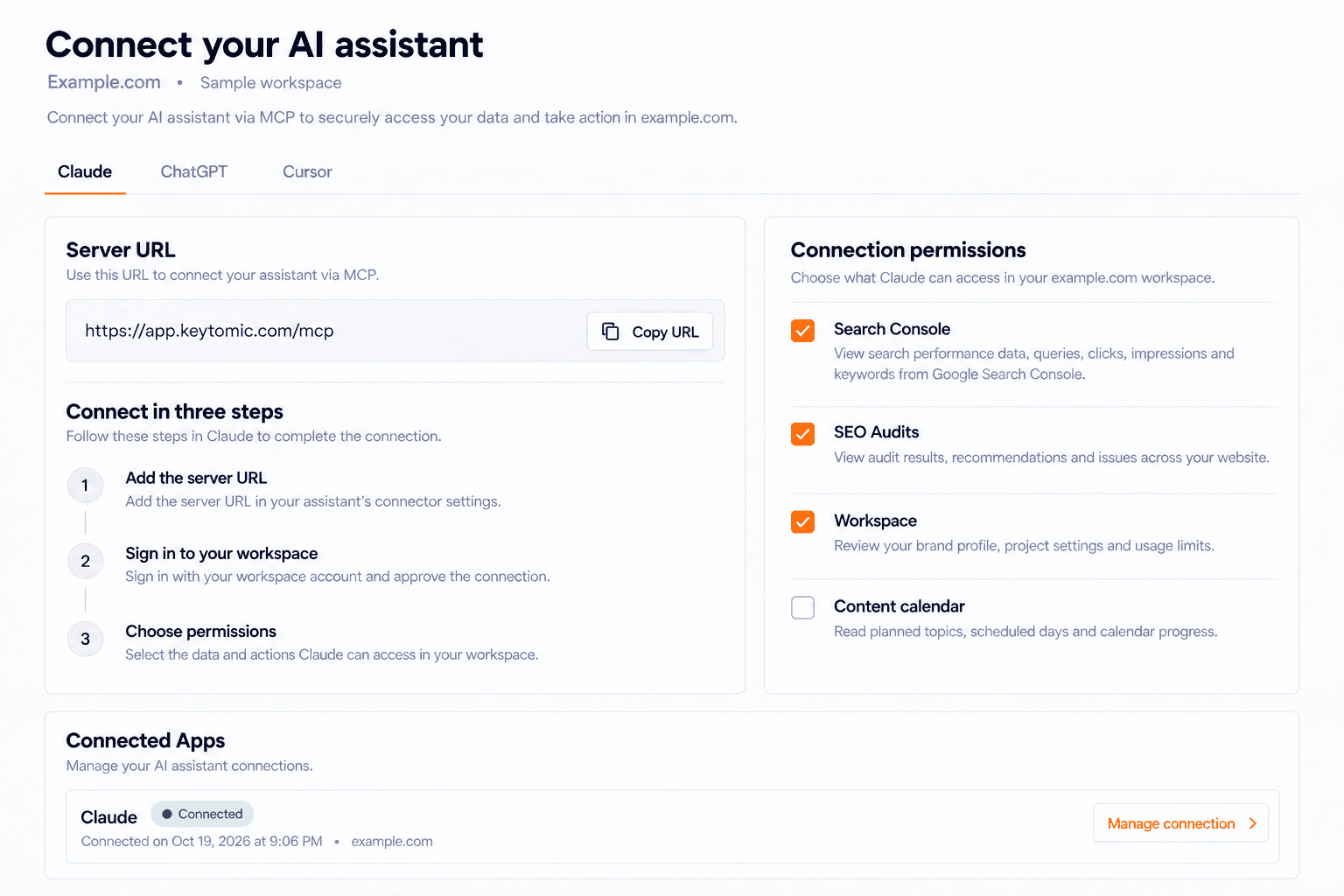
Connect your AI assistant: copy the server URL, sign in, and choose what the assistant can reach.Sample workspace Once connected, questions I ask Claude every week for dental clients:
- "What keywords are we tracking for [practice name] and which dropped this week?"
- "Write a content brief for 'dental implants vs dentures' based on our current cluster data"
- "Which articles are scheduled this week and what are their primary target keywords?"
- "What's the current indexing status of articles published in the last 7 days?"
- "Summarise the audit findings from this week's crawl"
Use it to run Monday morning client reviews at scale
I manage multiple dental marketing clients. Every Monday morning, I open Claude with the Keytomic MCP server connected and ask it to: summarise rank changes across all dental clients, flag any articles that dropped from the top 10, identify new keyword ranking opportunities from each client's GSC data, and draft the weekly update email. What used to take 3 hours now takes 25 minutes.
How I actually use thisI have a saved Claude prompt that says: "Connect to Keytomic and pull this week's ranking summary for [practice name]. Identify any keywords that dropped more than 3 positions, any new keywords appearing in the top 20 for the first time, and any articles with declining click-through rates. Format as a client-ready summary." I run this for each dental client in sequence every Monday morning.
What this system delivers
Realistic Results What to Expect at Each Stage
I want to be honest about timelines here. Dental SEO takes longer than most niches because of the YMYL authority requirements and the local competition. Here's what I've seen across the dental practices I've run this playbook on, broken down by time period:
| Timeframe | What's happening | Typical results |
|---|---|---|
| Month 1–2 | Technical audit fixes, schema markup, directory backlinks, first 40 articles published and indexed | Map Pack appearances increase 15–25%. GSC shows new keyword impressions. 0–5 top-10 rankings. |
| Month 3–4 | Content velocity builds, internal link structure improves, backlink profile grows | 5–20 top-10 rankings. Organic sessions start climbing meaningfully. First organic patient leads. |
| Month 5–6 | Cluster authority builds, informational content starts driving emergency/implant page authority | 20–45 top-10 rankings. 1,500–3,000 monthly organic sessions. 15–25 monthly organic leads. |
| Month 7–10 | Content freshness kicks in, AI visibility improves, compounding effect from internal linking | 45–80 top-10 rankings. 3,000–6,000+ monthly organic sessions. 30–50+ monthly organic leads. |
| Month 10–12 | Topical authority fully established. Competing for position #1–3 on core commercial keywords. | #1–3 for city-specific implants, emergency, cosmetic keywords. 100+ organic patient leads/month. |
The core insight from running this playbook
Dental SEO rewards topical completeness more than any other local niche I've worked in. The practice that covers every patient question — in every service area, at every stage of the patient journey, with content attributed to real dentists — builds an authority moat that is genuinely difficult for competitors to displace. Keytomic is the only tool I've found that handles the full pipeline — from keyword research to live article to AI visibility tracking — without requiring a full-time SEO team to manage it.
The same completeness is what gets a practice named in LLM answers. You don't need a separate AI strategy; you need the Google work done thoroughly, with content written so it can be quoted.
This playbook works for any practice size — solo dentist, group practice, or DSO managing multiple locations.
Start with Step 1: keyword research takes under an hour and immediately shows you the full opportunity in your market.
See how Keytomic works for dental practicesAbout the author
Organic Growth, Keytomic
Zainab Hai works in organic growth at Keytomic, running SEO experiments, writing content strategy and building keyword frameworks across industries.
Last updated: November 2026 · Keyword data sourced from SEMrush / Ahrefs public estimates · BrightLocal Local Search Ranking Factors 2026 · eMarketer Healthcare Consumer 2026. Keyword volumes are estimates from SEMrush / Ahrefs. All SEO results referenced are illustrative of typical outcomes.
 Fernhill CRM