ChatGPT does not use a single public ranking formula to choose sources. When web search is active, it fetches multiple candidate pages, reads their content, and selects the ones easiest to extract a direct answer from. Pages are more usable when they answer one question clearly, use clean HTML, name the right entities, and back claims with accessible evidence. If your page hides key facts behind JavaScript, opens with vague prose, or lacks a clear topical focus, ChatGPT is more likely to fall back on a competitor that made extraction easier. This guide separates what OpenAI has confirmed from what third-party testing observes, so you can make decisions based on signal, not speculation.
ChatGPT Search is one conversational alternative in a much wider field. Compare ChatGPT Search as a Google alternative.
Research note: ChatGPT search behavior and AI visibility tools were checked in July 2026. Platform behavior can change, so verify current source handling and reporting before making strategic decisions.
You cleaned up your content. You added schema. You fixed your headings and cut the filler. And ChatGPT still keeps citing someone else.
In my experience working on AI search visibility, this is the frustration most teams run into once they realize that traditional ranking and AI citation are two different games. A page can sit at position one on Google and still be invisible inside a ChatGPT answer, because the signals that drive search rankings and the signals that drive AI source selection are not the same thing.
This guide gives you a practical model: what ChatGPT likely uses to select sources (based on what OpenAI has confirmed and what third-party testing has observed), what it tends to skip, and how to make your pages easier to cite. I will also be clear about where the evidence is official versus where it is inferred, because the distinction matters when you are making content strategy decisions.
What signals does ChatGPT use to choose sources?
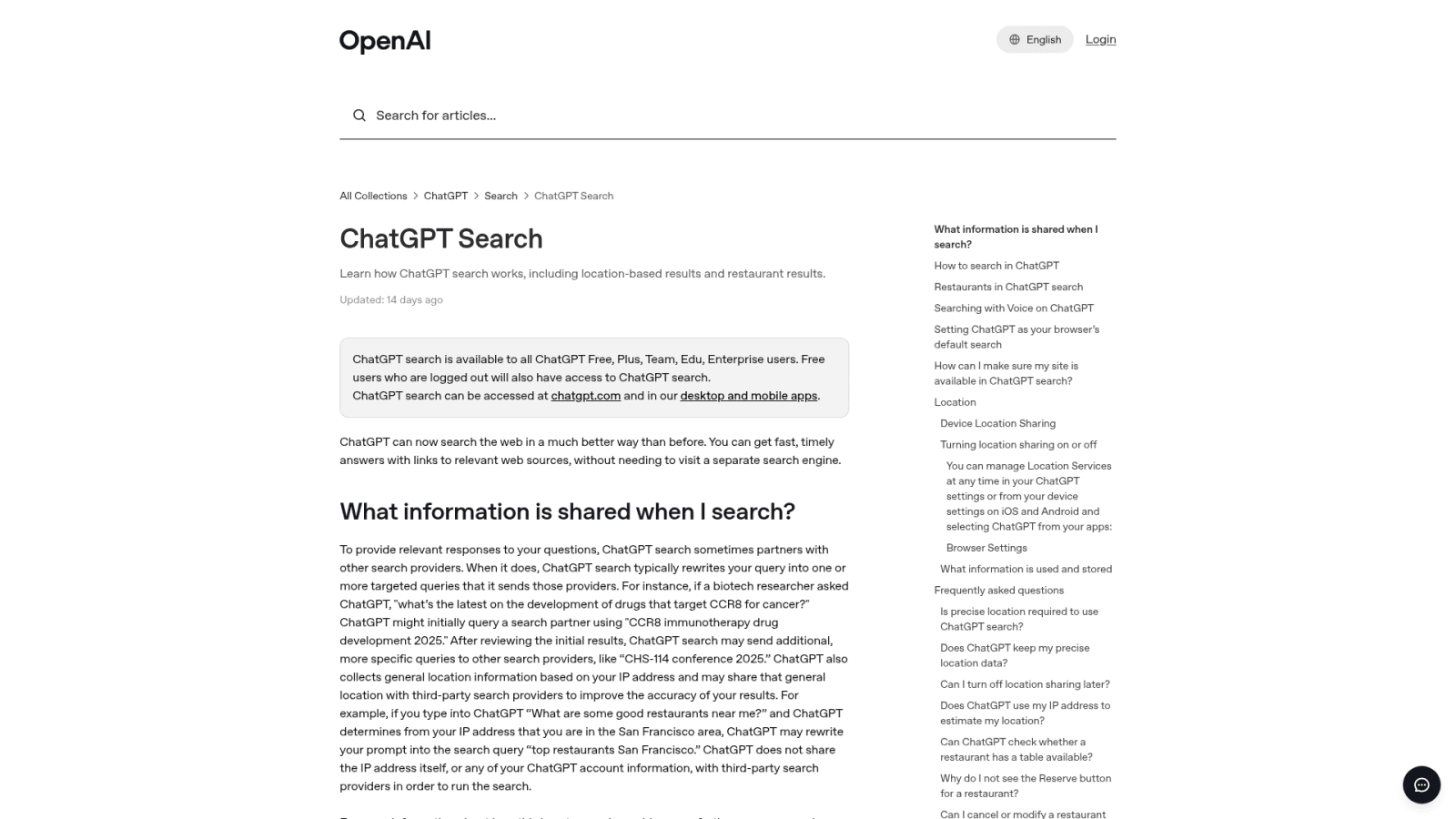
ChatGPT source selection is best understood as a retrieval plus synthesis plus citation process, not a fixed ranking list. OpenAI confirms that ChatGPT can search the web and display inline citations or a Sources panel when search is active. What OpenAI has not published is a specific weighting formula for why one source is chosen over another.
Third-party testing from Suganthan, who analyzed ChatGPT's raw network traffic across roughly 1,240 source records, found that the model runs multiple sub-queries from a single prompt, particularly on complex comparison questions, where the thinking model fired 15 to 40 sub-queries off a single question. The practical implication is that ChatGPT is not just retrieving one answer. It is actively searching for the clearest version of that answer across many candidate pages.
Based on official documentation and observed testing, the signals most likely to influence source selection include:
Crawlable, parseable HTML: Facts behind JavaScript or images cannot be read.
Direct answer positioning: Content that answers the question in the first 50 to 60 words of a section.
Entity clarity: Named organizations, products, people, and dates that give the model clear attribution anchors.
Freshness: Pricing, specs, and feature pages need current information, especially for factual queries.
Topical focus: A single-subject page with clear structure is easier to extract from than a generic, sprawling one.
Signal | Why it helps | What you can control |
|---|---|---|
Parseable HTML | Lets the model read the page directly | Avoid JS-rendered text for key facts |
Direct answer in first paragraph | Reduces ambiguity about page purpose | Restructure intros to lead with the answer |
Named entities and dates | Anchors citations to specific facts | Use official names, include dates |
Freshness indicators | Signals current accuracy | Add "last updated" dates; refresh stale pages |
Structured headings | Helps extraction match query intent | Use question-led H2s and H3s |
The clearest extraction advantage comes from pages that give one direct answer early, support it with evidence, and make entity relationships obvious in plain text.
Retrieval, citation, and mention are three different outcomes
Most teams treat these as interchangeable. They are not, and the difference changes your strategy.
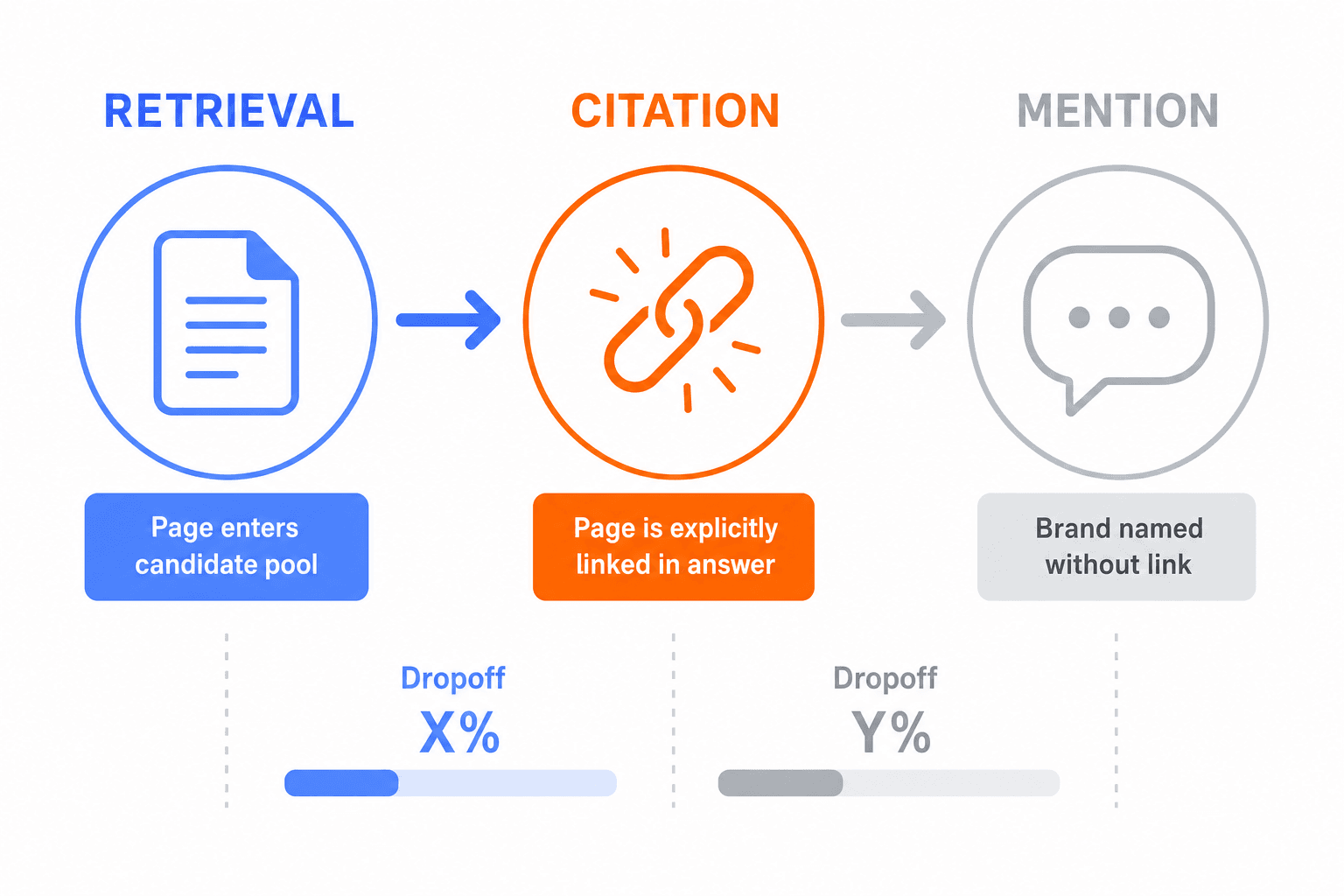
Retrieval is when ChatGPT fetches your page as a candidate source during its search phase. Your page entered the pool, but nothing else is guaranteed.
Citation is when ChatGPT explicitly links or references your page in its answer. This requires your content to directly support a specific claim the model is making in that moment. Generic pages and vague intros rarely pass this test.
Mention is when ChatGPT refers to your brand or product by name without linking to your page, often drawing on training data or a third-party source that described you. Being retrieved does not mean you will be cited. Being mentioned does not mean you were retrieved at all.
Why ChatGPT can cite different pages for the same prompt
This surprises a lot of teams, but it is expected behavior. When a user asks the same question twice, the intent signals in that prompt can shift slightly based on conversation context, account history, or query phrasing. Suganthan's network traffic analysis also showed that personalization is real and selective, with ChatGPT occasionally pulling from a user's past conversations or connected files when a query matched prior activity.
Freshness plays a role too. A page that was the most current source for a pricing question in March may have been replaced by an updated competitor page by June. Query fan-out also means the sub-queries ChatGPT fires may not be identical across sessions, so the candidate pool can vary even for similar prompts.
Which pages are most likely to get cited in ChatGPT answers?
The pages most likely to earn citations are official sources for factual queries, well-structured educational pages for informational queries, and third-party reviews or aggregator content for recommendation queries. No single page type wins every query type.
For facts like pricing, product specifications, and policies, OpenAI's Academy search guidance advises users to review citations carefully, implying that official sources carry more weight for verifiable facts. Suganthan's analysis confirmed that the model fires direct site probes at vendor pricing pages during comparison tasks, specifically looking for crawlable text versions of pricing data.
What ChatGPT tends to prefer for facts, pricing, and product details
For factual lookups, official pages matter most when the content is easy to parse. A pricing page where numbers sit in readable HTML beats one where the same numbers are rendered by JavaScript, because the model reads the page directly and falls back when it cannot. Freshness matters too: stale pricing or feature pages create extraction risk because the model may prefer a more recently updated third-party source over your own outdated official page.
What helps an educational page become citation-ready
For informational queries, the citation-ready pattern from SEO Works' testing points to a consistent set of signals: question-led subheadings, definitions early in the section, named entities and examples, clear authorship, and supporting evidence that does not require the reader to click elsewhere to verify a claim. Pages structured around one clear question per section are easier for the model to match to specific sub-queries it fires internally.
What makes ChatGPT skip a page even if it ranks in Google?
A page can rank on page one in Google and still be skipped by ChatGPT during source selection. The signals that drive organic ranking, including backlinks, click-through behavior, and page authority, are not the same signals that make a page easy to extract answers from.
The most common reasons pages get skipped, based on observed testing:
Key facts are rendered via JavaScript and cannot be read during page fetch.
The page opens with a vague intro that delays the actual answer by two or three paragraphs.
Content is spread across many thin pages instead of consolidated into one authoritative source.
Author identity and organizational context are missing, reducing attribution clarity.
Claims are unsupported, creating extraction risk when the model cross-checks sources.
Why crawlable does not always mean usable
Crawlability is a floor, not a guarantee. A page can be fully indexed and still fail at the extraction stage if its critical facts live inside interactive elements, expandable accordions, or images. PDF-only content and image-based pricing tables are common culprits. The model reads the page as it loads, and if the fact it needs requires JavaScript execution to appear, that fact is effectively invisible.
Why one strong source page beats many thin pages
Suganthan's analysis noted that when multiple sources say the same thing, the model tends to cite the one with the strongest domain signal, not all of them. This has a direct implication for content strategy: consolidating thin, repetitive pages into one well-supported source page is more likely to earn a citation than publishing five shallow variations on the same topic. Deduplication within the retrieval layer means weaker near-duplicate pages are cut before the final answer is composed.
How should you format content so ChatGPT can quote and cite it?
This is where most teams can make the fastest gains. Formatting changes require no new research, no link building, and no platform access. They require editorial discipline. Here is a numbered framework for citation-ready content:
Answer first. Every section should open with a direct answer to the question implied by its heading. Put the core claim in the first 50 words.
Use question-led headings. H2s and H3s phrased as questions match the sub-queries ChatGPT fires internally, making your sections easier to map to specific answer needs.
One claim per paragraph where possible. Dense multi-claim paragraphs are harder to extract from cleanly. Short, specific paragraphs with one central point each make extraction more precise.
Tables for dense comparisons. Structured data in table format gives the model clear rows and columns to draw from for comparison queries.
Named entities and dates. Use official names (OpenAI, not "the AI company"), include publication dates, and credit sources inline.
Author identity and organization context. Author bylines with role and organization help the model attribute the content correctly. Schema.org Article markup supports this.
Freshness signals. A visible last-updated date near the top of the page signals that the content is current, which matters for pricing, product features, and regulatory topics.
Before publishing any AI-search-focused article, run through your LLM citations checklist to confirm that risky claims are supported, stale data is refreshed, and entities are named consistently throughout.
A citation-ready page template you can apply to new or existing content
For educational content targeting informational queries, this order works well:
Opening crux block (2 to 4 lines, bold): Direct answer to the central question.
Context paragraph: Why this matters and what changed recently.
H2 sections as questions: Each section answers one specific sub-question in the first 50 words.
Evidence block: A table, numbered list, or cited statistic that supports the section claim.
FAQ section: Short, direct answers to adjacent questions readers and AI models are likely to ask.
Author byline and last-updated date: Visible at the top or bottom of the content block.
What to verify before publishing any AI-search-focused article
Use this checklist as a final editorial pass:
Every claim that references pricing, features, or statistics is sourced and dated.
No superlatives (best, always, most effective) without a comparative methodology to back them.
All key facts sit in crawlable HTML, not JavaScript-rendered elements or images.
Entity names are consistent throughout (same spelling, same capitalization).
The article has a visible last-updated date and an author name with role.
Schema markup is present for Article and FAQPage where relevant.
AEO vs SEO vs GEO: what changes when the goal is AI citation?
These three disciplines are related but not interchangeable, and understanding the distinction prevents teams from conflating tactics that serve different goals. For a full breakdown, see Keytomic's Answer Engine Optimization guide.
Discipline | Primary goal | Core levers |
|---|---|---|
SEO | Organic search rankings | Crawlability, authority, content relevance, backlinks |
AEO | AI citation and direct-answer extraction | Answer-first formatting, entity clarity, structured data |
GEO | Generative engine visibility across AI surfaces | Cross-engine optimization, AI referral tracking, citation monitoring |
SEO remains the foundation: without crawlability and indexation, neither AEO nor GEO is possible.
Where SEO still matters first
If your pages are not crawled, indexed, and associated with topical authority, AI systems will not have them available as candidate sources. Technical SEO, internal linking, and topical coverage are still prerequisites, not optional extras. A brand with strong organic presence is more likely to enter the candidate pool, even if ranking position alone does not guarantee a citation.
Where AEO and GEO add a different optimization layer
Once the technical foundation is in place, answer engine optimization adds a formatting and evidence layer: direct answers, question-led headings, entity naming, and structured data that make pages easier to extract from. Generative Engine Optimization broadens this further to track AI referrals across multiple surfaces, including ChatGPT, Perplexity, and Microsoft Copilot, and to measure citation share over time rather than just ranking position.
How can teams measure whether ChatGPT is using their content?
Measurement in AI search is significantly harder than in traditional SEO, and teams that overstate their measurement confidence often make poor content decisions as a result. Here is an honest split between what you can and cannot track today.
What you can measure today
Manual prompt testing: Run target queries in ChatGPT with web search enabled. Log which pages appear in the Sources panel and check them at regular intervals (weekly or biweekly).
Referral traffic monitoring: Some AI platforms pass referral data. Tag and monitor traffic from ai.com, chatgpt.com, and perplexity.ai in your analytics.
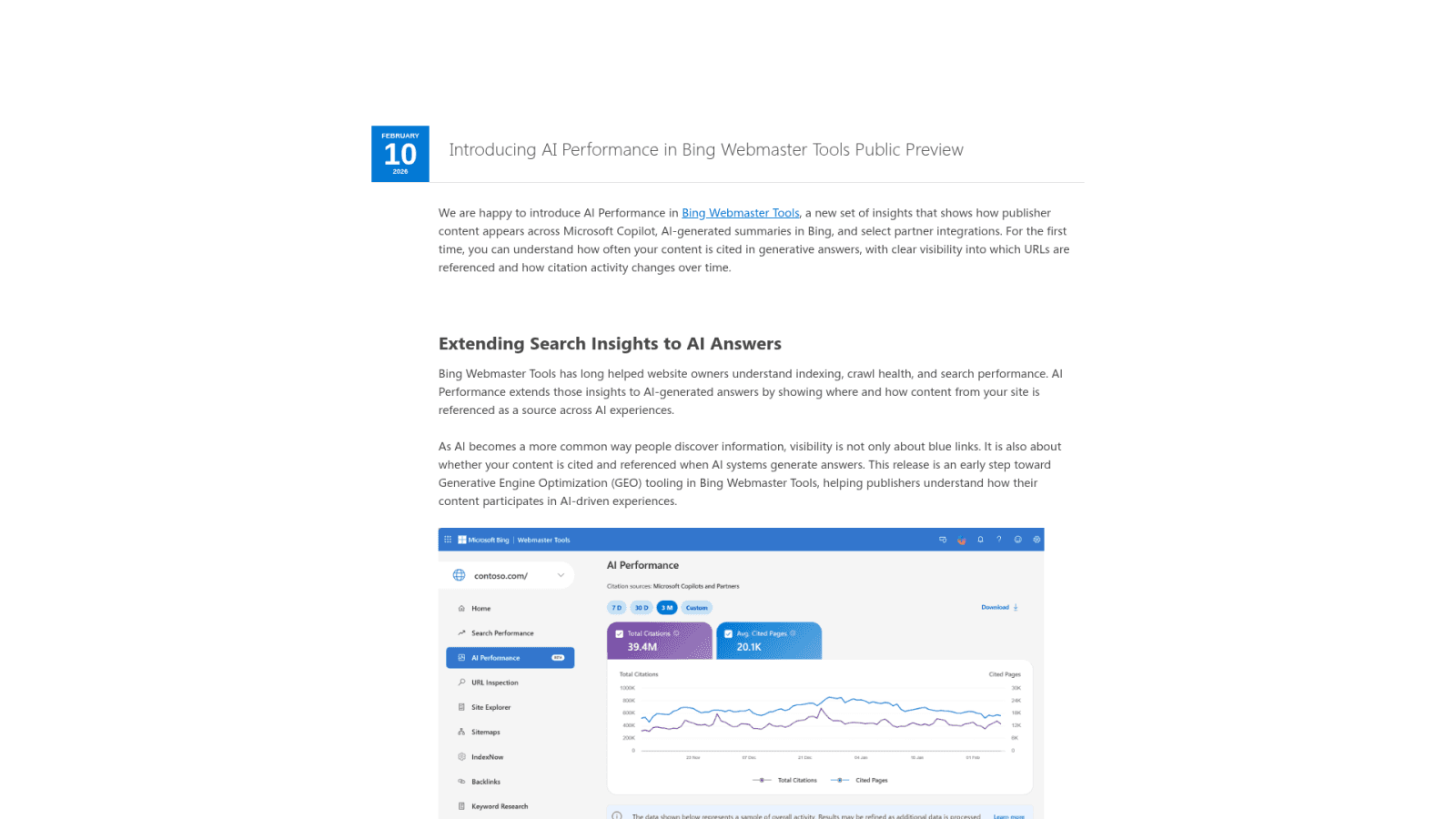
Bing AI Performance: Microsoft launched the AI Performance Report in Bing Webmaster Tools in February 2026, giving publishers visibility into which pages are cited across Microsoft Copilot and Bing AI summaries, along with grounding queries that triggered those citations. In June 2026, Microsoft expanded this to include Citation Share, Intent classification, and Topic groupings. Use an AI search monitoring platform to track these signals at scale.
Brand mention logging: Track when your brand name appears in AI-generated answers even without a direct page citation, using tools that monitor AI outputs across major platforms.
Content refresh tracking: Log when you update a page and check whether citation pickup changes in the weeks following the refresh.
You can also use Keytomic's AI visibility tracker to monitor which pages earn citations across AI surfaces and identify patterns across your content portfolio.
What you still cannot measure reliably
Full ChatGPT citation share: OpenAI does not publish citation-level reporting to publishers. The Bing AI Performance tool covers Microsoft's ecosystem only; it does not include ChatGPT sessions directly.
Causal attribution: Even if you see a referral from chatgpt.com, you cannot confirm which specific page or passage triggered the citation in that session.
Parametric memory citations: When ChatGPT answers from training data without activating web search, no citation appears and no referral is generated. This represents a large share of sessions that is currently unmeasurable.
In my experience, the teams that get the most useful data are the ones that build a repeatable manual testing process alongside whatever tools they use, rather than waiting for a single platform to solve attribution for them.
How does Keytomic help teams publish content that is easier for AI systems to use?
Disclosure: This section covers Keytomic because it is the publisher's product. The workflow notes below are limited to features verified on the live site.
Keytomic is an all-in-one AI SEO platform designed to handle the workflow layer that most teams struggle to operationalize consistently: keyword discovery, 30-day content roadmaps, auto-publishing, and AI visibility tracking. For teams trying to build citation-ready content at scale, the friction usually sits in the gap between knowing what to do and having a repeatable system to do it.
Where Keytomic fits in the workflow
For Keytomic SEO and AI visibility workflows, the process maps roughly like this:
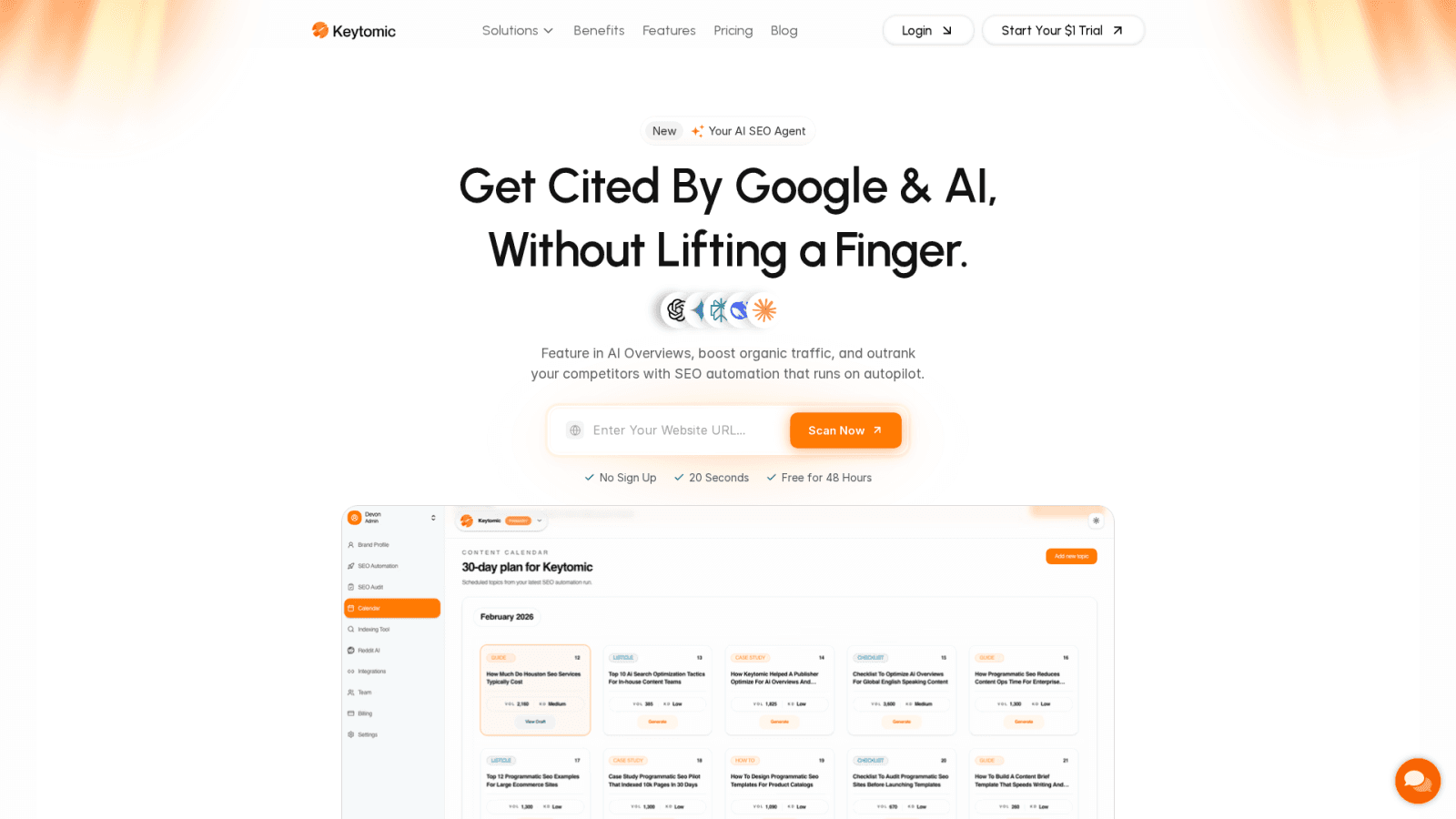
Keyword discovery: Identify which queries your target audience is asking across both Google and AI search surfaces, including answer-focused long-tail variations.
30-day content roadmap: Plan a structured publication schedule that builds topical authority across a cluster, rather than publishing isolated pages.
Content creation and publishing: Generate structured, AI-search-ready drafts with answer-first sections, entity-consistent naming, and schema guidance built in.
AI visibility tracking: Monitor which pages earn citations across AI surfaces and flag pages that are being retrieved but not cited, so you know where to focus editorial effort.
If your team is working on a 30 day AI search optimization roadmap, Keytomic's workflow structure maps directly to that cadence.
When Keytomic is not the right fit
Keytomic is a workflow automation platform, not a magic citation guarantee. Teams expecting hands-off strategy with zero editorial review will get less value from it. The platform handles research, planning, and publishing efficiency. Strategic topic selection, brand voice decisions, and final factual review still require human judgment. If your primary need is deep technical SEO auditing or link acquisition campaigns, Keytomic is not designed for those workflows.
What common mistakes stop content from getting featured in ChatGPT?
Most citation failures come down to a small set of recurring problems. Here is what to check on your existing pages before assuming the issue is technical:
Forcing keywords into the opening paragraph: The intro becomes about the keyword, not the reader's question, which makes the answer harder to extract cleanly.
Unsupported statistics and superlatives: Claims like "most effective" or "industry-leading" without a source make the model less likely to cite your page, because it cannot verify the assertion.
Burying the answer: If the actual answer appears in paragraph four after three paragraphs of context, the model may extract from a competitor that answered in paragraph one.
Stale pricing and product details: An official page with outdated pricing is less useful to the model than a third-party aggregator with fresher numbers.
Thin pages targeting every variation: Five 300-word pages on similar topics give the model five weak source options instead of one strong one. Consolidate.
Assuming AI models all behave the same way: Perplexity, ChatGPT, and Google AI Overviews each use different retrieval logic. Tactics that work on one surface may not transfer directly to another.
A quick edit-pass checklist before publishing: Does every H2 open with a direct answer? Are all statistics dated and sourced? Are entity names consistent from the title to the FAQ? If the answer to any of these is no, fix those first before adding schema or chasing links.
For a deeper look at how to improve brand visibility in ChatGPT beyond page-level formatting, see Keytomic's dedicated guide on cross-surface AI visibility strategy.
Frequently asked questions about ChatGPT citations and AI search visibility
Does ChatGPT always cite the highest-ranking Google result? No. ChatGPT uses Bing-powered search infrastructure when web browsing is active. Google ranking position is correlated with citation likelihood, but it is not the primary driver. Page structure and extraction quality matter independently.
Why does ChatGPT cite different websites for the same question? Query intent, freshness, conversation context, and query fan-out all shift the candidate pool between sessions. The same prompt can trigger different sub-queries and surface different candidate pages depending on how the model interprets the request.
Can ChatGPT cite a page that is hard to read with JavaScript? Unlikely for key facts. If the critical information on a page requires JavaScript execution to appear, the model reads an incomplete version of the page and typically falls back to a source where the same fact is available in crawlable HTML.
Does schema markup help ChatGPT understand a page? Schema.org markup, particularly Article and FAQPage schema, helps AI systems parse content structure and attribute authorship. It is a supporting signal, not a guaranteed citation factor. Use it, but do not treat it as a substitute for clear writing and direct answers.
Is AEO different from SEO? Yes. SEO focuses on ranking in traditional search results through authority, relevance, and technical signals. Answer engine optimization focuses on making content easy for AI systems to extract, cite, and synthesize into direct answers. SEO is a prerequisite; AEO is an additional formatting and evidence layer on top.
How is AEO different from GEO? AEO (answer engine optimization) focuses on citation readiness and direct-answer formatting for AI retrieval. GEO (Generative Engine Optimization) is broader, covering cross-engine visibility, AI referral tracking, and long-term presence across generative AI surfaces like ChatGPT, Perplexity, and Google AI Overviews.
How can I tell if ChatGPT is using my content? Run target queries manually in ChatGPT with web search enabled and check the Sources panel. Monitor referral traffic from chatgpt.com in your analytics. Use Bing Webmaster Tools' AI Performance report for Microsoft Copilot citation data. No tool currently provides complete ChatGPT citation reporting directly.
Should I create more pages for every AI search query variation? Generally no. Creating many thin pages for query variations dilutes your topical authority and gives AI retrieval systems multiple weak options instead of one strong source. Consolidate related queries into a single well-structured page with a comprehensive FAQ section.
Do official product pages matter more than blog posts for citations? It depends on the query type. For pricing, specifications, and product features, official pages matter most when the content is crawlable. For informational and educational queries, well-structured blog posts or guides often outperform thin product pages because they answer the question more completely.
Can Keytomic guarantee my brand will be cited in ChatGPT? No. No tool or platform can guarantee citations in ChatGPT. Keytomic helps teams build structured, AI-search-ready content at scale and monitor citation patterns over time. The platform supports the workflow; citation outcomes depend on content quality, topical authority, and platform behavior that no tool fully controls.
Decision framework: where to start
If your goal is factual citation readiness, fix page structure and evidence first: parseable HTML, direct answers, entity naming, and freshness signals before anything else.
If your goal is broader AI search visibility, add measurement next: set up Bing AI Performance, run weekly manual prompt checks, and track referral patterns from AI surfaces.
If your team cannot operationalize this manually at scale, a workflow tool and editorial process are the practical path forward. Explore Keytomic's AI visibility tracker or start with the Answer Engine Optimization guide to build the strategic foundation first.