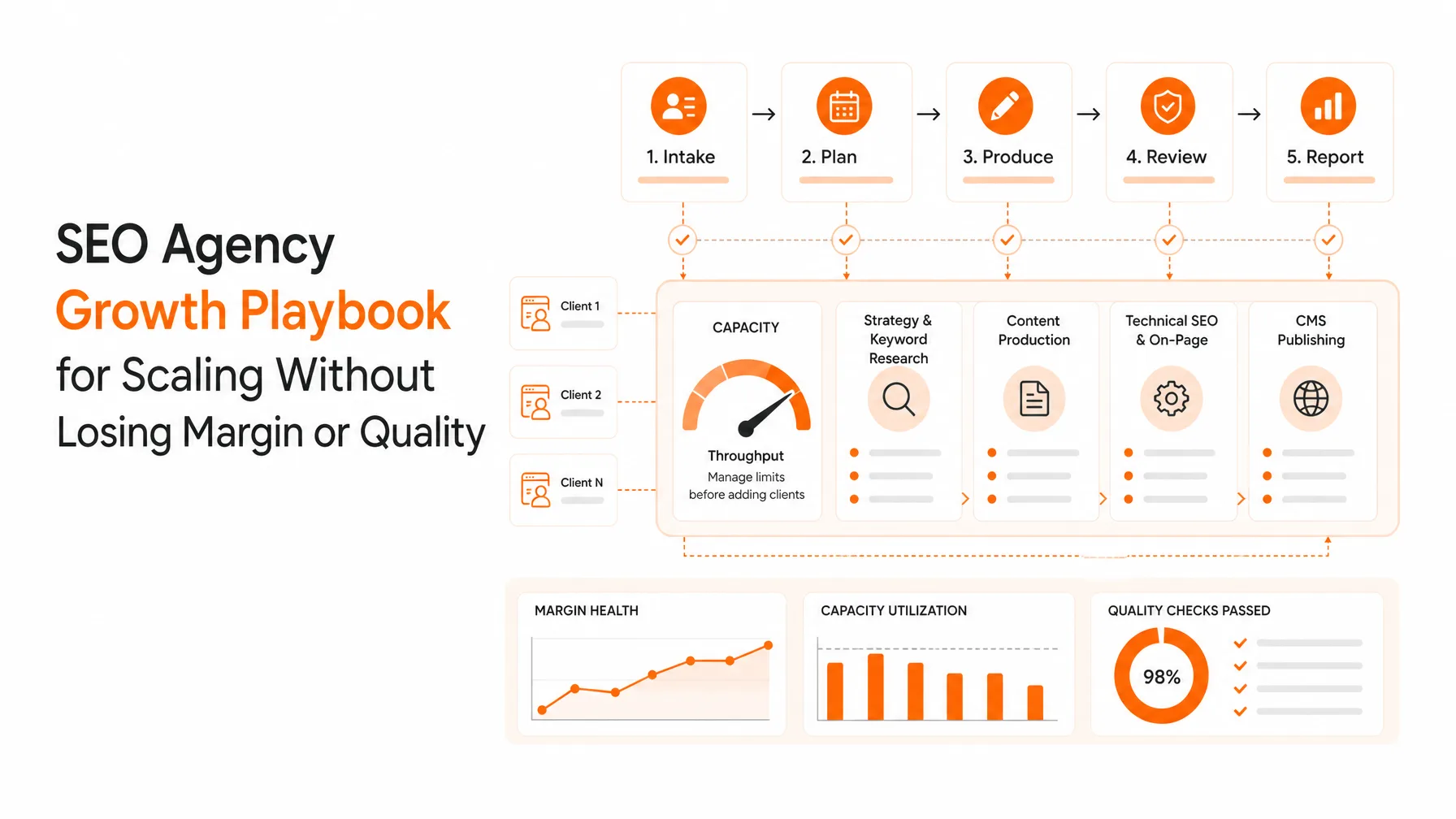
Automated SEO services give you a provider that owns recurring SEO execution, with the exact deliverables set by contract. SEO automation software gives your team connected tools to research, plan, create, publish, audit, index, and measure, while your team keeps strategy and review.
Choose services when execution capacity is the bottleneck. Choose software when someone can approve decisions and you want control over workflow and cost. Compare who owns each handoff, not which feature list is longer.
You're weighing a managed provider against SEO automation software that promises to do the work for you. The real question is what still lands on your team. I see buyers skip that question and compare feature lists instead.
Google's 2026 guidance says SEO fundamentals still apply to AI features, so pages must still be indexed, eligible for Search, and useful to people.
Below, I compare ownership, deliverables, control, cost model, accountability, scalability, and human review.
Key Takeaways
They’re different buying models. Automated SEO services sell execution and accountability through a provider. SEO automation software sells workflow capability and control to your team.
Compare ownership, not feature lists. For each step (research, drafting, review, publishing, measurement), ask who owns it and who approves it.
Neither is automatically cheaper. Price the whole workflow: software fee or retainer, plus setup, review, implementation, and specialist time.
Human review stays necessary. Facts, brand claims, topic choice, regulated subjects, and specialist technical or backlink work still need a person, under either model.
Choose services when execution capacity is the bottleneck and nobody internal can approve work every week.
Choose software when a capable owner wants approval control and repeatable workflows.
Use a hybrid when specialist judgment or regulated review has to sit alongside repeatable production.
Get it in writing before you buy. Ask for named deliverables, the approval process, a sample report, usage caps, data export, and exit terms. Be wary of promised rankings.
Automated SEO services and SEO automation software are different buying models
An automated SEO service supplies execution capacity: a provider owns recurring work under a contract. SEO automation software supplies workflow capability: your team runs a product that automates selected steps. Either way, confirm who owns strategy, approvals, publishing, and measurement.
Automated SEO services usually sell execution and accountability
You're paying for people, process, and a named party responsible for delivery. Scope varies by provider, so treat "automated" as a label, not a standard.
SEO automation software sells workflow capability and control
Software automates or coordinates steps, but it doesn't own business judgment. Your team supplies inputs, approvals, and quality control.
The operator determines what you actually get
This is the ownership-of-the-loop view I use. It shows who typically runs each step, and the answer changes by contract or product.
Loop step | Services: who usually owns it | Software: who usually owns it |
|---|---|---|
Research and prioritization | Provider proposes, you approve | Your team, with tool recommendations |
Drafting | Provider's writers or tools | Software drafts, your team edits |
Review | Shared, set by contract | Your team |
Publishing | Provider or you, per scope | Software pushes, you approve |
Measurement and next steps | Provider reports, you decide | Your team reads the data |
Under both models, you still own the business decision about what your content should say.
What do you actually get from automated SEO services?
A service typically bundles people, process, and execution, but the exact scope depends on the provider and the contract. I wouldn't assume any package is standard, because there's no agreed industry definition of automated SEO services.
Strategy, prioritization, and recurring planning
A provider may include keyword research, topic prioritization, and a recurring plan. Ask who decides what gets published first.
Production, implementation, and publishing support
Deliverables may include content production, technical fixes, and link work. Get each one named in the scope of work before you sign.
Reporting, communication, and responsibility for next steps
Reporting and account management may be included. Run a "who clicks the button?" test on each deliverable: when a page needs publishing or a fix, whose hands are on the CMS?
Before buying, request four things:
A written deliverables list
The approval process
A sample report
Exit terms
What does SEO automation software actually do?
SEO automation software connects recurring SEO tasks, but automation depth varies. Some products only report or recommend; others draft, publish, index, audit, or track selected workflows. My test is recommendation versus execution.
Research, topical planning, and content production
A workflow, in plain terms, is a connected sequence with an input, an action, an output, and an approval point. The useful question is whether a tool suggests a keyword or carries it through to a drafted page. For the longer version, see how SEO automation workflows connect research, publishing, indexing, and tracking.
Typical steps include keyword discovery, topical planning, briefs, and drafts with internal links.
Publishing, indexing, audits, and visibility tracking
Beyond drafting, tools may push content to WordPress, Shopify, Webflow, or Framer, submit URLs for indexing, crawl for technical issues, and track mentions in ChatGPT and Perplexity. Google's SEO Starter Guide still frames crawlability, indexability, internal links, and Search Console monitoring as the base, so I check those first. Not every product covers all of these, and SEO automation tools differ widely here.
Where human review still belongs
Google's guidance on helpful, people-first, non-commodity content is the standard I'd review drafts against. I would keep these manual or approval-gated:
Facts, statistics, and brand claims
Topic choice tied to business goals
Regulated or high-risk subjects
Specialist technical and backlink work
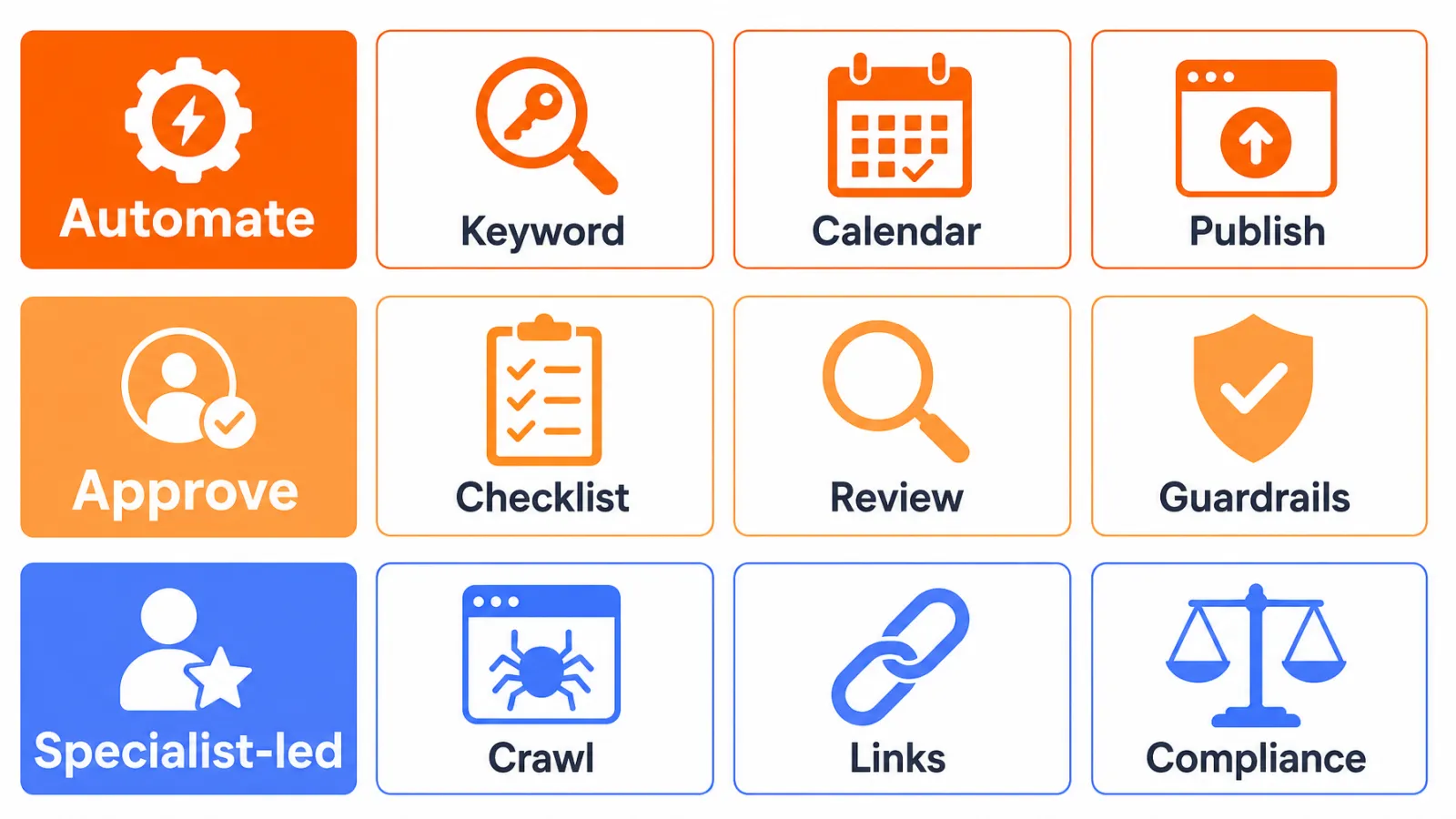
Automated SEO services vs software: side-by-side comparison
Services generally buy execution and accountability, while software buys control and repeatability. The better fit depends on internal capacity, risk tolerance, and how much you want to own.
I compared who owns strategy, what's delivered, how approvals work, what labor stays with you, how cost adds up, how each scales, and where specialists stay necessary. I didn't score winners, because no standardized test or service dataset exists for this.
Decision factor | Automated SEO services | SEO automation software | What to verify |
|---|---|---|---|
Strategy ownership | Provider recommends, you approve | Your team decides | Who sets priorities |
Research and content | Provider executes per scope | Software drafts, team reviews | Scope or feature list in writing |
Technical work | May be implemented for you | Audits flag issues, fixes vary | Who applies fixes |
Publishing and indexing | Provider or your team, per contract | Depends on CMS and indexing workflow | Documented CMS support |
Reporting | Often a recurring report | Dashboards and tracking, if included | Sample output |
Approvals | Set by contract | Set by your workflow | What publishes without sign-off |
Recurring cost | Retainer, scope-dependent | Subscription plus internal labor | Seats, sites, usage caps |
Scalability | Limited by provider capacity | Limited by plan and review time | Site and client limits |
Specialist depth and exit | Varies by provider; check notice terms | Narrower than specialist tools; check export | Data portability |
Services reduce the work your team must coordinate, while software gives your team more control over how that work is performed.
Ownership, control, and approvals
Ask how many handoffs exist between a provider, spreadsheet, writer, CMS, indexer, and reporting tool. That handoff count is my quickest read on coordination cost. Automated SEO vs manual SEO is a question of method, and manual work stays wherever judgment is needed.
Cost model, internal labor, and setup effort
Services shift labor to the provider, while software shifts it to configuration and review. Neither removes your setup time, and the next section shows how to add it up.
Scalability, customization, and technical depth
Software scales across sites until review time or plan limits bite, while services scale with provider capacity. I'd keep specialist crawlers and backlink databases in the picture, since no all-in-one tool covers every deep audit. Named vendor comparisons and alternatives are a different question, so I've kept them on Keytomic’s software comparison hub.
Which is cheaper, SEO software or an SEO service?
Neither is automatically cheaper. Software still costs setup, review, and editing time, and services vary widely by scope and retainer.
Compare subscription or retainer cost with internal labor
Here's the formula I'd copy into a spreadsheet: software fee + setup + review labor + implementation labor + specialist support. For a service, swap the software fee for the retainer and keep the rest. I'm excluding agency prices, because no standardized scope or verified proposal exists to compare against.
Separate software price from implementation and review cost
Keytomic's Pro plan is listed at $99 per month for one project or site, up to three seats, with a 3-day trial, and a managed Agency plan is listed at $999 per month. Pricing and plan details checked October 2026. Confirm current terms before buying.
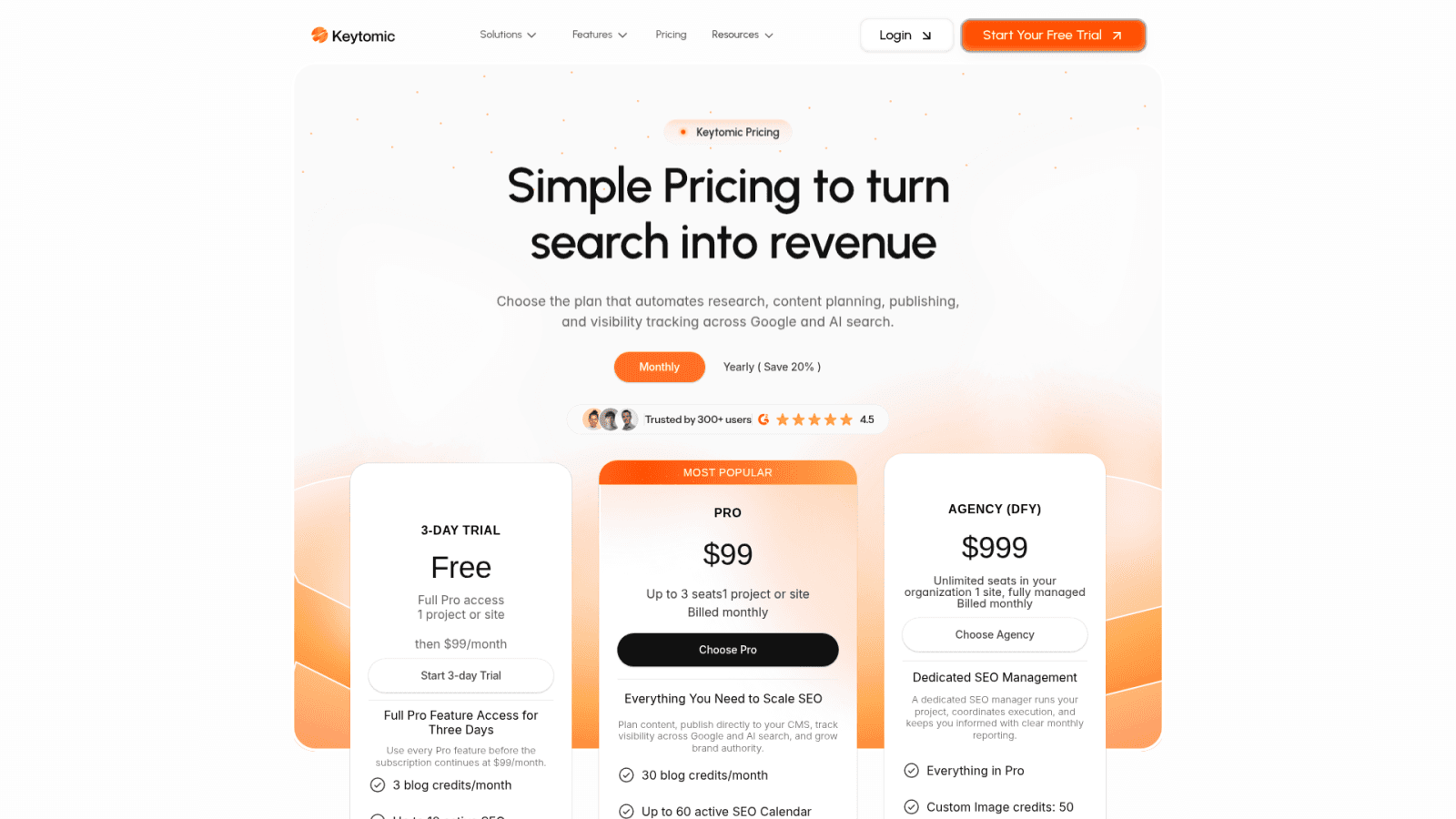
A low subscription still carries editing and approval hours, so price the whole workflow.
Measure workflow completion, not promised rankings
I'd track drafts approved, pages published, and pages indexed. Ask any provider or vendor for scope in writing, and be wary of promised rankings.
Which model fits your team and SEO workflow?
Choose services when execution capacity is the bottleneck. Choose software when a capable owner exists and the problem is repeatable workflow. Combine both when you need specialist judgment and production capacity.
The honest limits: a service makes you depend on the provider's capacity and scope, and software leaves review work with you.
SMB founders with limited execution capacity
Prioritize ease, clear approvals, and low coordination overhead. If nobody on your team can approve drafts weekly, software will stall.
Agencies managing multiple client workflows
For SEO software for agencies, I'd check client permissions, reporting, site limits, and margin protection. Don't assume white-label support unless the vendor documents it.
In-house SEO and content teams
You'll want control over CMS access, editorial review, data connections, and strategy. Software fits well when the team already knows what good looks like.
Technical, regulated, or high-risk websites
Keep specialist review and documented approval gates. A hybrid is valid here: software for repeatable production, a specialist for judgment.
How Keytomic fits the software side of the comparison
Keytomic is SEO automation software that connects keyword discovery, topical planning, content production, CMS publishing, technical checks, indexing workflows, and AI visibility tracking. Human approval stays necessary for facts, brand fit, and regulated content.
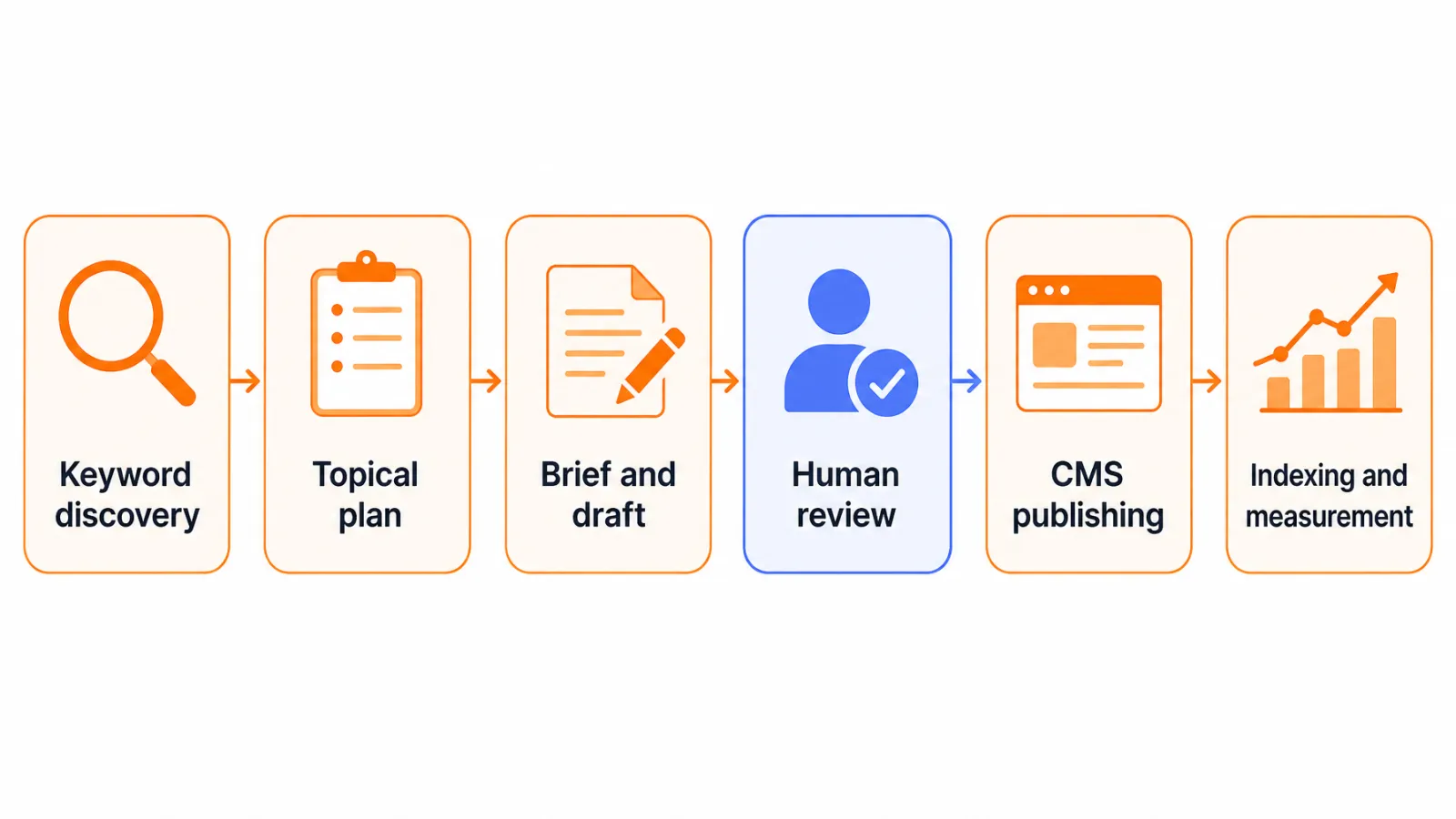
Keytomic publishes this article and is the product discussed in this section. Keytomic pricing and product references were checked against official pages in October 2026. Plans, features, integrations, and availability can change, so confirm current details before buying.
From keyword discovery to a planned content workflow
Keytomic maps keywords to pages using live volume, difficulty, and SERP data plus your Search Console data. It builds a topical map from your central entity, plans a 30-day calendar, briefs each article, and drafts in your brand voice with internal links, sources, and an author profile.
CMS publishing, technical audits, and AI visibility tracking
Keytomic’s CMS publishing workflow can publish or push drafts to WordPress, Shopify, Webflow, Framer, and other CMSs via webhook, so you can keep drafts for approval. It also submits new URLs for indexing and tracks index status per URL.
A technical audit crawls for indexability, Core Web Vitals, links, schema, and rendering issues, ranked by severity. Keytomic’s AI visibility tracker runs your prompts across major LLMs on a schedule and tracks mentions, citations, and competitors. It doesn't promise inclusion in any AI answer.
When Keytomic is not the right fit
Keytomic doesn't replace a forensic crawler or a deep backlink database for specialist work. Every draft still needs a human check for facts, brand voice, and anything regulated. If you have no internal owner to approve work, an accountable service fits better.
If the fit looks right, review Keytomic’s current pricing and 3-day trial before deciding.
A practical checklist before you choose an SEO service or software
Choose the option that gives clear answers on scope, ownership, approvals, data access, publishing, reporting, and cancellation. Copy these ten questions into your next vendor call.
Questions about scope, ownership, and approvals
Who chooses topics and priorities?
Who checks facts and brand claims?
What can publish automatically, and what requires approval?
What specialist work remains manual?
Questions about integrations, data, and publishing
Which CMSs and data sources (Google Search Console, GA4) are documented?
Are sites, seats, credits, or usage capped?
How are indexing and publishing errors handled?
If schema is generated, confirm it matches visible page content. Google's structured data guidelines say valid markup doesn't guarantee a rich result.
Questions about quality control, reporting, and exit terms
What reporting is included?
Can you export content and data if you leave?
What does the contract or subscription exclude?
Frequently asked questions about SEO services and automation software
What is the difference between automated SEO services and SEO automation software?
Services supply a provider who executes SEO work under a contract; software supplies tools your team operates. The deciding question is who owns strategy, approvals, and publishing.
Can SEO automation software replace an SEO agency?
Sometimes, but not by default. Software can replace repeatable execution steps, yet strategy, specialist technical work, and accountability still need an owner, whether in-house or outsourced.
Is SEO automation cheaper than hiring an agency?
Not automatically. Compare subscription or retainer cost plus setup, review, implementation, and specialist time. Agency prices vary by scope, so only compare written proposals against current software pricing.
Do I still need an SEO specialist when using software?
Usually yes, at least part-time. Software automates tasks, but someone must set priorities, check facts, and handle technical edge cases. That person can be in-house or a consultant.
What tasks can SEO automation software handle?
It can handle selected recurring steps: keyword research, planning, briefs, drafts, CMS publishing, indexing submissions, audits, and visibility tracking. Coverage varies by product, so verify documentation.
What should automated SEO services include?
It depends on the contract. Ask for named deliverables, an approval process, a reporting sample, and exit terms instead of assuming strategy, content, technical work, or links are included.
Will Google penalize AI-generated SEO content?
No, not automatically. Google's scaled content abuse policy targets low-value pages made to manipulate rankings, whether humans, automation, or both produce them.
How much human oversight does SEO automation need?
Enough to approve every page that goes live. At minimum, review facts, brand claims, and regulated topics, and decide which workflow steps can run without approval.
Is SEO automation software suitable for agencies?
Often, if it supports multiple sites and client permissions. Verify site limits, reporting, and white-label support in official documentation before assuming any of them.
What is the first workflow to automate?
Start with the step that creates the most manual handoffs, usually keyword-to-brief planning or publishing. Automate one workflow, keep approvals on, then expand.
Pick the model by who owns the loop
Use these three rules:
Choose automated SEO services when you need an accountable operator and lack internal execution capacity.
Choose SEO automation software when a capable owner wants approval control and repeatable workflows without more disconnected tools.
Use a hybrid when specialist strategy, technical work, or regulated review must sit beside repeatable production and publishing.
Before buying, compare the required approvals and deliverables with your team, then review Keytomic's workflow scope and pricing details.