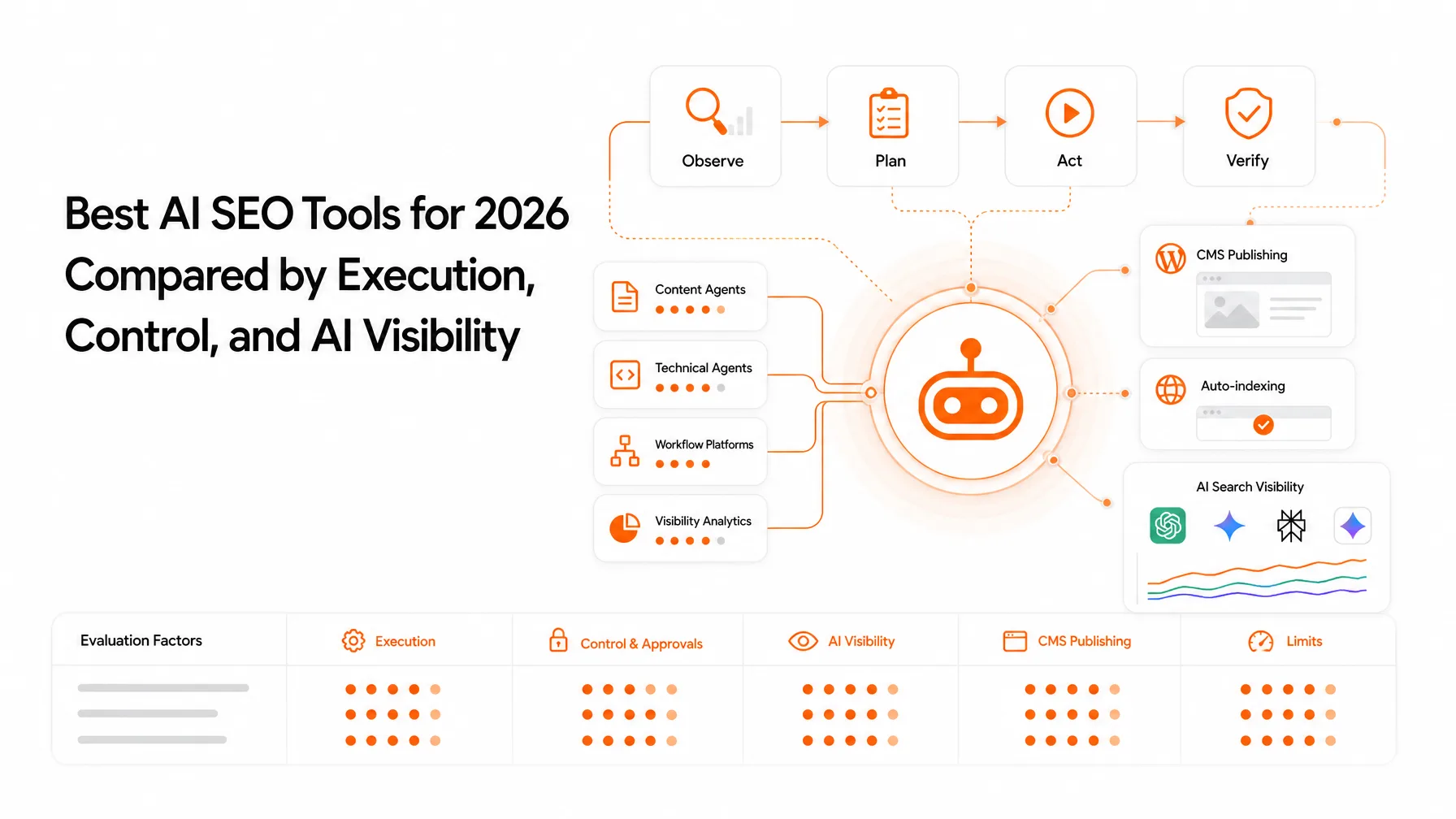
Patient acquisition strategies are the organic systems a healthcare practice uses to help the right patients discover, trust, and contact it. Start with a complete Google Business Profile, dedicated service and location pages, clinician-reviewed patient education, ethical review and referral processes, and a clear booking path. Track calls, forms, and booked appointments, not traffic alone.
You've got referrals coming in, a website that looks fine, and a Google listing someone set up years ago. What you can't say is which of those activities actually produces booked appointments.
Getting more patients can mean better discovery, stronger trust, easier booking, steadier referrals, or better retention. This guide stays on organic acquisition, and no single channel fixes every problem. I'm writing from a product and growth angle at Keytomic, not as a clinician, lawyer, or privacy specialist, so treat clinical and compliance points as items for qualified review.
Below you'll find a map of the patient journey, 20 tactics grouped by priority, healthcare content safeguards, a monthly workflow, and a measurement system. Treat them as one system, not a pile of tips.
What Patient Acquisition Strategies Actually Include
Patient acquisition is more than lead generation
Patient acquisition means attracting new patients and converting them into booked appointments. Lead generation covers only the inquiry at the front of that path. Retention and reactivation, which focus on patients you already have, are a separate job.
How organic channels move a patient from discovery to booking
Organic channels work as a chain, and the approaches that hold up cover every link. Google says local results are mainly based on relevance, distance, and prominence, so discovery depends on accurate details and trust signals. Content, reviews, and referrals then carry a patient from awareness to contact.
Stage | Organic tactics | Typical owner | Key metric |
|---|---|---|---|
Discovery | Business Profile, service and location pages, directory listings | Marketing lead | Impressions, profile actions |
Trust | Reviewed content, reviews, clinician information | Clinical lead, marketing | Review growth, engaged visits |
Booking | Booking links, calls, forms, follow-up | Front desk, practice manager | Calls, forms, booked appointments |
Referral | Professional relationships, community education | Practice owner | Referrals by source |
Retention | Permission-based email, reminders | Practice manager | Returning patients |
Why healthcare marketing needs stronger accuracy and privacy controls
Health content is held to a higher standard, so every claim needs a qualified reviewer. In the U.S., HHS publishes guidance on HIPAA and marketing, and other markets have their own privacy and advertising rules. Requirements also differ by specialty, as our guides to SEO for medical practices and this healthcare SEO example for dental practices show, so don't assume one playbook fits everyone.
What Are the Most Effective Organic Ways to Get More Patients?
How the 20 tactics were selected
I weighed these 20 tactics on patient-intent fit, organic contribution, effort, measurability, and privacy or clinical risk, then grouped them into four tiers: foundation, conversion, authority, and follow-up.
If you're wondering how to get more patients without ads, start with the tier that matches your weakest stage. Don't try all 20 at once. Paid ads, purchased reviews, patient-data targeting without permission, link schemes, and unsupported clinical claims are left out on purpose.
All 20 patient acquisition tactics at a glance
# | Tactic | Tier | Owner | Key metric |
|---|---|---|---|---|
1 | Complete and verify the Google Business Profile | Foundation | Practice manager | Profile calls, direction requests |
2 | Choose accurate primary and secondary categories | Foundation | Marketing lead | Impressions for service searches |
3 | Add service and appointment links | Foundation | Front desk lead | Booking link clicks |
4 | Create dedicated service pages | Foundation | Marketing lead + clinician | Search Console clicks per page |
5 | Build location pages and consistent directory listings | Foundation | Practice manager | Local queries, calls per location |
6 | Publish answers to common patient questions | Authority | Marketing lead | Inquiries from those pages |
7 | Add clinician-reviewed preparation and aftercare content | Authority | Clinical lead | Page-to-inquiry rate |
8 | Show clinician, practice, and author information | Authority | Practice manager | Contact clicks |
9 | Ask for genuine reviews through an ethical process | Authority | Front desk lead | Review count, rating trend |
10 | Respond to reviews without confirming private details | Authority | Practice manager | Response time |
11 | Improve mobile speed, accessibility, and navigation | Conversion | Web developer | Mobile engagement |
12 | Place booking, call, and contact actions on high-intent pages | Conversion | Web lead | Action clicks |
13 | Explain services and next steps in plain language | Conversion | Marketing lead | Form completions |
14 | Track forms, calls, bookings, and sources privately | Conversion | Marketing lead + compliance | Tracked inquiries by source |
15 | Improve missed-call and inquiry follow-up | Conversion | Front desk lead | Missed-call rate |
16 | Build referral relationships with relevant professionals | Follow-up | Practice owner | Referrals by source |
17 | Create educational social content | Follow-up | Marketing lead | Referral visits, inquiries |
18 | Use permission-based email | Follow-up | Practice manager | Reactivated appointments |
19 | Join community education or local partnerships | Follow-up | Practice owner | Referral traffic, inquiries |
20 | Refresh underperforming pages | Follow-up | Marketing lead | Clicks and inquiries after updates |
Tactics 1 to 5: Make the practice easier to discover locally
Complete and verify the Google Business Profile. Accurate details help nearby patients reach you. Start by verifying the listing and checking every field. Owner: practice manager. Metric: profile calls and direction requests.
Choose accurate primary and secondary categories. Categories tell Google what you do. Review Google's category guidance and pick only what truly applies. A physiotherapy clinic, for example, might use "Physical therapy clinic" as the primary category and add "Sports medicine clinic" only if it actually offers that service. Owner: marketing lead. Metric: impressions for service searches.
Add service and appointment links where eligible. They shorten the path from search to booking. Availability depends on business type and region, so check your profile dashboard. Owner: front desk lead. Metric: booking link clicks.
Create dedicated service pages. One page per core service matches specific searches. List the services patients ask about most, then start there. Owner: marketing lead with clinician input. Metric: Search Console clicks per page.
Build location pages and keep directory listings consistent. Each location page needs real, distinct details, never copied text. Then claim healthcare directory profiles such as Healthgrades, Zocdoc, or WebMD where relevant, and keep name, address, phone, and hours identical everywhere. Owner: practice manager. Metric: local queries and calls per location.
Tactics 6 to 10: Build trust before the first call
Publish answers to common patient questions. Helpful answers earn trust before a patient picks up the phone. Collect questions from front-desk calls first. Owner: marketing lead. Metric: inquiries from those pages.
Add clinician-reviewed preparation and aftercare content. Patients want to know what happens next. Have a clinician review and date each draft, and avoid individual medical advice. Owner: clinical lead. Metric: page-to-inquiry rate.
Show clear clinician, practice, and author information. Visible expertise supports trust. Add verified names, credentials, and review dates to key pages. Owner: practice manager. Metric: contact clicks from those pages.
Ask for genuine reviews through an ethical process. Ask every patient the same way, with no incentives or filtering, and follow FTC guidance on reviews and endorsements. Write one standard request (there's a template below). Owner: front desk lead. Metric: review count and rating trend.
Respond to reviews without confirming private details. A reply can thank someone without confirming they were a patient. Draft approved templates with your privacy lead. Owner: practice manager. Metric: response time.
Tactics 11 to 15: Remove friction from the website and booking process
Improve mobile speed, accessibility, and navigation. Patients often search on phones, so slow or cramped pages lose inquiries. Test key pages on a phone, check readable text and keyboard navigation. Owner: web developer. Metric: mobile engagement on service pages.
Place booking, call, and contact actions on high-intent pages. Every service page needs one obvious next step. Add it before writing anything new. Owner: web lead. Metric: clicks on those actions.
Explain services, preparation, availability, and next steps in plain language. Fewer unanswered questions mean fewer abandoned inquiries. Rewrite one service page this week. Owner: marketing lead. Metric: form completions.
Track forms, calls, bookings, and source information without exposing patient data. Without tracking, you can't tell which effort works. Set up call tracking and conversion events in Google Analytics 4, but check them with your compliance lead first: HHS has published guidance on online tracking technologies, and analytics pixels or call recordings on patient-facing pages can expose protected health information. Owner: marketing lead with compliance review. Metric: tracked inquiries by source.
Improve missed-call and inquiry follow-up. Visibility fades when inquiries go unanswered. Document a response routine and test it. Owner: front desk lead. Metric: response time and missed-call rate.
Tactics 16 to 20: Extend reach through referrals, community, and retention
Build referral relationships with relevant professionals. The AMA's physician referral strategy guide covers relationship building. List who already sends you patients and thank them. Guardrail: no improper incentives. Owner: practice owner. Metric: referrals by source.
Create educational social content that points to owned resources. Social supports discovery but rarely replaces search. Repurpose one reviewed FAQ and never share patient details. Owner: marketing lead. Metric: referral visits and inquiries.
Use permission-based email for appropriate patient communication. Confirm consent and privacy rules with your compliance reviewer first. Owner: practice manager. Metric: reactivated appointments.
Join community education or local partnerships. Talks, events, and partner pages build awareness and relevant local mentions. Choose one organization that fits your patients. Owner: practice owner. Metric: referral traffic and inquiries.
Refresh underperforming pages using Search Console and booking data. Find pages with impressions but few inquiries, then improve them. Owner: marketing lead. Metric: clicks and inquiries after each update.
Improve Local Search Visibility for Your Practice
Local SEO helps patients find a relevant nearby practice, but it can't promise a Map Pack spot. For practices serving a defined area, it's the base layer of patient acquisition, because the profile, the pages, and the reviews all feed one discovery path. For a deeper walkthrough, see how to improve Google local listings.
Complete and maintain the Google Business Profile
Treat the profile as a living page, not a one-time setup. Use this checklist:
Verify the profile and keep name, address, phone, and hours accurate
Choose the closest available categories
Add services, appointment links where eligible, and genuine photos
Reply to reviews on a regular schedule
Match every detail to your website and directory listings
Earn and respond to genuine patient reviews
Reviews shape choices. A rater8 survey of more than 1,000 U.S. patients, reported by Medical Economics, found 84% check online reviews before choosing a provider, yet 57% rarely or never leave one. It's a vendor survey, but the gap is the point: most happy patients won't review unless you ask.
Here's a simple request your front desk can send to every patient after a visit:
"Thanks for visiting [Practice name] today. If you have a minute, we'd appreciate an honest review on Google: [link]. Please don't include any personal health details in your review."
Send it the same way to everyone, offer nothing in return, and keep replies free of private patient details.
Show up in AI answers and healthcare directories
More patients now ask AI assistants for a nearby provider before they search Google. Those answers draw on the same signals as local search, so make them easy to read: clear service and location pages, consistent details across your profile and directories, plain-language FAQ answers, and MedicalClinic or LocalBusiness schema on your site. Then track AI mentions as a supporting signal alongside Search Console.
Create Content That Answers Patient Questions
Content earns trust when it answers the next decision a patient faces, not just a keyword. Say who each page is for and what it doesn't cover.
Build a question map around services and patient intent
Start with the questions your front desk hears every week, then match each to a page. For a physiotherapy clinic, that might look like this:
Patient question | Best page | Notes |
|---|---|---|
What should I expect at my first appointment? | First-visit preparation page | Include what to bring and how long it takes |
Are you accepting new patients? | Location pages | Only show availability you can keep accurate |
Do I need a referral for physio? | FAQ page | Answer by insurer or region, reviewed by staff |
How do I recover after a knee injury? | Clinician-reviewed guide | Educational only, with a clear booking next step |
How much does a session cost? | Service page | Include costs only when they're verified |
Add clinical review, sourcing, and clear limitations
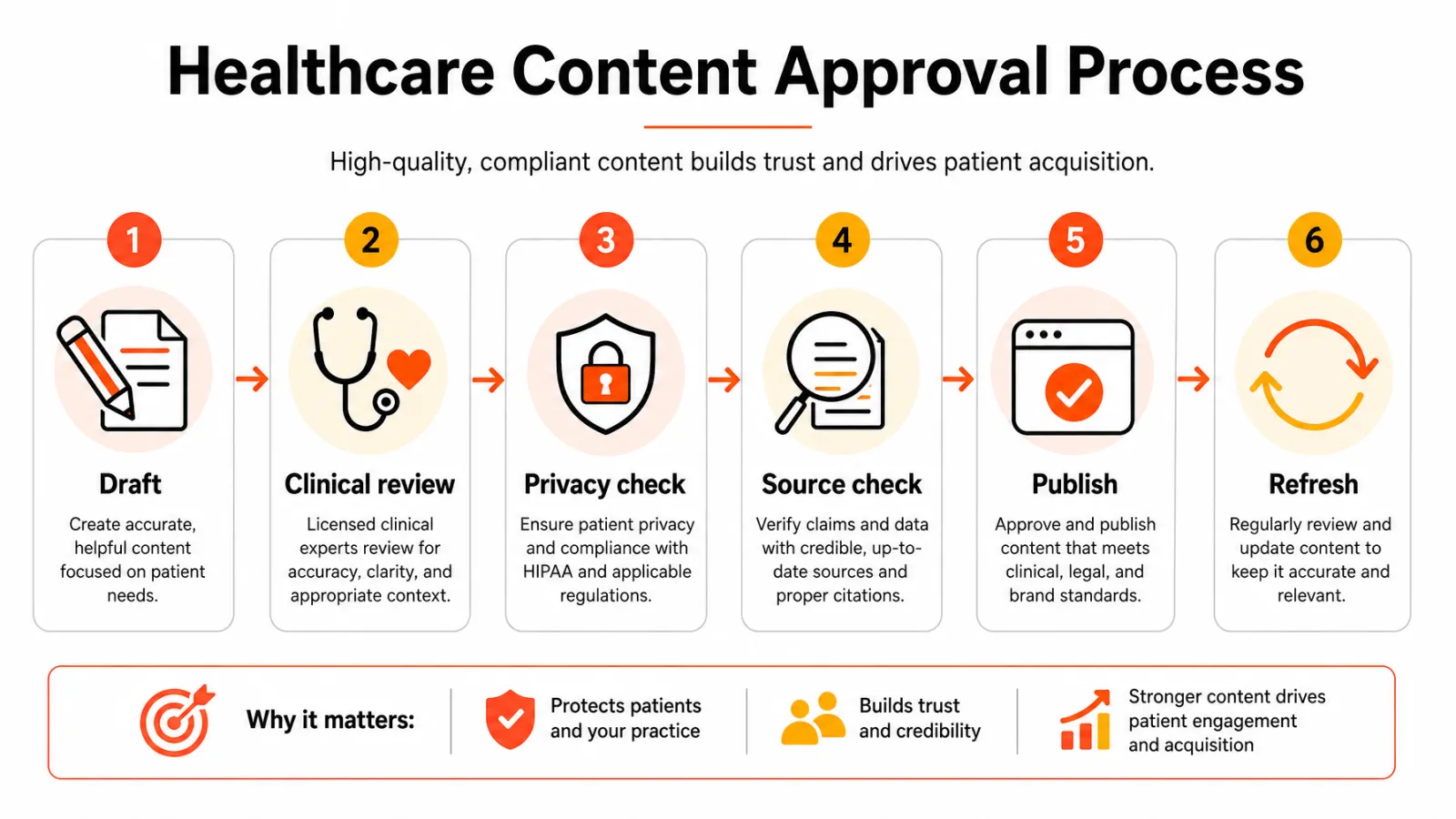
Google's people-first content guidance gives extra weight to quality signals on health topics. Build a gate before anything goes live:
Draft the page
Clinical review
Privacy check
Source check
Publish with author, reviewer, and date
Refresh on a schedule
Educational content isn't diagnosis or individual advice, so say so on the page. Match format to the question: FAQs for logistics, short articles for services and conditions, videos for preparation.
Turn Website Visits Into Patient Inquiries
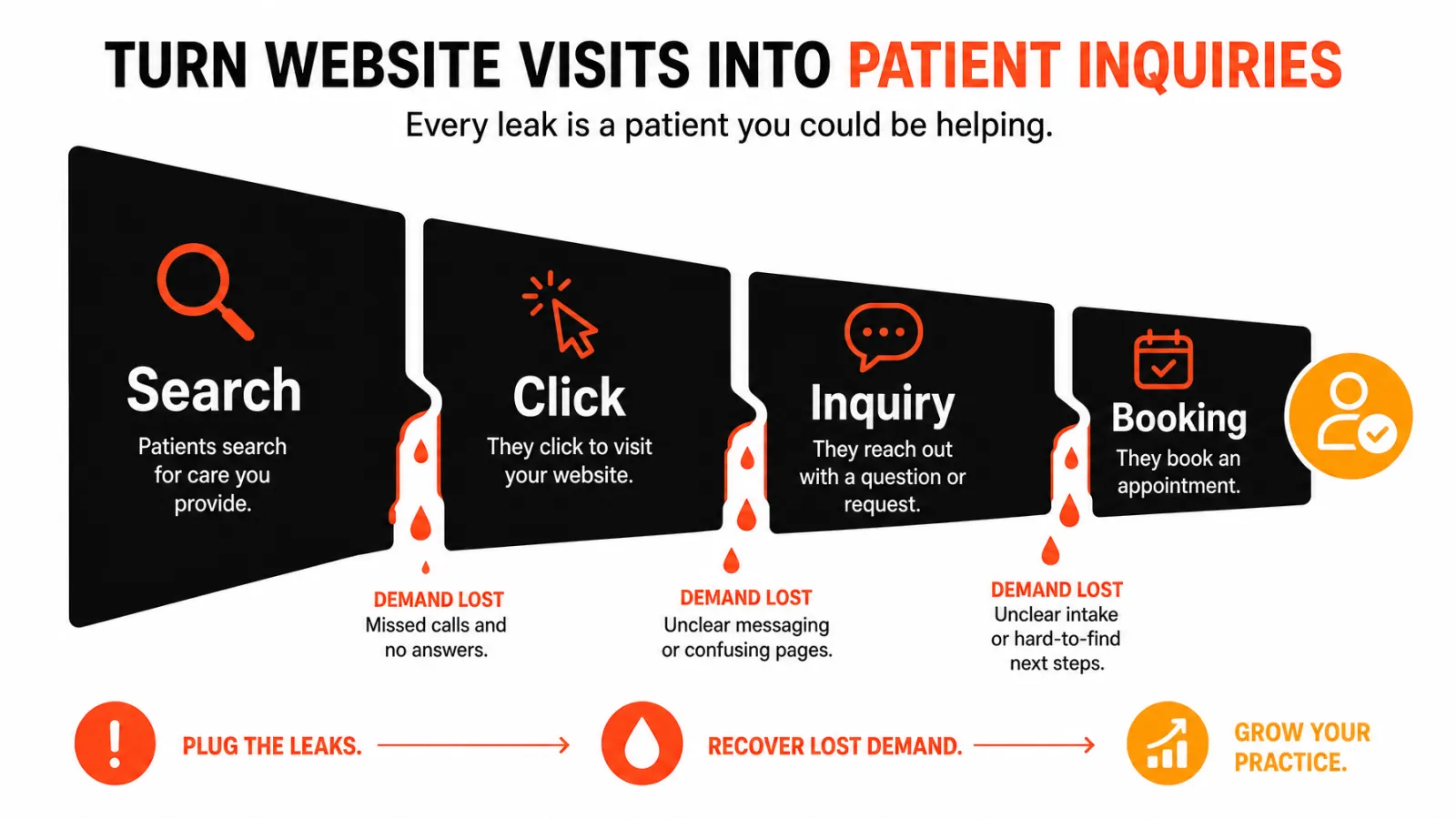
Traffic that doesn't become inquiries is a conversion problem, not a content problem. Calls, forms, and bookings are separate stages, and practices often lose demand between them.
Make booking and contact actions obvious
Within one visit, a patient should be able to:
Understand the service
See location, hours, and availability
Know what happens after they make contact
Book, call, or send a short form
Keep forms proportionate to the inquiry, and show verified clinician names, credentials, and review dates near the booking action.
Connect forms, calls, bookings, and source attribution
Tag form, call, and booking events so you can see where demand leaks, using only a tracking setup your compliance lead has approved.
Then add the low-tech check: ask every new patient how they found you, and compare the answer with your digital data.
Build a Repeatable Organic Patient Acquisition Workflow
Tactics only work with a rhythm and named owners.
A four-week cycle for research, review, publishing, and follow-up
Week 1: Review queries, calls, bookings, and local visibility
Week 2: Select topics and service-page improvements
Week 3: Draft, clinically review, and publish
Week 4: Inspect performance, follow up on reviews, and document next actions
Ongoing checks for content refreshes and local visibility
Refresh pages with impressions but few inquiries, and recheck profile hours, categories, and services. Run a technical SEO check for broken pages and slow templates, then review new reviews and referral sources.
A 90-day prioritization model for small healthcare teams
Days 1 to 30, foundation: Profile, service pages, tracking
Days 31 to 60, conversion: Booking path, follow-up, content gaps
Days 61 to 90, authority and follow-up: Referrals, community education, permission-based email
If your team is small, the research, drafting, and tracking steps in this cycle are the ones worth automating, so your staff's time goes to review and patient follow-up. That's the workflow behind Keytomic's SEO for medical practices.
How Keytomic Supports Healthcare SEO Workflows
Disclosure: Keytomic publishes this article, and this section describes documented platform workflows. Features and availability were checked in October 2026.
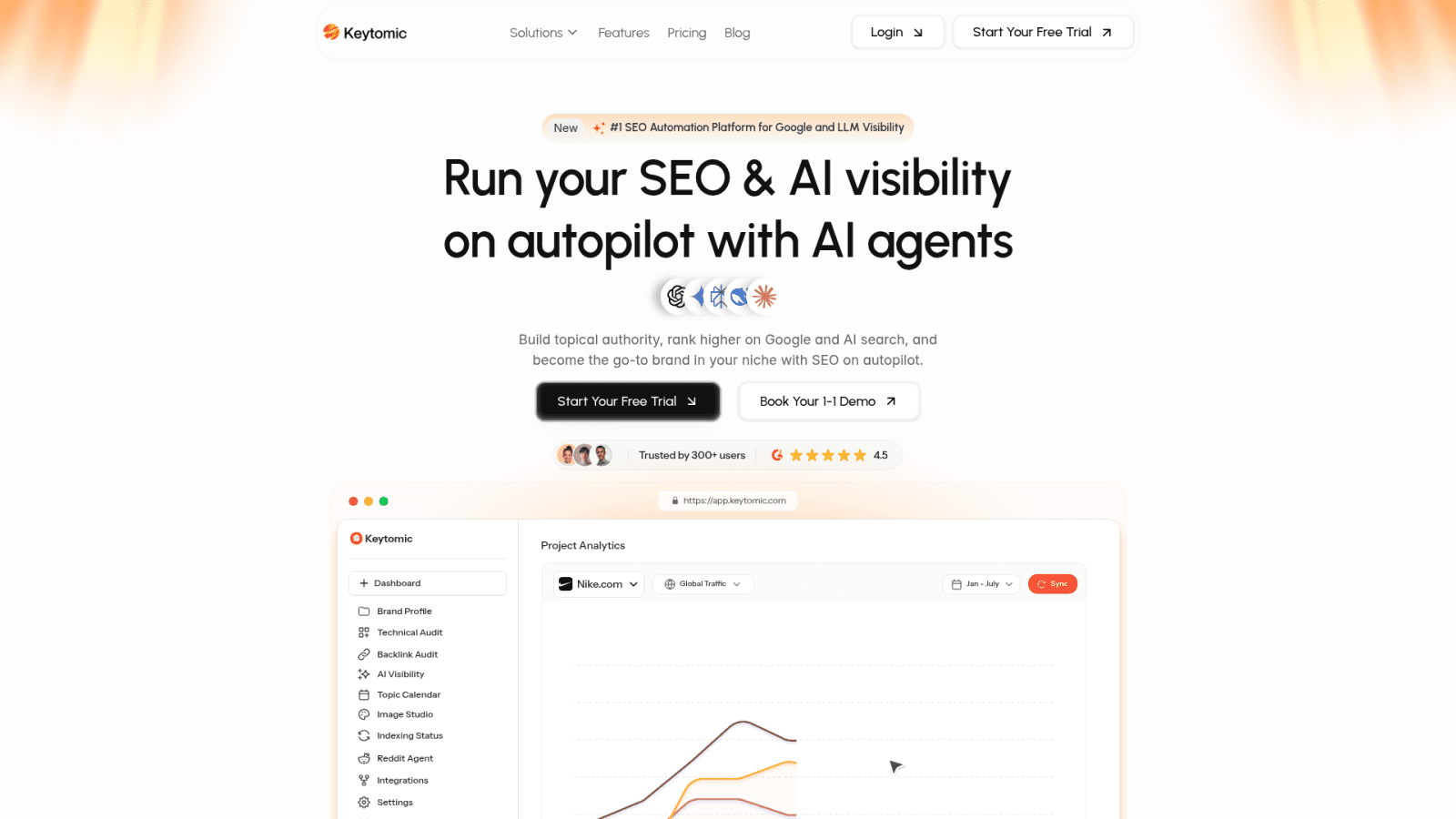
Where Keytomic can support research, planning, content, publishing, and visibility tracking
Keytomic is an AI-powered SEO automation platform that combines keyword research, topical planning, AI-assisted content creation, technical SEO audits, CMS publishing, and visibility monitoring across Google and AI answer engines. For healthcare practices, it handles the repetitive parts: finding patient questions, planning a topical map, drafting, and tracking visibility, all inside an approval-based workflow.
If your site runs on WordPress, see this SEO workflow for WordPress healthcare content. You can also review Keytomic pricing and plan details before deciding.
Where human clinical, strategic, and compliance review remains necessary
Keytomic doesn't replace clinical review, healthcare compliance advice, patient-intake operations, or strategic judgment. Approval steps exist so a person signs off before anything publishes, and in healthcare that person should be qualified.
When this is not the right fit: practices that need clinical content review, compliance counsel, patient intake management, or a fully human-only workflow will need additional systems or specialist support.
What to verify before adopting any SEO automation workflow
Who approves each page, and are they qualified to?
Are sources cited and checked before publishing?
Is patient information kept out of tools unless compliance has approved it?
Do you have Search Console access and a way to track bookings?
Does the workflow support your CMS?
How Should a Healthcare Practice Measure Organic Patient Acquisition?
Measurement should show which tactics produce appointments. Separate leading indicators from business outcomes, because impressions and AI mentions aren't patients.
Stage | What to track | Where to find it |
|---|---|---|
Visibility | Impressions, clicks, queries, profile views | Google Search Console, Google Business Profile |
Inquiry | Calls, form submissions, chats | Call tracking, Google Analytics 4, form tool |
Booking | Booked appointments, show rate if available | Booking system, practice records |
Source | How patients say they found you | Intake form, front desk |
Referral and AI | Referral sources, assisted conversions, AI visibility | Intake data, analytics, visibility tracker |
Discovery metrics from Google Search and local listings
Search Console shows queries, impressions, clicks, and average position for your site, while Business Profile shows how people found and contacted your listing. Treat both as leading indicators.
Inquiry and booking metrics tied to patient source
Calls and forms matter only if they turn into booked appointments. Compare tracked sources with what new patients tell you at intake, and expect the two to disagree sometimes.
Assisted conversions, referral quality, and AI visibility
A patient may visit your site, read a review, then call after a referral. Track assisted conversions and referral quality, and use AI visibility as a supplementary signal.
Choose the Right Starting Point for Your Practice
Patient acquisition falls flat when a team works on the wrong stage, such as publishing more content when the real bottleneck is booking.
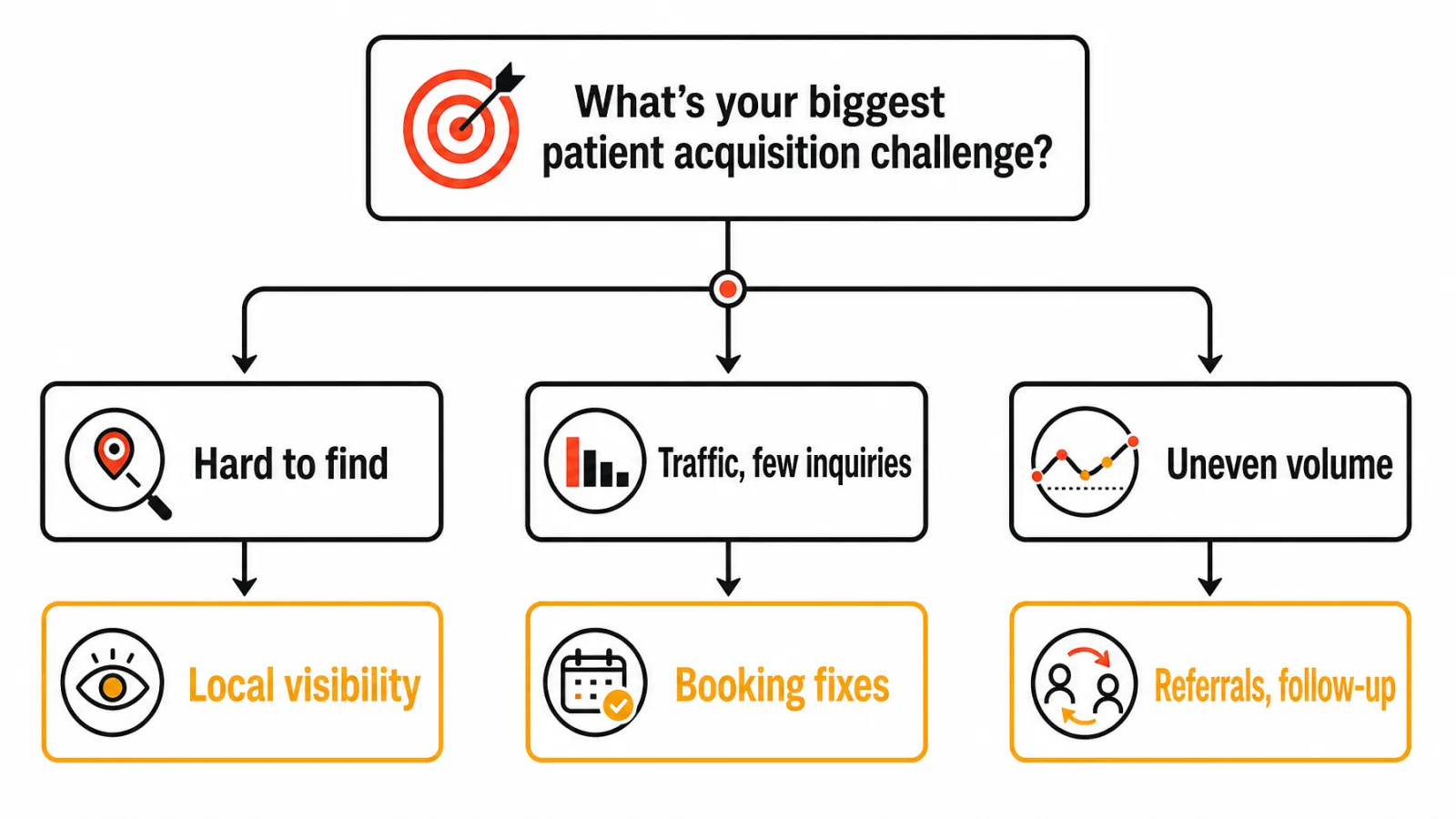
Start with local visibility when nearby patients cannot find you
Fix the Business Profile, categories, service pages, and location details first.
Start with conversion fixes when traffic does not become inquiries
Improve service-page actions, booking, calls, and intake follow-up before adding content.
Start with content, referrals, or retention when discovery is already strong
If discovery and conversion are healthy but volume is uneven, strengthen referrals, community education, and permission-based follow-up.
For example, picture a two-location clinic whose service pages get steady impressions but whose phones stay quiet. More blog posts won't help. The fix is tactics 12 to 15: clearer booking buttons, a short form, and a same-day callback routine for missed calls.
Questions Healthcare Practice Owners Ask About Getting More Patients
What is the fastest organic way to get more patients?
Fixing an incomplete Google Business Profile or a confusing booking path is often the quickest win. Speed depends on competition, location, and specialty.
How long does organic patient acquisition take?
Business Profile and booking fixes can show early movement within a few weeks. Content and authority gains usually take three to six months or longer, depending on competition, site authority, and execution. Judge progress with Search Console and booking data.
How often should a practice publish healthcare content?
Publish only what you can review properly. A steady cadence of clinician-reviewed pages beats high volume; one or two a month is a reasonable starting point for small teams.
How should a practice ask for patient reviews?
Ask every patient the same way, after a visit, without pressure or incentives. Follow FTC guidance, and reply without confirming that a reviewer is a patient.
Do referrals still matter for medical practices?
Yes. Referral relationships still matter, and the AMA publishes referral strategy guidance. Keep any arrangements compliant with medical, payer, and local rules, and avoid improper incentives.
Can social media bring in new patients?
It can support discovery and trust, but works best as a supporting channel. Share educational posts that point to reviewed pages, and never share patient details.
Can AI write healthcare marketing content?
AI can help with research, outlines, and first drafts. A qualified clinician must review anything medical, and a compliance reviewer should check privacy and advertising claims before publishing.
What should a practice measure besides traffic?
Track calls, form submissions, booked appointments, and patient source, not just traffic. Add review growth and referral quality, and ask new patients how they found you.
Is Keytomic suitable for healthcare SEO workflows?
Keytomic can support the SEO workflow: research, planning, drafting, audits, publishing, and visibility tracking. It isn't a clinical review, compliance, or patient intake tool, so keep human approval.
Build Patient Acquisition Around the Biggest Bottleneck
Match the next action to the weakest stage of the patient journey
The most useful patient acquisition strategies are the ones aimed at your weakest stage: discovery, trust, booking, follow-up, or measurement. Pick that stage first and leave the other tactics for later.
Set one owner, one metric, and one review date
Choose one bottleneck from the decision model above.
Assign one owner and one metric, such as booked appointments from a specific page.
Set a review date and decide what to change.
If you'd like help turning that into a repeatable SEO process, contact Keytomic about your SEO workflow. Your clinical and compliance reviewers still make the final call on what goes live.