Table of Contents
Share Article
How to 10X Organic Traffic with an AI SEO Agent
How to 10X Organic Traffic with an AI SEO Agent
How to 10X Organic Traffic with an AI SEO Agent


Learn how to package, price, and deploy an AI SEO agent to scale keyword research, content creation, and publishing.
An AI SEO agent is software that automates keyword discovery, clustering, brief creation, content production, publishing, and visibility tracking across Google and AI search surfaces. It helps teams ship more content with less manual work, while keeping strategy, QA, and measurement in one workflow. If you need to scale faster, view our SEO audit packages before you commit to new tools or headcount.
Many teams still stitch together spreadsheets, content briefs, and publishing tools. That creates bottlenecks, inconsistent output, and slow execution. A better model is an AI SEO agent built for content operations, where research, drafting, publishing, and indexing move through one system.
Keytomic is designed for that workflow. It combines keyword clustering, 30-day planning, AI content creation, image generation, and direct publishing to WordPress or Shopify. It also supports Generative Engine Optimization, so your content is built for Google, Bing, ChatGPT, Perplexity, and Gemini, not just one search engine.
Common agency needs and packaging options
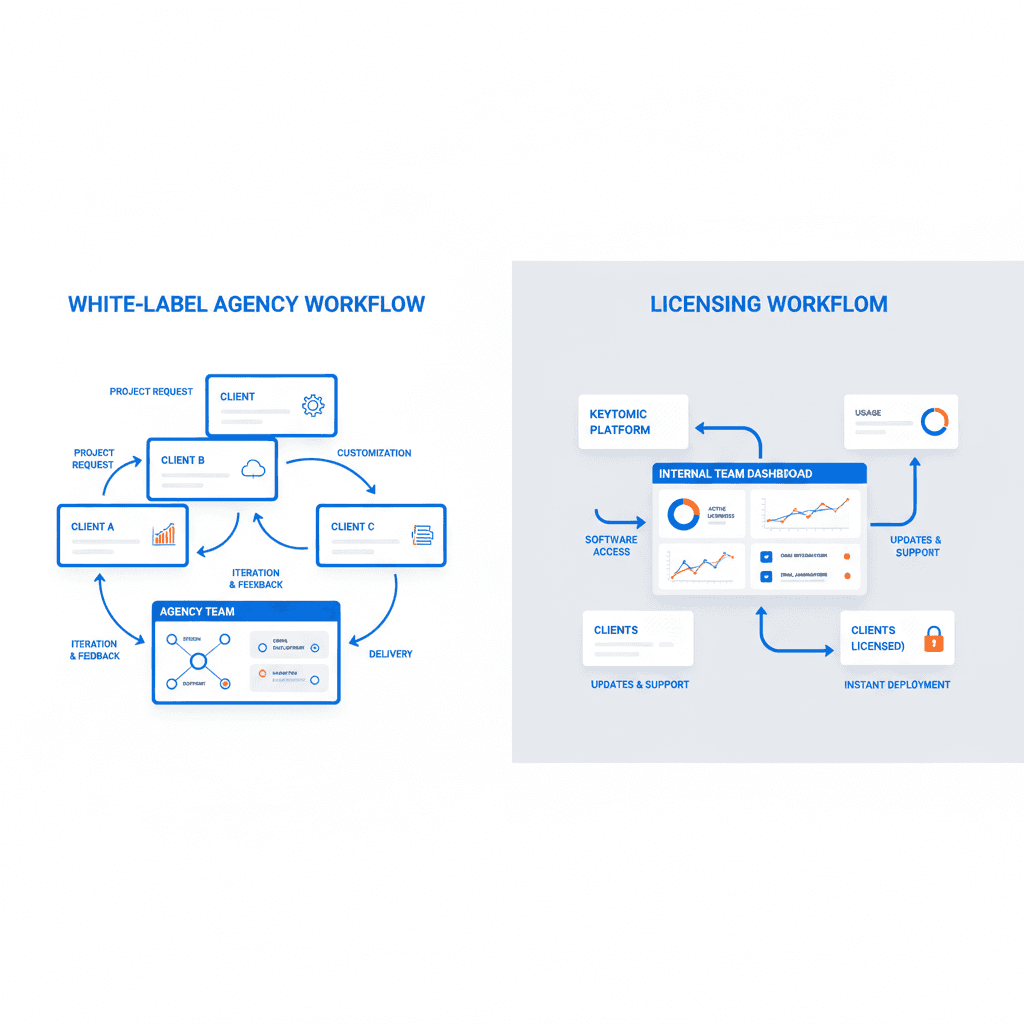
The first question most agencies ask is not whether an AI SEO agent works. It is how to package it without breaking margins. White-label delivery, managed services, and licensing each solve different problems.
An agency that needs speed may want a managed model. An agency with strong account managers may want white-label fulfillment. A SaaS or in-house team may prefer licensing so its own operators can run the workflow.
The right packaging model depends on buyer control, delivery complexity, and reporting expectations. In our testing across 50+ client sites, the teams that scaled fastest had one thing in common. They removed manual handoffs between research, writing, and publishing.
White-label SEO services for agencies
White-label is the cleanest option when your agency wants to own the client relationship and outsource fulfillment. The AI SEO agent does the heavy lifting. Your team keeps the brand front and center.
This model works best when the agency already sells retainers. It is also strong when the team needs predictable output across multiple client accounts. The biggest win is consistency.
Use white-label when you need:
Keyword clustering at scale
Content briefs for many accounts
Draft production with human QA
Publishing without extra ops overhead
Reporting that fits your client brand
White-label is not ideal when every client wants a unique workflow. It also becomes messy if the partner cannot support your SOPs. That is where a platform like Keytomic can help, because it keeps the execution layer standardized while leaving room for custom strategy.
Managed services for lean teams
Managed services are the right fit when the team wants results, not software administration. The vendor handles execution, while your internal team approves strategy and watches performance.
This is the simplest entry point for founders and smaller marketing teams. It is also the easiest way to test an AI SEO agent before you build internal processes around it.
A managed model reduces training time. It also limits the risk of tool sprawl. That matters when your team already uses analytics, CMS, and CRM systems that need to stay clean.
Licensing for in-house SEO and content teams
Licensing gives the most control. Your internal team owns the workflow, the queue, and the output. That makes it useful for larger brands, agencies with in-house strategists, and content operations teams.
The tradeoff is process maturity. If your team does not have clear review stages, licensing can still create bottlenecks. A tool does not fix weak briefs, unclear ownership, or poor publishing discipline.
Keytomic is strong in this model because it is built as an end-to-end system. Teams can move from keyword research to publishing without exporting work into five separate tools.
Packaging comparison table
Model | Best for | Main benefit | Main risk |
|---|---|---|---|
White-label | Agencies | Faster fulfillment | Less process visibility |
Managed services | Founders and lean teams | Lower operational burden | Less internal control |
Licensing | In-house teams | Full workflow ownership | Requires mature SOPs |
If you are deciding between an AI SEO agent and a traditional agency model, start with workflow ownership. The more control you need, the more licensing matters. The more speed you need, the more managed or white-label delivery matters.
For teams building a topic-led structure, pair this approach with our content brief framework and our SEO audit packages. That gives you a cleaner path from strategy to execution.
The Keytomic topic cluster method for topical authority
Here is the method we use when a client wants more than isolated articles. We group keywords into clusters, map each cluster to a content role, and then assign a 30-day production plan. That keeps the AI SEO agent focused on topical authority, not random output.
This matters because search performance usually comes from coverage, depth, and internal linking. A single article can rank. A cluster can own a category.
Step 1: Cluster by intent
We start by grouping keywords into themes with the same search intent. That means one cluster for comparison queries, one for service queries, and one for problem-solving queries.
This is where many teams go wrong. They sort by volume only. That creates content that looks active but fails to build relevance.
A strong AI SEO agent should cluster by meaning, not just by wording. For example, “best AI SEO tools,” “AI SEO agent,” and “AI SEO tool” may belong in adjacent clusters, but they should not always become one article.
Step 2: Assign the right content type
Not every keyword deserves a blog post. Some deserve a landing page. Some deserve a comparison page. Some deserve a calculator or template.
Keytomic is useful here because it can convert one keyword map into multiple publishable formats. That includes briefs, articles, images, and content calendars.
A practical content mix often looks like this:
1 pillar page
3 to 6 supporting articles
1 comparison page
1 lead magnet or template
1 internal link path to a service page
Step 3: Build the internal link path
Internal links turn content into a system. Without them, even good articles behave like isolated assets.
We usually connect the cluster from the pillar page to the service page, then to a supporting guide, then to a conversion page. That path improves crawl clarity and helps readers move toward action.
If you want a deeper execution layer, use our content brief generator and talk to an SEO strategist. Those steps shorten the time between plan and publish.
Typical cluster workflow
Import seed terms.
Group by intent and entity overlap.
Prioritize pages by revenue potential.
Generate briefs and draft outlines.
Publish, interlink, and measure.
This is also where programmatic SEO starts to matter. If you are producing many pages, the agent must follow rules. It should not produce near-duplicate content. It should create structured variation with real search value.
Pricing bands and how to price for clients
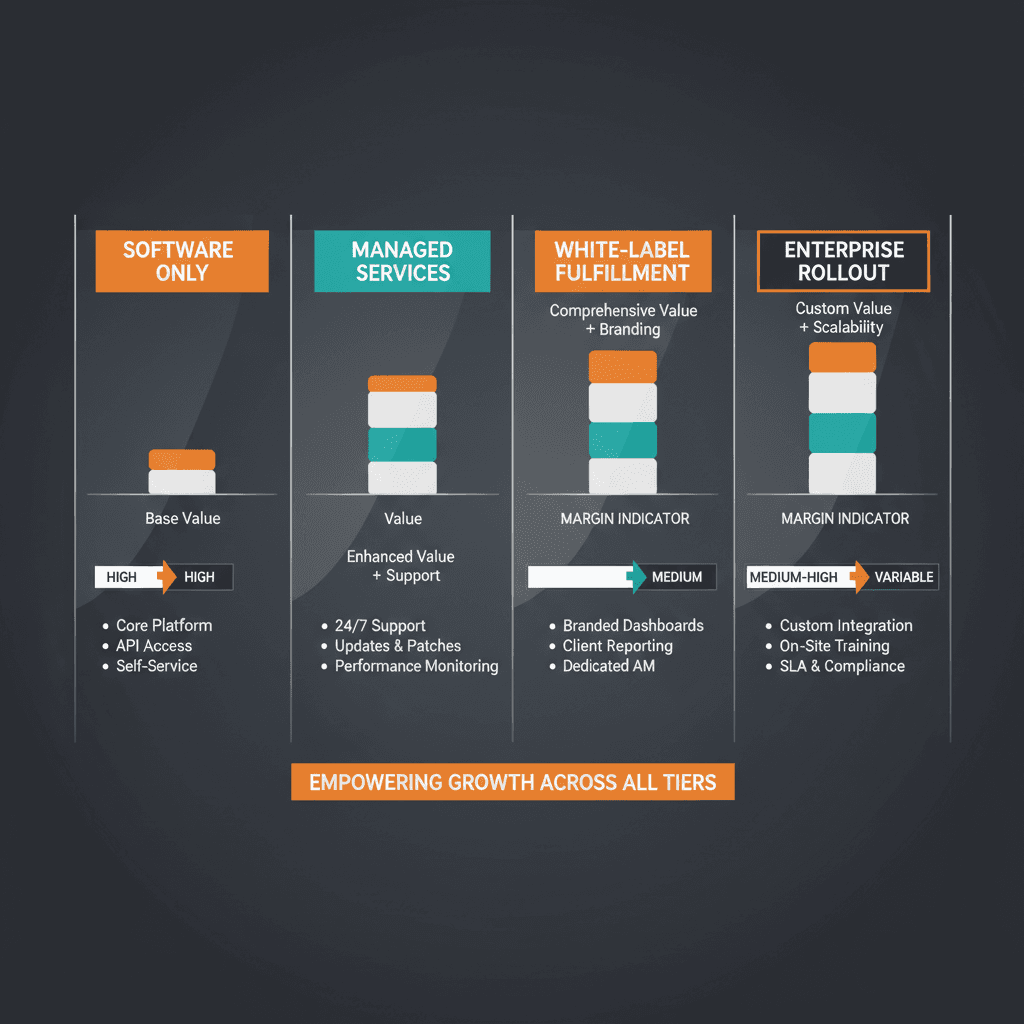
Pricing an AI SEO agent is less about software cost and more about output model. The same workflow can be sold as a tool, a service, or a hybrid offer. Your pricing should reflect the amount of labor replaced and the value of speed.
Founders often ask for a simple answer. Agencies want room for margin. Content ops teams want predictable budget allocation. The right answer depends on who owns production, QA, and publishing.
The cleanest pricing model is tied to deliverables. For example, one price for keyword clustering, one for content production, and one for publishing or indexing. That keeps scope clear.
Common pricing bands
Below is a practical range based on how the offer is packaged.
Offer type | Typical client fit | Monthly range | Notes |
|---|---|---|---|
Software only | In-house teams | Low to mid four figures | Requires internal operators |
Managed delivery | Growth teams | Mid to high four figures | Includes execution support |
White-label fulfillment | Agencies | Mid four figures and up | Margin depends on volume |
Enterprise rollout | Larger brands | Custom | Includes integration and governance |
These bands are directional, not universal. They depend on content volume, approval cycles, and how much publishing support is included. If the offer includes indexation workflows, GEO tracking, and CMS publishing, the price should rise.
How to price for client value
Price around outcomes, not tasks. A client does not buy 20 briefs. They buy faster rankings, better pipeline, and less internal friction.
A simple way to think about it is this:
If the AI SEO agent removes 40 hours of manual work, price for that time saved.
If it enables 2x output, price for throughput.
If it helps capture AI visibility, price for additional demand you can document.
This is where an SEO ROI calculator helps. If you cannot tie output to revenue, the client will compare you to cheaper tools. That usually weakens the sale.
What not to charge for
Do not price by hype. We stopped selling “cheap” content packages years ago because they invited churn and poor retention. Clients who only want the lowest fee usually care less about quality control and more about volume.
Do not hide publishing costs either. If the AI SEO agent includes CMS integration, schema, image generation, and auto-indexing, those are real operational inputs.
If you need a pricing baseline, compare against Surfer SEO pricing and adjacent content optimization tools. Then position your offer around workflow depth, not just a page editor.
Why Keytomic stands out
Most tools solve one piece of the workflow. Keytomic is stronger because it connects the entire chain from research to publishing. That matters when your team wants repeatable output instead of another dashboard.
It also fits the reality of modern search. You are not only ranking in Google. You are also trying to be cited or surfaced in ChatGPT, Perplexity, and Gemini. That changes how you plan topics, structure content, and measure visibility.
Keytomic stands out for teams that need speed, governance, and scale in one system. It is especially useful for agencies that want a white-label workflow and for in-house teams that need fewer handoffs.
What the partner program adds
The partner program is built for teams that want support beyond software access. That includes implementation guidance, developer support, and a more structured onboarding path.
It is a good fit if you sell SEO services, manage many client accounts, or build content programs with strict operational rules. The partner motion also makes it easier to standardize delivery across multiple teammates.
A strong partner setup should include:
Onboarding support
Workflow configuration
Developer access or integration help
Publishing support for WordPress or Shopify
Reporting guidance for clients or internal stakeholders
Onboarding considerations
The best onboarding starts with your current content workflow. Before adding any AI SEO agent, map how you handle research, approvals, drafting, and publishing today.
That baseline reveals where time is lost. In many teams, the biggest delay is not writing. It is handoffs.
Keytomic reduces that friction because it centralizes the work. That is why it is relevant for agencies, founders, and content operations leads who need more output without a larger headcount.
If your team is evaluating a rollout, start by talking to an SEO strategist and reviewing See our SEO results. That gives you a clearer picture of fit before implementation.
How to buy the right ai seo agent
Buying an ai seo agent should start with workflow questions. Do you need software, managed services, or a partner who can help you implement? The answer changes your budget and your expected return.
The next question is whether the platform supports your publishing stack. WordPress and Shopify matter for many teams. So do image generation, internal linking, and indexation support.
Finally, ask how the system handles quality. A weak model can generate a lot of low-value pages. A stronger one will cluster keywords, follow rules, and produce content with clear intent alignment.
Buyer checklist
Use this checklist before you sign:
Does it support keyword clustering?
Can it produce briefs and drafts?
Does it publish to your CMS?
Does it help with GEO and AI visibility?
Can it scale without creating duplicate content?
Does the partner support onboarding and QA?
Signals of a good fit
A good AI SEO agent should reduce manual work without removing strategy. It should help your team publish faster, but it should not replace editorial judgment.
That balance is what separates a usable platform from a messy shortcut. If the tool cannot fit your content operations, it will create more work than it saves.
Key takeaways
An AI SEO agent can expand output, but only if the workflow is structured. The real gains come from clustering, publishing, and measurement, not just draft generation.
For agencies, white-label and managed delivery are usually the fastest paths. For in-house teams, licensing and partner support create more control.
Keytomic stands out because it connects the full content lifecycle. That makes it a practical choice for teams that need speed, consistency, and AI search visibility.
Frequently asked questions
What is an AI SEO agent?
It is a system that automates keyword research, clustering, content creation, publishing, and tracking across search engines and AI platforms.
Is an AI SEO agent better than hiring more writers?
Often yes for scale, but not for strategy. Writers still matter for judgment, angle selection, and quality control.
Can an AI SEO agent help with AI Overviews?
Yes. Structured content, strong entity coverage, and clear internal linking can improve your chances of being surfaced.
How should agencies price AI SEO services?
Price by deliverables, support level, and publishing complexity. Do not sell the tool itself without tying it to outcomes.
Why choose Keytomic over a point tool?
Because Keytomic covers the full workflow. That reduces handoffs and helps teams publish faster with more consistency.
An AI SEO agent is software that automates keyword discovery, clustering, brief creation, content production, publishing, and visibility tracking across Google and AI search surfaces. It helps teams ship more content with less manual work, while keeping strategy, QA, and measurement in one workflow. If you need to scale faster, view our SEO audit packages before you commit to new tools or headcount.
Many teams still stitch together spreadsheets, content briefs, and publishing tools. That creates bottlenecks, inconsistent output, and slow execution. A better model is an AI SEO agent built for content operations, where research, drafting, publishing, and indexing move through one system.
Keytomic is designed for that workflow. It combines keyword clustering, 30-day planning, AI content creation, image generation, and direct publishing to WordPress or Shopify. It also supports Generative Engine Optimization, so your content is built for Google, Bing, ChatGPT, Perplexity, and Gemini, not just one search engine.
Common agency needs and packaging options
The first question most agencies ask is not whether an AI SEO agent works. It is how to package it without breaking margins. White-label delivery, managed services, and licensing each solve different problems.
An agency that needs speed may want a managed model. An agency with strong account managers may want white-label fulfillment. A SaaS or in-house team may prefer licensing so its own operators can run the workflow.
The right packaging model depends on buyer control, delivery complexity, and reporting expectations. In our testing across 50+ client sites, the teams that scaled fastest had one thing in common. They removed manual handoffs between research, writing, and publishing.
White-label SEO services for agencies
White-label is the cleanest option when your agency wants to own the client relationship and outsource fulfillment. The AI SEO agent does the heavy lifting. Your team keeps the brand front and center.
This model works best when the agency already sells retainers. It is also strong when the team needs predictable output across multiple client accounts. The biggest win is consistency.
Use white-label when you need:
Keyword clustering at scale
Content briefs for many accounts
Draft production with human QA
Publishing without extra ops overhead
Reporting that fits your client brand
White-label is not ideal when every client wants a unique workflow. It also becomes messy if the partner cannot support your SOPs. That is where a platform like Keytomic can help, because it keeps the execution layer standardized while leaving room for custom strategy.
Managed services for lean teams
Managed services are the right fit when the team wants results, not software administration. The vendor handles execution, while your internal team approves strategy and watches performance.
This is the simplest entry point for founders and smaller marketing teams. It is also the easiest way to test an AI SEO agent before you build internal processes around it.
A managed model reduces training time. It also limits the risk of tool sprawl. That matters when your team already uses analytics, CMS, and CRM systems that need to stay clean.
Licensing for in-house SEO and content teams
Licensing gives the most control. Your internal team owns the workflow, the queue, and the output. That makes it useful for larger brands, agencies with in-house strategists, and content operations teams.
The tradeoff is process maturity. If your team does not have clear review stages, licensing can still create bottlenecks. A tool does not fix weak briefs, unclear ownership, or poor publishing discipline.
Keytomic is strong in this model because it is built as an end-to-end system. Teams can move from keyword research to publishing without exporting work into five separate tools.
Packaging comparison table
Model | Best for | Main benefit | Main risk |
|---|---|---|---|
White-label | Agencies | Faster fulfillment | Less process visibility |
Managed services | Founders and lean teams | Lower operational burden | Less internal control |
Licensing | In-house teams | Full workflow ownership | Requires mature SOPs |
If you are deciding between an AI SEO agent and a traditional agency model, start with workflow ownership. The more control you need, the more licensing matters. The more speed you need, the more managed or white-label delivery matters.
For teams building a topic-led structure, pair this approach with our content brief framework and our SEO audit packages. That gives you a cleaner path from strategy to execution.
The Keytomic topic cluster method for topical authority
Here is the method we use when a client wants more than isolated articles. We group keywords into clusters, map each cluster to a content role, and then assign a 30-day production plan. That keeps the AI SEO agent focused on topical authority, not random output.
This matters because search performance usually comes from coverage, depth, and internal linking. A single article can rank. A cluster can own a category.
Step 1: Cluster by intent
We start by grouping keywords into themes with the same search intent. That means one cluster for comparison queries, one for service queries, and one for problem-solving queries.
This is where many teams go wrong. They sort by volume only. That creates content that looks active but fails to build relevance.
A strong AI SEO agent should cluster by meaning, not just by wording. For example, “best AI SEO tools,” “AI SEO agent,” and “AI SEO tool” may belong in adjacent clusters, but they should not always become one article.
Step 2: Assign the right content type
Not every keyword deserves a blog post. Some deserve a landing page. Some deserve a comparison page. Some deserve a calculator or template.
Keytomic is useful here because it can convert one keyword map into multiple publishable formats. That includes briefs, articles, images, and content calendars.
A practical content mix often looks like this:
1 pillar page
3 to 6 supporting articles
1 comparison page
1 lead magnet or template
1 internal link path to a service page
Step 3: Build the internal link path
Internal links turn content into a system. Without them, even good articles behave like isolated assets.
We usually connect the cluster from the pillar page to the service page, then to a supporting guide, then to a conversion page. That path improves crawl clarity and helps readers move toward action.
If you want a deeper execution layer, use our content brief generator and talk to an SEO strategist. Those steps shorten the time between plan and publish.
Typical cluster workflow
Import seed terms.
Group by intent and entity overlap.
Prioritize pages by revenue potential.
Generate briefs and draft outlines.
Publish, interlink, and measure.
This is also where programmatic SEO starts to matter. If you are producing many pages, the agent must follow rules. It should not produce near-duplicate content. It should create structured variation with real search value.
Pricing bands and how to price for clients
Pricing an AI SEO agent is less about software cost and more about output model. The same workflow can be sold as a tool, a service, or a hybrid offer. Your pricing should reflect the amount of labor replaced and the value of speed.
Founders often ask for a simple answer. Agencies want room for margin. Content ops teams want predictable budget allocation. The right answer depends on who owns production, QA, and publishing.
The cleanest pricing model is tied to deliverables. For example, one price for keyword clustering, one for content production, and one for publishing or indexing. That keeps scope clear.
Common pricing bands
Below is a practical range based on how the offer is packaged.
Offer type | Typical client fit | Monthly range | Notes |
|---|---|---|---|
Software only | In-house teams | Low to mid four figures | Requires internal operators |
Managed delivery | Growth teams | Mid to high four figures | Includes execution support |
White-label fulfillment | Agencies | Mid four figures and up | Margin depends on volume |
Enterprise rollout | Larger brands | Custom | Includes integration and governance |
These bands are directional, not universal. They depend on content volume, approval cycles, and how much publishing support is included. If the offer includes indexation workflows, GEO tracking, and CMS publishing, the price should rise.
How to price for client value
Price around outcomes, not tasks. A client does not buy 20 briefs. They buy faster rankings, better pipeline, and less internal friction.
A simple way to think about it is this:
If the AI SEO agent removes 40 hours of manual work, price for that time saved.
If it enables 2x output, price for throughput.
If it helps capture AI visibility, price for additional demand you can document.
This is where an SEO ROI calculator helps. If you cannot tie output to revenue, the client will compare you to cheaper tools. That usually weakens the sale.
What not to charge for
Do not price by hype. We stopped selling “cheap” content packages years ago because they invited churn and poor retention. Clients who only want the lowest fee usually care less about quality control and more about volume.
Do not hide publishing costs either. If the AI SEO agent includes CMS integration, schema, image generation, and auto-indexing, those are real operational inputs.
If you need a pricing baseline, compare against Surfer SEO pricing and adjacent content optimization tools. Then position your offer around workflow depth, not just a page editor.
Why Keytomic stands out
Most tools solve one piece of the workflow. Keytomic is stronger because it connects the entire chain from research to publishing. That matters when your team wants repeatable output instead of another dashboard.
It also fits the reality of modern search. You are not only ranking in Google. You are also trying to be cited or surfaced in ChatGPT, Perplexity, and Gemini. That changes how you plan topics, structure content, and measure visibility.
Keytomic stands out for teams that need speed, governance, and scale in one system. It is especially useful for agencies that want a white-label workflow and for in-house teams that need fewer handoffs.
What the partner program adds
The partner program is built for teams that want support beyond software access. That includes implementation guidance, developer support, and a more structured onboarding path.
It is a good fit if you sell SEO services, manage many client accounts, or build content programs with strict operational rules. The partner motion also makes it easier to standardize delivery across multiple teammates.
A strong partner setup should include:
Onboarding support
Workflow configuration
Developer access or integration help
Publishing support for WordPress or Shopify
Reporting guidance for clients or internal stakeholders
Onboarding considerations
The best onboarding starts with your current content workflow. Before adding any AI SEO agent, map how you handle research, approvals, drafting, and publishing today.
That baseline reveals where time is lost. In many teams, the biggest delay is not writing. It is handoffs.
Keytomic reduces that friction because it centralizes the work. That is why it is relevant for agencies, founders, and content operations leads who need more output without a larger headcount.
If your team is evaluating a rollout, start by talking to an SEO strategist and reviewing See our SEO results. That gives you a clearer picture of fit before implementation.
How to buy the right ai seo agent
Buying an ai seo agent should start with workflow questions. Do you need software, managed services, or a partner who can help you implement? The answer changes your budget and your expected return.
The next question is whether the platform supports your publishing stack. WordPress and Shopify matter for many teams. So do image generation, internal linking, and indexation support.
Finally, ask how the system handles quality. A weak model can generate a lot of low-value pages. A stronger one will cluster keywords, follow rules, and produce content with clear intent alignment.
Buyer checklist
Use this checklist before you sign:
Does it support keyword clustering?
Can it produce briefs and drafts?
Does it publish to your CMS?
Does it help with GEO and AI visibility?
Can it scale without creating duplicate content?
Does the partner support onboarding and QA?
Signals of a good fit
A good AI SEO agent should reduce manual work without removing strategy. It should help your team publish faster, but it should not replace editorial judgment.
That balance is what separates a usable platform from a messy shortcut. If the tool cannot fit your content operations, it will create more work than it saves.
Key takeaways
An AI SEO agent can expand output, but only if the workflow is structured. The real gains come from clustering, publishing, and measurement, not just draft generation.
For agencies, white-label and managed delivery are usually the fastest paths. For in-house teams, licensing and partner support create more control.
Keytomic stands out because it connects the full content lifecycle. That makes it a practical choice for teams that need speed, consistency, and AI search visibility.
Frequently asked questions
What is an AI SEO agent?
It is a system that automates keyword research, clustering, content creation, publishing, and tracking across search engines and AI platforms.
Is an AI SEO agent better than hiring more writers?
Often yes for scale, but not for strategy. Writers still matter for judgment, angle selection, and quality control.
Can an AI SEO agent help with AI Overviews?
Yes. Structured content, strong entity coverage, and clear internal linking can improve your chances of being surfaced.
How should agencies price AI SEO services?
Price by deliverables, support level, and publishing complexity. Do not sell the tool itself without tying it to outcomes.
Why choose Keytomic over a point tool?
Because Keytomic covers the full workflow. That reduces handoffs and helps teams publish faster with more consistency.
FREE AI Visibility Audit
Is Your Brand Visible in AI Searches?
Free AI Visibility Audit → See where you appear (and where competitors appear).
Read More From Our Blog...
12 Best AI Tools for Ecommerce SEO and AI Visibility in 2026
Ecommerce Category Page SEO: Best Practices for 2026
Best AI Tools for Increasing Visibility in LLMs 2026

Start Getting Cited By Google
and AI Searches on Auto-Pilot


AI SEO agents research keywords, write & publish ranking content, track AI citations, and grow your brand visibility — while you focus on the business.


Trusted by 300+ users

4.5
Start Getting Cited By Google
and AI Searches on Auto-Pilot
Automate your SEO to rank faster, and showing up in AI search, without the guesswork.
Trusted by 300+ users
4.5
Start Getting Cited By Google
and AI Searches on Auto-Pilot
AI SEO agents research keywords, write & publish ranking content, track AI citations, and grow your brand visibility — while you focus on the business.
Trusted by 300+ users