I'm Salam Qadir, Product and Growth Lead at Keytomic — a platform that competes with Scalenut. This comparison is built on Scalenut's public pricing, verified reviews on G2 and Capterra, and direct use of the platform. Weigh my read accordingly.
The practice of SEO has shifted further and faster in the past two years than in the decade before it. Keyword targeting and manual content production remain part of the workflow, but they now sit inside a much broader operational question: is a brand visible where its audience is actually searching? That query is more and more referring to AI-generated responses, search summaries, and chatbots rather than a conventional blue-link SERP. AI Overviews now appear in 99.9% of informational keyword searches, and traffic from AI-native platforms like ChatGPT and Perplexity surged over 527% year-over-year in 2025. For SEO teams, this not only alters what content should say, but also how the entire workflow is structured, monitored, and adjusted on a continual basis.
Both Scalenut and Keytomic deal with this new environment, but in different positions within it. Scalenut is a content-based AI SEO platform - it excels at planning keywords, content research based on the SERP, AI-guided writing, and real-time optimization advice based on a GEO Score system that scores pages on both search and AI citation readiness. Keytomic is an end-to-end SEO automation engine - designed to handle keyword discovery, content generation, CMS publishing, auto-indexing, and AI visibility tracking as a connected system rather than a set of assisted manual tasks. The two platforms share surface-level similarities - both use AI, both are built for teams scaling organic search - but they solve structurally different problems. This comparison examines where each platform leads, where each has real limitations, and which workflows each serves most effectively in 2026.
Scalenut vs Keytomic - What Do These Platforms Actually Do?
What Scalenut Does
Scalenut is an AI-based SEO and content marketing platform built around the full content lifecycle - from topic discovery and keyword planning through article generation, on-page optimization, and AI visibility monitoring. Its Cruise Mode feature automates the drafting process - users provide a target keyword and minimal input, and the platform generates structured outlines and draft content informed by SERP analysis of top-ranking pages. The content editor provides real-time guidance on NLP terms, heading structure, keyword density, and content completeness, while its GEO Score evaluates pages simultaneously for traditional search performance and AI citation readiness.
Scalenut has added AI visibility monitoring to all plans in 2025 and 2026 - tracking brand and content presence in ChatGPT and Google AI across all plans, with Perplexity added at higher tiers. It integrates with WordPress, SEMrush, and Copyscape, and plans topic clusters using its keyword planner. For teams where content production quality and editorial speed is the primary bottleneck, Scalenut is best understood as a content-centered AI SEO platform - one whose primary value is helping teams produce better, faster, and more SEO-aligned content at scale.
What Keytomic Does
Keytomic is designed as a system-level SEO engine rather than a writing or optimization workspace. Its Auto-Pilot plan generates 30 SEO-ready articles per month and auto-publishes directly to nine or more CMS platforms - including WordPress, Shopify, Webflow, and HubSpot - with no manual export or formatting step required. All published pages are automatically submitted for indexing via IndexNow protocol support, with pages reported to index 70% faster than through standard crawl discovery. The 30-day rolling content calendar self-replenishes as articles publish, maintaining a continuous pipeline without manual scheduling effort.
Keytomic monitors brand mention and visibility across AI platforms including ChatGPT, Perplexity, Gemini, and Claude, feeding that data back into the content planning workflow as a continuous signal rather than a one-time audit. Technical SEO auditing runs on an automated schedule with prioritized, plain-language recommendations - no specialist interpretation required. For teams where the bottleneck is execution capacity rather than content quality, Keytomic functions as an SEO operating system with integrated AI visibility capabilities - a platform that runs and monitors the SEO cycle rather than supporting individual stages within it.
Why These Two Tools Get Compared
Scalenut and Keytomic are compared because both apply AI to content-driven SEO outcomes, both address keyword research and article generation, and both target teams trying to scale organic growth without proportionally scaling headcount. Those surface similarities make the comparison intuitive. What they obscure is that the two platforms are optimized for different operational constraints. Scalenut leads when the primary need is editorial quality, content depth, and optimization precision. Keytomic leads when the primary need is execution automation, workflow continuity, and cross-platform AI visibility monitoring. Understanding that distinction is the most important input to any decision between them.
What's Actually Inside Scalenut's GEO Toolset
Scalenut's AI-visibility layer isn't one feature — it's three, and some 2026 "alternatives" roundups still describe Scalenut as lacking this entirely. That's outdated.
GEO Score: a real-time score evaluating a page against 11 GEO-critical parameters — prompt coverage, schema, key terms, and featured-snippet readiness — shown inside the content editor as you write.
GEO Watchtower: tracks brand and content mentions across ChatGPT, Gemini, and Perplexity by region.
Social UpReach: monitors Reddit threads for brand mentions.
These are genuinely useful for evaluating a single piece of content. What they don't do is feed that data back into what gets generated next — that loop is where Keytomic's approach diverges.
Scalenut vs Keytomic - Feature-by-Feature Comparison
Feature | Scalenut | Keytomic |
Content Briefs | Strong - SERP-informed briefs | Moderate - generation-first approach |
AI Writing | Advanced - Cruise Mode + editor | Strong - 30 articles/month automated |
Content Optimization | Strong - GEO Score, NLP, real-time | Moderate - built into generation |
Keyword Planning | Strong - clusters, planner, intent | Strong - sweet spot discovery engine |
Topic Clustering | Strong | Strong |
SEO Automation | Limited to moderate | Advanced - full lifecycle automation |
Publishing Workflow | Moderate - WordPress integration | Advanced - auto-publish to 9+ CMS |
Auto Indexing | Not a core feature | Core feature - 70% faster indexing |
AI Visibility Tracking | Moderate - ChatGPT + Google AI (all plans) | Advanced - multi-LLM citation monitoring |
Entity & Topic Tracking | Limited | Strong |
Technical SEO Monitoring | Limited | Strong - automated audits |
Workflow Orchestration | Moderate | Advanced - end-to-end automation |
Competitor Analysis | Moderate - SERP-based | Strong - gap + competitor discovery |
Content Calendar | Strong - editorial planning | Automated - self-replenishing system |
Pricing (from) | ~$49/mo (Essential) | ~$99/mo (Auto-Pilot) |
The table illustrates the core structural difference: Scalenut concentrates its depth in the content creation and optimization layer, while Keytomic extends its capabilities into the execution, indexing, and monitoring layers that content-focused platforms typically leave to other tools or manual processes. A team choosing between them is choosing between deep content intelligence and broad workflow automation - both of which matter, but in different ways depending on where the actual bottleneck sits.
Which Platform Is Better for AI SEO in 2026?
Content Optimization vs AI Visibility
Modern SEO in 2026 has effectively split into two distinct operational priorities. The first is creating content that is structurally sound, search-intent aligned, and citation-ready - the domain where content optimization tools have always competed. The second is tracking whether that content is actually surfacing in AI-generated answers, search summaries, and conversational engines, and adjusting the strategy based on what those systems are choosing to cite. Both priorities are real; neither replaces the other.
Scalenut addresses the first priority with more depth and precision. Its GEO Score evaluates pages on both SEO and AI readiness simultaneously, its NLP term guidance is grounded in live SERP data, and its editor provides actionable, in-context recommendations during writing rather than after publication. Keytomic addresses both priorities within a single automated system - content generation, publishing, indexing, and AI citation monitoring all run as connected parts of the same workflow rather than as separate tasks. The distinction is between depth of optimization per piece and breadth of automation across the lifecycle.
Which Platform Feels More Aligned With Generative Search?
Generative search changes what SEO software needs to prioritize. Citation readiness, structured content output, entity relevance, and ongoing answer-engine visibility matter alongside - and in some cases more than - traditional ranking signals. Both platforms have moved in this direction, but with different orientations.
Scalenut’s GEO Score is a meaningful tool for writers and editors who want to evaluate how citation-ready a specific piece of content is before and during publication. It surfaces gaps in semantic coverage, entity clarity, and structural alignment with what AI platforms tend to cite. That kind of per-page optimization intelligence is genuinely useful for teams whose workflow centers on deliberate content production. Keytomic’s approach to ranking in AI search is systemic rather than editorial - it structures every generated article with direct-answer paragraphs, FAQ schema, and entity optimization built in by default, then monitors which AI platforms are citing the content and adjusts the next cycle of production accordingly. Scalenut optimizes individual pieces carefully; Keytomic optimizes the system continuously.
Which Is the Better AI SEO Agent in 2026?
Framed as an AI agent question, the two platforms operate at different levels of autonomy. Scalenut behaves like an AI content and optimization assistant - it accelerates, guides, and scores work that a human is actively driving. The AI writes drafts, suggests improvements, and evaluates content against competitive benchmarks, but the human sets the agenda, makes editorial decisions, and manages the workflow. Keytomic behaves more like an AI SEO execution and monitoring agent - it identifies keyword opportunities, generates and publishes content, submits it for indexing, and tracks performance across AI platforms largely without requiring the human to manage individual steps.
Neither model is universally superior. Teams that value editorial control and content precision will find Scalenut’s assistant model more appropriate. Teams that need SEO automation to function as an automated system - producing, deploying, and monitoring content at scale with minimal per-article intervention - will find Keytomic’s agent model more aligned with their operating constraints. The question is whether the buyer needs a capable assistant or an autonomous operator.
Content Research, Writing, and Optimization - Where Scalenut Usually Leads
Keyword Planning and Topic Research
Scalenut’s keyword planner is built around topic cluster strategy - users can identify keyword groups, assess their collective traffic and difficulty profile, and map them against a content pillar structure. This kind of cluster-level planning is valuable for editorial teams building topical authority systematically, because it moves keyword research from a list of individual targets to a coordinated architecture of interconnected content. The platform’s SERP research pulls insights from top-ranking pages for any target query, surfacing competitor outlines, commonly used headings, People Also Ask data, and NLP terms - giving content strategists a structured foundation before writing begins.
This layer of research saves content marketers, SEO writers, and editorial teams that produce mostly high-quality long-form content significant time on competitive analysis and brief creation. It consolidates into one interface what would otherwise require separate keyword tools, SERP scrapers, and manual competitor review.
AI Writing and Draft Generation
Cruise Mode is Scalenut’s flagship writing acceleration feature. Users input a target keyword, optionally customise the outline, and the platform generates a structured, SERP-informed article draft. The resulting draft is not a generic AI output - it incorporates competitive insights, topic coverage from top-ranking pages, and NLP term suggestions that are specific to the query. The ability to move from keyword to working draft in minutes - rather than hours - is a material efficiency gain for content teams under production pressure.
The AI copywriter component extends Scalenut’s writing support to shorter formats - ad copy, social content, email, and product descriptions - using frameworks like AIDA and PAS. This breadth makes Scalenut useful not just for blog-scale SEO content but for teams managing multiple content formats across marketing channels. For content-heavy operations where volume and speed are as important as precision, this makes Scalenut a particularly well-suited tool.
Content Optimization and On-Page Guidance
Scalenut’s content optimizer is where its depth shows most clearly. Once a draft exists - whether written inside Scalenut or imported from elsewhere - the editor provides real-time guidance across multiple dimensions: NLP term coverage, heading structure, keyword density, readability, content length relative to top-ranking competitors, and the GEO Score that captures both traditional SEO and AI citation readiness in a single metric. Writers receive specific, in-context suggestions rather than a post-submission audit, which keeps the optimization process integrated into the writing rather than separated from it.
The platform’s automated internal linking feature adds another practical layer - identifying opportunities to connect new content to existing pages based on semantic relevance, which reduces one of the more time-consuming manual tasks in content production at scale.
SEO Automation, Publishing, and Visibility Monitoring - Where Keytomic Usually Leads
SEO Workflow Automation
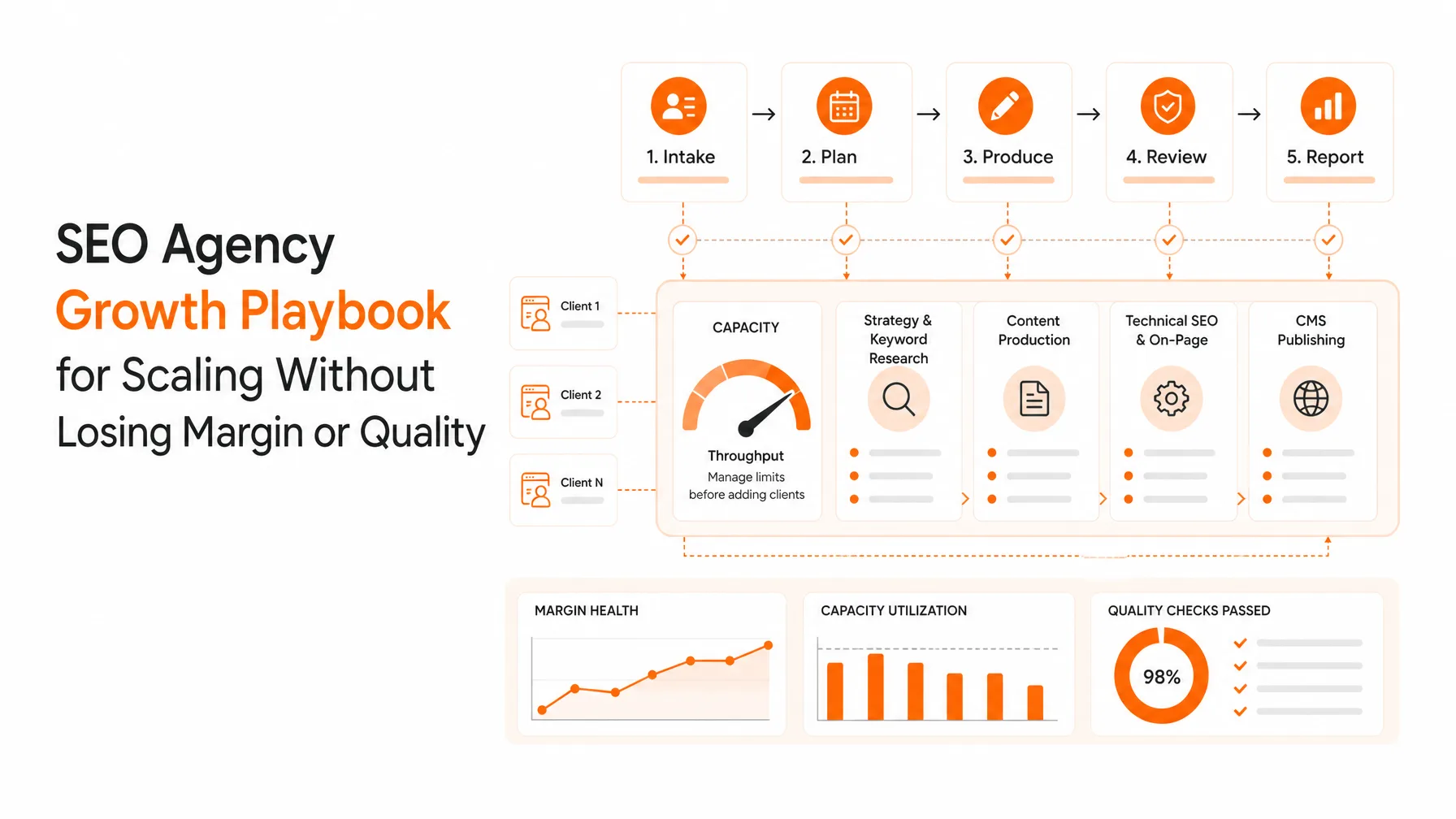
Keytomic’s defining characteristic is that it treats SEO as a system to be operated rather than a set of tasks to be assisted. The platform’s SEO automation covers the full workflow: keyword discovery using intent mapping and competitor gap analysis, content generation from those opportunities, CMS publishing, search engine indexing submission, and AI visibility monitoring - all as connected, automated steps rather than discrete tools requiring manual handoff between each stage. For teams where the limiting factor is not what to do but how to do it consistently at scale, this system-level approach changes the operational equation significantly.
The platform also includes technical SEO auditing on an automated schedule, surfacing issues like broken links, missing metadata, duplicate content, and crawlability problems with prioritized severity scoring. This integration means teams are not just producing and publishing content but maintaining the technical foundation that allows that content to be discovered and ranked.
Publishing and Execution Layer
One of the most material distinctions between Scalenut and Keytomic is in the publishing workflow. Scalenut integrates with WordPress and supports publication from within the platform, but publishing remains a step the team manages. Keytomic’s auto-publishing connects directly to nine or more CMS platforms via one-click OAuth authentication, deploying content with formatting, internal links, schema markup, and SEO settings already configured - reducing a 30–45 minute manual process per article to a near-instant automated step.
The value of this distinction compounds at scale. A team publishing 30 articles per month saves six to nine hours of manual publishing work monthly - time that shifts from mechanical execution to strategic review. For lean teams or agencies managing multiple clients, that kind of workflow efficiency in content calendar execution is not a marginal improvement but a structural one.
AI Search Visibility and Citation Monitoring
Keytomic’s strongest differentiator in 2026 is not its content generation capability but its AI visibility monitoring system. The platform tracks brand mention and citation frequency across ChatGPT, Perplexity, Gemini, and Claude, measuring share of AI voice relative to competitors and providing AI referral traffic data as a distinct reporting metric. This monitoring operates continuously rather than as an on-demand audit, feeding insights about what is and is not being cited back into the content planning and generation cycle.
For brands investing in generative engine optimization as a measurable strategy, this kind of closed feedback loop - where AI visibility data directly informs the next round of content production - is a significant capability gap between Keytomic and platforms that offer AI visibility as a dashboard feature without connecting it to execution. Scalenut’s AI tracking monitors presence across ChatGPT and Google AI (with Perplexity on higher plans), which is useful for awareness; Keytomic’s monitoring feeds directly into what gets produced next, which is useful for strategy.
Scalenut vs Keytomic Pricing - Which One Delivers Better Value?
Scalenut Pricing Positioning
Scalenut offers three main plan tiers. The Essential plan starts at approximately $49 per month and covers five articles, five optimizer reports, and five keyword clusters - suited for individual writers or small teams with lighter production volumes. The Growth plan runs approximately $79–$103 per month depending on billing cycle and covers 30 articles, 30 pages, and 30 clusters, making it the standard tier for content teams at moderate scale. The Pro plan at approximately $149–$193 per month extends to 75 articles, pages, and clusters, targeting agencies and larger teams with higher volume requirements. All plans include a free trial, and annual billing reduces costs by approximately 50% across tiers.
Scalenut's pricing structure is built around content production volume - how many articles are written, how many pages are optimized, and how many clusters are managed. Teams evaluating Scalenut should assess the plan tier against their actual monthly content output rather than against feature counts, since the platform’s capabilities are largely consistent across tiers while the limits on usage vary significantly.
Keytomic Pricing Positioning
Keytomic's Auto-Pilot plan is priced at $99 per month (or $79 per month on annual billing) and includes 30 SEO-ready articles per month, auto-publishing to connected CMS platforms, keyword research, auto-indexing, branded image generation, AI visibility tracking, technical SEO audits, and unlimited team seats and rewrites. A custom plan is available for agencies and enterprises requiring unlimited projects, white-label reporting, and dedicated account management.
Evaluating Keytomic's pricing purely against per-article cost misses the core value proposition. The platform is designed to replace a multi-tool stack - separate keyword research, content optimization, AI writing, publishing, and indexing tools - consolidating those functions at a price point significantly below what they would cost individually. Teams that are currently managing four to six separate SEO subscriptions alongside manual publishing and indexing workflows will find the cost comparison more favorable than teams evaluating Keytomic as a standalone article generator.
Cost vs Capability Comparison
Scalenut delivers clearer and more immediate value for teams whose primary investment area is content quality and editorial precision. At the Growth tier, it provides a capable research-to-publication stack for content teams at a manageable price. Keytomic delivers more strategic value for teams solving an SEO lifecycle automation problem - where the limiting factor is not content quality but the operational capacity to produce, deploy, index, and monitor content consistently at scale. The right comparison is not which platform is cheaper but which one addresses the actual constraint the buyer is trying to solve.
Which Tool Is Better for Different SEO Workflows?
Use Case | Scalenut | Keytomic |
Content Writing | Strong | Strong |
Editorial SEO Workflows | Strong | Strong |
AI SEO Strategy | Moderate | Strong |
AI Visibility Tracking | Moderate | Strong |
SEO Automation | Moderate | Advanced |
Publishing Automation | Limited to moderate | Strong |
Technical SEO Monitoring | Limited | Strong |
Content Scaling at Volume | Strong | Strong |
Enterprise SEO Operations | Moderate | Strong |
Search Intelligence | Moderate | Strong |
The use case table reflects what the feature comparison suggests: Scalenut is the stronger choice wherever content production, editorial quality, and optimization precision are the primary requirements. Keytomic is the stronger choice wherever SEO automation, execution continuity, AI visibility monitoring, and technical SEO management are the primary requirements. Both platforms support content scaling at volume, though through different mechanisms - Scalenut through better per-article quality and speed, Keytomic through automated pipeline management.
Scalenut vs Keytomic for Agencies, In-House Teams, and Lean SEO Operations
For Agencies
Agencies managing multiple clients on content retainers will find Scalenut's brief generation, SERP-informed drafting, and optimization workflows useful for maintaining consistent quality across accounts. The platform’s Pro tier supports higher volume and multi-workspace operations, and its content editor provides a clear, demonstrable process that can be shown to clients as part of delivery. Keytomic's custom plan is built specifically for agency operations - offering unlimited projects, white-label reporting, and auto-publishing across client CMS platforms, which reduces the operational overhead of managing multiple content pipelines simultaneously. For agencies where client reporting on AI visibility and search performance is part of the proposition, Keytomic's monitoring capabilities provide a more differentiated deliverable.
For In-House Marketing Teams
Scalenut will be more aligned to the workflow of in-house teams with a dedicated content function and editorial coordination process - the platform facilitates deliberate, quality-driven content production where writers and editors work through a structured research-to-publication process. Keytomic will be a better operational fit for teams that need consistent publishing output across multiple channels, want SEO and AI visibility data integrated into content decisions, and are looking to reduce tool fragmentation. The difference maps to editorial culture: teams that prioritize per-piece quality over volume favor Scalenut; teams that prioritize system throughput and monitoring favor Keytomic.
For Small Teams That Need Leverage
For a one- or two-person SEO operation, both platforms offer meaningful leverage, but in different directions. Scalenut’s Cruise Mode and optimization editor allow a single writer to produce content that would otherwise require a researcher, SEO specialist, and editor working in parallel. Keytomic’s automation layer allows a single strategist to run a complete SEO program - keyword research, content production, publishing, indexing, and AI monitoring - at a scale that would otherwise require a team of four to six people. Which matters more depends on whether the individual’s constraint is content quality or production volume.
Strengths and Limitations
Scalenut Strengths
SERP-grounded content research and brief generation - competitive data drives the writing process from the start
Cruise Mode - structured, intent-aligned drafts generated quickly with minimal input
GEO Score - simultaneous SEO and AI citation readiness evaluation in real time during writing
Automated internal linking reduces one of the more time-consuming manual content tasks
Well-suited for publishing-focused teams where editorial quality is the primary differentiator
Scalenut Limitations
Auto-publishing and auto-indexing are not core workflow features - publication steps remain largely manual
AI visibility tracking covers fewer platforms than purpose-built monitoring systems and is less connected to content production decisions
Technical SEO monitoring is limited - teams with complex technical requirements will need additional tooling
Less suited for teams needing full SEO lifecycle automation across keyword discovery, publishing, indexing, and monitoring
Keytomic Strengths
End-to-end SEO automation - keyword discovery through indexed, published content in a single connected workflow
Auto-publishing to 9+ CMS platforms with auto-indexing - content deployed and submitted for discovery automatically
Multi-LLM AI visibility monitoring - citation tracking across ChatGPT, Perplexity, Gemini, and Claude feeds back into content planning
30-day rolling content calendar self-replenishes - no manual scheduling gaps
Consolidates a multi-tool stack into one platform, replacing four to six separate subscriptions
Keytomic Limitations
Not a writer-first content workspace - teams that value editorial control over every sentence will find the generation-first model less aligned with their process
Per-article content scoring is less granular than dedicated optimization platforms with real-time NLP guidance
Most valuable for buyers who think in systems - teams expecting a simple AI SEO tool may underutilize the platform’s automation depth
Common Mistakes When Comparing Scalenut and Keytomic
Mistake 1 - Treating Them as Direct Clones
The most common mistake in this comparison is assuming that because both platforms use AI and both support blog-scale SEO content, they are interchangeable. They are not. Scalenut operates primarily in the content creation and optimization layer. Keytomic operates across the full SEO execution and monitoring layer. Choosing between them based on writing quality or AI feature count alone ignores the structural difference between a content assistant and an SEO automation engine.
Mistake 2 - Comparing Writing Features Without Comparing Visibility Features
In 2026, evaluating an SEO platform based on its writing and optimization features alone is an incomplete assessment. The question of whether content is visible in AI-generated answers - and whether the platform helps teams understand and improve that visibility - is equally consequential. Scalenut provides meaningful AI visibility data; Keytomic connects that data to automated execution. Teams that ignore the visibility layer when comparing platforms are optimizing for the wrong part of the modern SEO workflow.
Mistake 3 - Ignoring Workflow Fit
Platform choice decisions most often fail not because of feature gaps but because of workflow misalignment. Scalenut is well-designed for teams whose SEO work centers on deliberate, quality-driven content production with active editorial involvement. Keytomic is well-designed for teams whose SEO work centers on consistent, high-volume execution with minimal per-article intervention. A team with the wrong tool for its workflow will underuse the platform’s core capabilities regardless of the feature set it carries.
Conclusion
Scalenut and Keytomic address different yet complementary problems within the modern SEO stack. Scalenut is a capable, well-designed content platform - its research depth, GEO Score system, and Cruise Mode drafting make it a strong choice for teams whose competitive advantage is editorial quality and optimization precision. Keytomic is a capable, well-designed execution engine - its automation coverage, auto-publishing, auto-indexing, and AI citation monitoring make it a strong choice for teams whose competitive advantage is operational consistency and cross-platform visibility at scale. The decision between them maps directly to where the buyer's bottleneck actually sits, and both platforms have clear and well-supported use cases in 2026.
In 2026, the better platform is rarely the one with the longer feature list. It is the one that aligns more closely with how SEO work is actually being done. Scalenut and Keytomic each have clear value, but they support different levels of execution, visibility, and operational complexity. Teams that begin the comparison by identifying their primary constraint - content quality or workflow automation - will make a faster and more accurate platform decision than those comparing feature tables without that operational context.
Frequently Asked Questions
What is the difference between Scalenut and Keytomic?
Scalenut is a content-centered AI SEO platform - its strengths are in keyword planning, SERP-informed research, AI-assisted writing, and on-page optimization through its GEO Score system. Keytomic is an end-to-end SEO automation engine that handles keyword discovery, content generation, auto-publishing, auto-indexing, and AI visibility monitoring as a connected system. Scalenut focuses on content quality per piece; Keytomic focuses on workflow automation across the full SEO lifecycle.
Is Scalenut better for content optimization?
Yes, in most editorial contexts. Scalenut’s real-time GEO Score, NLP term guidance, and SERP-grounded content editor provide a more detailed and precise optimization experience than Keytomic’s generation-first approach. For teams producing content where per-article quality and AI citation readiness are the primary concerns, Scalenut’s optimization depth is a clear advantage. Keytomic’s optimization is built into the generation workflow rather than provided as a separate editorial layer.
Is Keytomic better for AI visibility tracking?
Yes, particularly in terms of how AI visibility data is used. Keytomic monitors brand citation and content presence across ChatGPT, Perplexity, Gemini, and Claude on a continuous basis, and connects those insights to the next cycle of content production. Scalenut tracks AI visibility across ChatGPT and Google AI on all plans and adds Perplexity on higher tiers, but the monitoring functions more as a reporting layer than as a feedback loop into automated content decisions.
Which platform is better for SEO automation in 2026?
Keytomic is significantly stronger for SEO automation. It automates keyword discovery, content generation, CMS publishing across nine or more platforms, search engine indexing submission, and AI visibility monitoring in a single connected workflow. Scalenut automates meaningful parts of the content creation process - particularly research, outlining, and draft generation - but does not extend automation into publishing, indexing, or continuous performance monitoring at the same depth.
Which is the better AI SEO agent in 2026?
The answer depends on what the term implies in practice. Scalenut behaves as an AI content and optimization assistant - accelerating and guiding work that a human drives. Keytomic behaves as an AI SEO execution agent - identifying opportunities, generating and deploying content, and monitoring performance with minimal per-step human involvement. Teams wanting editorial control benefit from Scalenut’s model; teams wanting operational autonomy benefit from Keytomic’s model.
Can Scalenut replace a full SEO platform?
Scalenut covers content research, writing, and optimization effectively, but it does not replace a full SEO platform’s capabilities in backlink analysis, rank tracking, or deep technical auditing. Teams using Scalenut alongside a keyword research tool and a technical SEO tool will cover most of the SEO workflow. Teams wanting a single platform to handle those functions alongside content creation will find Scalenut has gaps that require supplementary tooling.
Does Keytomic include content generation features?
Yes. Keytomic generates full SEO-ready article drafts as part of its automated workflow - 30 articles per month on the Auto-Pilot plan. Content is generated with direct-answer paragraphs, FAQ schema, entity optimization, and internal linking suggestions built in. The generation approach is optimized for automated volume rather than per-article editorial precision, making it most effective for teams who treat generated content as a strong starting point that requires a 30–45 minute review rather than an intensive editorial rewrite.
Which tool is better for agencies?
Both tools serve agency contexts, but differently. Scalenut's Pro plan supports content-focused agencies managing multiple clients through its multi-workspace structure and volume-based optimization workflows. Keytomic’s custom plan is built specifically for agencies needing white-label reporting, unlimited client projects, and auto-publishing across multiple client CMS platforms - making it better suited for agencies whose value proposition includes automated content execution and AI visibility reporting rather than purely manual editorial delivery.
Does Scalenut have AI visibility tracking?
Yes — as of 2026, GEO Score and GEO Watchtower are included features that track brand and content presence across ChatGPT, Gemini, and Perplexity. Some older "alternatives to Scalenut" roundups still claim it has no GEO layer; that's no longer accurate. The real distinction isn't whether Scalenut tracks AI visibility, but whether that tracking data feeds back into automated content decisions — which is where Keytomic and Scalenut diverge.