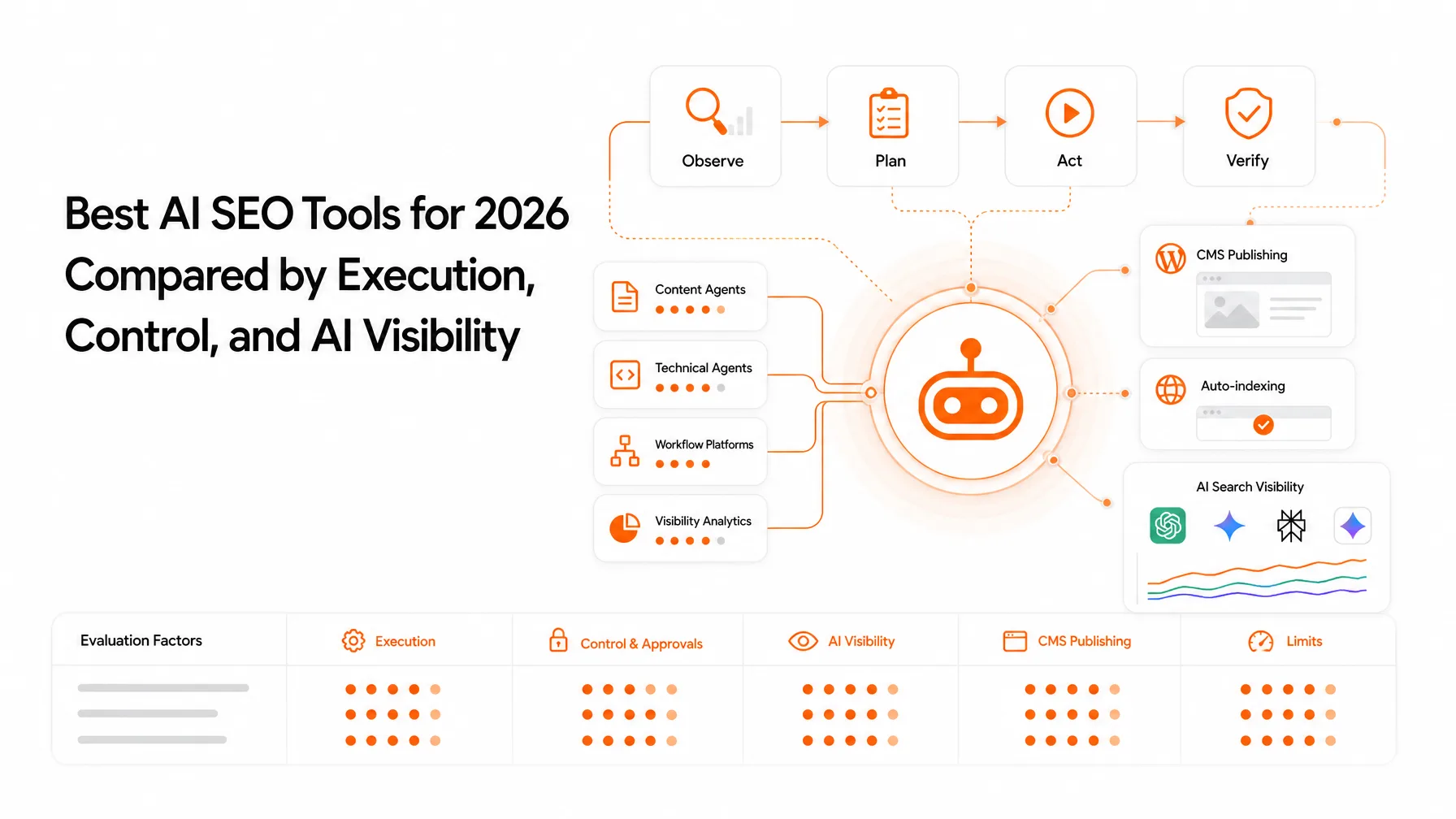
There's no single best option for every business. BrightLocal fits dedicated rank tracking, audits, citations, and agency reporting; Semrush Local suits teams already on Semrush; Whitespark suits citation specialists; Local Falcon suits geo-grid tracking; Yext and Uberall target multi-location brands; Keytomic fits local content and broader SEO automation.
Pick by the first job you need done: listings, geo-grid rankings, reviews, content, reporting, or governance.
One tool tracks your rankings, another cleans up listings, a third builds the client report, and you're still the one turning findings into changes. That tab-juggling is the hidden cost of most local setups.
Which tool is best also depends on who's asking: one location, a roster of clients, or fifty branches. Those buyers need different things, so I'd rather match tools to jobs than crown a universal winner.
In this guide to local SEO tools, I separate dedicated local platforms from broader SEO suites. I compare them on rank tracking, Google Business Profile support, citations, audits, reporting, integrations, price structure, and limitations.
What Makes a Local SEO Tool Worth Using in 2026?
Local SEO tools solve different jobs, so the useful question is which layer of local visibility is currently broken. I think of six layers: Google Business Profile and listings, map rankings, reviews, local website content, technical health, and AI visibility. Very few platforms are strong across all six.
Match the tool to the local visibility problem
Google Business Profile is the free foundation for eligible businesses, and Google's guidelines for representing a business govern names, categories, addresses, and service areas. Software can help you monitor that data, but it can't change what Google considers eligible.
On the website side, Google's LocalBusiness structured data documentation explains how markup helps Google understand your business details. It doesn't promise a rich result or a higher position.
Separate local rank tracking from geo-grid tracking
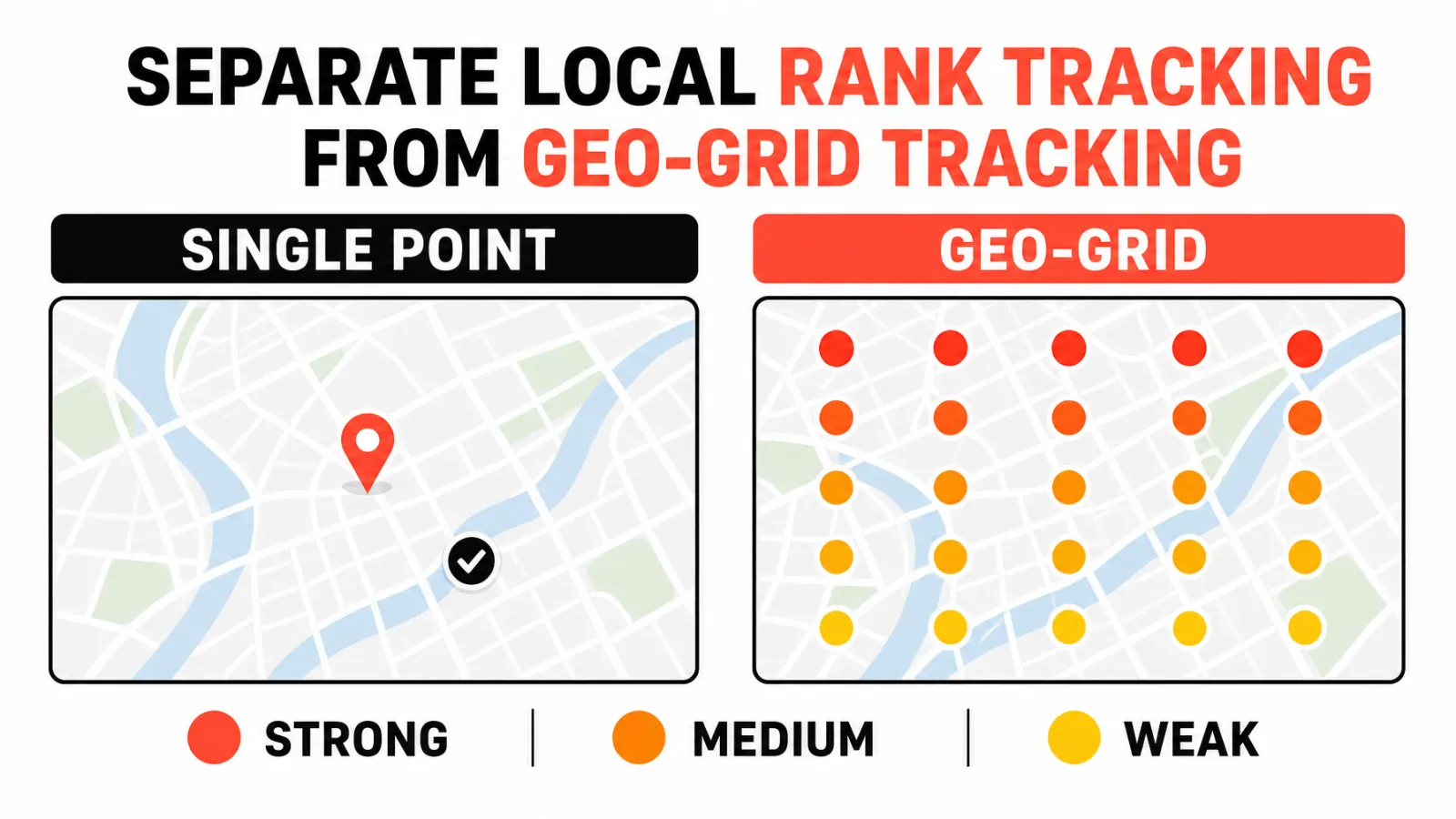
Local rank tracking checks where you appear for a keyword from a set location. Geo-grid tracking scans many points across a map, so you can see how visibility in Google Maps and the local pack shifts block by block.
If customers come from across a metro area, one city-center check hides most of the story. That's why local rank tracking tools and geo-grid tools aren't interchangeable.
Check listings, reviews, reporting, and workflow governance
Beyond rankings, compare these jobs separately:
Citation management: keeping name, address, and phone data consistent across directories.
Reviews: monitoring and responding across locations.
Audits: local SEO audit tools may check profiles and citations, website health, or both.
Reporting and governance: white-label reports, user roles, and approvals.
Handoff: whether the tool only reports a problem or helps turn it into an approved task.
Free diagnostics help too. Google Search Console and Bing Webmaster Tools URL inspection show indexing and search performance, but neither is a full local suite.
Which local SEO features matter most for a single-location business?
Start with accurate Google Business Profile data, rank checks from a few real service-area points, review monitoring, and a simple monthly report. Skip enterprise listing governance until manual upkeep actually fails.
Quick Comparison of the Best Local SEO Tools
Pricing and feature availability checked in October 2026. Vendor plans and limits can change. Features compared from official vendor pages, checked October 2026; I haven't independently tested each platform.
Tool | Best for | Local rank tracking | GBP or listings support | Citation workflow | Reporting | Pricing approach | Limitation |
|---|---|---|---|---|---|---|---|
BrightLocal | Agencies and local marketers | Local rank and geo-grid tracking | GBP audits | Citation tracking | White-label reporting | Location-based plans | Local-focused; content execution sits elsewhere |
Semrush Local | Existing Semrush teams | Map rank tracking | Listing and GBP management | Listing management | Not assessed | $60 per location per month (Local Pro) | Cost scales with locations |
Whitespark | Citation and ranking specialists | Local Rank Tracker | Not assessed | Citation-focused tooling | Not assessed | $17 to $140 monthly (weekly tracker tiers) | Checked prices cover the tracker only |
Local Falcon | Geo-grid specialists | Geo-grid tracking for Google Maps | Not assessed | Not assessed | Shareable map visuals | Not assessed | Geo-grid only; not a full local suite |
Yext | Many-location brands | Not assessed | Listings management, direct publisher distribution | Publisher distribution | Not assessed | Request pricing | No public pricing |
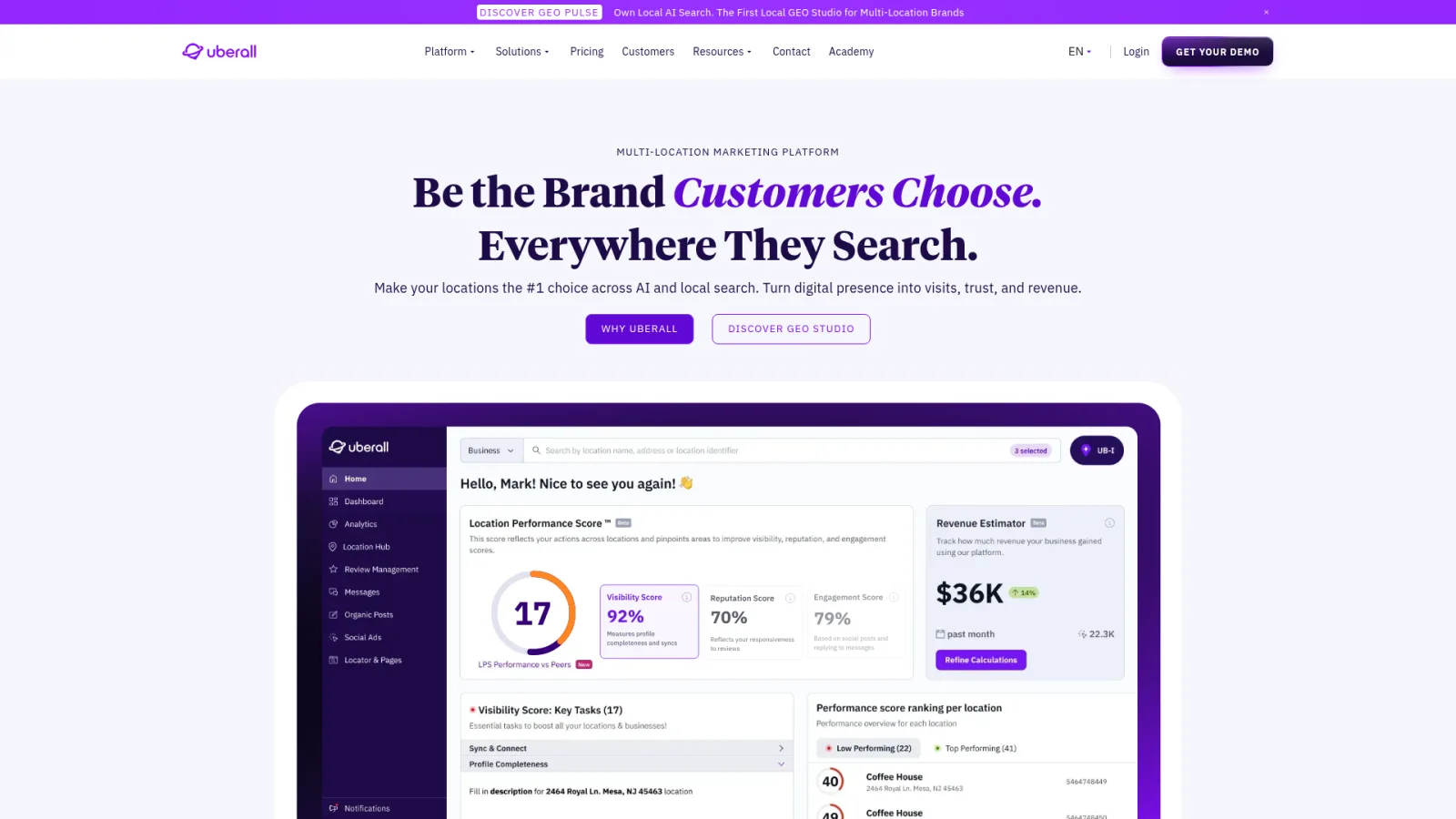
Uberall | Many-location brands | Not assessed | Listings, reviews, local pages | Listings management | Not assessed | Request pricing | Enterprise oriented, no public pricing |
Keytomic | Local content and SEO automation | Google and AI visibility tracking, not geo-grid | Not positioned as a listings tool | Not positioned for citation sync | Visibility monitoring | Pro plan at $99 per month, three-day trial | Not a specialist listings or geo-grid platform |
Not assessed means I didn't verify the capability on official pages, not that it's missing.
Dedicated local SEO platforms
BrightLocal and Whitespark are the closest fits when rankings, audits, or citations are the recurring task. For specialists, they form the core of a best local SEO software shortlist, and dedicated local SEO tools usually go deeper than suites. Local Falcon is the pick when geo-grid visibility across a service area is the primary diagnostic need.
Broader SEO platforms with local modules
Semrush Local and Keytomic sit inside wider workflows. That suits teams that want keyword research, audits, and reporting in one place, with a tradeoff in local specialization.
Enterprise platforms for many locations
Yext and Uberall are built around governing listings across many locations, which is why both use request-pricing models.
Best Local SEO Tools for Different Business Needs
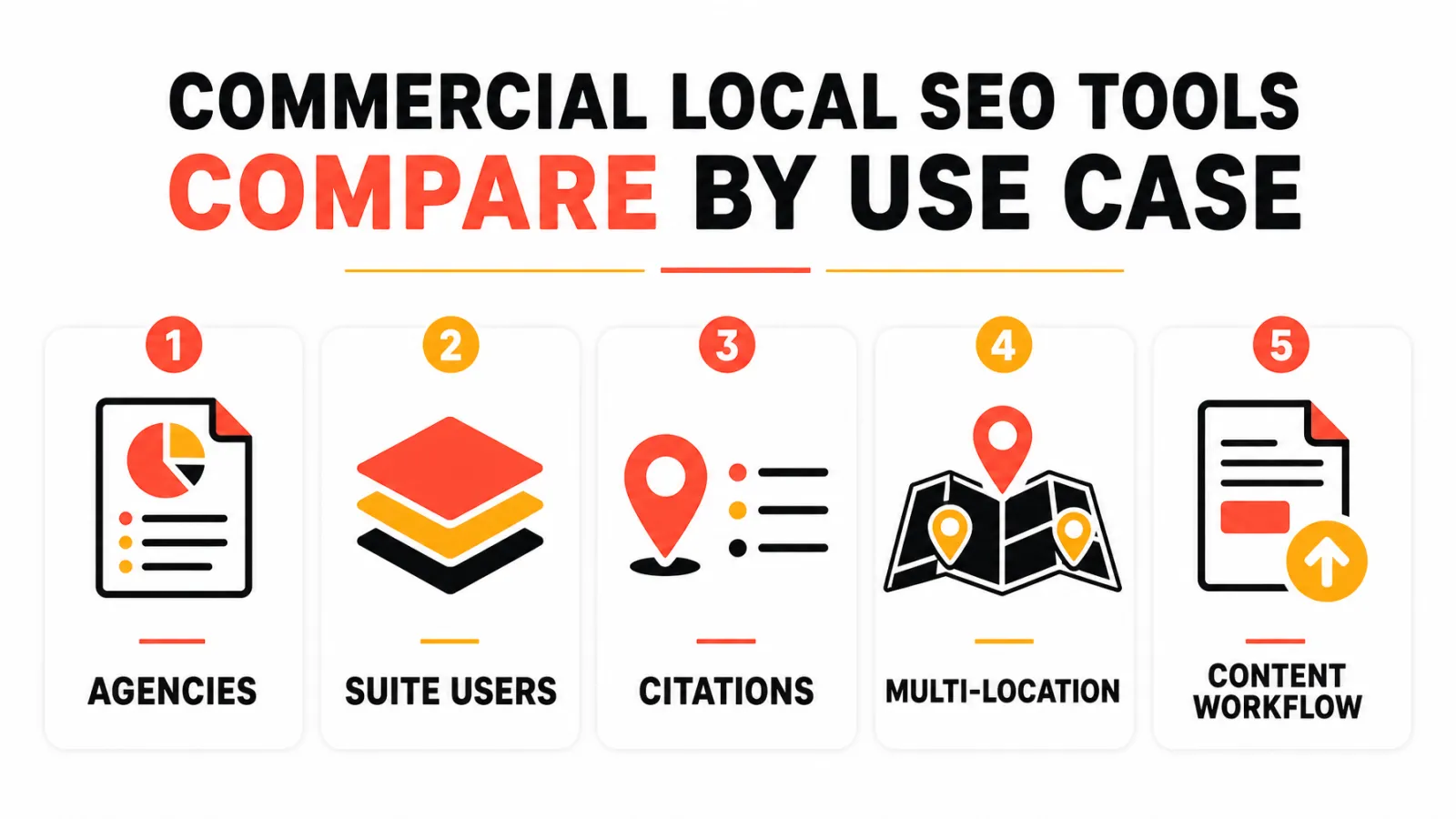
Among local SEO tools, a single-location business usually wants simplicity and profile help, while an agency wants reports, permissions, and multi-client workflows. My decision rule: choose the tool for the first recurring task that currently fails.
Best for agencies and client reporting: BrightLocal
Choose BrightLocal if you need rank tracking, citation monitoring, and recurring white-label reports in one platform across multiple SMB clients. It's a strong anchor for agency reporting workflows that need audits and citations in the same subscription.
Best for teams already using a broad SEO suite: Semrush Local
Choose Semrush Local if your team already works in Semrush and wants local listing management and map rank tracking without adding another primary platform.
Best for citation research and specialist local SEO: Whitespark
Choose Whitespark if citation cleanup and citation building are a formal, recurring deliverable in your SOPs rather than an occasional task.
Best for geo-grid rank tracking: Local Falcon
Choose Local Falcon if you need to map Google Maps visibility block by block across a service area and produce shareable before-and-after grids for client reporting.
Best for multi-location listings governance: Yext or Uberall
Franchises and multi-location brands should shortlist both, then request pricing and compare publisher coverage for their own markets.
Best for local content and broader SEO automation: Keytomic
Choose Keytomic when the bottleneck is turning local keyword research into approved content and published pages, not syncing listings.
Local SEO Tool Reviews
These local SEO tool cards follow one template. Prices and limits come from official vendor pages checked in October 2026, and each card includes a limitation.
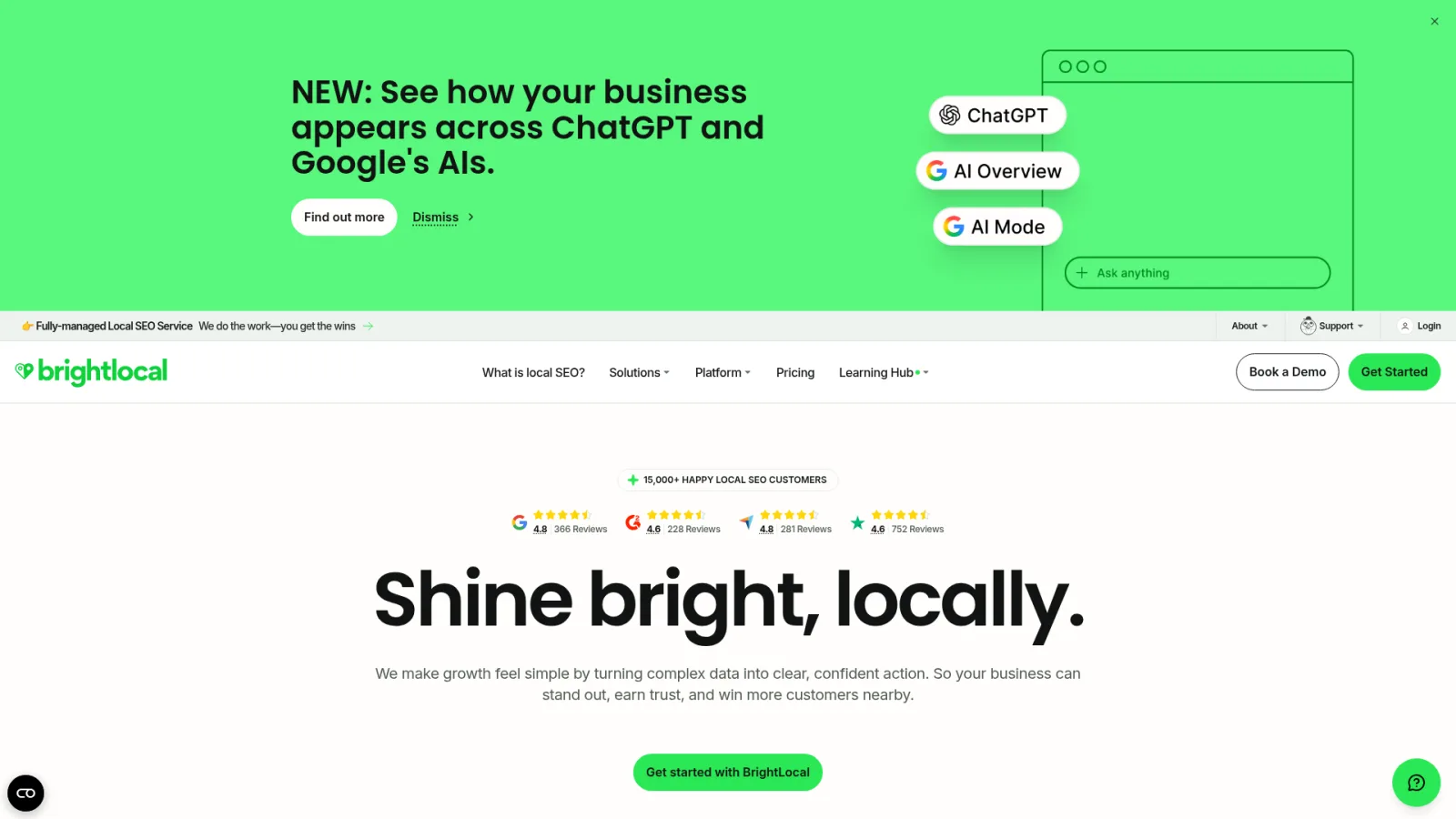
BrightLocal
Overview: A dedicated local platform centered on rank tracking, audits, and client reporting.
Key features: Local rank tracking, geo-grid tracking, GBP audits, citation tracking, reviews, white-label reporting.
Pros: Covers several local jobs in one product; white-label reporting suits client work.
Cons: Plans are location-based, so many-branch costs need a careful quote check, and content execution isn't part of the documented feature set.
Pricing: Location-based plans; confirm tiers on BrightLocal's official pricing page.
Choose this if: You manage multiple SMB clients and need audits, citations, and reporting in one subscription without overcomplicating the stack.
Semrush Local
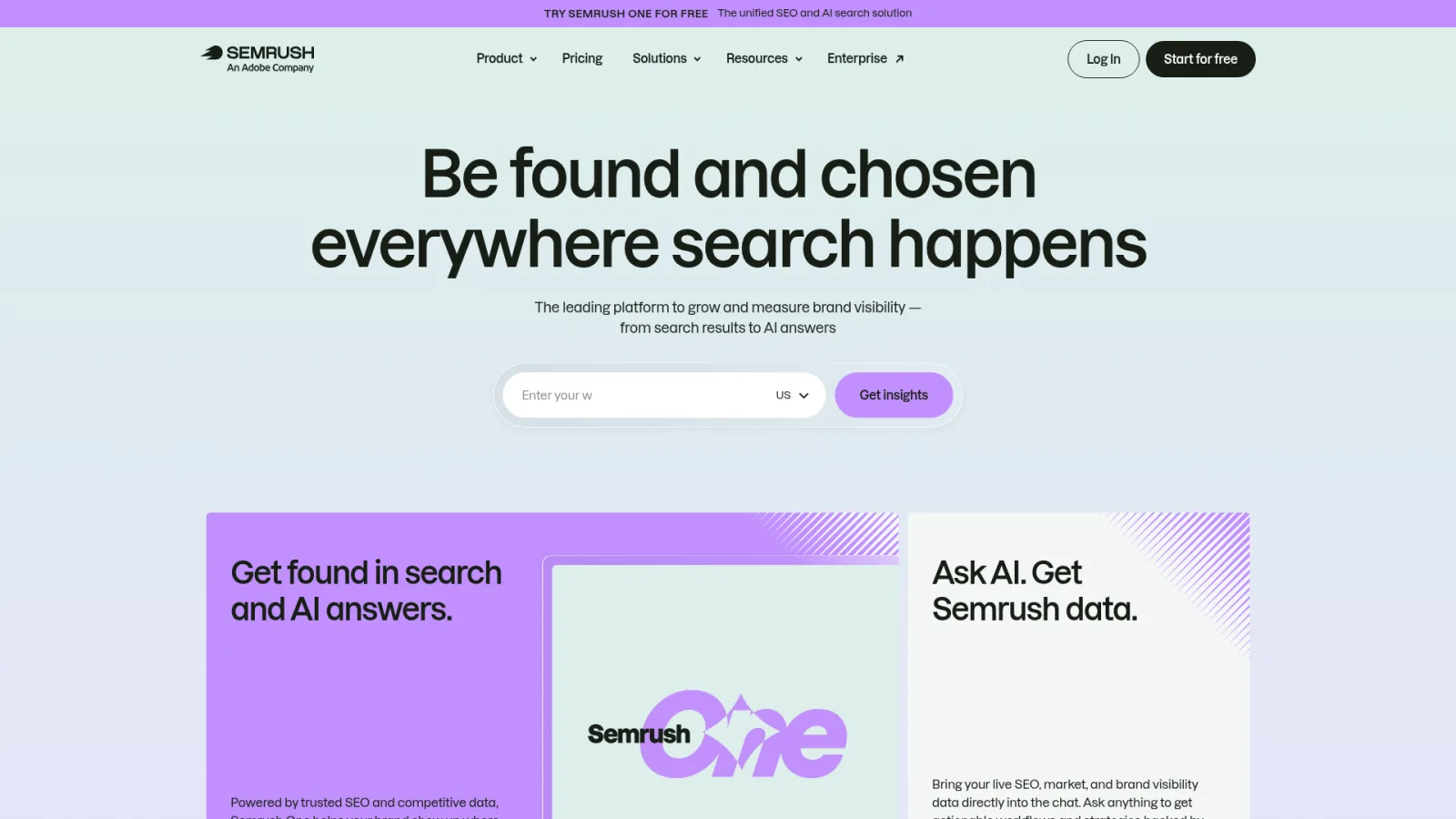
Overview: A local module inside the wider Semrush ecosystem.
Key features: Listing management, GBP management, review management, map rank tracking, API access, per Semrush's listing management documentation.
Pros: Familiar for existing Semrush users; API access supports custom workflows.
Cons: Per-location pricing climbs with branches, and wider Semrush features aren't part of Semrush Local unless confirmed.
Pricing: Local Pro was $60 per location per month at the October 2026 check.
Choose this if: Your team already lives in Semrush and wants local SEO capabilities without adding another primary platform.
Whitespark
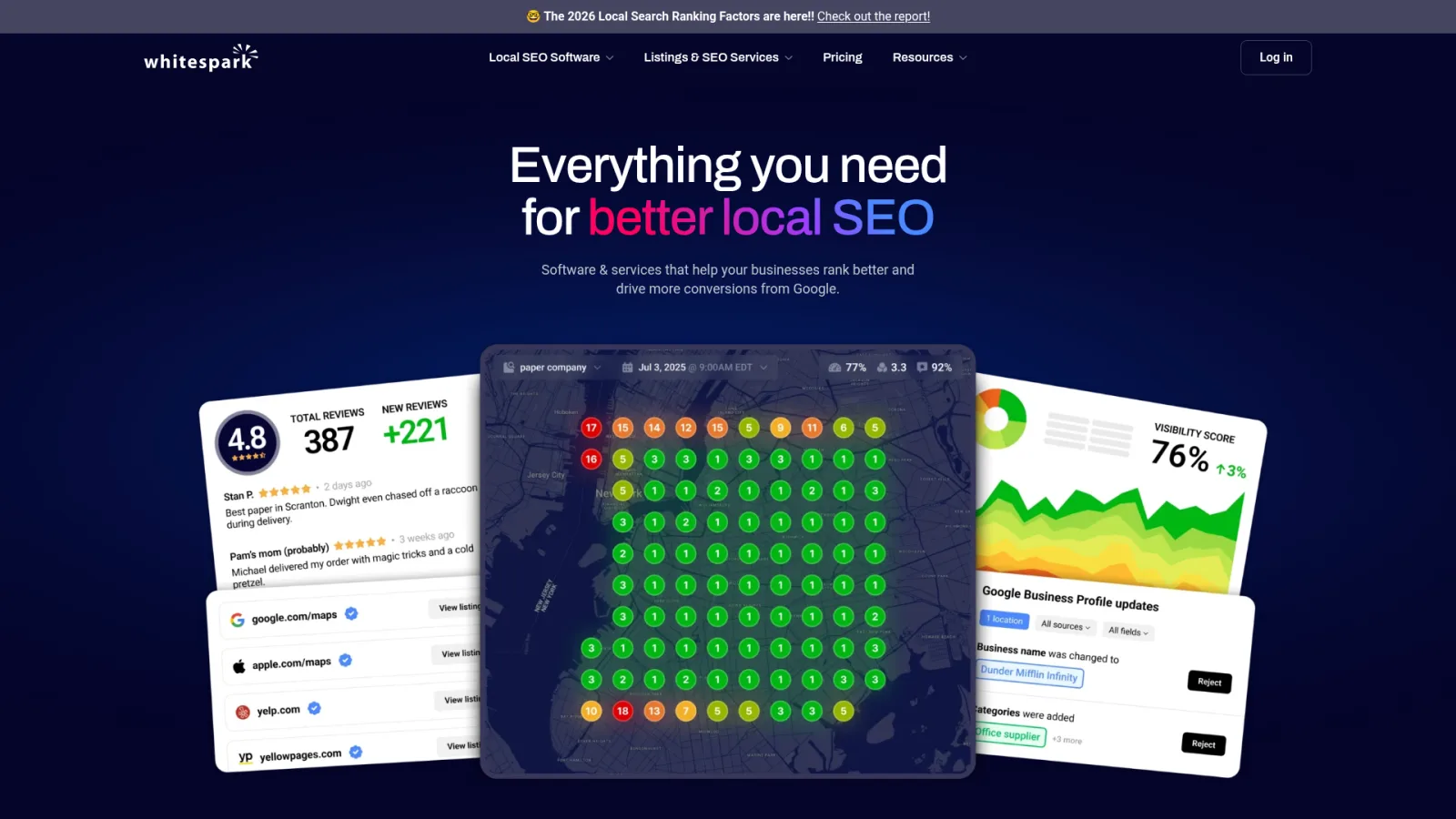
Overview: A specialist offering local ranking and citation-focused tools.
Key features: Local Rank Tracker with weekly tracking tiers.
Pros: Low entry price for ranking-only buyers; specialists can buy one tool instead of a suite.
Cons: The checked prices cover only the tracker, so citation and other tool costs need separate checks.
Pricing: Weekly-tracking monthly tiers of $17, $35, $70, and $140 (confirm on Whitespark's official site). Don't generalize them to other Whitespark products.
Choose this if: Citations are a formal deliverable in your process and you want a focused tool rather than another full suite.
Local Falcon
Overview: A specialist geo-grid tracking platform focused on Google Maps visibility across a defined area.
Key features: Geo-grid scanning across a service area, scheduled scans, historical comparisons, shareable map-based visuals, multi-location tracking.
Pros: Block-by-block visibility exposure that standard rank tracking misses; shareable grids work well in client reporting.
Cons: Geo-grid only — not a full local suite for audits, citations, or reporting.
Pricing: Not assessed; confirm on Local Falcon's official site.
Choose this if: You need to prove local pack improvements with before-and-after map evidence and proximity diagnostics across a service area.
Yext
Overview: An enterprise listings platform for managing business data across publishers.
Key features: Listings management, direct publisher distribution, multi-location workflows, AI-oriented listing distribution, per Yext's listings platform page.
Pros: Centralizes location data; suits governance across many branches.
Cons: Pricing isn't published, and rank tracking and content workflows weren't assessed.
Pricing: Request pricing.
Choose this if: You manage dozens or hundreds of locations and need a single system to govern listing accuracy across publisher networks.
Uberall
Overview: An enterprise-oriented platform for multi-location presence.
Key features: Listings management, reviews, local social, and local pages, as described on Uberall's pricing page.
Pros: Broad presence tooling in one platform; built with many locations in mind.
Cons: Request-pricing plans make budgeting harder, and vendor claims shouldn't be treated as independent proof.
Pricing: Request pricing.
Choose this if: You need listings, reviews, and local pages governed centrally across a large multi-location brand or franchise.
Keytomic
Overview: An AI-powered SEO automation platform with one approval-based workflow.
Key features: Keyword research, topical planning, AI-assisted content, technical audits, backlink opportunities, CMS publishing, and Google and AI visibility tracking.
Pros: Connects local keyword research to approved, published content; reduces tool sprawl for Keytomic's agency workflow.
Cons: It isn't a dedicated listings, citation, review, or geo-grid platform.
Pricing: Pro plan at $99 per month with a three-day trial at the October 2026 check.
Choose this if: The bottleneck is turning local keyword research into approved, published pages — not syncing listings or scanning geo-grids.
How to Choose the Right Local SEO Software
Choose by location count, team structure, and reporting needs
Count your locations, users, and report recipients first. Then check keyword and scan limits, report frequency, user roles, API access, and data export. If automation is part of the decision, how to choose SEO automation tools covers workflow criteria in more depth.
Decide whether you need listings, maps, reviews, content, or all four
Most buyers need one or two of these, not all five. Run a quick three-step check:
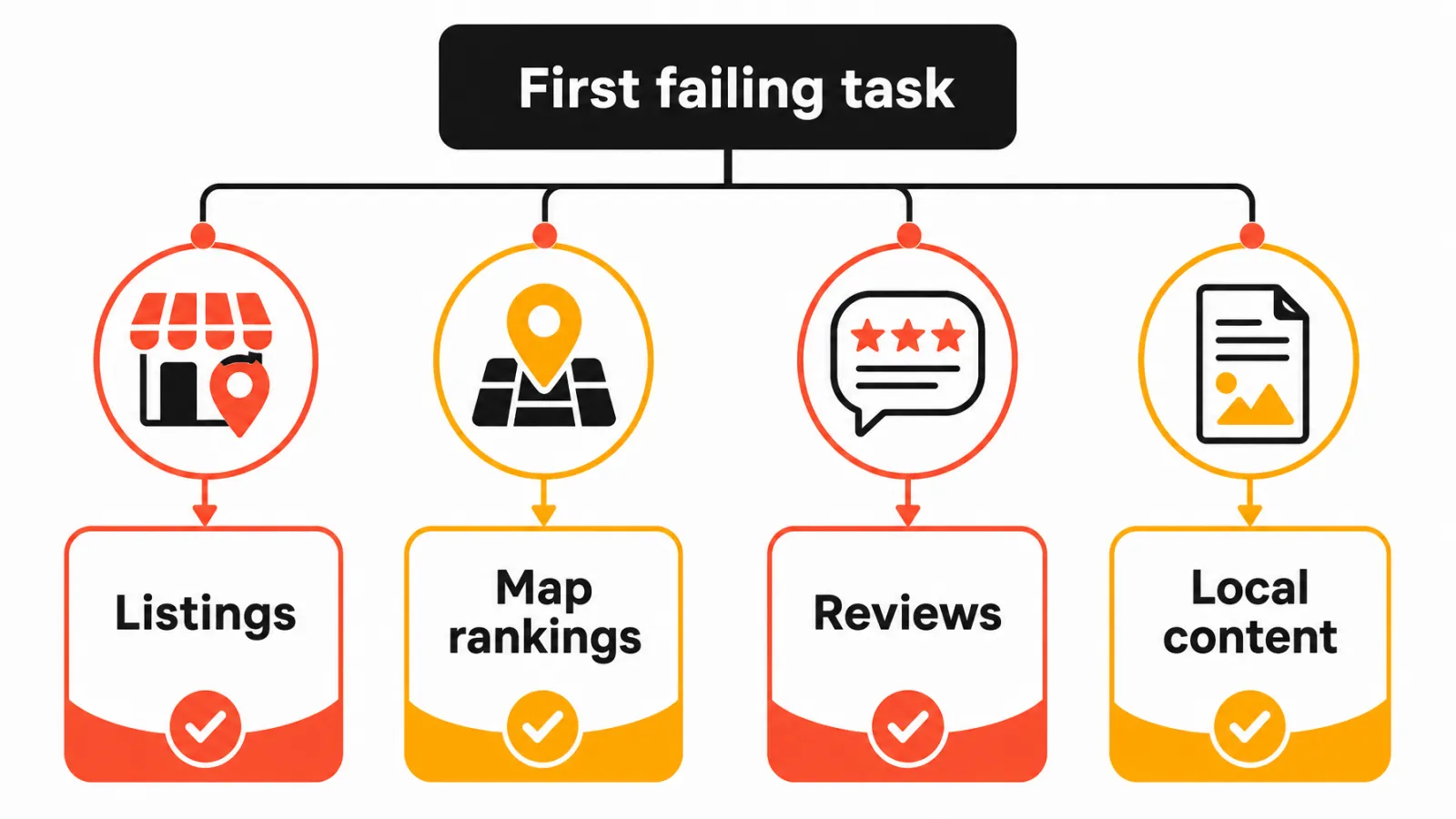
Name the recurring task that fails today.
Shortlist one specialist for that task.
Ask whether findings become approved tasks or just reports.
Compare total cost, usage limits, add-ons, and data ownership
Most local SEO tools charge by location, plan, or tool, so compare cost per location and per workflow, not the sticker price. At $60 per location per month, five locations is $300 monthly before add-ons.
Agencies should also check access and exit terms. Google's third-party Business Profile policy calls for transparency, owner control, and an easy way for customers to discontinue authorized management.
Is a local SEO tool enough without Google Business Profile?
No. For eligible businesses, Google Business Profile remains the source of your listing, and tools only measure, manage, and support it.
Common Local SEO Tool Mistakes to Avoid
Tracking only one city-center location
The fix: track several points across your real service area. Even the best local SEO tools can't show what you didn't measure.
Treating citation sync as a ranking guarantee
The fix: treat sync as a way to keep business information consistent, not a promise of position. For profile basics, see how to rank higher in Google local listings.
Automating profile changes without owner approval
The fix: keep the business owner in control of edits. Google's third-party rules expect transparency and owner control.
Choosing feature count instead of workflow fit
The fix: define one KPI per tool, and check whether it reports problems, recommends actions, or executes approved changes.
Frequently Asked Questions About Local SEO Tools
What is the best local SEO tool for a small business?
It depends on your biggest gap. BrightLocal suits rank tracking and audits, while a lighter specialist works if you only need tracking. Match the tool to one recurring job.
Is Google Business Profile enough for local SEO?
No, though it's the free foundation for eligible businesses. Extra tools help with measurement, listing consistency, reviews, reporting, and website work.
Which tool is best for local rank tracking?
For geo-grid and Local Pack tracking, start with BrightLocal or Local Falcon; for budget-focused tracking, check Whitespark's Local Rank Tracker tiers. Ordinary location-based tracking is less detailed than geo-grid scans.
Do I need citation management software?
Not always. It makes sense with many locations, frequent changes, or wide directory needs; one stable location can often maintain listings manually.
What is the best local SEO software for agencies?
BrightLocal is a strong starting point because it lists white-label reporting and location-based plans. Also compare permissions, multi-client views, and cost per location.
How much does local SEO software cost in 2026?
It varies by model. At the October 2026 check, Semrush Local Pro was $60 per location monthly, Whitespark's tracker tiers ran $17 to $140, and Keytomic Pro was $99.
Can Semrush Local replace a dedicated local SEO platform?
It can cover local tasks for teams already using Semrush, but a dedicated platform may offer deeper local specialization. Compare your must-have features first.
Can Keytomic replace citation or geo-grid software?
No, not on current evidence. Keytomic supports broader SEO automation and local content workflows; specialized tools may suit citation distribution, review operations, or map-grid measurement better.
Can a local SEO tool guarantee Google Maps rankings?
No. Tools measure, diagnose, and support improvements, but no vendor should guarantee rankings.
Your 15-Minute Local SEO Tool Decision
Spend fifteen minutes naming the task that fails first, then use this framework:
Choose a dedicated local platform if listings, GBP, citations, reviews, or geo-grid tracking are the main recurring tasks.
Choose a broad SEO platform with local features if your team also needs keyword research, audits, reporting, and competitor analysis in one place — see SEO automation for agencies for a broader comparison.
Choose Keytomic when the bottleneck is connecting local keyword research, topical planning, content, technical work, CMS publishing, and visibility monitoring.
Use a specialist plus Keytomic when local presence management and local content execution are separate needs.
The right pick among local SEO tools is the one that fixes your first broken workflow, not the one with the longest feature list.
If you need broader SEO automation, talk with the Keytomic team. If listings or map-grid depth is your primary requirement, start with a dedicated local platform.