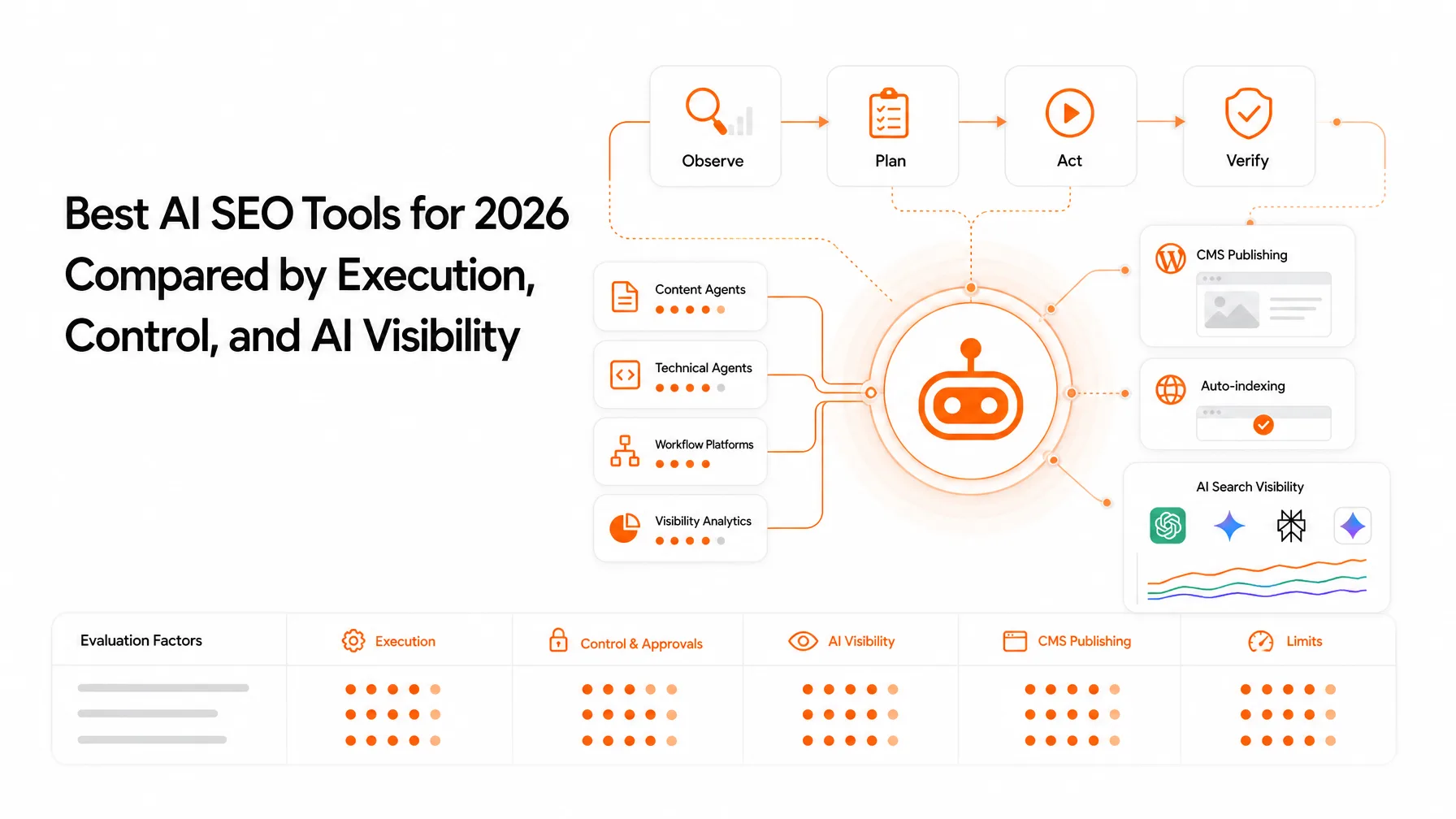
SEO platforms are now more than just rank trackers. By 2026, the tools marketers use are expected to provide competitive insights, content ideas, technical analysis, and - increasingly - visibility data in AI-powered search results. When deciding between Ahrefs, Semrush, and SpyFu, marketers are faced with more than a choice of which platform has the most keywords indexed or the more user-friendly layout. With AI-generated content from ChatGPT, Google AI Overviews, Perplexity, and Gemini becoming the first place people turn for answers to millions of queries, an SEO tool’s capacity to monitor brand mentions, entity mentions, and citation signals in these AI results is quickly becoming a key consideration. Those that don’t keep up could be missing out on one of the fastest-growing sources of organic visibility. If you want a cheaper option, our Ahrefs vs Ubersuggest comparison covers that trade-off.
The three platforms at the centre of this comparison - Ahrefs, Semrush, and SpyFu - represent fundamentally different approaches to SEO software. Ahrefs specialises in data accuracy, boasting one of the industry’s largest backlink indexes and a crawler that rivals Google’s in scope. Semrush has evolved into a comprehensive digital marketing platform, and its Semrush One platform now integrates AI visibility tracking across major LLM platforms. SpyFu, meanwhile, takes a leaner, cost-effective approach centred on competitor intelligence and PPC research. Together, both Ahrefs and Semrush maintain keyword databases in the tens of billions, making them the dominant players in data coverage - but scale alone does not determine which platform is the right fit for any given team or strategy. For how an automation platform fits beside them, see Keytomic vs Ahrefs.
What Do These Tools Do?
Before we get into the detail, let’s first consider the design philosophy of each platform. These are not simply tools that do the same thing with slight variations - they are aimed at different workflows, different team sizes, and different notions of what successful SEO looks like.
Ahrefs - The SEO Intelligence and Backlink Authority Engine
Ahrefs started out as a link-building tool. It has one of the most active crawlers on the web, and has been the go-to source for link-building professionals since its inception. Beyond backlinks, Ahrefs offers robust keyword research, content gap analysis, rank tracking, and a Site Audit tool that uncovers technical SEO issues with pinpoint accuracy. More recently, Ahrefs has ventured into the AI era, with Brand Radar for tracking AI mentions and an AI Content Helper for on-page optimisation. Ahrefs is best described as an SEO-first intelligence platform - it has many capabilities, but its core identity remains anchored in organic search data and link analysis.
Semrush - All-in-One Digital Marketing and AI Visibility Platform
Semrush started out as an SEO platform but is now one of the most comprehensive marketing platforms available. It covers SEO, PPC, content marketing, social media management, competitive intelligence, and AI search monitoring. The Semrush One layer integrates AI visibility tracking into its core workflow, allowing teams to monitor how their brand appears across LLMs and AI-generated search results - not just traditional SERPs. For agencies managing multiple clients across channels, Semrush offers an ecosystem that few competitors can match. It is the platform of choice for brands aiming to achieve visibility across the entire search and content funnel. Explore Semrush alternatives if you are looking to supplement its capabilities with more specialised AI-native tooling.
SpyFu - Competitor Intelligence and PPC-Focused SEO Tool
SpyFu is the most specialised of the three. It excels at competitor intelligence - revealing which keywords rivals rank for, how much they spend on Google Ads, which ads have run the longest (signalling what converts), and where there are opportunities in competitor strategies to be exploited. SpyFu also boasts a broader keyword dataset than either Ahrefs or Semrush in certain competitive research contexts, though overall data depth for link analysis and technical SEO is more limited. SpyFu’s real value is its price point - at a fraction of the cost of its larger rivals, it delivers genuine competitor research value, particularly for PPC-heavy teams and budget-conscious marketers.
Core Feature Comparison: Ahrefs vs SpyFu vs Semrush
Here is a feature-by-feature comparison across the dimensions that matter most in 2026.
Feature | Ahrefs | Semrush | SpyFu |
|---|---|---|---|
Keyword Research | Advanced | Advanced | Strong (competitor focus) |
Backlink Analysis | Industry-leading | Strong | Moderate |
Competitor Analysis | Strong | Very strong (multi-channel) | Excellent (core strength) |
PPC Research | Limited | Advanced | Excellent |
Content Optimization | Strong | Strong | Moderate |
Technical SEO Audit | Strong | Advanced | Basic |
AI Visibility Tracking | Yes (Brand Radar) | Yes (Semrush One) | Limited |
Data Depth | Very high | Very high | Strong in competitor data |
Ease of Use | Moderate | Moderate – complex | Easy |
Pricing (entry/mo) | From ~$129 | From ~$139 | From ~$39 |
Keyword Research - Which Tool Performs Best?
For a comparison centered specifically on keyword discovery, see Ahrefs vs KWFinder on keyword research.
All three tools are capable in keyword research, but approach it in different ways. The variations in data structure, intent modelling, and clustering capabilities affect the efficiency of a team’s content strategy building process.
Ahrefs Keyword Research
Ahrefs offers a highly accurate keyword dataset, with excellent SERP analysis, click-through rate estimates, and search intent classification. The Keywords Explorer surfaces parent topics and related terms simultaneously, making it particularly useful for building content clusters. Where Ahrefs stands out is its inclusion of click data - not every search results in a click, and Ahrefs quantifies traffic opportunity more accurately as a result. Understanding keyword difficulty is critical when deciding which targets are realistic, and Ahrefs KD metric remains one of the most trusted in the industry.
Semrush Keyword Research
Semrush matches Ahrefs in scale with a database of approximately 30 billion keywords, and offers more in terms of workflow integration. The Keyword Magic Tool allows for filtering by intent, question format, and SERP feature likelihood. Semrush's topic clustering and keyword grouping features are particularly strong for content strategists who need to map entire topic universes before producing a single piece of content. It can seamlessly feed into its Content Marketing Toolkit to create content briefs. For campaign-driven teams, Semrush's research-to-execution flow is hard to beat.
SpyFu Keyword Research
SpyFu’s keyword approach is inherently competitive. Rather than starting with a blank keyword list, SpyFu lets you enter a competitor’s domain and immediately surface every keyword that domain ranks for - both organically and via paid search. This reverse-engineering approach is powerful for identifying gaps and opportunities that pure volume-based research would miss. Historical keyword tracking lets users see how competitor rankings have shifted over months or years, revealing strategic pivots and content investment patterns that a static snapshot would not capture.
Backlink Analysis - Where Ahrefs Still Leads
Backlinks remain a major ranking signal, and the quality of a tool’s link index directly affects how accurately teams can assess authority, identify link gaps, and build acquisition strategies.
Ahrefs Backlink Advantage
Ahrefs’ backlink index is widely regarded as the most comprehensive available. It crawls billions of pages continuously, and the resulting link data is fresher and more granular than most alternatives. Metrics like Domain Rating (DR) and URL Rating (UR) have become industry standards that third-party tools and SEO professionals reference daily. Link intersect analysis, referring domain trends, and anchor text distribution reports make Ahrefs the go-to platform for any serious link-building or link audit workflow. For backlink intelligence, no competing platform comes close to Ahrefs’ depth and freshness.
Semrush Backlink Tools
Semrush’s Backlink Analytics is genuinely strong - it surfaces referring domains, anchor text, toxic link identification, and link acquisition opportunities. The Backlink Gap tool directly mirrors Ahrefs’ link intersect feature. While the raw index size is comparable, some independent audits suggest Semrush’s link freshness lags slightly behind Ahrefs in certain verticals. For most agency use cases, however, Semrush’s backlink data is more than sufficient - and the advantage of having it integrated with rank tracking, site audit, and PPC tools within a single dashboard is a real operational benefit.
SpyFu Backlink Capabilities
SpyFu’s backlink data is adequate but not as comprehensive. It is fine for high-level competitive backlink comparisons but lacks the depth, freshness, and analytical granularity needed for serious link-building campaigns. Professionals who need rigorous link analysis should treat SpyFu’s backlink features as supplementary intelligence rather than a primary research source.
Competitor Analysis - SpyFu vs Semrush vs Ahrefs
Competitor intelligence is an area where the three tools differ most clearly in their approach and depth.
SpyFu Dominates Competitor Intelligence
Competitor analysis is SpyFu’s core reason to exist. Its Kombat comparison tool allows users to visualise keyword overlaps and gaps between up to three competing domains simultaneously. SpyFu also tracks historical PPC spend, surfacing which ads have run the longest - a reliable proxy for which creatives and keywords are generating ROI. This combination of historical depth and PPC intelligence makes SpyFu uniquely valuable for teams that derive significant revenue from paid search and want to understand how competitors are allocating their ad budgets over time.
Semrush Multi-Channel Competitor Analysis
Semrush offers more than just PPC and keyword data. Its Traffic Analytics module estimates competitor website traffic, channel breakdown, engagement metrics, and audience overlap. Market Explorer provides a broader view of an entire vertical, identifying players that might not be on a team’s radar. For agencies producing competitive landscape audits, Semrush provides a wealth of data that SpyFu simply cannot match - covering SEO, paid search, display advertising, and content performance simultaneously.
Ahrefs Competitor Analysis
Ahrefs’ Content Gap and Keyword Gap tools are highly effective for identifying organic search opportunities that competitors are capturing but the client is not. Link Intersect adds a backlink dimension to that analysis. Ahrefs is genuinely strong for SEO-specific competitive research, but it lacks the PPC depth of SpyFu and the multi-channel breadth of Semrush. It is the right choice when the competitive question is entirely about organic search rather than paid or broader marketing intelligence.
Which Tool Is Best for AI SEO in 2026?
Organic search has changed with the rise of AI search. Being cited in a ChatGPT answer, featured in a Google AI Overview, or referenced in a Perplexity answer now carries real traffic and brand value - yet most existing SEO tools were not built to track or optimise for these surfaces.
SEO Has Shifted from Rankings to Visibility
Modern SEO strategy now encompasses AI citations, featured snippet ownership, entity visibility, and search intent coverage across both traditional and AI-generated results. A page can rank on page one of Google and still receive zero AI Overview mentions. Conversely, a brand with a strong structured content strategy and high entity authority may appear in AI-generated answers without ranking in the top ten organically. This disconnect means teams need tools that measure both dimensions - traditional SERP rankings and AI search presence - to get an accurate picture of their visibility. To understand how AI search monitoring platforms fit into this broader strategy, see the guide on how an AI search monitoring platform can improve SEO strategy.
Which Tool Handles AI Search Best?
Ahrefs' Brand Radar feature allows teams to monitor how their brand is being referenced across AI-generated search results, tracking AI mentions alongside traditional SERP data within a single interface. This is a meaningful step toward AI-aware SEO - though the feature is still maturing compared to dedicated AI visibility platforms. Semrush One integrates AI visibility tracking more deeply into its marketing workflow, providing data on how brands appear in LLM-generated answers across ChatGPT, Perplexity, and Google AI Overviews. For a broader view of specialised tools in this space, the roundup of AI visibility tracking tools in 2026 covers dedicated platforms that go deeper than either Ahrefs or Semrush on AI citation monitoring. SpyFu currently has no meaningful AI visibility features and remains anchored to traditional search data.
Which Is the Best AI SEO Agent in 2026?
The concept of an AI SEO agent - a system that autonomously researches, plans, and executes SEO tasks - is increasingly relevant as teams look to scale output without proportionally scaling headcount. In this framing, each of the three tools plays a different agent role:
Ahrefs functions as a data intelligence agent - surfacing highly accurate link-building, content gap, and organic search opportunities
Semrush acts as a full marketing and AI visibility agent - strategising campaigns, tracking multi-channel performance, and monitoring AI search visibility
SpyFu serves as a competitive intelligence agent - extracting competitor keyword and PPC opportunities at a low cost
There is no single “best” AI SEO agent - it depends entirely on the workflow it needs to serve. Organic-first teams will favour Ahrefs. Multi-channel marketers get the most from Semrush. Competitive-first or PPC-heavy teams will find the most value in SpyFu.
Pricing Comparison (2026)
Price is a significant distinguishing factor between these three platforms and directly shapes which teams they are accessible to.
Ahrefs Pricing
Ahrefs offers a starting plan of around $129 per month, positioning it firmly in the premium tier. Higher plans - designed for agencies and enterprises - scale significantly above this, with features like increased crawl limits, additional users, and expanded data export allowances. There is no free tier, though a limited freemium option exists. For solo SEO professionals and small agencies, the cost requires clear ROI justification, which Ahrefs typically delivers for link-heavy or content-driven strategies.
Semrush Pricing
Semrush starts at around $139 per month for its Pro plan. Business-tier plans and the Semrush One suite can exceed $500 per month when advanced features like AI visibility tracking and multi-user access are factored in. Despite the premium cost, Semrush’s breadth means it can potentially replace several single-purpose tools - content brief builders, PPC research platforms, social schedulers - which can make the total cost of tooling lower for larger teams. A free trial and limited free account tier are available.
SpyFu Pricing
SpyFu’s starting plan begins at approximately $39 per month, making it one of the most affordable SEO tools with genuine data depth. Even its higher-tier plans remain well below the cost of Ahrefs or Semrush, making it particularly attractive for freelancers, small businesses, and PPC-focused teams that do not need a full SEO suite.
Cost vs Value: Which Tool Offers the Best Return?
SpyFu: Best value for competitor research and PPC intelligence - delivers outsized return relative to its cost
Ahrefs: Best value for dedicated SEO professionals and link-building teams where data accuracy is non-negotiable
Semrush: Best value for agencies and marketing teams managing multiple channels - the suite’s breadth justifies the cost at scale
Workflow Comparison - How Each Tool Fits Into SEO
The operational workflow supported by each tool is as important as its feature set. A tool that disrupts existing processes or requires excessive manual data transfer between tools creates friction that erodes its value over time.
Ahrefs Workflow
Ahrefs facilitates a sequential, data-driven SEO process: investigate a topic or competitor → identify link and content opportunities → optimise on-page elements based on Content Explorer insights → monitor rankings and refine. The interface is clean and focused, making it fast to move from research to action. The lack of a built-in content brief or project management system means Ahrefs users typically pair the platform with a separate content tool - but this modularity also makes it easy to slot Ahrefs into any existing stack.
Semrush Workflow
Semrush offers a comprehensive approach to campaign management: research → plan → execute → track → optimise. It has tools for each stage, reducing the need to integrate with external platforms. For agencies, the ability to generate reports, manage client access, and track campaign progress all within one dashboard significantly reduces operational overhead. The downside is complexity - Semrush’s interface can be overwhelming for users who only need two or three of its many capabilities.
SpyFu Workflow
SpyFu’s workflow is competitive-first: identify competitors → extract their keywords and ads → use that intelligence to build content and PPC strategies → track performance over time. It is a tighter, more focused workflow suited to teams with a specific intelligence-gathering mandate rather than a full-stack SEO function.
Use Case Breakdown
Use Case | Ahrefs | Semrush | SpyFu |
|---|---|---|---|
SEO Specialists | Best | Strong | Moderate |
Agencies | Strong | Best | Moderate |
PPC Marketers | Limited | Best | Strong |
Beginners | Moderate | Moderate | Best |
Budget Users | Weak | Weak | Best |
AI SEO Strategy | Strong | Strong | Weak |
Strengths and Limitations
Ahrefs
Strengths: Most respected backlink index; fastest data refresh; clean and fast interface; strong click-data modelling; growing AI visibility capabilities
Limitations: Premium pricing with no meaningful free tier; limited PPC research capability; content management features less developed than Semrush
Semrush
Strengths: The most complete digital marketing suite available; strong in both SEO and PPC; AI visibility tracking via Semrush One; best ecosystem for agencies
Limitations: Interface complexity can slow onboarding; highest cost among the three; some individual features (e.g. backlinks) are less deep than Ahrefs equivalents
SpyFu
Strengths: Best-in-class competitor keyword and PPC intelligence; most affordable option; easy to use; historical data depth for competitive analysis
Limitations: Weak backlink analysis; minimal technical SEO capability; no meaningful AI visibility features; not suitable as a primary SEO platform for growth-focused teams
Common Mistakes When Choosing Between These Tools
Choosing Based on Price Alone
SpyFu’s affordability is genuine value - but only for the use cases it was designed to serve. Teams that select SpyFu hoping to replace a full SEO platform will quickly run into the limits of its technical audit, backlink analysis, and AI visibility features. Conversely, paying for Semrush’s full suite when the team only needs keyword research and rank tracking is an unnecessary expense. The right choice starts with an honest assessment of workflow requirements, not the pricing page.
Ignoring AI Search Evolution
Too many SEO teams are still evaluating tools exclusively through a traditional SERP lens - clicks, rankings, and organic traffic. This is increasingly incomplete. As AI Overviews, ChatGPT, and Perplexity capture a growing share of informational queries, brands that are not measuring their AI search presence are operating with a significant blind spot. Both Ahrefs and Semrush are investing in AI visibility features; SpyFu is not. Teams choosing a long-term platform should factor this trajectory into their decision.
Overvaluing Features Without Workflow Fit
Having a long feature list is only valuable if the team will actually use those features within their existing process. Semrush’s content marketing tools, for example, are genuinely powerful - but if a team already uses a dedicated content platform and has no intention of migrating, those features add cost without value. The best SEO tool is the one that removes friction from the specific workflows a team runs every day, not the one with the most checkmarks on a comparison chart.
Conclusion
Ahrefs, Semrush, and SpyFu represent three distinct and legitimate approaches to SEO intelligence. Ahrefs excels in data accuracy and backlink analysis - the professional’s tool for organic search precision. Semrush dominates in all-in-one marketing execution and AI visibility tracking - the platform of choice for agencies and cross-functional marketing teams. SpyFu stands apart for competitor intelligence and PPC research at an accessible price point - a specialist tool that delivers high ROI within its defined scope.
In 2026, the definition of the best SEO tool has expanded well beyond features and database size. The platform that wins is the one that integrates with the evolving realities of AI-driven search, fits the operational workflow of the team using it, and provides data that leads to decisions - not just dashboards. As AI Overviews and LLM citations become permanent fixtures of the search landscape, both Ahrefs and Semrush are positioning themselves to serve this new reality. SpyFu, for all its strengths, remains anchored in traditional competitive intelligence. Understanding where each tool sits on that spectrum is the clearest guide to making the right choice for any given team or client.
For teams already evaluating how these platforms compare against the broader SEO automation landscape, the Semrush vs Ahrefs vs Moz comparison offers additional context - and the Keytomic blog covers the growing category of AI-native SEO tools that are beginning to complement and, in some cases, challenge these established platforms.
Frequently Asked Questions
What is the difference between Ahrefs, Semrush, and SpyFu?
Ahrefs is a backlink and organic search focused SEO tool. Semrush is an all-in-one digital marketing platform covering SEO, PPC, content, and AI visibility. SpyFu is a specialist competitor intelligence and PPC research tool that focuses on historical ad data and keyword espionage. Each serves a different primary use case, making them complementary rather than direct substitutes in many agency setups.
Which is better: SpyFu vs Semrush?
Semrush offers significantly more features, including technical SEO, content marketing, AI-based visibility monitoring, and multi-channel analytics. SpyFu is the stronger choice for PPC intelligence, competitor keyword research, and teams operating on a tighter budget. For spyfu vs semrush comparisons, the answer depends on whether the priority is breadth or competitive research depth.
Is Ahrefs better than Semrush?
Ahrefs leads in backlink analysis, data freshness, and SEO-specific workflows. Semrush leads in all-in-one marketing, PPC research, and AI visibility tracking. Neither is categorically better - the right choice depends on whether the team needs a focused SEO intelligence tool or a comprehensive marketing platform.
Which tool is best for AI SEO in 2026?
Both Ahrefs and Semrush are actively investing in AI visibility features. Semrush One currently offers more integrated AI tracking across LLM platforms, while Ahrefs’ Brand Radar provides brand mention monitoring in AI-generated results. For teams that need the deepest AI visibility data, dedicated AI visibility tools may offer more granular coverage than either platform currently provides.
Is SpyFu worth it compared to Ahrefs or Semrush?
SpyFu is worth it for teams whose primary SEO need is competitor keyword and PPC analysis. At its price point, it delivers excellent value for that specific use case. However, teams that also need strong backlink analysis, technical SEO auditing, content optimisation, and AI search monitoring will quickly outgrow SpyFu’s capabilities and find more comprehensive value in Ahrefs or Semrush.
Can these tools be used together?
Yes - and many serious SEO teams do exactly this. A common combination is Ahrefs for backlink analysis and organic research, Semrush for PPC insights and campaign reporting, and SpyFu for competitive keyword deep-dives at a low marginal cost. The tools are not mutually exclusive, and for high-value accounts, the data overlap often reveals discrepancies worth investigating.