Two AI visibility trackers can watch the same brand on the same day and report very different scores. They sample different prompts, engines and regions, refresh at different intervals, and count a mention, recommendation and cited link differently. If you buy on the headline score, you are buying someone else's definition of visibility.
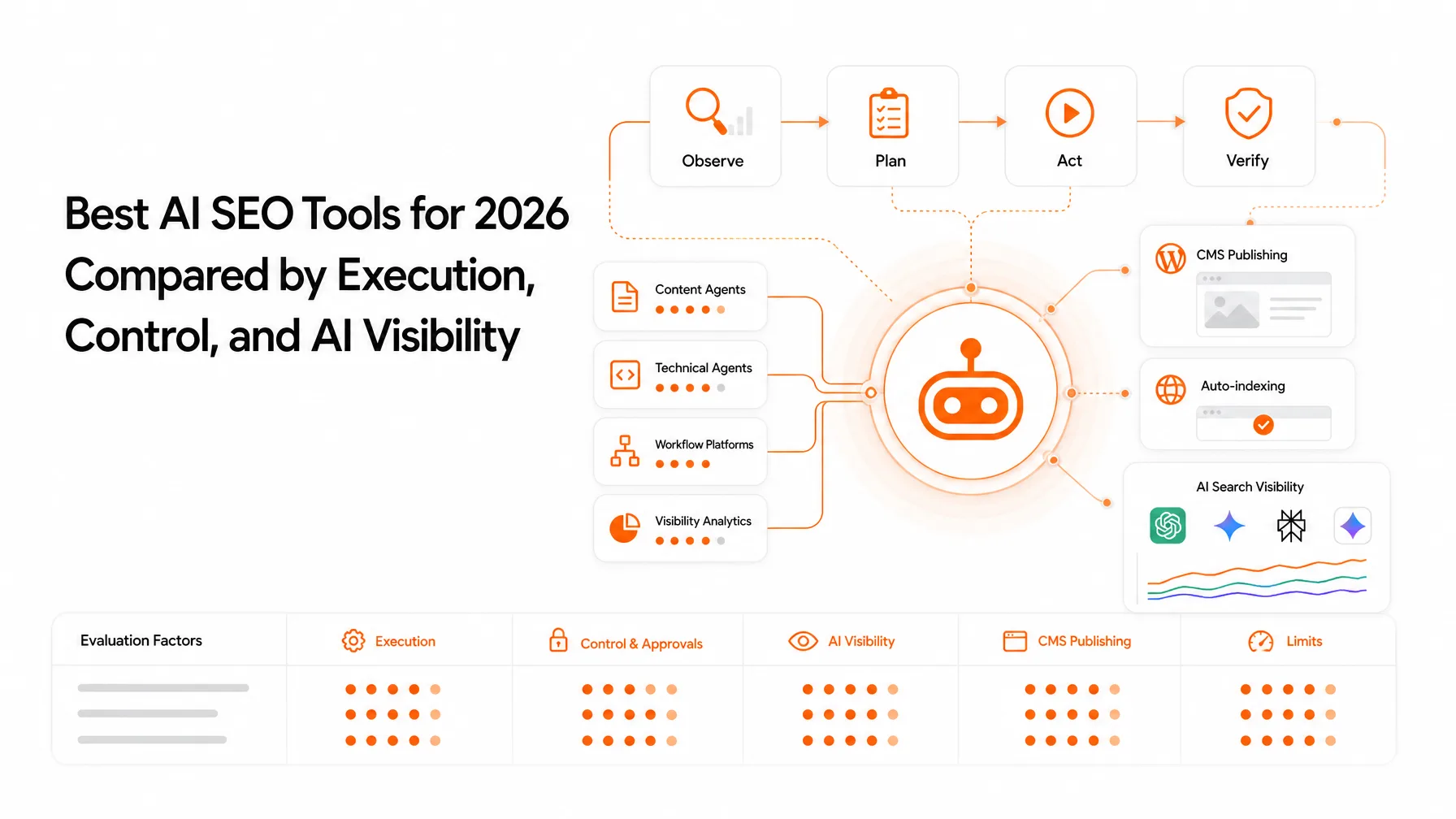
This guide compares ten trackers on the details that make the data usable: entry-plan engine coverage, prompt limits, exact cited URLs, update cadence and what your team can do when a gap appears. Prices and plan limits were checked on October 11, 2026. For industry examples, see AI tools for ecommerce SEO and our AI search visibility strategy for B2B SaaS.
I work at Keytomic, and Keytomic is on this list. I explain why it is listed first, and where it is the weaker choice, in its entry. Solo founders can also read how this fits a small team in AI SEO for founders.
AI Search Visibility Tracking Tools at a Glance
Details below refer to the entry plan unless noted.
Tool | Best for | Starting price | Entry-plan engines | Prompts | Source detail | Cadence | Beyond monitoring |
|---|---|---|---|---|---|---|---|
Keytomic | Tracking tied to SEO execution | $99/mo (Pro) | ChatGPT, Gemini | 20 | Sources and competitors per prompt | 3x weekly | GSC, audits, content, publishing, MCP |
Otterly.AI | Affordable daily monitoring | $29/mo | ChatGPT, AI Overviews, Perplexity, Copilot | 15 | Link citation analysis | Daily | GEO audit, 3 recommendations a week |
Peec AI | Prompt-level analytics, agencies | Tiered by prompts | Choose 3 models | 50 | Classified source analytics | Daily | Gap analysis, actions |
Profound | Enterprise intelligence | Custom | Up to 9 on Enterprise | Custom | Citations, sentiment, ranking | Daily | AI Marketer agents, agent analytics |
Ahrefs Brand Radar | Broad research and source discovery | From €47/mo | 6, plus Claude on custom prompts | Per plan quota | Mentions and citations | Daily to monthly | Ahrefs suite |
Semrush AI Visibility | Existing Semrush teams | $99/mo per domain, annual | ChatGPT, Google AI, Gemini, Perplexity | 25 | Mentions, competitor research | Daily to monthly | Semrush suite, AI readiness audit |
SE Visible | SEO teams adding AI tracking | From $99/mo | ChatGPT, Gemini, AI Mode, Perplexity, AI Overviews | 200 | Sources grouped by category | Daily | API, 7 countries |
AthenaHQ | Tracking and recommendations | $295/mo | 11 models | Credit-based | Citation intelligence | Not stated | Content agent, GA4 and GSC |
Scrunch | Broad coverage and agent traffic | $250/mo annual | 7 platforms | 350 | Citation tracking | Not stated | Page audits, AXP |
Rankscale | Budget multi-engine tracking | $99/mo (Pro) | Broad, credit-metered | Credit-based | Citation analysis | Hourly to monthly | Sentiment, query fanout |
Prices and allowances checked October 11, 2026. Billing terms differ, so confirm before you buy.
How I Compared These AI Visibility Platforms
I researched vendor pricing pages, plan documentation and product pages of these best AI SEO software on October 11, 2026. I did not run a controlled head-to-head test of all ten tools, so this is not a benchmark of which tracker is most accurate. When a detail was not stated publicly, I say so instead of guessing.
Criterion | Weight | What I checked |
|---|---|---|
Engine and geographic coverage | 20% | Entry-plan engines, countries and languages |
Citation and source intelligence | 20% | Exact cited URLs, domains and answer context |
Sampling and reproducibility | 15% | Prompt transparency, refresh cadence and collection method |
Competitor and brand analysis | 15% | Share of voice, sentiment and competitor appearances |
Follow-up actions | 15% | Diagnostics, recommendations, integrations and execution |
Pricing and allowance clarity | 10% | Prompts, add-ons and billing terms |
Data access and integrations | 5% | API, exports, MCP and SEO analytics connections |
Every tracker measures only the prompts you ask it to run, on supported engines, at the moments it runs them. That is a sample of AI answers, not a census of every conversation. Only tools with publicly documented plans or capabilities made the list.
The 10 Best AI Search Visibility Tracking Tools
1. Keytomic: Best for AI Visibility Tracking Connected to SEO Execution
Keytomic's AI visibility tracking runs prompts on a schedule and records brand appearances, answer context, cited sources and competitors. It builds a trend line rather than a one-time snapshot.
I list Keytomic first because tracking sits in the same account as Google Search Console, technical SEO audits, topical maps and automated publishing. It is not the deepest pure tracker here.
Pros
Shows cited sources, answer context and competitors for each prompt.
Search Console queries, audits, the content calendar and CMS publishing share one account.
Keytomic MCP lets connected assistants investigate Search Console data and site audits.
The free audit gives you an initial reading without signing up.
Cons
Pro tracks 20 prompts on ChatGPT and Gemini three times a week. Otterly tracks four engines daily, and Peec's entry plan tracks 50 prompts daily.
Claude and Perplexity tracking, sentiment trends and advanced GEO recommendations are on the 99 managed plan, not Pro.
Google AI Overviews and AI Mode are not listed in the plan matrix.
Pricing: Pro is $99/month for one project and up to three seats. Agency (DFY) is $999/month and fully managed. A 3-day trial is available. See Keytomic pricing.
Best for: Founders, lean SEO teams and agencies that want to find a visibility gap and act on it in one account.
Skip it if: You need many prompts, many engines or white-label reports from a dedicated tracker.
2. Otterly.AI: Best for Affordable Ongoing AI Search Monitoring
Otterly's Lite plan tracks 15 prompts daily across ChatGPT, Google AI Overviews, Perplexity and Microsoft Copilot. Link citation analysis and a GEO audit are included.
Pros
Daily tracking on every plan, unlimited team members and support for 50+ countries.
Link citation analysis shows cited URLs, while the Brand Visibility Index and domain ranking provide a quick overview.
Standard adds API, MCP and Looker Studio access.
A free trial lets you test the setup.
Cons
Gemini, Google AI Mode and Claude are add-ons. On Lite they cost $9, $9 and $29, so all three bring the monthly total to $76.
Lite has one workspace and three recommendations a week.
Moving from 15 to 100 prompts means upgrading to Standard at 89. Each extra 100 prompts costs 9.
Otterly monitors and advises, but does not execute fixes.
Pricing: Lite $29/month, Standard $189/month for 100 prompts, Premium $489/month for 400 prompts, plus Enterprise. Annual billing lowers the monthly rate.
Best for: Solo marketers and small teams monitoring a short prompt list daily.
Skip it if: You need broad prompt coverage on a small budget or want fixes implemented for you.
3. Peec AI: Best for Prompt-Level Analytics and Agency Reporting
Peec focuses on analytics. Plans track daily on three models you choose, allow unlimited users, and classify sources as competitor, editorial, reference or user-generated content.
Pros
Gap analysis finds sources that mention competitors but not you.
Source analytics show domain and URL detail, citation share and fanout queries.
Brand perception features surface recurring objections and can fact-check answers against facts you provide.
Prompts can be tagged by intent and region. Countries and languages carry no extra charge.
Cons
Standard plans cover three selected models. Perplexity is a paid add-on and Claude is Enterprise only.
Starter includes one project and one country. Looker Studio starts on Advanced.
Dense analytics require someone to turn the data into decisions.
Public plan text does not show prices, so confirm the amount at checkout.
Pricing: Starter includes 50 prompts, Pro 150 and Advanced 350, with a 15% annual discount. Enterprise is custom. See the Keytomic vs Peec comparison.
Best for: SEO teams and agencies that want prompt-level analytics across multiple topics.
Skip it if: You want fixes executed for you or need Perplexity and Claude on a mid-priced plan.
4. Profound: Best for Enterprise AI Search Intelligence
Profound targets enterprise teams. Its public page offers a free 7-day trial with 50 daily prompts on ChatGPT, Gemini and Google AI Overviews. Enterprise tracks up to nine answer engines.
Pros
Enterprise coverage spans ChatGPT, Perplexity, Google AI Mode, Gemini, Copilot, DeepSeek, Claude, Google AI Overviews and Exa.
Agent Analytics connects AI-sourced traffic with domains through CDN, cloud and analytics integrations.
SOC 2, SSO/SAML, API access and CSV or JSON exports suit regulated buyers.
Prompt Volumes helps prioritize the questions users ask AI engines.
Cons
Enterprise pricing is custom.
The trial uses a recommended prompt set without customization, history, exports or support.
AI Marketer agents use credits, so costs depend on usage.
It may be more platform than a small team needs. See the Keytomic vs Profound comparison.
Pricing: Free trial, then custom Enterprise pricing. A self-serve agency plan with 400 credits per client workspace exists, but its price was not listed publicly.
Best for: Enterprise brands with compliance requirements and large prompt sets.
Skip it if: You want transparent self-serve pricing or track only a few dozen prompts.
5. Ahrefs Brand Radar: Best for Broad Brand and Citation Research
Brand Radar has two modes. Custom Prompts tracks questions you define, refreshed up to daily. The AI Visibility Index maps mentions across 470M+ prompts modeled from Ahrefs keyword data.
Pros
Reports mentions, citations, AI share of voice and estimated impressions weighted by search demand.
The Index covers AI Overviews, AI Mode, ChatGPT, Perplexity, Gemini and Copilot. Custom Prompts adds Claude.
Fanout queries show what AI searches behind the scenes and expose content gaps.
YouTube, TikTok and Reddit visibility are included free while in beta.
Cons
The Index depends on Ahrefs keyword data, so brands with little search demand may get thin data.
Index question sets are retested monthly on a 90-day window.
Custom Prompts are check-based. Claude consumes 8 checks per update.
Custom Prompts start at €47/month, the Index at €179/month, and all Custom Prompts models can reach €654/month.
Pricing: Custom Prompts from €47/month, with daily quotas in paid Ahrefs plans (Lite 5 prompts, Standard 10, Advanced 20). AI Visibility Index from €179/month.
Best for: Ahrefs teams that want broad market and source discovery.
Skip it if: You need daily tracking of a fixed prompt list across several engines at low cost.
6. Semrush AI Visibility Toolkit: Best for Existing Semrush Teams
Semrush keeps AI tracking beside its research suite. The Base plan tracks 25 custom prompts with daily AI rankings for one domain.
Pros
Covers ChatGPT, Google AI, Gemini and Perplexity, with competitor and prompt research.
Includes an AI readiness site audit.
Data updates daily, weekly or monthly.
White-label reporting is available through the Pro Report add-on.
Cons
Pricing is per domain and billed annually, so multiple domains add up.
Twenty-five prompts is a small sample for a competitive category.
Claude is not listed on Base.
Extra users start at $45/month, and report add-ons cost $10 to $20 a month.
Pricing: Base is $99/month per domain, billed annually. Enterprise is custom.
Best for: Existing Semrush teams that want AI visibility alongside their SEO reporting.
Skip it if: You are not already a Semrush user or need a large prompt set on one budget.
7. SE Visible: Best for SEO Teams Adding AI Search Monitoring
SE Visible, from the SE Ranking team, collects real responses through a browser interface rather than API outputs and refreshes them daily.
Pros
Basic includes 200 prompts across ChatGPT, Gemini, AI Mode, Perplexity and AI Overviews, about 30,000 answers per month.
Tracks the US, UK, Canada, France, Germany, the Netherlands and Spain in five languages.
Groups sources by type, including media, blogs and forums.
Includes unlimited users, CSV export and an API covering nearly the full interface.
Cons
Claude is not supported yet.
The SE Ranking Agency Pack does not apply to SE Visible.
The sentiment page is marked coming soon.
Plan steps are $99, $189 and $355 for 200, 450 and 1,000 prompts.
Pricing: Basic from $99/month, Core from $189 and Plus from $355. Annual billing saves 20%. A 10-day trial is available.
Best for: SEO teams and agencies that want many prompts with daily refresh.
Skip it if: You need Claude or white-label client reporting today.
8. AthenaHQ: Best for AI Visibility Insights and Recommendations
AthenaHQ pairs tracking with an action layer. Starter covers 11 models and lists on-page and off-page actions, a content optimization agent, GA4 and Search Console integration, and unlimited seats.
Pros
Tracks ChatGPT, Perplexity, AI Overviews, AI Mode, Gemini, Claude, Copilot, Grok, DeepSeek, Meta AI and Mistral.
Connects visibility with site traffic through GA4 and Search Console.
A free Essential plan includes 5 in credit.
Smart robots.txt and llms.txt management is part of its action layer.
Cons
Starter includes 3,600 credits monthly. One credit equals one AI response, so 40 prompts across three engines checked daily uses the allowance.
Extra credits and API access are paid add-ons with no public price.
Starter is limited to one language and region. Advanced content agent features and multiple countries are Enterprise features.
The plan page does not state update cadence.
Pricing: Essential is free, Starter is $295/month (17% annual discount), and Enterprise is custom.
Best for: Small and mid-sized teams that want recommendations as well as charts.
Skip it if: You want a fixed monthly prompt count instead of a credit budget.
9. Scrunch: Best for Enterprise-Scale Visibility and Agent Experiences
Scrunch monitors ChatGPT, Claude, Gemini, Perplexity, Google AI Mode, AI Overviews and Meta. Its AXP creates an AI-friendly version of your site for AI-driven experiences.
Pros
Plans include citation tracking, prompt management, personas, page audits and agent traffic monitoring.
Starter allows 350 prompts and Growth 700, with unlimited key topic monitoring.
Starter has a 7-day trial without a credit card.
Customer success is included on all plans.
Cons
Starter costs $250/month annually or $300 monthly.
Starter and Growth include email support, with Slack on Enterprise.
The plan page does not state refresh cadence.
AXP is an additional product consideration if you only need monitoring.
Pricing: Starter $250/month annual ($300 monthly), Growth $417/month annual ($500 monthly), Enterprise custom.
Best for: Brands that want broad engine coverage and tools for AI agents visiting their site.
Skip it if: You need a basic monitor on a smaller budget.
10. Rankscale: Best for Budget-Conscious Multi-Engine Tracking
Rankscale sells credits rather than fixed prompt counts. Pro includes 1,200 credits monthly, enough for up to 4,800 answers, plus unlimited search terms, ten brand dashboards and 50 page audits.
Pros
Scheduling runs hourly to monthly, and every plan covers all regions.
Analytics include citation and sentiment analysis, query fanout and competitor benchmarking.
Unlimited seats, shareable dashboards, CSV and Sheets exports, and MCP are listed. Confirm which tier includes each.
Pro has a 7-day free trial.
Cons
A typical run costs 0.25 credits, Claude costs 2 and DeepSeek 1, so engine choice changes usage.
REST API starts at Pro+ ($229/month). White-label dashboard links need the API on Growth ($385/month).
Essentials is $20/month on yearly billing, but its allowances were unclear on the page.
Use the credit calculator before committing.
Pricing: Essentials $20/month yearly, Pro $99, Pro+ $229, Growth $385 and Enterprise $780.
Best for: Small teams and agencies that want many engines and can manage a credit budget.
Skip it if: You want a fixed prompt count and predictable cost per engine.
Which AI Visibility Metrics Actually Matter?
Tracker scores differ because teams define and sample metrics differently.
Brand Mention Rate vs Recommendation Rate
A mention means your brand appears in an answer. A recommendation means the answer suggests you. Count them separately.
Mention rate = tracked answers that mention the brand ÷ all valid tracked answers × 100.
Recommendation rate uses the same denominator, but counts only answers meeting a stated rule, such as being listed as a top option. If a vendor does not disclose that rule, treat its recommendation figure as unverified.
Citation Frequency and Exact Source URLs
A citation is a source an answer linked or used. It is not automatically an endorsement of a nearby brand. These cases mean different things:
Scenario | What it means |
|---|---|
Brand named, own site cited | Mention plus direct citation |
Brand named, review site cited | A third party carries the mention |
Own site cited, brand not named | Citation without explicit brand mention |
Competitor recommended, unrelated source cited | Competitor win with separate source context |
If a tool cannot show the exact URL, you cannot tell which case you are seeing. For more, read our LLM citation tracker guide.
Share of Voice Against Competitors
Share of voice is useful only when you know its denominator. Check which competitors and prompts are included, and whether an answer naming three brands counts as three mentions or one.
Sentiment and Brand Context
Automated sentiment can misread comparisons, negation and mixed reviews. The surrounding answer text is more useful than a sentiment label alone.
Prompt Coverage, Frequency and Sampling Reliability
A score from 15 prompts is not comparable to one from 200. Check prompt count, engines, regions and refresh rate. AI answers vary between runs, so repeated observations are more useful than a single screenshot.
Which AI Engines Should You Track in 2026?
Start with the engines your buyers use, not the longest vendor list. For most B2B and SaaS brands, ChatGPT, Gemini, Perplexity and Google's AI surfaces are the practical core. Add Claude and Copilot if your audience skews technical or uses Microsoft products. See our AI visibility for B2B SaaS guide.
Google AI Overviews and Google AI Mode are different experiences. Tracking one does not prove the other is covered. Also, an engine a vendor supports may not be included in its entry plan.
Tool | ChatGPT | Perplexity | Gemini | AI Overviews | AI Mode | Claude |
|---|---|---|---|---|---|---|
Keytomic (Pro) | Included | Managed plan | Included | Not listed | Not listed | Managed plan |
Otterly (Lite) | Included | Included | Add-on | Included | Add-on | Add-on |
Peec (Starter) | Choose 3 of 6 | Add-on | Choose 3 of 6 | Choose 3 of 6 | Choose 3 of 6 | Enterprise |
Profound | Trial and Enterprise | Enterprise | Trial and Enterprise | Trial and Enterprise | Enterprise | Enterprise |
Ahrefs (Custom Prompts) | Included | Included | Included | Included | Included | Included, more checks |
Semrush (Base) | Included | Included | Included | Listed as Google AI | Listed as Google AI | Not listed |
SE Visible (Basic) | Included | Included | Included | Included | Included | Coming soon |
AthenaHQ (Starter) | Included | Included | Included | Included | Included | Included |
Scrunch (Starter) | Included | Included | Included | Included | Included | Included |
Rankscale (Pro) | Included | Included | Included | Included | Included | Included, higher credit cost |
Plan coverage checked October 11, 2026. Included means listed in the entry plan, though credit-metered tools may limit usage.
How Much Does AI Search Visibility Tracking Cost?
The allowance behind the monthly price matters more than the sticker price.
Tool | Entry price | What that buys | What changes the bill |
|---|---|---|---|
Rankscale | $20 to $99/mo | $99 Pro: 1,200 credits | Engine choice, credit top-ups |
Otterly | $29/mo | 15 prompts, 4 engines, daily | Engine add-ons, extra prompts |
Ahrefs Brand Radar | From €47/mo | Custom prompts, check-based | Platforms and checks |
Semrush | $99/mo per domain | 25 prompts | Domains, users, reports |
Keytomic | $99/mo | 20 prompts, ChatGPT and Gemini | Managed plan at $999/mo for 4 engines |
SE Visible | From $99/mo | 200 prompts, 5 engines, daily | Upgrade to 450 or 1,000 prompts |
Scrunch | $250/mo annual | 350 prompts, 7 platforms | Seats and plan tier |
AthenaHQ | $295/mo | 3,600 credits | Credit and API add-ons |
Peec | Tiered by prompts | 50 prompts, 3 models, daily | Models and plan tier |
Profound | Custom | Trial or Enterprise | Prompt volume and credits |
Otterly shows how costs rise: 9 for the base plan, 6 with three engine add-ons, and 89 once you need more than 15 prompts. Keytomic Pro is software; the 99 Agency plan includes a dedicated SEO manager, strategy, execution and monthly reporting. Compare Pro with monitoring software and the managed plan with an agency retainer.
What Should You Do After an AI Visibility Tracker Finds a Gap?
Tracking is useful when a gap becomes a decision:
Identify the missing prompt. Find a buyer question where your brand is absent or a competitor is recommended.
Inspect cited URLs. Check whether the engine cites your site, a competitor, or a third party such as a review site or forum.
Check search evidence. Review Search Console impressions, queries, rankings, landing pages and indexing status for the topic.
Diagnose the cause. The page may not answer the question, lack comparison evidence, be inaccessible to crawlers, or face a dominant third-party source.
Make one justified change. Refresh a page, publish supporting content, fix a technical issue or pursue relevant coverage.
Measure again. Rerun the same prompts and monitor organic and referral signals separately.
No change guarantees inclusion. Google's guidance says sound Search practices underpin visibility in generative features, but markup or sitemap submission does not guarantee a citation. Read Google's note on AI features and your website. Also see our LLM citations checklist, guide to improving brand visibility in AI search, and article on how AI search monitoring can improve SEO strategy.
How Keytomic MCP Extends This Workflow Into AI Assistants
These two Keytomic capabilities do different jobs:
Component | What it does |
|---|---|
AI Visibility Tracker | Runs prompts and records appearances, citations, competitors and answer context |
Lets an authorized assistant read Search Console data and run site audits |
The MCP does not measure AI answer visibility. Its documented tools cover Search Console queries, quick wins, traffic decay, CTR gaps, keyword cannibalization, URL inspection, sitemap submission and sync, and a full technical audit. It connects Claude, ChatGPT, Cursor, Claude Code, Codex, Gemini CLI and Windsurf through one URL and is included in paid plans.
For example, you could ask:
Using my connected Keytomic project, find pages that lost impressions in the last 28 days compared with the previous 28. Then list queries ranking between positions 5 and 20 on those pages, check the indexing status of the strongest opportunities, and tell me which pages to refresh first.
This is an example prompt, not a guaranteed output.
Can You Check AI Search Visibility for Free?
A free check is a reading, not ongoing tracking. It can show whether a few engines mention your brand today, but not whether visibility changes next week.
Keytomic's free AI visibility audit needs no sign-up. Enter a domain, and it runs queries across ChatGPT, Gemini, Perplexity and Claude. Add an email to get the full report and recommendations. Other vendors offer limited free checks too.
Manually asking ChatGPT or Gemini is a weak substitute for a baseline because answers change with wording, session history, user context and timing. It is fine for a quick check before deciding whether to pay.
Do You Need an AI Visibility Tool or Managed SEO?
Situation | Better-fit approach |
|---|---|
Occasional brand checks, minimal budget | Free audit or limited monitor |
Daily tracking and history on a fixed prompt set | Dedicated monitoring subscription |
AI visibility plus SEO diagnostics and publishing | Integrated platform such as Keytomic |
Strategy, execution, monitoring and reporting handled for you | Managed SEO |
Keytomic's 99/month Agency plan covers the last row: a dedicated SEO manager, hands-on strategy and execution, content review and publishing management, and monthly reporting. Agencies can read about Keytomic for agencies.
Frequently Asked Questions About AI Visibility Tracking
What is the best AI search visibility tracking tool in 2026?
It depends on the job. Otterly suits low-cost daily monitoring, Peec suits prompt-level analytics, Profound suits enterprise requirements, and Ahrefs Brand Radar suits broad research. Keytomic suits teams that want tracking connected to Search Console data and execution.
How do I know whether ChatGPT recommends my brand?
Run the same buyer prompts repeatedly and record whether your brand is named, recommended and cited. A tracker automates that on a schedule. A single manual check is unreliable because answers change between sessions.
Can Google Search Console measure ChatGPT and Perplexity visibility?
No. Search Console reports performance in Google Search. It gives useful context, such as which pages rank and whether they are indexed, but it does not report whether ChatGPT or Perplexity mention you.
What is the difference between an AI brand mention and an AI citation?
A mention is your brand name appearing in an answer. A citation is a linked or referenced source. You can be mentioned without your site being cited, and your site can be cited without your brand being named.
Can I monitor competitors' AI share of voice?
Yes. Most trackers compare your appearance rate against competitors you name. Check which competitors and prompts are included and how multi-brand answers are counted.
Which AI visibility tools integrate with Google Search Console?
Keytomic connects to Search Console, and AthenaHQ lists GA4 and Search Console integration. Others connect through exports, APIs or Looker Studio. Confirm the integration on the plan you are buying.
Is it worth paying for a tracker instead of manually testing prompts?
Pay when you need repeatable tracking, history or competitor comparison. Manual testing is fine for a first look, but it does not provide a stable sample or trend.
How accurate are AI visibility scores?
They are only as accurate as their sample. A score reflects prompts, engines, regions and refresh rate. Treat it as a trend within one tool, not a figure to compare across tools.
Can I track AI visibility across different countries and languages?
Yes, but coverage varies. Otterly supports 50+ countries, SE Visible covers seven countries and five languages, and Peec says countries and languages do not cost extra. AthenaHQ Starter limits you to one language and region.
Final Verdict: Which AI Search Visibility Tool Should You Choose?
Choose Otterly for affordable daily monitoring. Consider Peec for prompt-level analytics, SE Visible for a high prompt count, Profound for enterprise needs, and Ahrefs Brand Radar for broad source and brand research.
Choose Keytomic when you also want Search Console diagnostics, technical audits and publishing in the same account, or want a managed team to do the work. It is not the best choice when monitoring depth is your only requirement.
For a baseline, run the free AI visibility audit. To test tracking alongside content and indexing workflows, see Keytomic plans, which include a 3-day trial.
For the wider category, see our roundup of AI visibility tools for global brands and agencies and guide to AI tools for LLM visibility, which covers tools that help improve visibility rather than measure it.