To track brand mentions in ChatGPT, run a fixed set of realistic buyer prompts on a repeat schedule and record whether your brand is mentioned, recommended, cited, described accurately, and shown beside competitors. Keep mention rate separate from citation rate because ChatGPT can name a brand without linking to its website. Use repeated prompt observations as directional visibility data, not as a fixed ranking.
ChatGPT brand mention tracking is the practice of running fixed buyer prompts on a schedule to record when and how an AI platform names your brand — separating mentions, recommendations, citations, and accuracy into distinct signals rather than collapsing them into one score.
You ask ChatGPT about your category and your brand shows up. Ten minutes later it doesn't, and there's no Search Console-style report to tell you why.
You're probably asking two different questions here. Does ChatGPT name your brand, and does it trust your website or another source enough to cite it? Mixing those up is the fastest way to make ChatGPT brand mentions data misleading.
For context on how this fits the broader AI search landscape, our guide on AEO vs SEO explains the shift — and for platform-specific guides, see our posts on ranking in Perplexity and ranking in Gemini.
I'll walk through a fixed prompt workflow, the tracking-sheet fields, and the rules for reading changes. Fair warning: no tool, Keytomic included, can force ChatGPT to include you.
What Counts as a Brand Mention in ChatGPT?
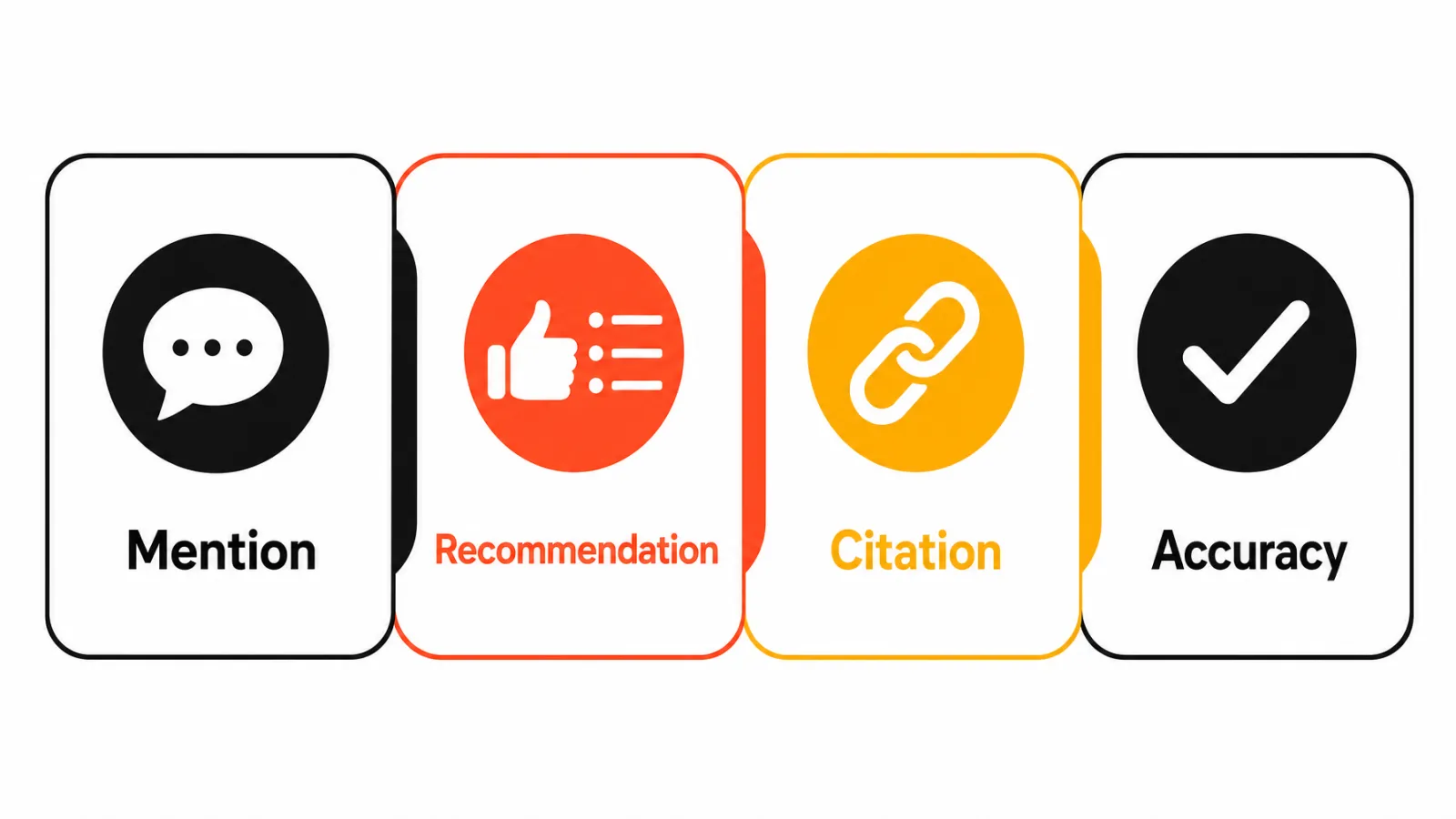
A brand mention is your brand name appearing in a ChatGPT answer. That's the baseline, but it's one of four states worth logging separately.
State | Operational definition | What it tells you |
|---|---|---|
Brand mention | Your brand name appears in the answer | Basic awareness |
Recommendation | The answer explicitly suggests your brand or puts it on a shortlist | Buying influence |
Citation | A source reference or linked page appears with a search-enabled answer | Evidence trail |
Incorrect or outdated representation | The answer misstates your pricing, features, or category | Accuracy risk |
OpenAI's help center confirms that ChatGPT Search citations can appear inline and in a Sources panel. Not every response includes them, so a missing source isn't automatically a tracking error.
A mention is not the same as a recommendation
A mention is a name drop, while a recommendation is an explicit suggestion. Being one of ten names in a list is visibility, but it isn't the same as being the answer. Log the two separately.
A citation is not the same as a brand mention
A citation is a source reference shown with a response, not proof that your brand was named. A page can be cited while a competitor gets the recommendation, and your brand can be named without your site being linked. I'd treat how ChatGPT actually picks sources as its own question, separate from brand inclusion.
Track incorrect or outdated descriptions separately
An incorrect or outdated description is a visibility problem, not a footnote. Wrong pricing, features, or category labels deserve their own field so they trigger a fix instead of getting counted as a win.
Why ChatGPT Brand Monitoring Matters for SEO and Brand Discovery
OpenAI has reported 900 million weekly active users as of February 2026, so it's reasonable to assume some of your buyers research categories there. Monitoring ChatGPT brand mentions shows how your company appears in that conversation. It doesn't replace organic traffic, conversions, or standard SEO reporting.
It shows where buyers may encounter your brand in AI answers and which sources or competitors shape that representation. Specifically, tracking can reveal:
Category association: which problems your brand gets linked to
Competitor presence on the prompts you care about
Missing source coverage on third-party pages
Inaccurate product descriptions
If you're working on AI visibility for local businesses, the same tracking principles apply — the prompt set just shifts to location and service-based queries. For a broader guide on how to improve brand visibility in ChatGPT, that post covers what actually moves the needle once your tracking baseline is in place.
ChatGPT answers do not behave like traditional rankings
Google Search Console reports query positions. ChatGPT has no public, brand-level analytics dashboard like it, so you rely on repeated prompt sampling methodology instead. Wording, sources, and brand inclusion can all shift between runs.
AI visibility connects brand discovery with source evidence
Think of AI brand visibility as two layers: answer inclusion and evidence inclusion. Answer inclusion asks whether you're named; evidence inclusion asks which sources support the answer. For a cross-platform view of this, our guide on how to improve brand visibility in AI answers covers the full picture. Perplexity, Gemini, and Google AI Overviews are separate answer surfaces, so don't assume results transfer between them.
How Do I Track Brand Mentions in ChatGPT?
Because there's no native feed, the practical method for ChatGPT brand mentions is controlled prompt sampling from the outside. Each step below has an action, a constraint, and an example.
Step 1: Build a non-branded buyer prompt set
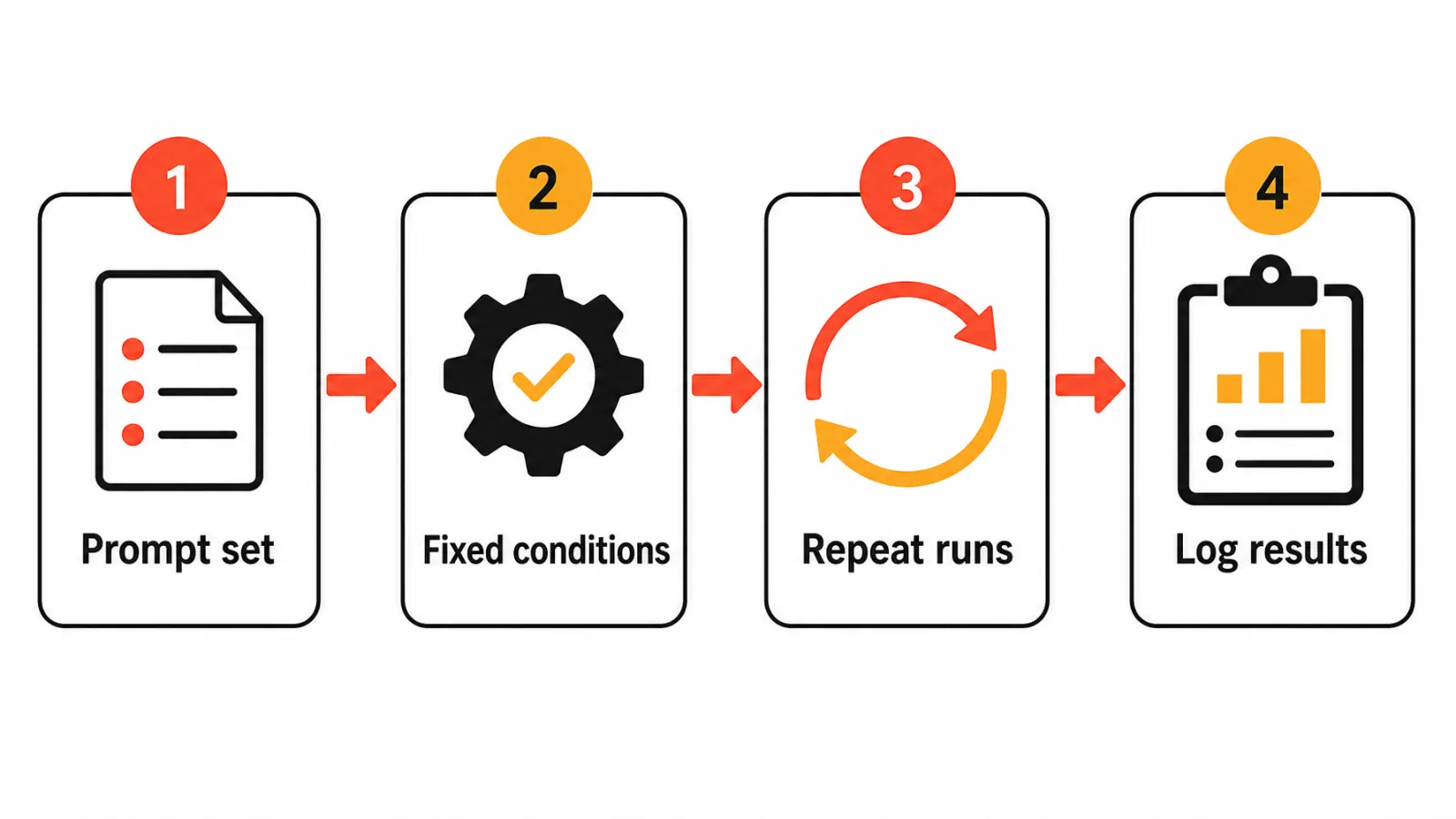
Write 20 to 50 realistic buyer prompts, which is my editorial starting point rather than a universal rule. Cover category discovery, problem solving, use cases, comparisons, buying criteria, and objections. Good ChatGPT SEO prompts sound like real buyers, for example: 'What tools help small teams track AI search visibility?'
Keep branded prompts in a separate cohort. Asking 'What is Keytomic?' tests recognition, while asking 'What tools help with AI visibility?' tests discovery.
Step 2: Fix the testing conditions
Record the model or interface, search on or off, signed-in state, locale, date, and time for every run. Change only one variable at a time, such as search state, so you know what moved the result. If you automate through the API, spot-check against the live interface because outputs and browsing behavior may differ.
If your site never appears as a source, check the OpenAI crawler documentation. It separates OAI-SearchBot for ChatGPT Search, GPTBot for training, and ChatGPT-User for user-initiated requests, though access doesn't guarantee a mention or citation.
Step 3: Run each prompt repeatedly and save the full response
Run every prompt several times, say three to five as a starting point, and save the complete answer text. A screenshot alone loses the wording you'll need later. When you're logging ChatGPT brand mentions, store the full response and its cited URLs in the same row. Our guide on LLM citation tracking covers how to structure this log for repeated runs across platforms.
Step 4: Record mentions, competitors, citations, and accuracy
For each response, capture:
Whether your brand was mentioned, and whether it was recommended
Which competitors appeared in the same answer
Cited URLs, plus whether each source is your site, a review page, a directory, or a publication
Whether the description of your brand is accurate
Sentiment, only as a manual coding of the saved text
ChatGPT citations exist only when the response shows sources, so leave the field blank rather than guessing.
What Should a ChatGPT Brand Mention Tracking Sheet Include?
The tracking sheet is where scattered checks become evidence. I'd build it around the prompt response, not the brand, and keep the raw answer one click away.
Use one row per prompt response
Each run gets its own row with the exact prompt, the conditions, and a link or export of the raw answer. This follows the spreadsheet-based tracking method that other methodology guides describe — parse.gl documents one version of it. One row per response keeps ChatGPT brand mentions auditable and lets you recalculate anything later.
Prompt coverage means the share of your fixed prompt set where the brand appears. Only quote it when the denominator, meaning the number of prompts, is visible.
Separate core metrics from diagnostic fields
Field | What to record | Type |
|---|---|---|
Prompt ID and exact prompt | Stable ID plus the wording used | Core |
Intent | Discovery, comparison, or objection | Diagnostic |
Platform, model or interface | Where you ran it | Core |
Search state | On or off | Core |
Locale and language | Test conditions | Diagnostic |
Date and time | Timestamp of the run | Core |
Brand mentioned | Yes or no | Core |
Recommendation status | None, listed, or explicitly suggested | Core |
Answer order | Position in the response, not a rank | Diagnostic |
Competitors | Names that appear | Core |
Cited URLs | Every source shown | Core |
Mention context | How the brand is described | Diagnostic |
Accuracy issue | Wrong or outdated claims | Core |
Sentiment | Manually coded from the saved text | Diagnostic |
Follow-up action | Fix, outreach, or none | Diagnostic |
How Should You Interpret Changes in ChatGPT Visibility?
Read results as a distribution of observations, not a position. Mention rate, recommendation rate, and citation share are the AI visibility measurement components that monitoring guides commonly describe, and each needs a visible denominator.
Read mention rate and prompt coverage together
If mentions rise only on branded prompts, you've measured recognition, not discovery.
If your mention rate climbs but the context is irrelevant or negative, that's not a business gain.
If a competitor appears repeatedly, analyze its prompts and sources rather than assuming it's objectively better.
Find the source behind a gained or lost mention
If the brand is mentioned but the website isn't cited, inspect the cited sources before changing the page. The answer may lean on a review site, directory, or publication.
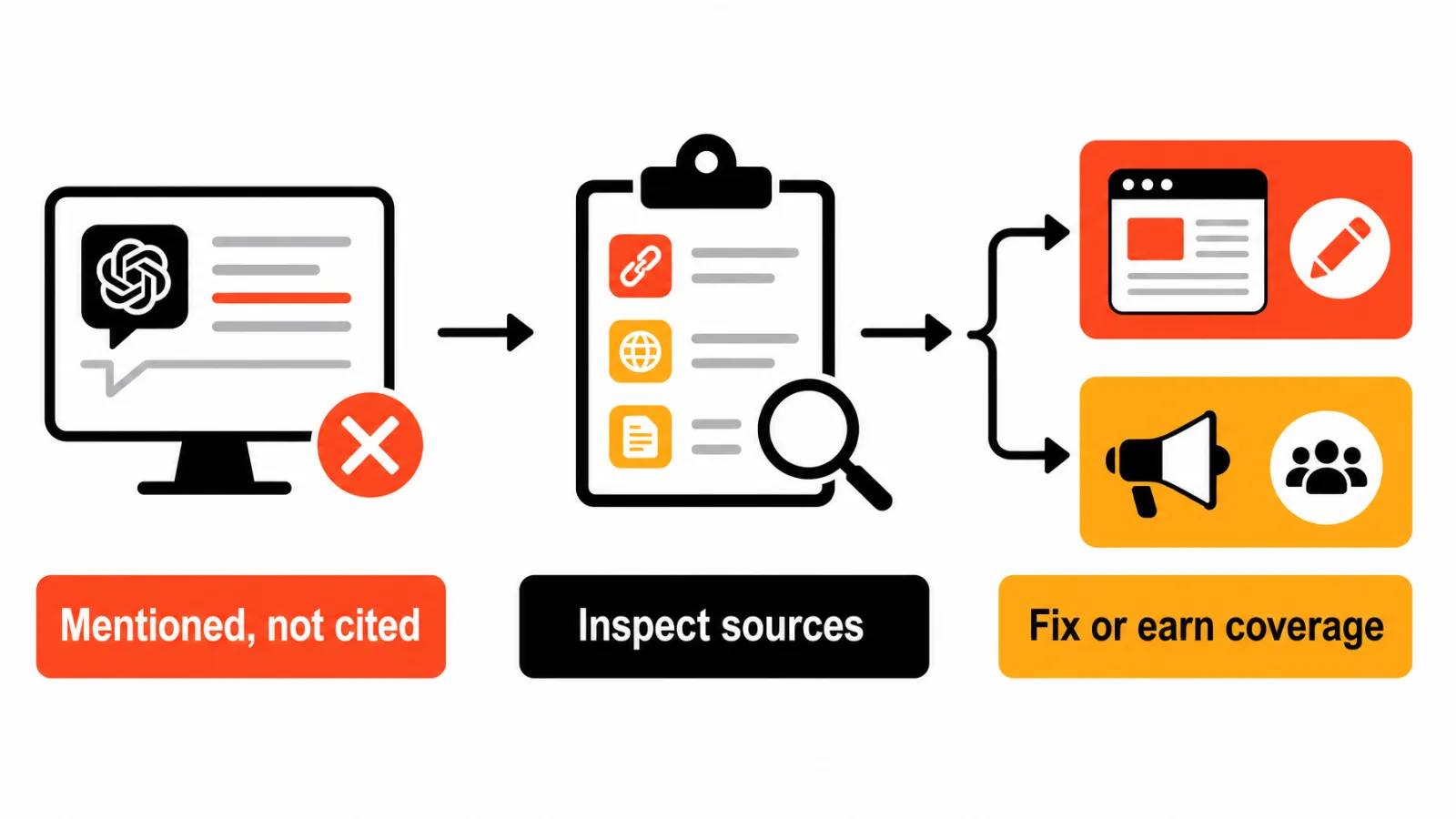
A mention without a citation and a citation without a recommendation point to different fixes. That's why the source-type field earns its place in the sheet.
Treat trends as evidence to investigate, not proof of causation
A visibility change after a content edit is a correlation until the same prompt set and conditions show a sustained pattern. If you change the prompt set, the denominator changes and the trend isn't comparable. When ChatGPT states wrong pricing or features, trace the likely source, fix it, and rerun the prompt.
Common Mistakes When Tracking ChatGPT Mentions
Most problems with ChatGPT brand mentions data come from a few avoidable habits.
Using only branded prompts
Do not rely on prompts that include your brand name, because they test recognition, not discovery. Add non-branded buyer prompts and report the two cohorts separately.
Treating one answer as a trend
Do not read a single response as a trend. Repeat each prompt, keep conditions fixed, and never change the prompt set just to make a score look better.
Confusing mentions with citations or recommendations
Do not count every appearance as a win. Log mention, recommendation, citation, and accuracy as separate fields, and review competitors and incorrect descriptions every cycle.
Frequently Asked Questions About ChatGPT Brand Mentions
How do I track brand mentions in ChatGPT?
Run a fixed set of buyer prompts on a schedule, repeat each one, save the full responses, and log mentions, recommendations, citations, competitors, and accuracy in a sheet.
What counts as a ChatGPT brand mention?
Your brand name appearing in the generated answer text. Record it separately from recommendations and citations, because each signals something different.
Can Google Alerts track mentions inside ChatGPT answers?
No, not for private generated responses. Google Alerts monitors web content, not individual ChatGPT sessions, so you need controlled prompt testing instead.
How often should I monitor ChatGPT brand mentions?
A consistent weekly or biweekly baseline works for small teams, plus extra checks after major site or positioning changes. That's a practical recommendation, not a platform rule.
Why does ChatGPT give different answers to the same question?
Output can vary with prompt wording, search state, model or interface, locale, timing, and account context. Treat each response as one sample, not a fixed result.
Can ChatGPT mention a brand without citing its website?
Yes. ChatGPT can name a brand without showing its website as a source, which is why mentions and citations need separate fields.
Can I track competitors in ChatGPT?
Yes, if you run the same fixed prompts under the same conditions and log which competitors appear. Compare patterns, not quality judgments.
Can any tool guarantee that ChatGPT will mention my brand?
Monitoring tools can measure and organize observations, but they can't control how OpenAI selects answers or sources.
Choose the Next Measurement Step
If you have no prompt set or process, start manually; if your prompt set is stable and repeat checks are eating your time, move to scheduled tracking.
Start with a manual baseline if you have no data
Build 20 to 50 non-branded prompts, create the tracking sheet, and run a first round. The free AI Visibility Tracker is one way to get an initial baseline across ChatGPT, Gemini, Perplexity, and Claude. Our roundup of AI visibility monitoring tools covers what's available if you're evaluating options.
Use scheduled tracking when the prompt set becomes operational
Switch when you need repeated observations, several AI platforms, competitor monitoring, or multiple brands. Manual tracking works well until the prompt set grows and weekly runs start eating hours. At that point, the job is the same — fixed prompts, logged mentions, competitor comparisons — but Keytomic's AI Visibility Tracker automates the repeat runs so the method stays consistent and the findings stay actionable. The Keytomic demo shows how it fits into a broader SEO workflow.