The best SEO competitor analysis tool depends on the job: rival keyword gaps, backlink research, rank monitoring, or turning findings into published content. Plan limits, especially exports and project counts, decide more purchases than feature lists do.
If you're the SEO manager who has to recommend a purchase, you're choosing between rival-keyword data, link research and the work that happens after the report. Across 7+ years in SaaS, product marketing, SEO and AI search, the pattern I watch for is teams buying on features and then hitting an export cap.
This comparison is for SEO managers, founders, agencies and small marketing teams. It compares ten tools on keyword-gap research, backlink research, workflow coverage and plan cost, in US dollars with each plan's billing basis. If you're also evaluating keyword research tools beyond competitor analysis, that guide covers the broader category.
Key Takeaways
The best SEO competitor analysis tool depends on the research job, so choose by use case: broad suites for keyword and backlink gaps, specialists for links, history or tracking.
Keyword-gap work and backlink-gap work are different jobs, and a tool that is strong at one can be thin at the other.
Plan and export limits matter as much as features: Ahrefs Starter at $29/month has no exports, while Lite at $129/month includes 500,000 export rows.
A research suite finds the gap, but approved content and publishing need a separate step or a workflow tool.
Google Search Console gives first-party data on your own site only, so use it to check your results, not to see rivals.
Quick picks
Here's the fast route to the right tool for each job.
Best for combined keyword and backlink gap work: Semrush
Best for inspecting rival top pages and links: Ahrefs
Best for monitoring a portfolio of tracked keywords: SE Ranking
Best for organic research alongside Google Ads history: SpyFu
Best for a three-site campaign with backlink queries: Moz Pro
Best for a five-project keyword and link package: Serpstat
Best for a lower-cost single-project shortlist: Ubersuggest
Best for turning competitor opportunities into approved content: Keytomic
Best for comparing competitor traffic channels: Similarweb
Best for link-context and topical backlink research: Majestic
How we chose
I ranked the tools on four criteria: competitor keyword and gap research, competitor backlink research, workflow or monitoring coverage, and plan cost and limits. Keyword-gap and backlink capability come first, workflow next, then cost. That order is an editorial judgment, not an accuracy test. I used official product, documentation and pricing pages in November 2026, including plan limits such as Ahrefs Starter's missing exports and SE Ranking Core's 10 projects. One boundary: Google's Performance report documentation covers clicks and impressions for your own property, not a rival's. Understanding keyword difficulty is a useful companion when interpreting gap data, since a gap without a difficulty filter is just a list.

SEO competitor analysis tools compared
The table puts the same four criteria next to every tool, with the billing basis kept in each cost cell. Read cost beside the limits: a lower price often comes with fewer exports, projects or rows. Ahrefs shows it clearly, since Starter at $29 has no exports and Lite at $129 includes 500,000 rows. Keytomic Pro covers one project and SE Ranking Core covers 10, though they bundle different features.
Rank and tool | Best for | Keyword or rival research | Backlink research | Workflow or monitoring | Plan cost and limit |
|---|---|---|---|---|---|
1. Semrush | Keyword and backlink gaps together | Keyword Gap compares up to four rivals | Backlink Gap finds link opportunities | SEO plan tracks 500 keywords | $139/month monthly; five sites |
2. Ahrefs | Rival top pages and links | Site Explorer; Starter shows 25 Top Pages rows | Competitor link data; gap analysis on Lite | Starter: no exports; Lite: 500,000 export rows | Starter $29/month; Lite $129/month, monthly |
3. SE Ranking | Portfolio keyword tracking | Competitor research in Core | Backlink research in Core | 2,000 daily keywords; 25,000 API credits | Core $129/month monthly; 10 projects |
4. SpyFu | Organic plus Google Ads history | Organic and Google Ads research; 10+ years of history | Competitor links filterable by keyword | 10,000 export rows | Basic $39/month monthly; one live tracked site |
5. Moz Pro | Three-site campaigns | Competitive research; 300 tracked keywords | Backlink queries | Three tracked sites | Standard $99/month monthly |
6. Serpstat | Five-project research package | Competitor keyword gaps | Link Intersect; 2,000 rows per report | 100 searches daily; API starts at Team | Individual $50/month, billed annually |
7. Ubersuggest | Low-cost single project | Keyword gaps; five tracked competitors | Backlink opportunities; 2,000 rows | 150 reports daily; one project | Individual $29/month monthly |
8. Keytomic | Competitor findings to approved content | Competitor context feeds keyword and topical opportunities | Backlink opportunities are part of the offering | Approved CMS publishing; AI competitor visibility | Pro $99/month monthly; one project, 30 blog credits |
9. Similarweb | Traffic-channel comparison | Keyword Gap compares up to four rival sites | Backlink Analytics is a listed tool | Marketing Channels comparison | Business packages through a sales conversation |
10. Majestic | Link context and topical links | Keyword Checker on Lite | Fresh Index, Link Context, Topical Trust Flow | Historic Index and Clique Hunter on Pro | Lite $49.99/month; Pro $99.99/month, monthly |
The 10 best SEO competitor analysis tools
Each card uses the same fields in the same order, ranked on the four criteria above. Only Keytomic is linked.
1. Semrush
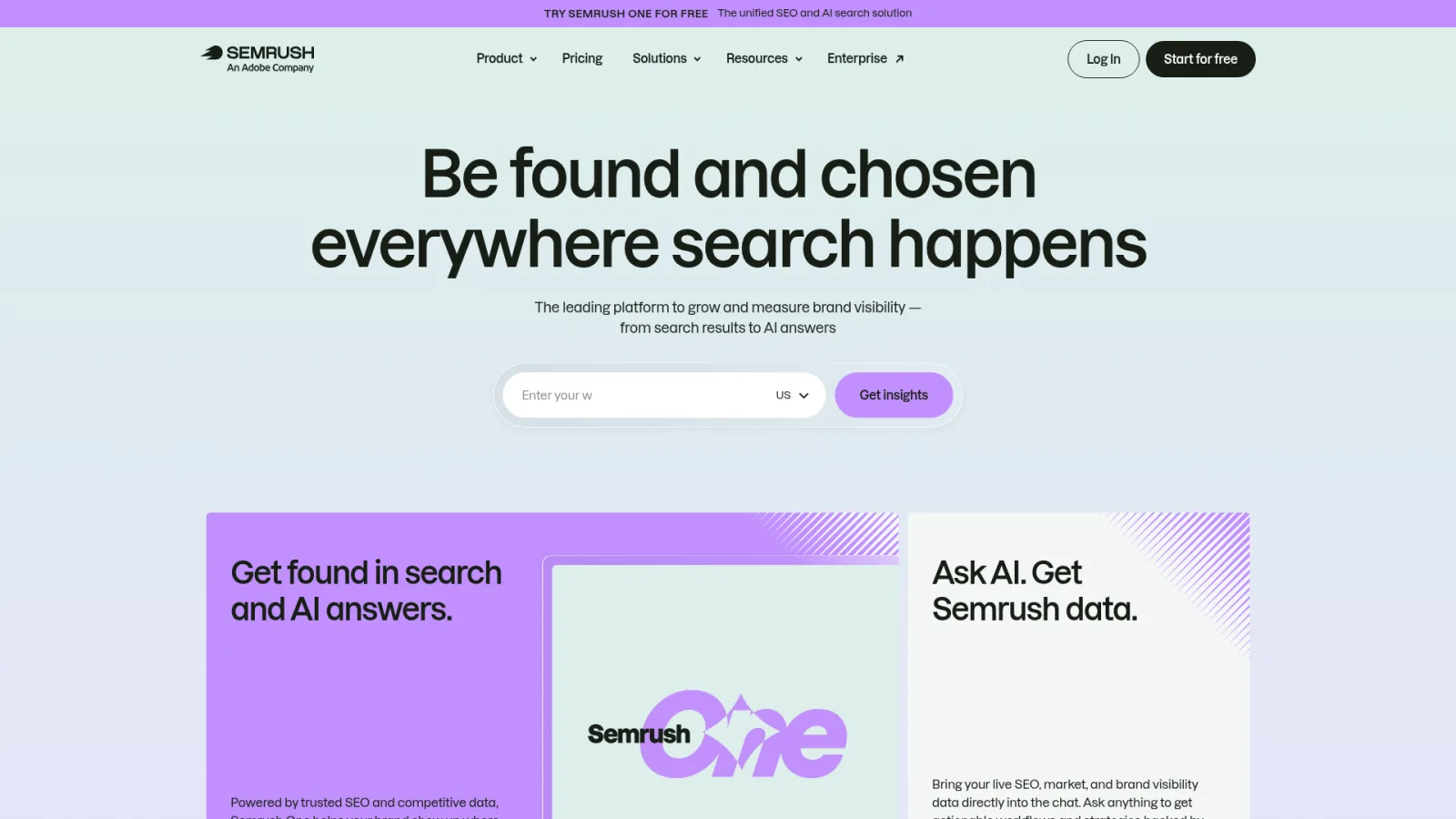
Semrush is the broadest option here for rival research. Keyword Gap compares your site with up to four competitors, and Backlink Gap surfaces referring-domain opportunities. The SEO plan also tracks 500 keywords across five monitored websites, so the account that finds a gap can watch whether you close it. For a head-to-head look at how Semrush stacks up against its closest rivals, see our Semrush vs Ahrefs vs Moz comparison.
Best for: Combined keyword and backlink gap workflows. It wins the first two criteria together, with both gap tools in one product.
Key facts:
Keyword Gap: your domain against up to four rivals
Backlink Gap: referring-domain opportunities
SEO plan: five monitored websites, 500 tracked keywords
Free tier: 10 requests per day on a free account; Pro trial available
Price: $139/month, billed monthly (SEO plan).
Pros:
Keyword and backlink gaps live in one account, so you don't reconcile two exports.
Tracking sits beside research, which keeps an acted-on gap monitored.
Cons:
At $139/month it costs nearly five times Ahrefs Starter at $29, a real step up for a small team.
Historical keyword data is reserved for higher tiers, so trend research on rivals costs more.
2. Ahrefs
Ahrefs is where I'd send someone who wants to read a rival's pages and links closely. Site Explorer and competitive analysis cover top pages and competitor link data, but the plan changes how much you see. Starter has 200 monthly credits, 25 Top Pages rows, one month of history and no exports. If you're weighing Ahrefs directly against Ubersuggest for a tighter budget, our Ahrefs vs Ubersuggest breakdown covers the key differences in depth.

Best for: Inspecting rival top pages and links. It wins on rival-page and link research, with Lite's competitive analysis as the entry point to real gap work.
Key facts:
Starter: 200 credits, one unverified project, no exports
Lite: 1,000 credits, competitive analysis, 750 tracked keywords
Lite exports: 500,000 rows
Free tier: Ahrefs Webmaster Tools (AWT) for your own verified site only
Price: Starter $29/month, monthly only; Lite $129/month, billed monthly.
Pros:
Site Explorer lets you inspect a rival's pages and links in one place.
Lite's 500,000 export rows move gap data into a spreadsheet or brief.
Cons:
Starter's no-export rule and 25-row view make it a lookup tool, not a research workflow.
Competitive analysis is listed with Lite, so the realistic entry price for gap work is $129/month, not $29.
3. SE Ranking
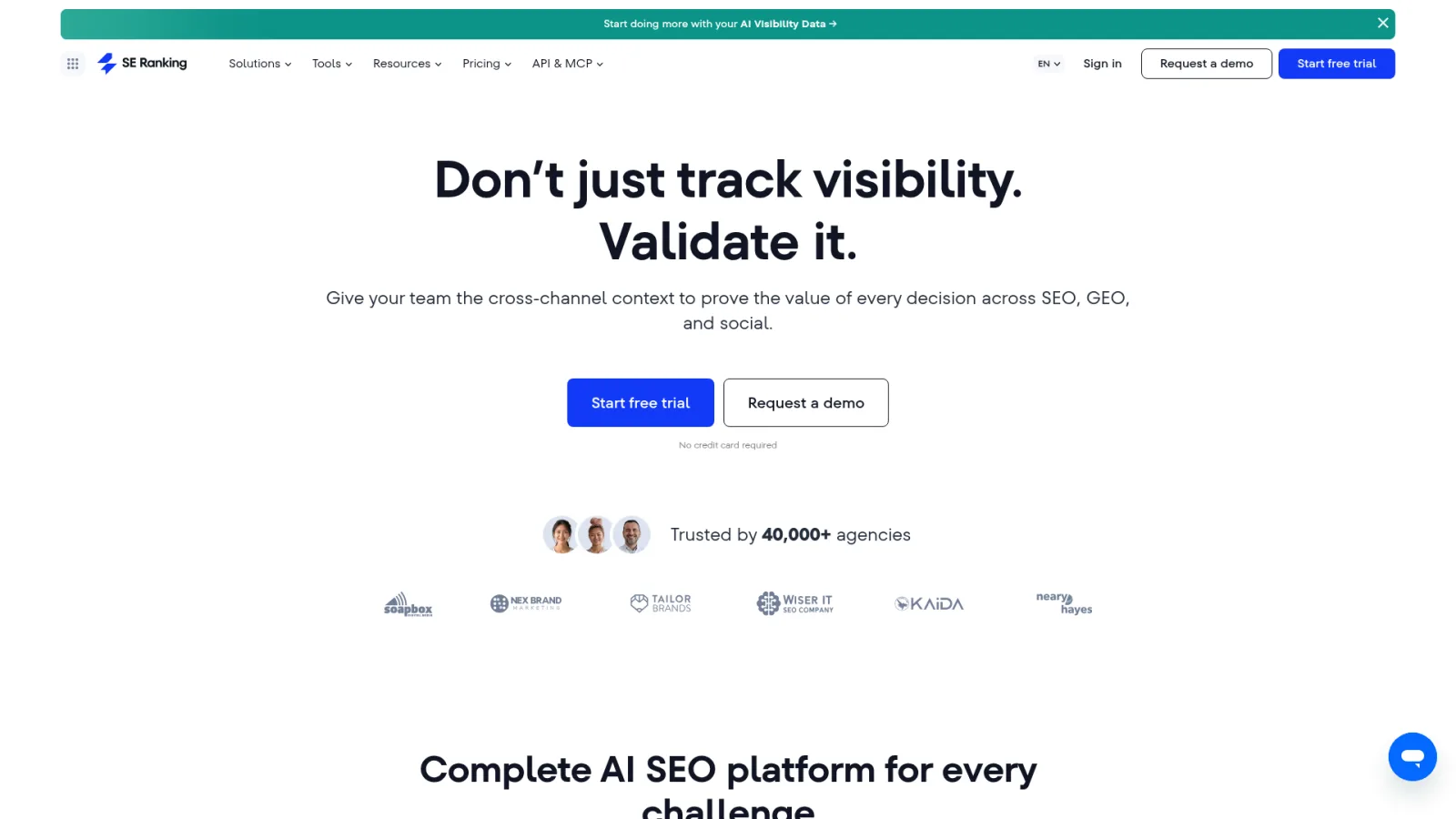
SE Ranking Core is a monitoring-first plan with research attached. It includes competitor and backlink research, 10 projects, 2,000 daily tracked keywords and 25,000 API credits. The project count is the number to notice: it suits a team juggling several sites better than plans built around one or three.
Best for: Monitoring a portfolio of tracked keywords. It wins the workflow criterion with 2,000 daily tracked keywords across 10 projects.
Key facts:
Competitor research and backlink research in Core
10 projects
2,000 daily tracked keywords and 25,000 API credits
Free trial: 14 days
Price: Core $129/month, billed monthly.
Pros:
10 projects suit agencies and in-house teams with several sites.
API credits let you pull data into your own reports.
Cons:
Core includes one manager seat, so larger teams need a different arrangement.
It costs $30 more than Moz Pro Standard, so it pays off only if you use the extra projects and keywords.
4. SpyFu
SpyFu stands out for history. Basic includes 10-plus years of historical data and covers both organic and Google Ads keywords, so you can see how a rival's search presence changed. Its backlink tool filters a competitor's links by keyword, a quick way to find links tied to the terms you want to win. For a direct comparison against the two most common alternatives, our Ahrefs vs SpyFu vs Semrush guide puts them side by side on the same jobs.

Best for: Organic research alongside Google Ads history. It wins the rival-research criterion on depth of history.
Key facts:
Organic and Google Ads keyword research
Competitor backlinks filtered by keyword
10,000 result and export rows; one live site tracking project
Free tier: limited lookups without an account
Price: Basic $39/month, billed monthly.
Pros:
Paid and organic history sit in one view.
Keyword-filtered backlinks narrow link research to your target terms.
Cons:
Basic caps result and export rows at 10,000, so large rival domains get cut short.
One live tracked site means agencies and multi-site teams outgrow it quickly.
5. Moz Pro
Moz Pro Standard is a middle-priced option for a small set of sites. It includes competitive research, backlink queries, 300 tracked keywords and three tracked sites. Moz also lists a $49/month entry plan for one website, but I've compared Standard because its allowances are clearest.
Best for: A three-site campaign with documented competitive and backlink queries. It wins on a defined site limit at a mid-range price.
Key facts:
Three tracked sites
300 tracked keywords
Competitive research and backlink queries
Free trial: 30 days on Standard
Price: Standard $99/month, billed monthly.
Pros:
300 tracked keywords and backlink queries at $99/month.
The clear site limit makes capacity easy to plan.
Cons:
Three tracked sites compares with SE Ranking Core's 10 projects, so portfolios outgrow it.
300 tracked keywords is far below SE Ranking Core's 2,000 daily keywords.
6. Serpstat
Serpstat packages keyword gaps and Link Intersect into a plan with five projects. Individual allows 100 searches per day and 2,000 backlink results per report. Link Intersect handles the link side of a rival comparison, while the keyword gap tools cover search terms.
Best for: A five-project keyword-and-link research package. It wins on project count at $50/month.
Key facts:
Competitor keyword gaps and Link Intersect
Five projects; 100 searches per day
2,000 backlink results per report; API and batch analysis start at Team
Free trial: available on request
Price: Individual $50/month, billed annually.
Pros:
Keyword gaps and Link Intersect in one package.
Five projects at $50/month.
Cons:
100 daily searches limit long comparison sessions.
API access and batch analysis are in Team, not Individual, and annual billing means paying for the year up front.
7. Ubersuggest
Ubersuggest Individual is among the lowest-priced plans here with competitor features. It offers competitor keyword gaps and a backlink opportunity report, tracks five competitors, and allows 150 daily reports and 2,000 backlink rows per report, all on one project.

Best for: A lower-cost single-project competitor shortlist. It wins on price at $29/month with five tracked competitors.
Key facts:
Five tracked competitors
150 daily reports; 2,000 backlink rows per report
One project
Free tier: three searches per day without an account
Price: Individual $29/month, billed monthly.
Pros:
Five tracked competitors at $29/month.
The backlink opportunity report gives outreach starting points.
Cons:
One project, so it doesn't suit agencies.
White-label reporting and branded client portals are not offered.
8. Keytomic
Keytomic is our own product.
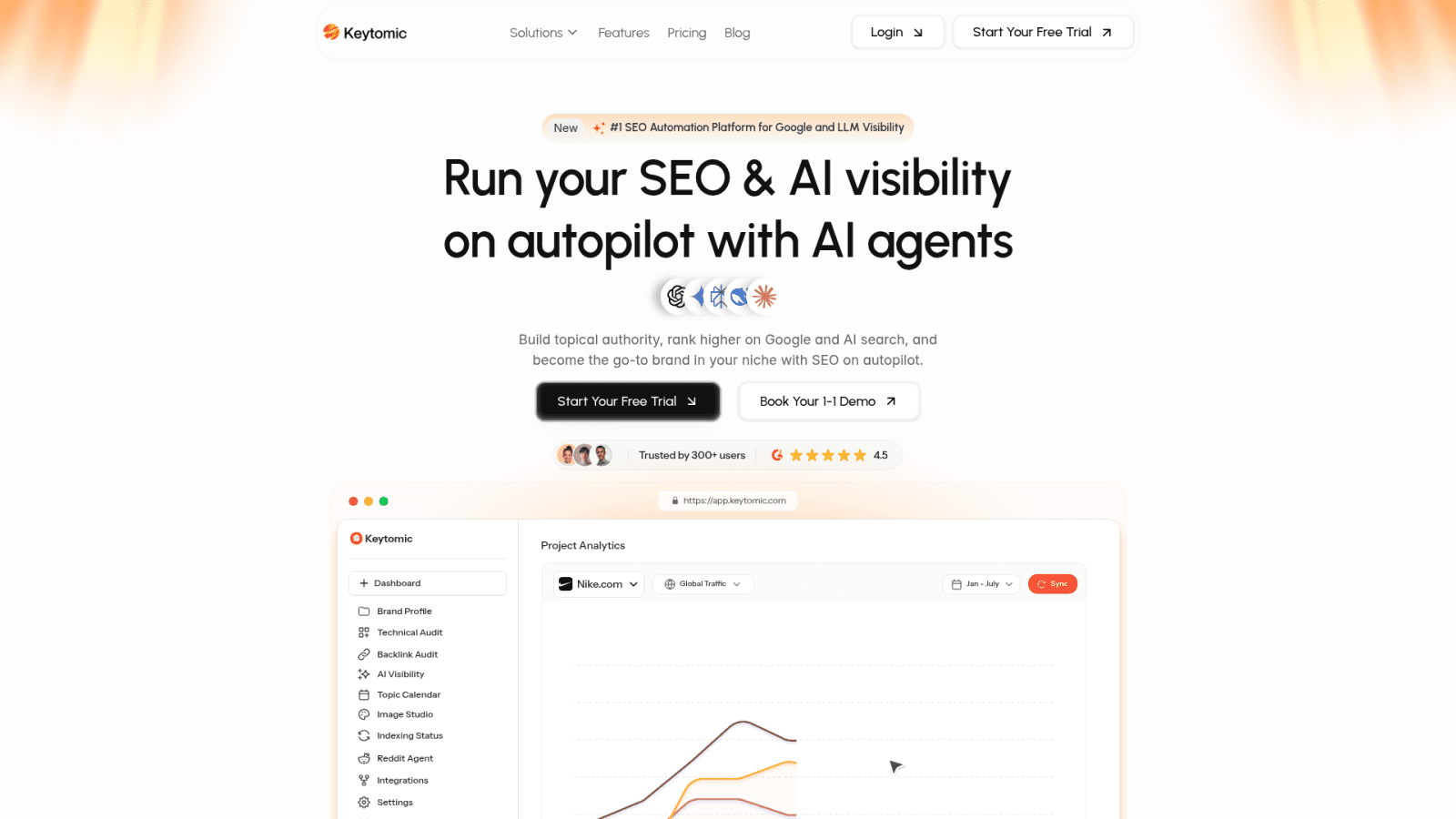
Keytomic starts from your site's competitors and existing content to find keyword and topical opportunities, then carries them into approved-content publishing. It also shows competitor appearances in AI answers — the AI visibility tracker surfaces which rivals appear in AI Overviews and AI Mode for your tracked queries. For researching keyword opportunities it connects to AI keyword research, so competitor context lands in a plan instead of a spreadsheet. Building topical authority around your niche is what makes the gap data actionable over time.
Best for: Turning competitor opportunities into an approved content workflow. It wins the workflow criterion with approved CMS publishing and AI competitor visibility, and it ranks eighth because the suites above go deeper on dedicated gap data.
Key facts:
Competitor and content context feeds keyword and topical opportunities
Approved-content publishing and competitor appearances in AI answers
Pro: one project, up to three seats, 30 blog credits
Free trial: three days, then $99/month
Price: Pro $99/month, billed monthly.
Pros:
Findings flow into planning and publishing, so they don't stall in a report.
Publishing waits for approval, so a human stays in the loop.
Cons:
Pro is built around one project, so a buyer managing 10 projects would need a different arrangement.
Built for turning opportunities into content, so not the best choice if your main job is exploring a rival's link profile in depth.
9. Similarweb
Similarweb widens the lens beyond search. Website Keywords compares a domain with up to four others, and Marketing Channels compares traffic sources across sites, so you can see whether a rival wins through search or elsewhere. Backlink Analytics is among its listed tools.
Best for: Comparing competitor traffic channels alongside search. It wins on channel-level comparison that pure SEO suites don't centre.
Key facts:
Website Keywords: one domain against up to four others
Marketing Channels: source comparison across sites
Competitive Intel, Strategic SEO and Gen AI Intel are distinct business suites
Free tier: limited lookups on the free plan
Price: Business and enterprise packages are sold through a sales conversation.
Pros:
Channel comparison shows where rivals get traffic.
Keyword comparison covers up to four rival sites.
Cons:
Strategic SEO and Gen AI intelligence are separate suites, so a buyer wanting both must assess the relevant package.
Sales-led packaging means no published price to compare against Ubersuggest or SpyFu.
10. Majestic
Majestic is a link specialist. Lite includes Fresh Index, Link Context, Topical Trust Flow and Keyword Checker, which together cover a rival's recent links, the context around them and their topical focus. Historic Index and Clique Hunter sit in Pro.
Best for: Link-context and topical backlink research. It wins the backlink criterion on Link Context and Topical Trust Flow.
Key facts:
Lite: Fresh Index, Link Context, Topical Trust Flow, Keyword Checker
Pro: adds Historic Index and Clique Hunter
No free tier; Lite at $49.99/month is the entry point
Price: Lite $49.99/month and Pro $99.99/month, both billed monthly.
Pros:
Link Context and Topical Trust Flow add detail on link quality.
Lite at $49.99/month costs less than most suites here.
Cons:
Historic Index and Clique Hunter require the $99.99/month Pro plan.
Its keyword side is Keyword Checker on Lite, so pair it with a keyword-gap tool for rival terms.
How do you choose the right competitor analysis tool?
Run the same job in every trial: one rival domain, one country and one device. Then complete a keyword gap, a referring-domain task and an export in each tool, and price the plan that finishes all three.
Enter the same rival domain, country and device everywhere.
Run one keyword gap against that rival.
Run one referring-domain task, such as a link gap.
Export the results and note the row limit.

Export limits change the answer. Ahrefs Starter at $29/month has no exports, so the realistic Ahrefs price for this job is Lite at $129/month with 500,000 export rows.
Keep estimates and owned data apart. Third-party tools estimate rival performance, while Google's documentation describes Search Console data for your own property, so it checks your results, not theirs. Pairing competitor data with a proper SEO audit of your own site is the most direct way to decide which gaps are actually worth targeting.
Finally, look at the handoff from finding to action. I'd rather buy a plan that supports repeatable SEO automation workflows than a perfect report nobody acts on. Founders with one site and no analyst: start at $29 to $39 a month and add a suite when export limits start to bind. Agencies managing several clients should also look at how these tools compare on SEO software built for agencies, since project limits and white-label reporting change the calculation significantly.
Frequently asked questions about SEO competitor analysis tools
Can Google Search Console replace a competitor research tool?
Search Console reports clicks, impressions, queries and pages for your own verified property only. A rival's data is never exposed through the API or the UI. Use it to validate what your research tools surface for your own site, not to see how a competitor ranks or what keywords they own.
Does Google provide a separate view of AI-search impressions?
Yes. Google's Search Generative AI reports show your own site's impressions in AI Overviews and AI Mode, not rivals'. The reports reached all verified Search Console properties on August 31, 2026. You can filter by query and page to see which of your URLs appear in AI-generated answers.
Why might a Search Console query export omit searches?
Google omits anonymized queries below a volume threshold and truncates some row exports. The dimensions and data-grouping documentation explains why totals in the UI can differ from API or CSV exports. For research at scale, supplement with a third-party tool rather than relying on the raw export alone.
Does Ahrefs Starter let me export competitor reports?
Ahrefs Starter ($29/month) has no export rows at all. If you need to move gap data into a spreadsheet or brief, Lite at $129/month includes 500,000 export rows per month. Treat Starter as a lookup tool for quick checks, not a workflow that ends in a deliverable.
Is the Keytomic trial a permanently free plan?
The published three-day trial continues at $99/month (Pro plan) under the stated terms. Pro includes one project, up to three seats and 30 blog credits per month. There is no permanently free tier; the trial gives full access to evaluate the workflow before committing.
Do any SEO competitor analysis tools track AI search visibility?
Yes, though coverage varies. Keytomic's AI visibility tracker shows where rivals appear in AI-generated answers. Similarweb's Gen AI Intel suite tracks AI-search traffic at the channel level. For a broader look at the tools in this category, see our guide to AI visibility tools. For most tools in this list, AI search remains a gap: they surface traditional organic data but don't show how competitors appear in AI Overviews or AI Mode results.
Choose the tool for the job you need done
Pick the job you'll repeat every month, not the longest feature list. This is the path I'd follow:
Keyword and backlink gaps from one account: Semrush.
Rival pages and links: Ahrefs, on Lite if you need exports.
Many sites and keywords to track: SE Ranking Core, with its 10 projects.
Organic plus Google Ads history on a tight budget: SpyFu Basic.
Link context and topical links: Majestic.
Rival traffic channels beyond search: Similarweb.
For turning rival findings into approved content, Keytomic is the one I'd shortlist, especially as SEO software for founders who want research connected to publishing, or for SEO agencies that need a repeatable content workflow alongside their research stack.
Whichever you trial, run the same domain, the same gap task and the same export, then let plan limits decide. A gap found but never acted on means the tool hasn't done its job.
Resources
Internal resources
External resources
About the author
Salam Qadir, Product & Growth Lead
Salam Qadir is a product owner and growth strategist with 7+ years of experience across SaaS, product marketing, SEO, and AI search. His work sits at the intersection of product, marketing, and search, helping companies turn technology into clear market propositions and measurable growth opportunities.