Table of Contents
Share Article
How to Rank on ChatGPT and Build Real AI Search Visibility
How to Rank on ChatGPT and Build Real AI Search Visibility
How to Rank on ChatGPT and Build Real AI Search Visibility

Ahsan Iqbal
Marketing Growth Expert

Learn how ChatGPT SEO works, from crawler access and entity signals to content structure, prompt mapping, and repeatable AI citation tracking.
You cannot rank number one on ChatGPT the way you target a fixed Google position. You can improve your chances of being mentioned, cited, or recommended by making your pages crawlable, entity-clear, directly relevant, and evidence-backed. Start by confirming crawler access, fixing indexability, publishing concise answers to real buyer prompts, and building consistent first-party and third-party brand signals. Measure repeated prompts, cited URLs, competitor presence, referrals, and representation accuracy. One screenshot is not a baseline.
You publish solid content, rank on page one for your category terms, and then a buyer opens ChatGPT and asks for a tool recommendation. A competitor appears. Your brand does not. That gap is not a fluke, and it is not solved by publishing more pages.
OpenAI's current publisher guidance distinguishes OAI-SearchBot from GPTBot and confirms that public websites can be surfaced in ChatGPT Search when accessible. The access layer is the first dependency, not the last. Most teams skip straight to content and miss the structural problems underneath.
The sequence that actually matters: diagnose access first, then content extraction, entity consistency, corroboration, prompt mapping, and measurement. Only then does automation compound your effort. That is the model this guide walks through.
What Does It Mean to Rank on ChatGPT?
ChatGPT does not expose a traditional ten-blue-links ranking page. There is no universal position one to target, no public scoring formula, and no guaranteed placement for any site. What exists instead is a set of visibility outcomes that are related but not interchangeable.
When ChatGPT Search is active, OpenAI's product documentation confirms that the system can search the web, rewrite queries into targeted searches, and return relevant source links. Not every ChatGPT response uses live web retrieval. Standard model responses draw on training data and do not cite live URLs.
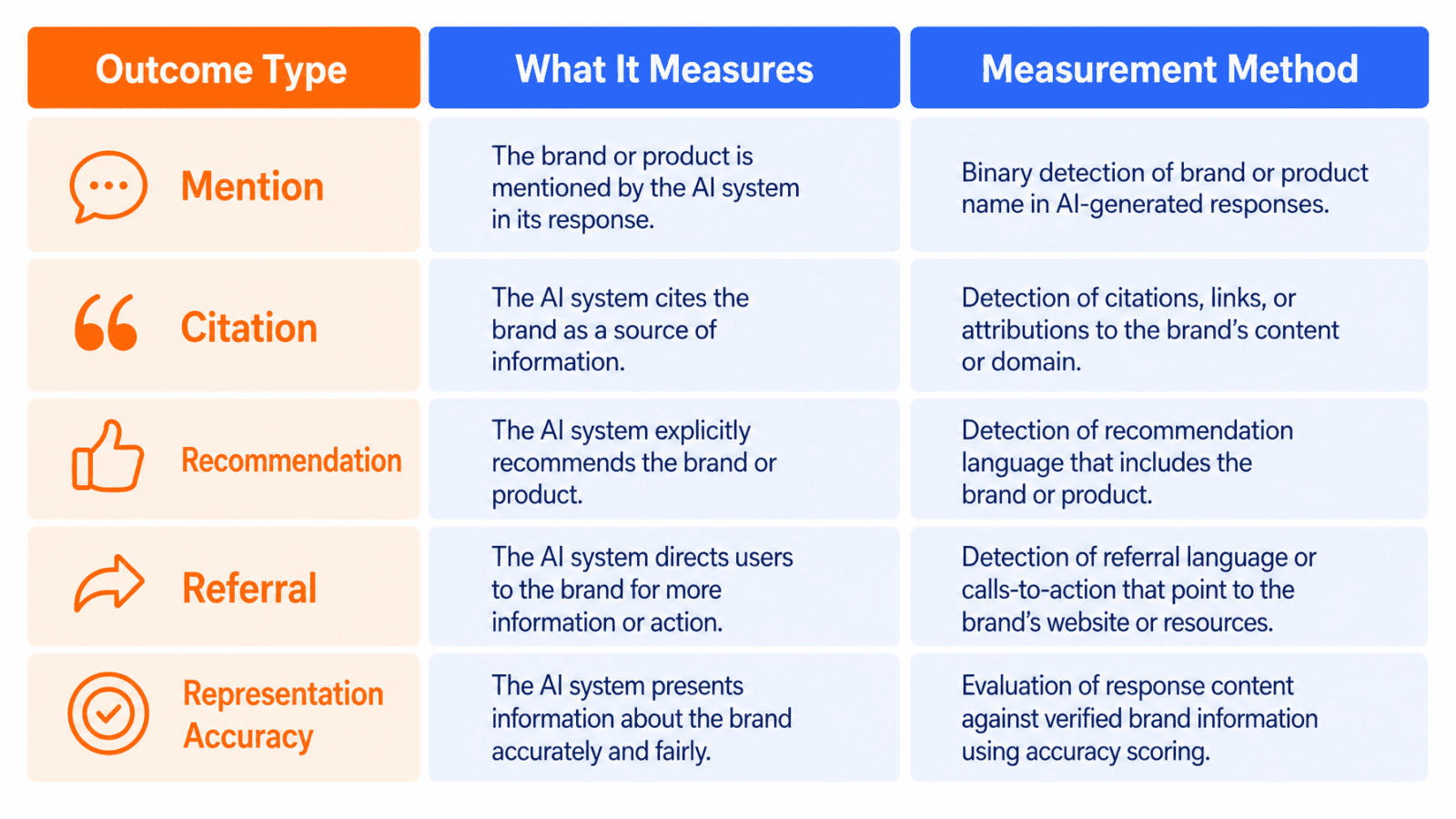
Visibility outcome | What it means | How it is measured |
|---|---|---|
Mention | Brand name appears in the response text | Prompt sampling, brand monitoring |
Citation | Source URL is shown as a reference | Cited URL tracking, referral logs |
Recommendation | ChatGPT suggests your brand or product | Prompt sampling across query types |
Referral | A user clicks through to your site | GA4 utm_source=chatgpt.com sessions |
Representation accuracy | The description of your brand is correct | Manual review against source content |
The practical goal is not a fixed ChatGPT position; it is repeatable visibility for the prompts that matter to your buyers.
Can You Rank #1 on ChatGPT?
No public universal formula or guaranteed position exists. OpenAI does not publish a source-selection weighting system, and no independent method can reliably produce a consistent top citation across all users, platforms, locations, and query modes. You can improve your eligibility for retrieval and citation. You cannot guarantee a fixed rank.
Ranking, Mention, Citation, and Recommendation Are Different
Teams that treat all visibility outcomes as one blended score make poor diagnostic decisions. A brand mention without a citation URL provides no referral traffic. A cited URL that misrepresents your product does more harm than good. Separate measurement for each outcome connects observations to the right corrective action.
What Changes When ChatGPT Search Is Active?
When a user has web search enabled, ChatGPT may rewrite the prompt into one or more targeted queries, retrieve pages from a search index, and return source links alongside the answer. This surface is where access decisions matter most for citation eligibility. Non-search ChatGPT responses draw only on model training and do not surface live citations.
How ChatGPT Finds and Selects Sources
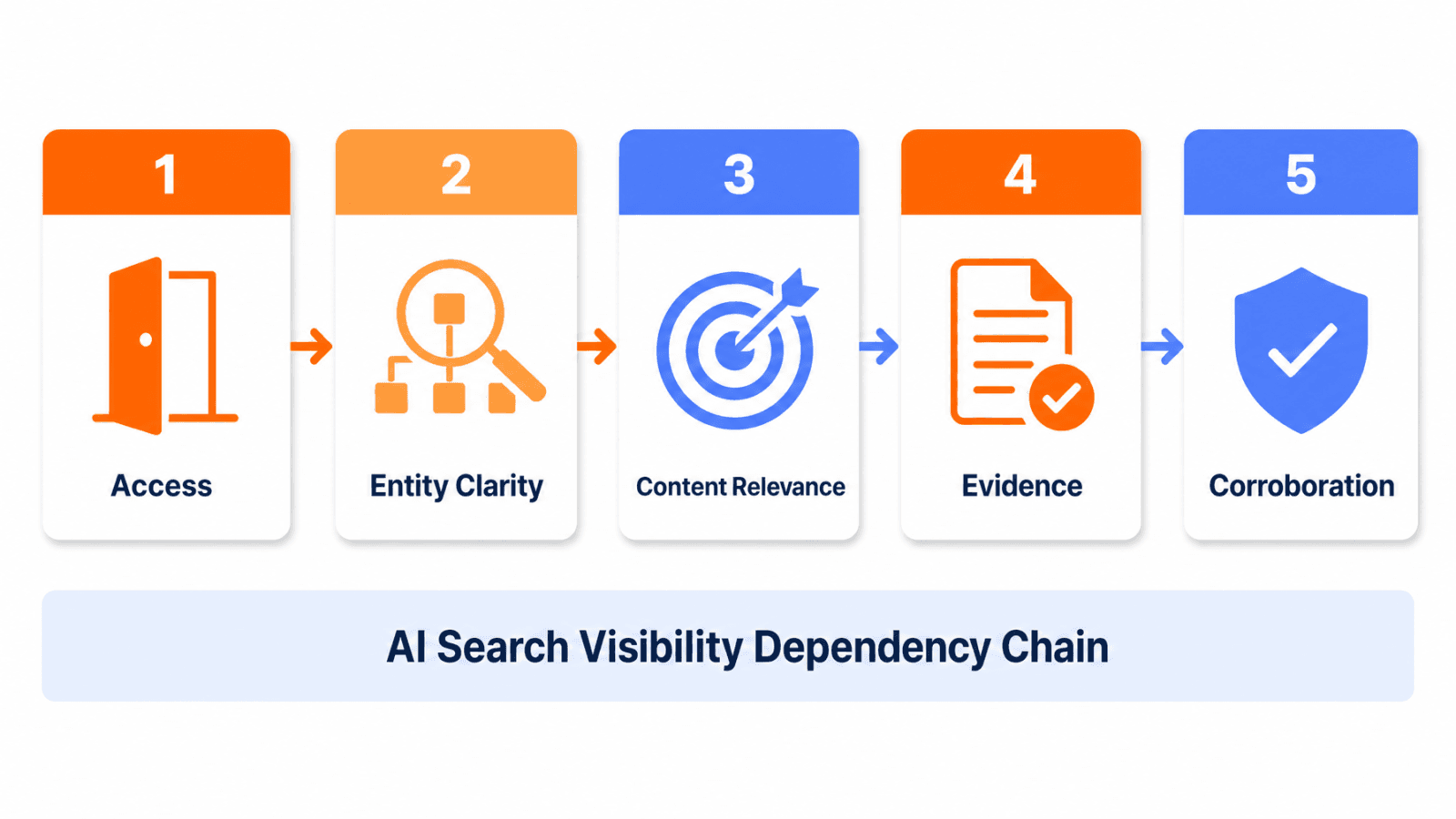
Source selection should be treated as a five-layer dependency chain, not a single ranking signal. OpenAI confirms web search and query rewriting behavior, but does not publish a universal weighting formula. The model below is an editorial framework based on official documentation and observed platform behavior; treat each layer as a diagnostic checkpoint, not a guaranteed output.
For a deeper breakdown of this process, the how ChatGPT picks sources guide covers the retrieval mechanics in full detail.
Discovery: Can ChatGPT Access Your Website?
A page must be publicly accessible and crawlable before it can be considered. OAI-SearchBot is OpenAI's dedicated search crawler for ChatGPT Search surfacing. It is separate from GPTBot, which has a training-related purpose. Robots.txt permissions, XML sitemaps, and external references from other indexed pages all affect whether a page enters the discovery layer.
Retrieval: Does the Page Match the User's Question?
Query rewriting means a single user prompt may generate multiple sub-queries. A page that targets one exact-match keyword phrase but does not address adjacent questions, follow-up concerns, or conversational phrasing is a partial match at best. One keyword is not a complete visibility strategy for conversational search intent.
Entity Understanding: Is Your Brand Easy to Identify?
ChatGPT builds a picture of an entity from the relationships it can extract: organization, product category, audience, features, authors, competitors, and claims. Inconsistent descriptions across your own pages create entity ambiguity. Conflicting category labels on a homepage versus a review profile make accurate representation harder, not easier.
Corroboration and Selection: Is the Answer Verifiable?
First-party pages establish product facts but cannot independently prove that a brand is the best, the most trusted, or the most widely used. Independent editorial mentions, third-party reviews, and credible community discussions provide corroboration that your own pages cannot supply. Absence of corroboration is a retrieval risk.
Step 1: Make Your Priority Pages Accessible to AI Search Crawlers
A page cannot be selected if the relevant system cannot access, parse, or retrieve it. This step is a prerequisite for everything else in the sequence.
OpenAI's publisher documentation identifies three separate user agents with distinct purposes:
Bot name | Purpose | Desired policy | How to verify |
|---|---|---|---|
OAI-SearchBot | ChatGPT Search surfacing and citation | Allow for public pages you want cited | Check robots.txt, server logs, IP range |
GPTBot | Model training data collection | Allow or disallow based on your content policy | Check robots.txt independently |
ChatGPT-User | User-triggered live page retrieval | Allow for public pages | Check server logs for on-demand requests |
Each setting is independent. You can allow OAI-SearchBot while disallowing GPTBot. Do not copy a blanket robots.txt rule without reviewing your site's specific content and policy requirements first.
For discovery and indexing, also review IndexNow and ChatGPT discovery as a complementary indexing signal.
How Do I Make My Website Visible to OAI-SearchBot?
OAI-SearchBot is the crawler that surfaces pages inside ChatGPT Search. Allowing it in your robots.txt is the access prerequisite, but access alone does not guarantee surfacing. Confirm HTTP 200 status on your target pages, verify no noindex tags are blocking indexability, check that your XML sitemap includes the correct canonical URLs, and review server or CDN logs to confirm the bot can reach your pages without being rate-limited or blocked by a WAF rule.
Check Google and Bing Crawlability, Indexability, and Rendering
ChatGPT Search draws on search index data, so pages that are not indexed by major search engines face a higher discovery barrier. Use Google Search Central's crawling and indexing guidance to confirm HTTP status, robots.txt permissions, rendered HTML, canonical URLs, and sitemap inclusion. Bing Webmaster Tools provides parallel crawl and index signals. Neither guarantees ChatGPT citation, but both reduce access-layer failure.
Use Sitemaps, Internal Links, and Structured Data Correctly
XML sitemaps are discovery hints, not index guarantees. Structured data clarifies page meaning for search systems when it accurately reflects visible content, but it does not guarantee ChatGPT citations. Internal links help crawlers find priority pages. Use schema markup for AI visibility as a supporting signal, not a replacement for crawlability and useful content.
Step 2: Create Content ChatGPT Can Understand and Cite
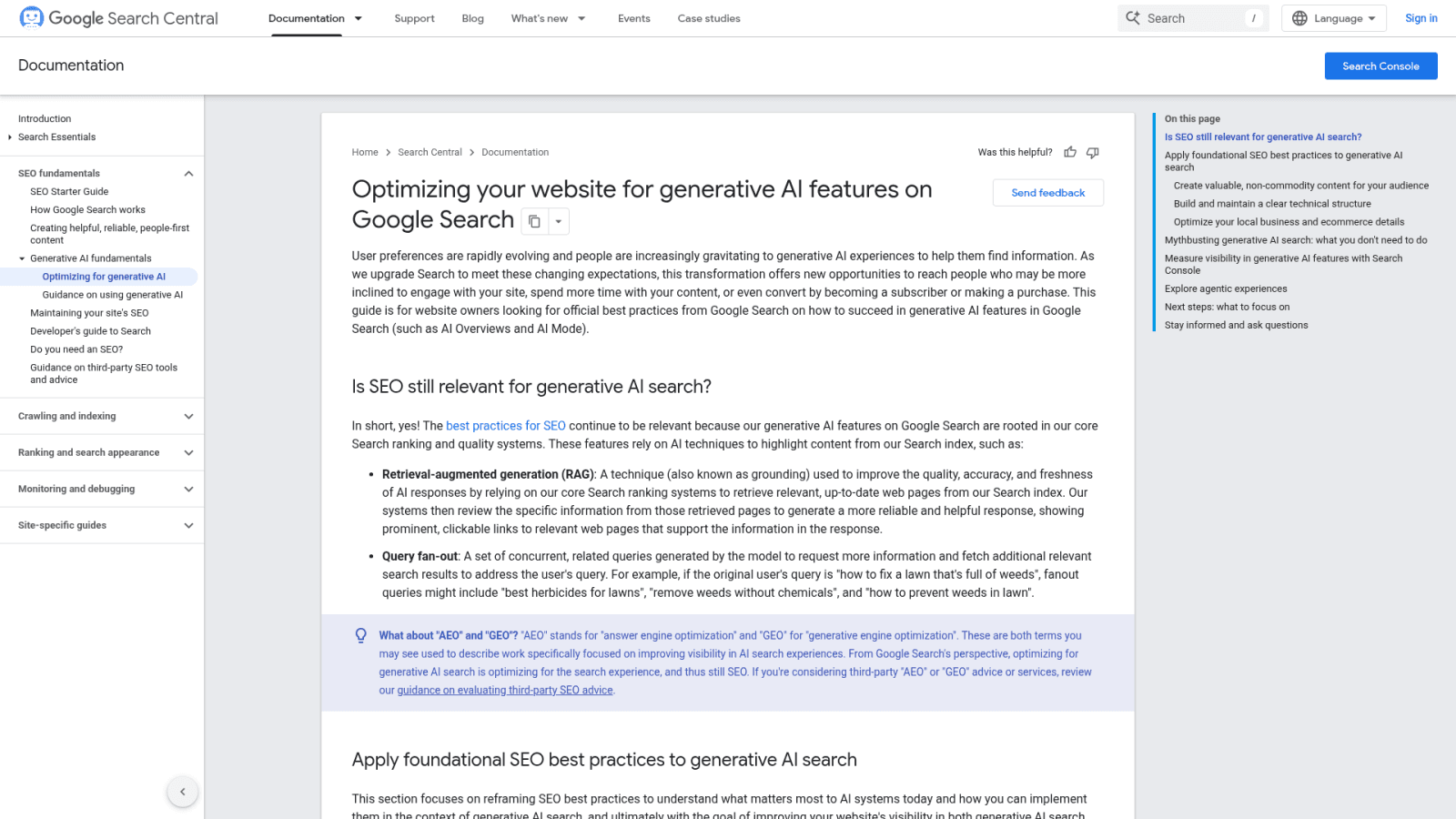
Citation-ready content gives a direct answer early, identifies the subject clearly, supports claims with evidence, and states its limitations honestly. Google's guidance on generative AI features confirms that useful, non-commodity, clearly organized content remains the foundation for AI feature eligibility.
Use this LLM citations checklist as a practical pre-publish review before marking any page ready for AI search.
Put the Direct Answer Before the Background
A vague opener like "Content marketing is an important discipline that covers many areas" tells a retrieval system very little. A precise opener like "Keytomic is an AI SEO automation platform that handles keyword research, topical planning, publishing, and AI visibility tracking in one workflow" establishes the entity and its predicates immediately. Short paragraphs, descriptive headings, definitions on first use, and tables for dense comparisons all reduce extraction friction.
Build Entity-Clear Pages Around One Primary Question
Each priority page should map to one clear subject-predicate-object relationship. For example: Keytomic (subject) provides (predicate) AI SEO automation for SMB founders and marketing teams (object). Define acronyms on first use. Connect claims to named products, dates, standards, and sources. Generative Engine Optimization (GEO) and Answer Engine Optimization (AEO) should each be defined on first use and linked to dedicated guides rather than summarized in passing.
Add Evidence, First-Hand Experience, and Honest Limitations
E-E-A-T signals require more than well-written copy. Verified examples, methodology notes, and source-backed explanations make pages more extractable and more trustworthy. If no first-hand proof exists for a claim, use third-person editorial voice and attribute the claim to a named source. Unverified performance claims and invented case studies are both accuracy and policy risks.
Step 3: Build Consistent Brand and Entity Signals
AI systems need consistent relationships between an organization, its product category, audience, features, authors, and claims. Inconsistency across pages is one of the most common and least diagnosed causes of poor AI visibility.
Run a consistency audit across these touchpoints before producing more content:
Homepage category label and product description
Product pages and feature descriptions
Author profile pages and linked credentials
Third-party review profiles (G2, Capterra, and similar)
Partner pages and external editorial mentions
Public documentation and blog content
Use the Same Category, Audience, and Product Description Everywhere
Keytomic should be consistently described as an AI SEO automation platform across all owned and earned properties. References to Generative Engine Optimization, Answer Engine Optimization, ChatGPT, Perplexity, and Google AI Overviews should use consistent naming conventions. Category mismatches between a homepage description and a review profile create entity ambiguity that hurts retrieval accuracy.
Earn Independent Corroboration Without Manufacturing It
Credible editorial mentions, real customer reviews, partner references, and relevant community discussions provide the third-party corroboration that first-party pages cannot supply independently. Do not pursue fake profiles, undisclosed paid placements, or manufactured testimonials. Those tactics violate platform policies and introduce accuracy risks that damage long-term visibility.
Make Author and Organization Signals Verifiable
Person and Organization structured data should only be added where the page visibly displays verified credentials, a confirmed byline, and a linked profile. Google's Article structured data guidance recommends author URLs or sameAs references that uniquely identify the author. Schema that does not match visible page content does not help and may be ignored.
Step 4: Map Conversational Search Intent to the Right Page
Teams should map real buyer prompts to the smallest page that fully answers the need, then consolidate overlapping intent. Publishing a new URL for every AI fan-out query is one of the fastest ways to create thin, cannibalizing content.
For a dedicated treatment of GEO strategy and what Answer Engine Optimization means in practice, the existing guide covers the full framework. For the deeper GEO methodology, Keytomic's GEO guide provides a structured approach to prompt-to-page planning.
Build a Buyer-Intent Prompt Universe
Start with 20 to 50 stable prompts across ChatGPT, Perplexity, Gemini, Google AI Overviews or AI Mode, and Microsoft Copilot. For each run, record the platform, date, login state, web-search mode, model or mode where available, cited URLs, competitor presence, and representation accuracy. Prompt results vary by session. One run is not a baseline.
Use Query Fan-Out Without Creating Thin Pages
Each subtopic should earn a page, heading, sentence, or rejection based on whether it satisfies a distinct user need not already covered. If a subtopic already has a dedicated Keytomic page with established intent, link to it instead of reproducing the content inline.
When Should You Consolidate Instead of Publishing a New URL?
Consolidate when two URLs target the same primary intent, when the existing page can absorb the subtopic without losing its core focus, or when the new URL would duplicate entity signals without adding new evidence. Refreshing a confirmed existing page avoids cannibalization and preserves accumulated trust signals.
How Should You Measure ChatGPT Visibility?
Reliable measurement requires repeated controlled prompt runs and separate tracking for each visibility outcome. ChatGPT automatically appends utm_source=chatgpt.com to referral URLs, as confirmed by OpenAI's publisher FAQ, which means GA4 can identify ChatGPT referral sessions without manual tagging.
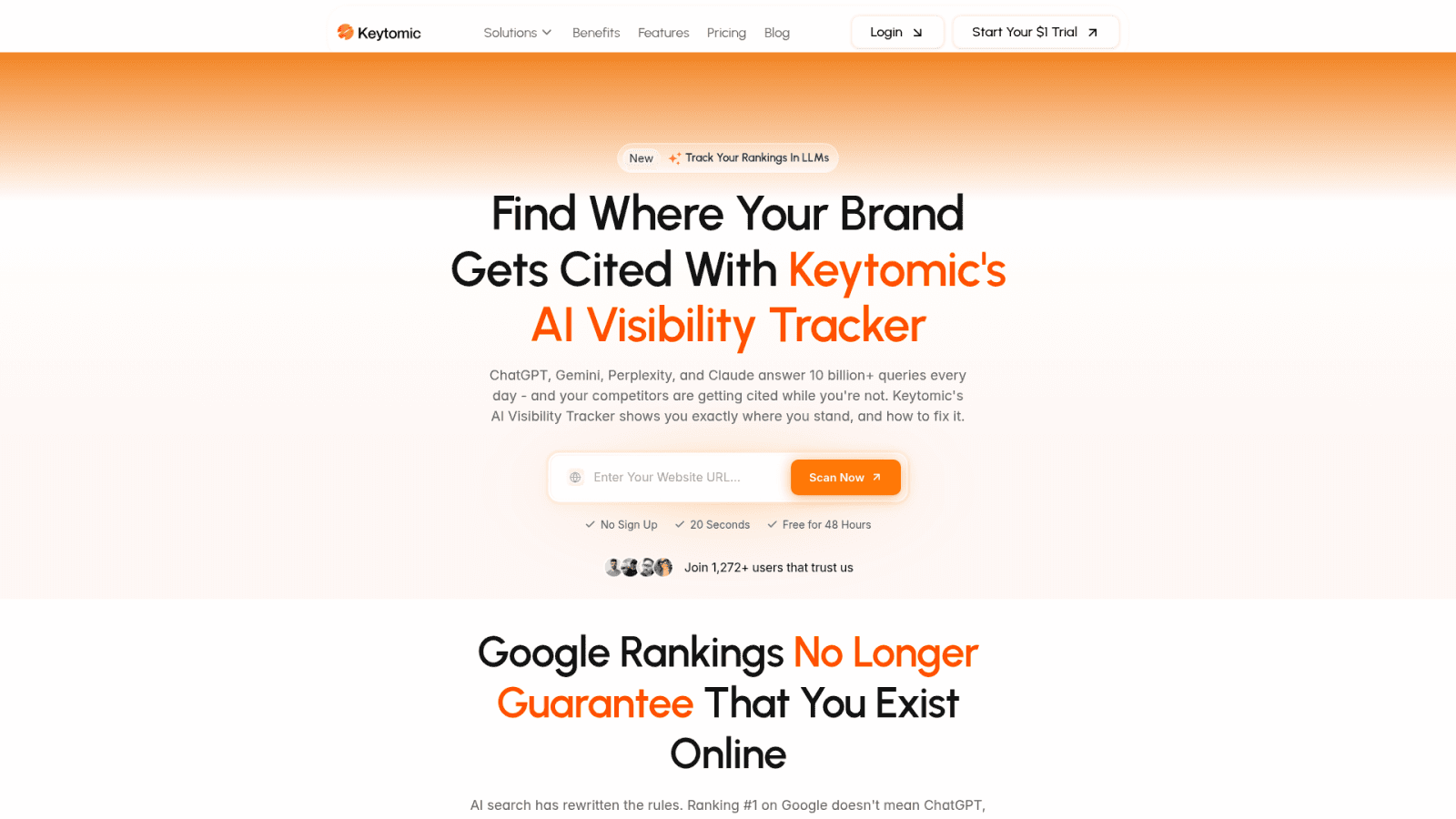
Use Keytomic's free AI visibility tracker to establish a repeatable prompt baseline and monitor citation changes over time. For a full source-level tracking methodology, the LLM citation tracking workflow details the data model.
Track Mentions, Citations, Recommendations, and Referrals Separately
Metric | Definition | Connected decision |
|---|---|---|
Mention | Brand name in response text | Entity clarity audit |
Citation | Source URL shown as reference | Access and content gap review |
Recommendation | Brand suggested for a use case | Corroboration and evidence gap review |
Referral session | Click-through from ChatGPT | Content and CTA quality review |
Representation accuracy | Description matches brand facts | Entity consistency audit |
Competitor presence | Competitor cited instead | Diagnostic gap analysis |
Connect each observation to an action: access fix, content revision, entity cleanup, corroboration activity, or measurement change.
Run Controlled Prompt Tests Across Platforms
Use a fixed prompt set and document conditions for every run: date, platform, location, login state, web-search mode, and model version where available. Compare ChatGPT, Perplexity, Gemini, Google AI Overviews, and Microsoft Copilot only when the surface is accessible to you. A correlation after a content update does not prove that the update caused the change.
What Should You Do When Competitors Are Cited Instead?
Run a gap diagnosis before changing content. The gap is usually in one of five layers: access (the page cannot be reached), entity clarity (the brand is not clearly described), content relevance (the page does not answer the prompt), evidence (claims are unsupported), or corroboration (no independent third-party references exist). Domain authority is rarely the complete explanation.
Why Keytomic Fits This AI Search Visibility Workflow
Keytomic is the brand publishing this guide and offers the workflow described here. Product availability and pricing should be verified on the current official pages before making purchasing decisions. Pricing and feature availability checked August 2026.
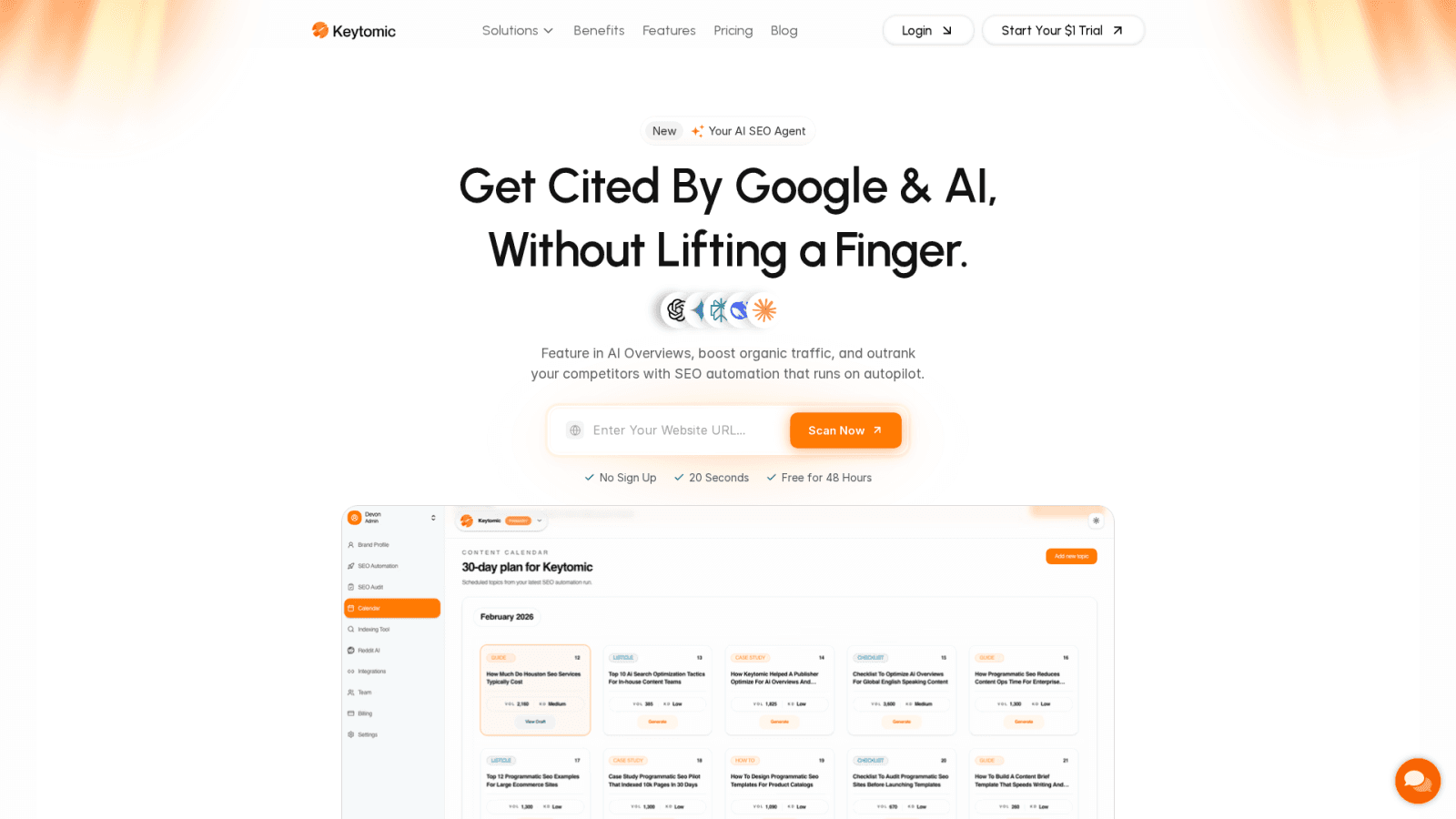
For teams that need one workflow across SEO planning, content production, publishing, indexing, and AI visibility monitoring, the Keytomic SEO automation platform combines these stages without requiring a separate tool for each step.
What Keytomic's Public Product Information Confirms
Based on information available on the Keytomic homepage, the platform publicly covers: AI keyword research, 30-day content calendar planning, auto-publishing, technical site audits, schema markup generation, AI visibility tracking, brand mention monitoring, multi-search indexing support, and Google Search Console and analytics references. Each of these maps to a specific stage in the AI search visibility dependency chain described in this guide.
From Prompt Research to Published and Measured Content
The practical workflow runs in sequence: research real buyer prompts, build a topical content plan around entity-clear pages, draft and review content with human editorial judgment, publish through the CMS, confirm indexing and crawler access, then measure citation outcomes against the baseline prompt set. Automation handles the repeatable steps. Human review determines strategy, editorial quality, and accuracy.
After reviewing the workflow, book a Keytomic demo to see how the platform maps to your specific visibility gaps.
When Keytomic Is Not the Right Fit
Teams that require fully manual editorial control across every content decision, independent platform-neutral consulting, or verified enterprise requirements with custom SLA and data governance terms should evaluate alternatives and request current product details before committing. Keytomic does not guarantee ChatGPT inclusion, cannot replace editorial judgment, and does not prove that a specific content change caused a visibility increase.
Common Mistakes That Prevent ChatGPT Visibility
Most visibility failures occur in the dependency chain before a page can be selected. Fix access problems before content problems. Fix entity problems before corroboration problems. Publishing more pages before diagnosing the gap is the most expensive mistake a team can make. For a full review of why AI content may not be indexed, the linked guide covers the most common indexing failure patterns.
Treating ChatGPT Like a Traditional SERP
Page-one Google ranking and ChatGPT citation are related but not interchangeable outcomes. A page can rank well in Google and never appear in ChatGPT Search if OAI-SearchBot is blocked, if the content lacks direct answers, or if the entity signals are inconsistent. The measurement methods, diagnostic tools, and optimization actions differ significantly.
Adding Schema Without Fixing the Visible Page
Structured data clarifies page meaning for search systems when it accurately matches visible content. It does not substitute for crawlability, useful content, or evidence. Adding FAQPage or Article markup to a thin page with unsupported claims does not improve retrieval eligibility. Validate all structured data with the Rich Results Test and Schema Markup Validator before publishing.
Publishing More Pages Before Diagnosing the Visibility Gap
The dependency chain runs in order: access, entity clarity, relevance, evidence, corroboration, measurement. Skipping diagnostic steps and publishing volume content creates thin, cannibalizing pages that dilute entity signals rather than strengthening them. Audit the existing URL inventory first.
Frequently Asked Questions About Ranking on ChatGPT
Can Websites Rank on ChatGPT?
Websites can be surfaced, cited, or linked in ChatGPT Search, but there is no universal public ranking position to target. Visibility depends on crawler access, content relevance, entity clarity, and corroboration.
Can You Rank Number One on ChatGPT?
No fixed number-one position exists in ChatGPT Search. OpenAI does not publish a public source-selection formula, and citation order varies by prompt, session, location, and model mode.
Does ChatGPT Use Google Rankings?
ChatGPT Search may use search providers and web retrieval that overlap with Google-indexed content, but there is no confirmed fixed relationship between Google rankings and ChatGPT citation. Treat them as related but separate outcomes.
How Does ChatGPT Choose Which Websites to Cite?
ChatGPT Search retrieves pages through OAI-SearchBot, matches them against the rewritten query, evaluates entity clarity and answer usefulness, and selects sources that can be corroborated. OpenAI does not publish the full weighting model.
Should I Allow OAI-SearchBot?
Allow OAI-SearchBot for public pages where you want your content eligible for ChatGPT Search surfacing. Review your site's content and training policies separately, then set GPTBot permissions independently based on your preferences.
Does Schema Markup Help ChatGPT Cite a Page?
Structured data can clarify page meaning for search systems when accurate and visible, but it is not a guaranteed ChatGPT citation factor. Fix crawlability and content quality first; use schema as a supporting signal.
How Long Does It Take to Appear in ChatGPT?
No reliable timeframe applies universally. Crawling, indexing, retrieval, source selection, model behavior, and prompt conditions all vary. Establish a repeatable baseline and measure change over time rather than expecting a fixed outcome window.
Do Backlinks Matter for ChatGPT Visibility?
Relevant third-party corroboration, including editorial mentions and credible references, may support discovery and trust in AI retrieval systems. Do not reduce the process to backlink quantity or domain authority score alone.
Is GEO Different From SEO?
Generative Engine Optimization shares technical SEO foundations such as crawlability, entity clarity, and structured content, but measures different outcomes: mentions, citations, recommendations, and referrals across AI platforms rather than keyword rankings. Read what Answer Engine Optimization means for a full comparison.
How Can I Track Whether ChatGPT Mentions My Brand?
Use controlled prompt testing with a fixed prompt set, citation URL tracking, GA4 referral analysis filtered to utm_source=chatgpt.com, and representation accuracy checks. Keytomic's free AI visibility tracker provides a repeatable tracking baseline across platforms.
What to Do Next If You Want ChatGPT Visibility
The recommended order is: audit access first, map buyer prompts to existing pages second, then establish a repeatable measurement baseline before making content changes.
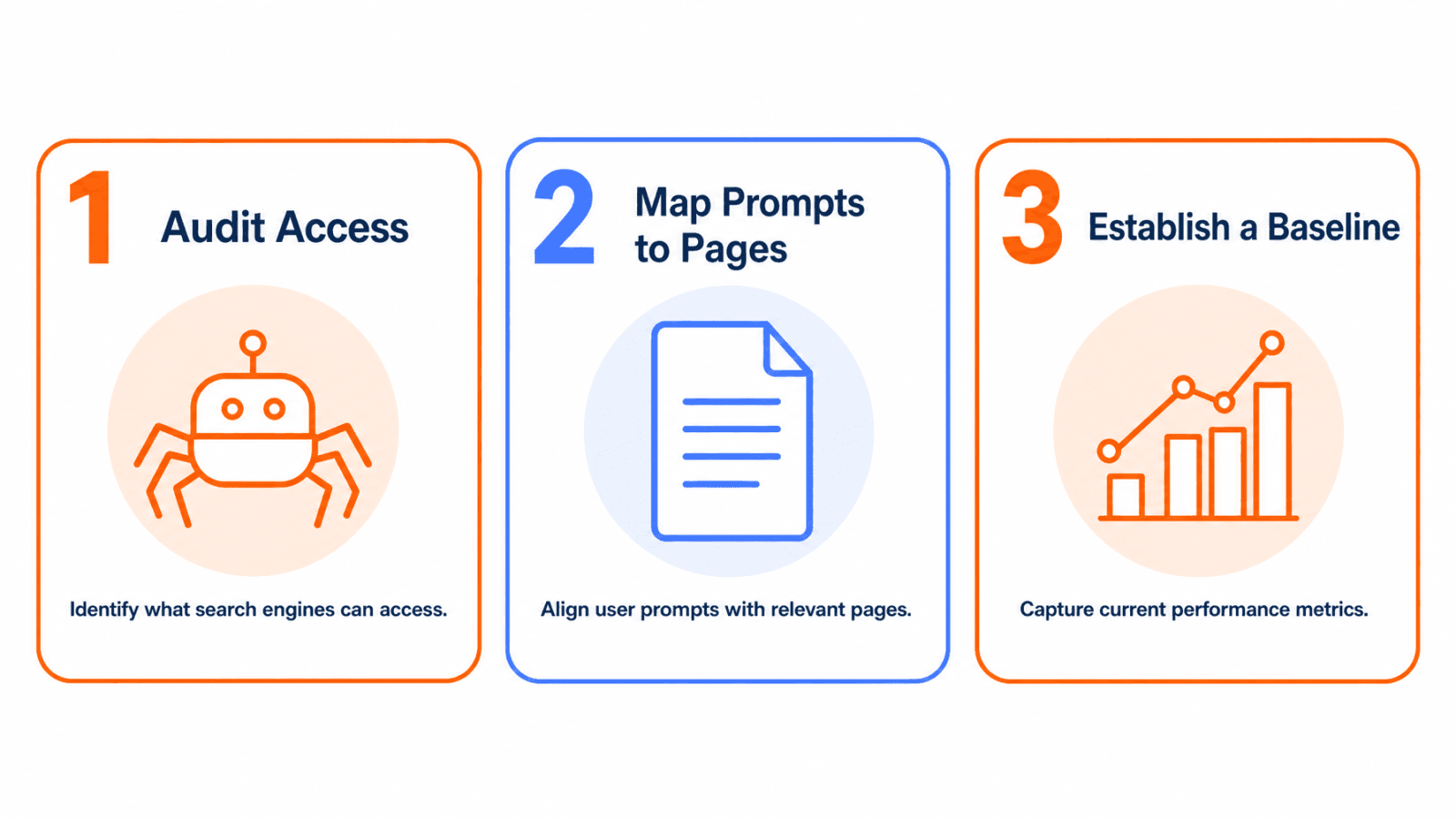
Audit access: Confirm OAI-SearchBot is allowed, target pages return HTTP 200, no noindex tags block priority content, and XML sitemaps include canonical URLs.
Map prompts to pages: Build a prompt universe of 20 to 50 buyer queries across ChatGPT, Perplexity, Gemini, and Google AI Mode. Match each prompt to the most relevant existing page or identify a genuine content gap.
Establish a repeatable baseline: Run controlled prompt tests, record cited URLs, competitor presence, and representation accuracy, then track changes against that baseline over 30 and 60 days.
If you want the full workflow handled in one platform, start a Keytomic free trial to connect keyword research, content planning, publishing, and AI visibility tracking in a single workflow.
You cannot rank number one on ChatGPT the way you target a fixed Google position. You can improve your chances of being mentioned, cited, or recommended by making your pages crawlable, entity-clear, directly relevant, and evidence-backed. Start by confirming crawler access, fixing indexability, publishing concise answers to real buyer prompts, and building consistent first-party and third-party brand signals. Measure repeated prompts, cited URLs, competitor presence, referrals, and representation accuracy. One screenshot is not a baseline.
You publish solid content, rank on page one for your category terms, and then a buyer opens ChatGPT and asks for a tool recommendation. A competitor appears. Your brand does not. That gap is not a fluke, and it is not solved by publishing more pages.
OpenAI's current publisher guidance distinguishes OAI-SearchBot from GPTBot and confirms that public websites can be surfaced in ChatGPT Search when accessible. The access layer is the first dependency, not the last. Most teams skip straight to content and miss the structural problems underneath.
The sequence that actually matters: diagnose access first, then content extraction, entity consistency, corroboration, prompt mapping, and measurement. Only then does automation compound your effort. That is the model this guide walks through.
What Does It Mean to Rank on ChatGPT?
ChatGPT does not expose a traditional ten-blue-links ranking page. There is no universal position one to target, no public scoring formula, and no guaranteed placement for any site. What exists instead is a set of visibility outcomes that are related but not interchangeable.
When ChatGPT Search is active, OpenAI's product documentation confirms that the system can search the web, rewrite queries into targeted searches, and return relevant source links. Not every ChatGPT response uses live web retrieval. Standard model responses draw on training data and do not cite live URLs.
Visibility outcome | What it means | How it is measured |
|---|---|---|
Mention | Brand name appears in the response text | Prompt sampling, brand monitoring |
Citation | Source URL is shown as a reference | Cited URL tracking, referral logs |
Recommendation | ChatGPT suggests your brand or product | Prompt sampling across query types |
Referral | A user clicks through to your site | GA4 utm_source=chatgpt.com sessions |
Representation accuracy | The description of your brand is correct | Manual review against source content |
The practical goal is not a fixed ChatGPT position; it is repeatable visibility for the prompts that matter to your buyers.
Can You Rank #1 on ChatGPT?
No public universal formula or guaranteed position exists. OpenAI does not publish a source-selection weighting system, and no independent method can reliably produce a consistent top citation across all users, platforms, locations, and query modes. You can improve your eligibility for retrieval and citation. You cannot guarantee a fixed rank.
Ranking, Mention, Citation, and Recommendation Are Different
Teams that treat all visibility outcomes as one blended score make poor diagnostic decisions. A brand mention without a citation URL provides no referral traffic. A cited URL that misrepresents your product does more harm than good. Separate measurement for each outcome connects observations to the right corrective action.
What Changes When ChatGPT Search Is Active?
When a user has web search enabled, ChatGPT may rewrite the prompt into one or more targeted queries, retrieve pages from a search index, and return source links alongside the answer. This surface is where access decisions matter most for citation eligibility. Non-search ChatGPT responses draw only on model training and do not surface live citations.
How ChatGPT Finds and Selects Sources
Source selection should be treated as a five-layer dependency chain, not a single ranking signal. OpenAI confirms web search and query rewriting behavior, but does not publish a universal weighting formula. The model below is an editorial framework based on official documentation and observed platform behavior; treat each layer as a diagnostic checkpoint, not a guaranteed output.
For a deeper breakdown of this process, the how ChatGPT picks sources guide covers the retrieval mechanics in full detail.
Discovery: Can ChatGPT Access Your Website?
A page must be publicly accessible and crawlable before it can be considered. OAI-SearchBot is OpenAI's dedicated search crawler for ChatGPT Search surfacing. It is separate from GPTBot, which has a training-related purpose. Robots.txt permissions, XML sitemaps, and external references from other indexed pages all affect whether a page enters the discovery layer.
Retrieval: Does the Page Match the User's Question?
Query rewriting means a single user prompt may generate multiple sub-queries. A page that targets one exact-match keyword phrase but does not address adjacent questions, follow-up concerns, or conversational phrasing is a partial match at best. One keyword is not a complete visibility strategy for conversational search intent.
Entity Understanding: Is Your Brand Easy to Identify?
ChatGPT builds a picture of an entity from the relationships it can extract: organization, product category, audience, features, authors, competitors, and claims. Inconsistent descriptions across your own pages create entity ambiguity. Conflicting category labels on a homepage versus a review profile make accurate representation harder, not easier.
Corroboration and Selection: Is the Answer Verifiable?
First-party pages establish product facts but cannot independently prove that a brand is the best, the most trusted, or the most widely used. Independent editorial mentions, third-party reviews, and credible community discussions provide corroboration that your own pages cannot supply. Absence of corroboration is a retrieval risk.
Step 1: Make Your Priority Pages Accessible to AI Search Crawlers
A page cannot be selected if the relevant system cannot access, parse, or retrieve it. This step is a prerequisite for everything else in the sequence.
OpenAI's publisher documentation identifies three separate user agents with distinct purposes:
Bot name | Purpose | Desired policy | How to verify |
|---|---|---|---|
OAI-SearchBot | ChatGPT Search surfacing and citation | Allow for public pages you want cited | Check robots.txt, server logs, IP range |
GPTBot | Model training data collection | Allow or disallow based on your content policy | Check robots.txt independently |
ChatGPT-User | User-triggered live page retrieval | Allow for public pages | Check server logs for on-demand requests |
Each setting is independent. You can allow OAI-SearchBot while disallowing GPTBot. Do not copy a blanket robots.txt rule without reviewing your site's specific content and policy requirements first.
For discovery and indexing, also review IndexNow and ChatGPT discovery as a complementary indexing signal.
How Do I Make My Website Visible to OAI-SearchBot?
OAI-SearchBot is the crawler that surfaces pages inside ChatGPT Search. Allowing it in your robots.txt is the access prerequisite, but access alone does not guarantee surfacing. Confirm HTTP 200 status on your target pages, verify no noindex tags are blocking indexability, check that your XML sitemap includes the correct canonical URLs, and review server or CDN logs to confirm the bot can reach your pages without being rate-limited or blocked by a WAF rule.
Check Google and Bing Crawlability, Indexability, and Rendering
ChatGPT Search draws on search index data, so pages that are not indexed by major search engines face a higher discovery barrier. Use Google Search Central's crawling and indexing guidance to confirm HTTP status, robots.txt permissions, rendered HTML, canonical URLs, and sitemap inclusion. Bing Webmaster Tools provides parallel crawl and index signals. Neither guarantees ChatGPT citation, but both reduce access-layer failure.
Use Sitemaps, Internal Links, and Structured Data Correctly
XML sitemaps are discovery hints, not index guarantees. Structured data clarifies page meaning for search systems when it accurately reflects visible content, but it does not guarantee ChatGPT citations. Internal links help crawlers find priority pages. Use schema markup for AI visibility as a supporting signal, not a replacement for crawlability and useful content.
Step 2: Create Content ChatGPT Can Understand and Cite
Citation-ready content gives a direct answer early, identifies the subject clearly, supports claims with evidence, and states its limitations honestly. Google's guidance on generative AI features confirms that useful, non-commodity, clearly organized content remains the foundation for AI feature eligibility.
Use this LLM citations checklist as a practical pre-publish review before marking any page ready for AI search.
Put the Direct Answer Before the Background
A vague opener like "Content marketing is an important discipline that covers many areas" tells a retrieval system very little. A precise opener like "Keytomic is an AI SEO automation platform that handles keyword research, topical planning, publishing, and AI visibility tracking in one workflow" establishes the entity and its predicates immediately. Short paragraphs, descriptive headings, definitions on first use, and tables for dense comparisons all reduce extraction friction.
Build Entity-Clear Pages Around One Primary Question
Each priority page should map to one clear subject-predicate-object relationship. For example: Keytomic (subject) provides (predicate) AI SEO automation for SMB founders and marketing teams (object). Define acronyms on first use. Connect claims to named products, dates, standards, and sources. Generative Engine Optimization (GEO) and Answer Engine Optimization (AEO) should each be defined on first use and linked to dedicated guides rather than summarized in passing.
Add Evidence, First-Hand Experience, and Honest Limitations
E-E-A-T signals require more than well-written copy. Verified examples, methodology notes, and source-backed explanations make pages more extractable and more trustworthy. If no first-hand proof exists for a claim, use third-person editorial voice and attribute the claim to a named source. Unverified performance claims and invented case studies are both accuracy and policy risks.
Step 3: Build Consistent Brand and Entity Signals
AI systems need consistent relationships between an organization, its product category, audience, features, authors, and claims. Inconsistency across pages is one of the most common and least diagnosed causes of poor AI visibility.
Run a consistency audit across these touchpoints before producing more content:
Homepage category label and product description
Product pages and feature descriptions
Author profile pages and linked credentials
Third-party review profiles (G2, Capterra, and similar)
Partner pages and external editorial mentions
Public documentation and blog content
Use the Same Category, Audience, and Product Description Everywhere
Keytomic should be consistently described as an AI SEO automation platform across all owned and earned properties. References to Generative Engine Optimization, Answer Engine Optimization, ChatGPT, Perplexity, and Google AI Overviews should use consistent naming conventions. Category mismatches between a homepage description and a review profile create entity ambiguity that hurts retrieval accuracy.
Earn Independent Corroboration Without Manufacturing It
Credible editorial mentions, real customer reviews, partner references, and relevant community discussions provide the third-party corroboration that first-party pages cannot supply independently. Do not pursue fake profiles, undisclosed paid placements, or manufactured testimonials. Those tactics violate platform policies and introduce accuracy risks that damage long-term visibility.
Make Author and Organization Signals Verifiable
Person and Organization structured data should only be added where the page visibly displays verified credentials, a confirmed byline, and a linked profile. Google's Article structured data guidance recommends author URLs or sameAs references that uniquely identify the author. Schema that does not match visible page content does not help and may be ignored.
Step 4: Map Conversational Search Intent to the Right Page
Teams should map real buyer prompts to the smallest page that fully answers the need, then consolidate overlapping intent. Publishing a new URL for every AI fan-out query is one of the fastest ways to create thin, cannibalizing content.
For a dedicated treatment of GEO strategy and what Answer Engine Optimization means in practice, the existing guide covers the full framework. For the deeper GEO methodology, Keytomic's GEO guide provides a structured approach to prompt-to-page planning.
Build a Buyer-Intent Prompt Universe
Start with 20 to 50 stable prompts across ChatGPT, Perplexity, Gemini, Google AI Overviews or AI Mode, and Microsoft Copilot. For each run, record the platform, date, login state, web-search mode, model or mode where available, cited URLs, competitor presence, and representation accuracy. Prompt results vary by session. One run is not a baseline.
Use Query Fan-Out Without Creating Thin Pages
Each subtopic should earn a page, heading, sentence, or rejection based on whether it satisfies a distinct user need not already covered. If a subtopic already has a dedicated Keytomic page with established intent, link to it instead of reproducing the content inline.
When Should You Consolidate Instead of Publishing a New URL?
Consolidate when two URLs target the same primary intent, when the existing page can absorb the subtopic without losing its core focus, or when the new URL would duplicate entity signals without adding new evidence. Refreshing a confirmed existing page avoids cannibalization and preserves accumulated trust signals.
How Should You Measure ChatGPT Visibility?
Reliable measurement requires repeated controlled prompt runs and separate tracking for each visibility outcome. ChatGPT automatically appends utm_source=chatgpt.com to referral URLs, as confirmed by OpenAI's publisher FAQ, which means GA4 can identify ChatGPT referral sessions without manual tagging.
Use Keytomic's free AI visibility tracker to establish a repeatable prompt baseline and monitor citation changes over time. For a full source-level tracking methodology, the LLM citation tracking workflow details the data model.
Track Mentions, Citations, Recommendations, and Referrals Separately
Metric | Definition | Connected decision |
|---|---|---|
Mention | Brand name in response text | Entity clarity audit |
Citation | Source URL shown as reference | Access and content gap review |
Recommendation | Brand suggested for a use case | Corroboration and evidence gap review |
Referral session | Click-through from ChatGPT | Content and CTA quality review |
Representation accuracy | Description matches brand facts | Entity consistency audit |
Competitor presence | Competitor cited instead | Diagnostic gap analysis |
Connect each observation to an action: access fix, content revision, entity cleanup, corroboration activity, or measurement change.
Run Controlled Prompt Tests Across Platforms
Use a fixed prompt set and document conditions for every run: date, platform, location, login state, web-search mode, and model version where available. Compare ChatGPT, Perplexity, Gemini, Google AI Overviews, and Microsoft Copilot only when the surface is accessible to you. A correlation after a content update does not prove that the update caused the change.
What Should You Do When Competitors Are Cited Instead?
Run a gap diagnosis before changing content. The gap is usually in one of five layers: access (the page cannot be reached), entity clarity (the brand is not clearly described), content relevance (the page does not answer the prompt), evidence (claims are unsupported), or corroboration (no independent third-party references exist). Domain authority is rarely the complete explanation.
Why Keytomic Fits This AI Search Visibility Workflow
Keytomic is the brand publishing this guide and offers the workflow described here. Product availability and pricing should be verified on the current official pages before making purchasing decisions. Pricing and feature availability checked August 2026.
For teams that need one workflow across SEO planning, content production, publishing, indexing, and AI visibility monitoring, the Keytomic SEO automation platform combines these stages without requiring a separate tool for each step.
What Keytomic's Public Product Information Confirms
Based on information available on the Keytomic homepage, the platform publicly covers: AI keyword research, 30-day content calendar planning, auto-publishing, technical site audits, schema markup generation, AI visibility tracking, brand mention monitoring, multi-search indexing support, and Google Search Console and analytics references. Each of these maps to a specific stage in the AI search visibility dependency chain described in this guide.
From Prompt Research to Published and Measured Content
The practical workflow runs in sequence: research real buyer prompts, build a topical content plan around entity-clear pages, draft and review content with human editorial judgment, publish through the CMS, confirm indexing and crawler access, then measure citation outcomes against the baseline prompt set. Automation handles the repeatable steps. Human review determines strategy, editorial quality, and accuracy.
After reviewing the workflow, book a Keytomic demo to see how the platform maps to your specific visibility gaps.
When Keytomic Is Not the Right Fit
Teams that require fully manual editorial control across every content decision, independent platform-neutral consulting, or verified enterprise requirements with custom SLA and data governance terms should evaluate alternatives and request current product details before committing. Keytomic does not guarantee ChatGPT inclusion, cannot replace editorial judgment, and does not prove that a specific content change caused a visibility increase.
Common Mistakes That Prevent ChatGPT Visibility
Most visibility failures occur in the dependency chain before a page can be selected. Fix access problems before content problems. Fix entity problems before corroboration problems. Publishing more pages before diagnosing the gap is the most expensive mistake a team can make. For a full review of why AI content may not be indexed, the linked guide covers the most common indexing failure patterns.
Treating ChatGPT Like a Traditional SERP
Page-one Google ranking and ChatGPT citation are related but not interchangeable outcomes. A page can rank well in Google and never appear in ChatGPT Search if OAI-SearchBot is blocked, if the content lacks direct answers, or if the entity signals are inconsistent. The measurement methods, diagnostic tools, and optimization actions differ significantly.
Adding Schema Without Fixing the Visible Page
Structured data clarifies page meaning for search systems when it accurately matches visible content. It does not substitute for crawlability, useful content, or evidence. Adding FAQPage or Article markup to a thin page with unsupported claims does not improve retrieval eligibility. Validate all structured data with the Rich Results Test and Schema Markup Validator before publishing.
Publishing More Pages Before Diagnosing the Visibility Gap
The dependency chain runs in order: access, entity clarity, relevance, evidence, corroboration, measurement. Skipping diagnostic steps and publishing volume content creates thin, cannibalizing pages that dilute entity signals rather than strengthening them. Audit the existing URL inventory first.
Frequently Asked Questions About Ranking on ChatGPT
Can Websites Rank on ChatGPT?
Websites can be surfaced, cited, or linked in ChatGPT Search, but there is no universal public ranking position to target. Visibility depends on crawler access, content relevance, entity clarity, and corroboration.
Can You Rank Number One on ChatGPT?
No fixed number-one position exists in ChatGPT Search. OpenAI does not publish a public source-selection formula, and citation order varies by prompt, session, location, and model mode.
Does ChatGPT Use Google Rankings?
ChatGPT Search may use search providers and web retrieval that overlap with Google-indexed content, but there is no confirmed fixed relationship between Google rankings and ChatGPT citation. Treat them as related but separate outcomes.
How Does ChatGPT Choose Which Websites to Cite?
ChatGPT Search retrieves pages through OAI-SearchBot, matches them against the rewritten query, evaluates entity clarity and answer usefulness, and selects sources that can be corroborated. OpenAI does not publish the full weighting model.
Should I Allow OAI-SearchBot?
Allow OAI-SearchBot for public pages where you want your content eligible for ChatGPT Search surfacing. Review your site's content and training policies separately, then set GPTBot permissions independently based on your preferences.
Does Schema Markup Help ChatGPT Cite a Page?
Structured data can clarify page meaning for search systems when accurate and visible, but it is not a guaranteed ChatGPT citation factor. Fix crawlability and content quality first; use schema as a supporting signal.
How Long Does It Take to Appear in ChatGPT?
No reliable timeframe applies universally. Crawling, indexing, retrieval, source selection, model behavior, and prompt conditions all vary. Establish a repeatable baseline and measure change over time rather than expecting a fixed outcome window.
Do Backlinks Matter for ChatGPT Visibility?
Relevant third-party corroboration, including editorial mentions and credible references, may support discovery and trust in AI retrieval systems. Do not reduce the process to backlink quantity or domain authority score alone.
Is GEO Different From SEO?
Generative Engine Optimization shares technical SEO foundations such as crawlability, entity clarity, and structured content, but measures different outcomes: mentions, citations, recommendations, and referrals across AI platforms rather than keyword rankings. Read what Answer Engine Optimization means for a full comparison.
How Can I Track Whether ChatGPT Mentions My Brand?
Use controlled prompt testing with a fixed prompt set, citation URL tracking, GA4 referral analysis filtered to utm_source=chatgpt.com, and representation accuracy checks. Keytomic's free AI visibility tracker provides a repeatable tracking baseline across platforms.
What to Do Next If You Want ChatGPT Visibility
The recommended order is: audit access first, map buyer prompts to existing pages second, then establish a repeatable measurement baseline before making content changes.
Audit access: Confirm OAI-SearchBot is allowed, target pages return HTTP 200, no noindex tags block priority content, and XML sitemaps include canonical URLs.
Map prompts to pages: Build a prompt universe of 20 to 50 buyer queries across ChatGPT, Perplexity, Gemini, and Google AI Mode. Match each prompt to the most relevant existing page or identify a genuine content gap.
Establish a repeatable baseline: Run controlled prompt tests, record cited URLs, competitor presence, and representation accuracy, then track changes against that baseline over 30 and 60 days.
If you want the full workflow handled in one platform, start a Keytomic free trial to connect keyword research, content planning, publishing, and AI visibility tracking in a single workflow.
FREE AI Visibility Audit

Is Your Brand Visible in AI Searches?
Free AI Visibility Audit → See where you appear (and where competitors appear).
Read More From Our Blog...
12 Best AI Tools for Ecommerce SEO and AI Visibility in 2026
Ecommerce Category Page SEO: Best Practices for 2026
Best AI Tools for Increasing Visibility in LLMs 2026

Start Getting Cited By Google
and AI Searches on Auto-Pilot


AI SEO agents research keywords, write & publish ranking content, track AI citations, and grow your brand visibility — while you focus on the business.


Trusted by 300+ users
4.5
Start Getting Cited By Google
and AI Searches on Auto-Pilot
Automate your SEO to rank faster, and showing up in AI search, without the guesswork.
Trusted by 300+ users
4.5
Start Getting Cited By Google
and AI Searches on Auto-Pilot
AI SEO agents research keywords, write & publish ranking content, track AI citations, and grow your brand visibility — while you focus on the business.
Trusted by 300+ users