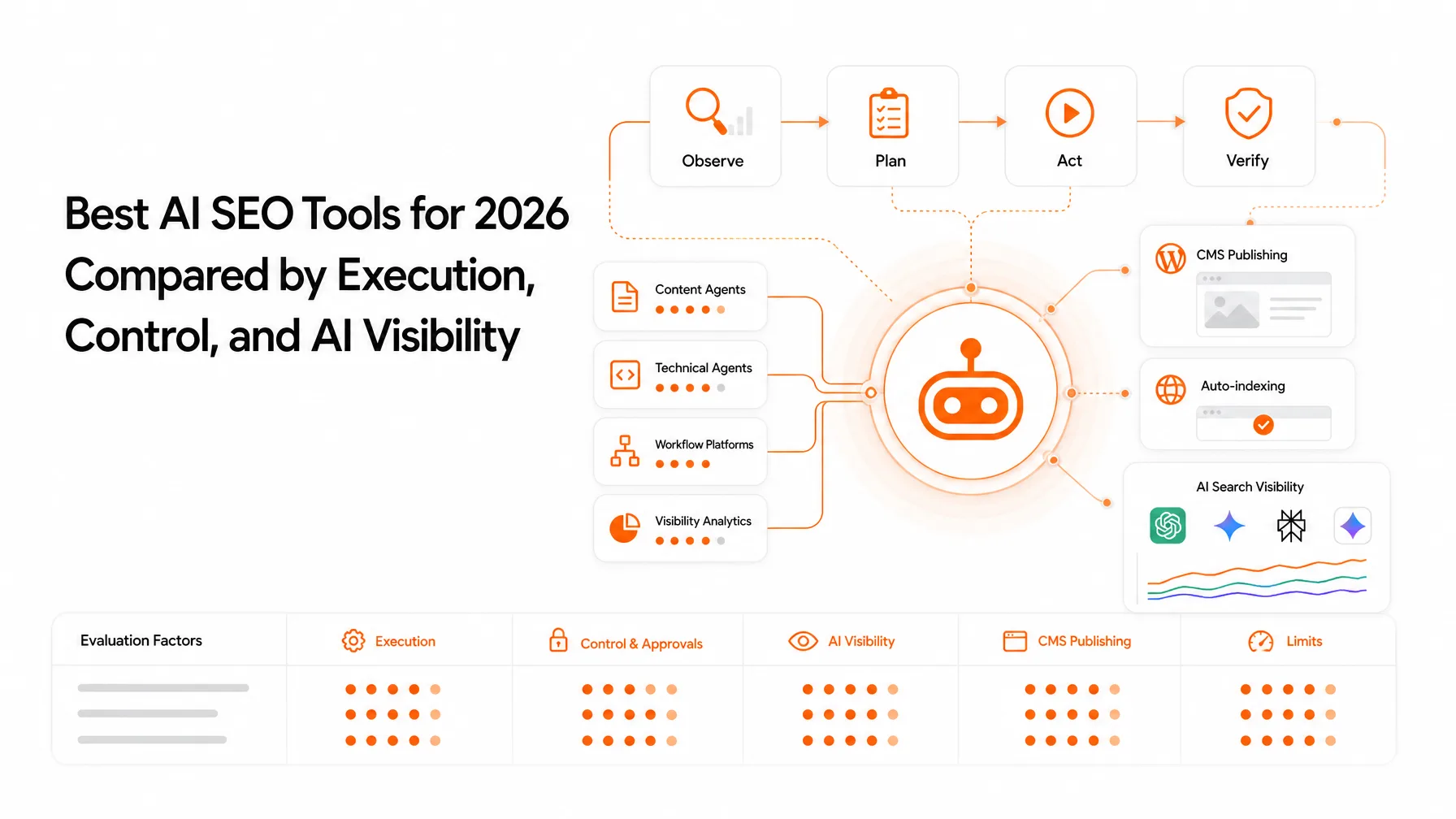
Agentic SEO is the use of AI agents to plan, execute, check, and improve connected SEO tasks toward a defined goal. Unlike rule-based SEO automation or a standalone AI writing tool, an agent can choose the next step, use connected data, react to new findings, and hand uncertain decisions back to a person.
You've got keyword research in one tab, briefs in a doc, a CMS login somewhere else, an audit export nobody has opened, and a report due Friday. The hours don't vanish in the work itself; they vanish in the handoffs. That handoff problem is what agentic workflows try to fix.
If you're searching for this term, you're probably not asking whether AI can write a blog post. You want to know whether software can connect the work, pick sensible next steps, and still leave you in control.
This guide separates SEO automation, AI-assisted tasks, and agentic workflows, then covers capabilities, limits, governance, and how to choose what to automate first. It's written for founders, lean marketing teams, and agencies rather than enterprise SEO departments, so expect opinions on what to automate and what to keep human.
What Agentic SEO Means
Agentic SEO is an emerging industry term for AI agents that work toward a goal, sequence connected tasks, use tools and data, observe results, and route uncertain calls to a person. Google doesn't define it. Google's guidance on generative AI search says that, from its perspective, optimizing for AI search is still SEO.
What can an AI SEO agent actually do?
It depends on what it's connected to. With the right access, an agent can:
Pull Search Console and SERP data to spot opportunities
Group keywords into topical maps and flag intent mismatches
Prepare briefs and drafts for human review
Suggest internal links and run technical audit checks
Queue pages for publishing and track visibility afterward
Capabilities vary by product and setup, so don't assume one vendor's feature list describes every agent.
Agentic SEO vs SEO automation and AI writing tools
A writing tool stops when the text is generated. Rule-based automation stops when its rules run out. An agent carries a goal across several steps, which is why governance matters more than the model itself.
What agentic SEO is not
Not a ranking guarantee. Google says third-party tools can't guarantee rankings.
Not a separate ranking system for AI search.
Not hands-off publishing.
Not a replacement for strategy.
How AI SEO Agents Work
A prompt gives you one output. A workflow gives you a chain of decisions, tool calls, and checks, and that's the gap agents try to close.
From a business goal to a sequence of SEO tasks
Most agent workflows follow five steps:
Goal: a person sets the outcome, such as refreshing pages that are losing clicks.
Context: the agent gathers Search Console data, SERP data, site structure, and brand rules.
Plan: it chooses or follows a sequence of tasks.
Execution: it uses connected tools to research, draft, or prepare changes.
Validation and handoff: it checks the output and asks for approval when risk is material.
Not every agent has memory, browser access, or API access, so check what a given product actually does.
The plan, act, observe, and revise loop
The core pattern is plan, act, observe, revise. Search Engine Land's agentic SEO guide describes connected subtasks, decision points, and human review inside that kind of loop.
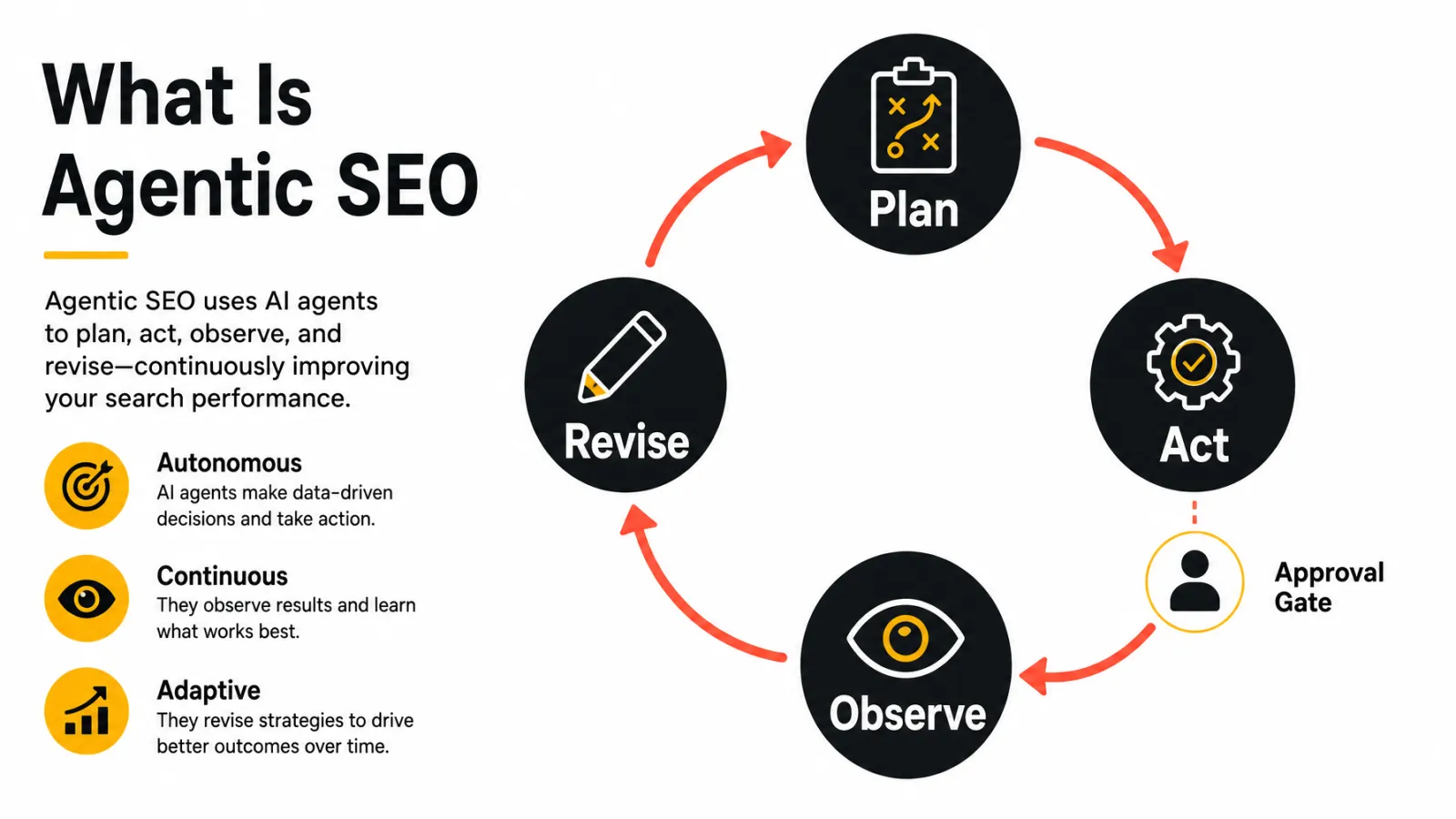
Here's a simple example. The agent notices a page with strong impressions and weak clicks, pulls SERP data, drafts a brief, prepares a refresh, validates the links, and queues it for approval. Then it watches what changed and adjusts the next step.
Where human approval and quality gates belong
Put a permissions checkpoint after execution and before publishing. The agent should return an evidence bundle: sources used, changes proposed, checks passed, and open questions. If it can't produce that bundle, it pauses.
Core Components of an Agentic SEO Workflow
Each component feeds the next. Research shapes topical planning, planning shapes page selection, page selection shapes content, and publishing without measurement stops the learning. For a wider map, see these SEO automation workflows worth automating.
Opportunity discovery, keyword research, and topical mapping
Agent action: collect keyword and SERP data, cluster by intent, and draft a topical map.
Human check: confirm the topics fit business goals and won't cannibalize existing pages.
Content planning, creation, internal linking, and CMS publishing
Agent action: prepare briefs, draft content, suggest internal links, and format pages for the CMS.
Human check: verify facts, voice, and claims, then approve.
Publishing is the riskiest step, so keep it behind approval. Keytomic documents a WordPress SEO automation workflow as one example of connected publishing.
Technical audits, indexing signals, and AI search visibility monitoring
Agent action: run scheduled audits, flag crawlability issues, and monitor indexing signals and visibility.
Human check: prioritize fixes and validate anything touching redirects or canonicals.
Meeting technical requirements doesn't guarantee crawling, indexing, or serving. Treat indexing as something to monitor, not something to promise.
Can agentic SEO support Google AI Overviews, ChatGPT, and Perplexity?
It can support the work of creating crawlable, useful, well-structured content and monitoring visibility, but no system can guarantee inclusion or citation. Google's guide to generative AI search optimization treats this as part of SEO and says llms.txt isn't needed for Google Search.
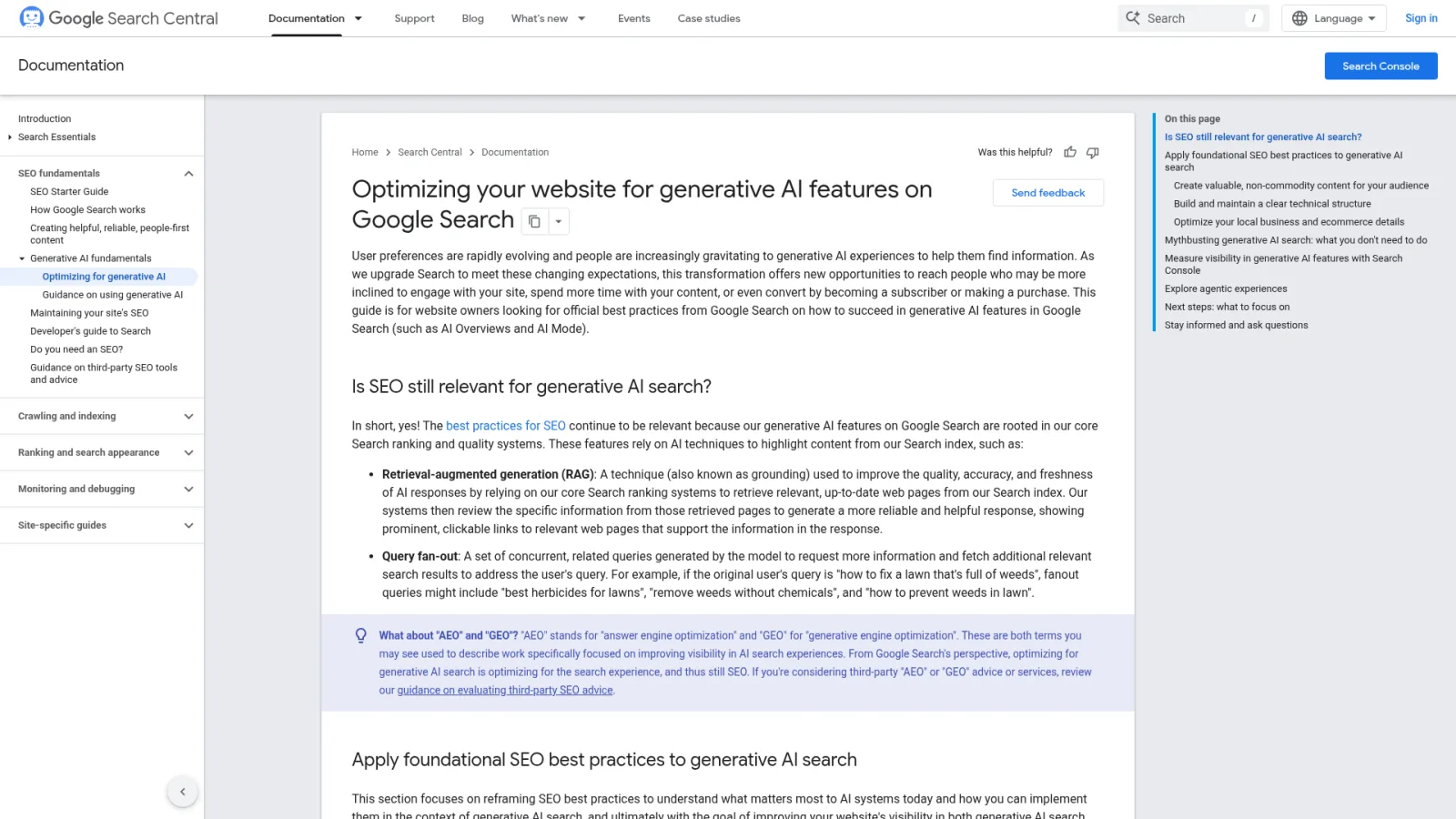
For measurement, separate what Search Console can report from third-party estimates of mentions. Our AI search visibility workflow post covers monitoring in more detail.
Agentic SEO vs Traditional SEO Automation
Agentic SEO differs from SEO automation in how work starts and who decides: rules run when triggered, while agents choose the next permitted step toward a goal.
Model | Starts when | Who decides | Adapts to new data | Good fit by risk |
|---|---|---|---|---|
Manual SEO | A person starts the task | A person | Yes, but slowly | High-stakes strategy and claims |
Rule-based automation | A schedule or trigger fires | The rule author | Only within coded branches | Repeatable, reversible checks |
AI-assisted SEO | A person prompts the tool | A person, using AI output | Per prompt | Drafts and suggestions |
Agentic SEO | A goal or a detected change | The agent within permissions, plus approvals | Yes, across steps | Multi-step investigation and drafting |
Rule-based automation still anchors one end of this spectrum. Agentic SEO extends automation; it doesn't replace deterministic systems.
Which decisions should an agent make?
Let agents choose which data to pull, which pages to investigate, and which draft to prepare next. Keep strategic direction, factual claims, redirects, canonical changes, and publishing approval with people.
Where deterministic rules are still better
If a task is repeatable, reversible, and easy to check, a plain rule is cheaper and more predictable than an agent. Think scheduled crawls, broken-link alerts, and report exports. I'd rather have a boring rule I can trust than a clever agent I have to babysit.
Benefits and Limitations of Agentic SEO
Where agentic workflows reduce repetitive work
Fewer manual handoffs between research, briefs, and the CMS
Faster investigation of why a page is slipping
Repeatable workflows instead of one-off scrambles
A clearer view of the next action
More consistent QA checks
I'm not quoting time-saved percentages here, because they depend entirely on your starting process.
Where hallucinations, bad inputs, and overreach create risk
Agents can reason incorrectly, work from stale data, misread a source, or act with permissions that are too broad. Google's guidance on generative AI content focuses on accuracy, originality, and user value rather than banning AI. Its spam policies cover scaled content made mainly to manipulate rankings.
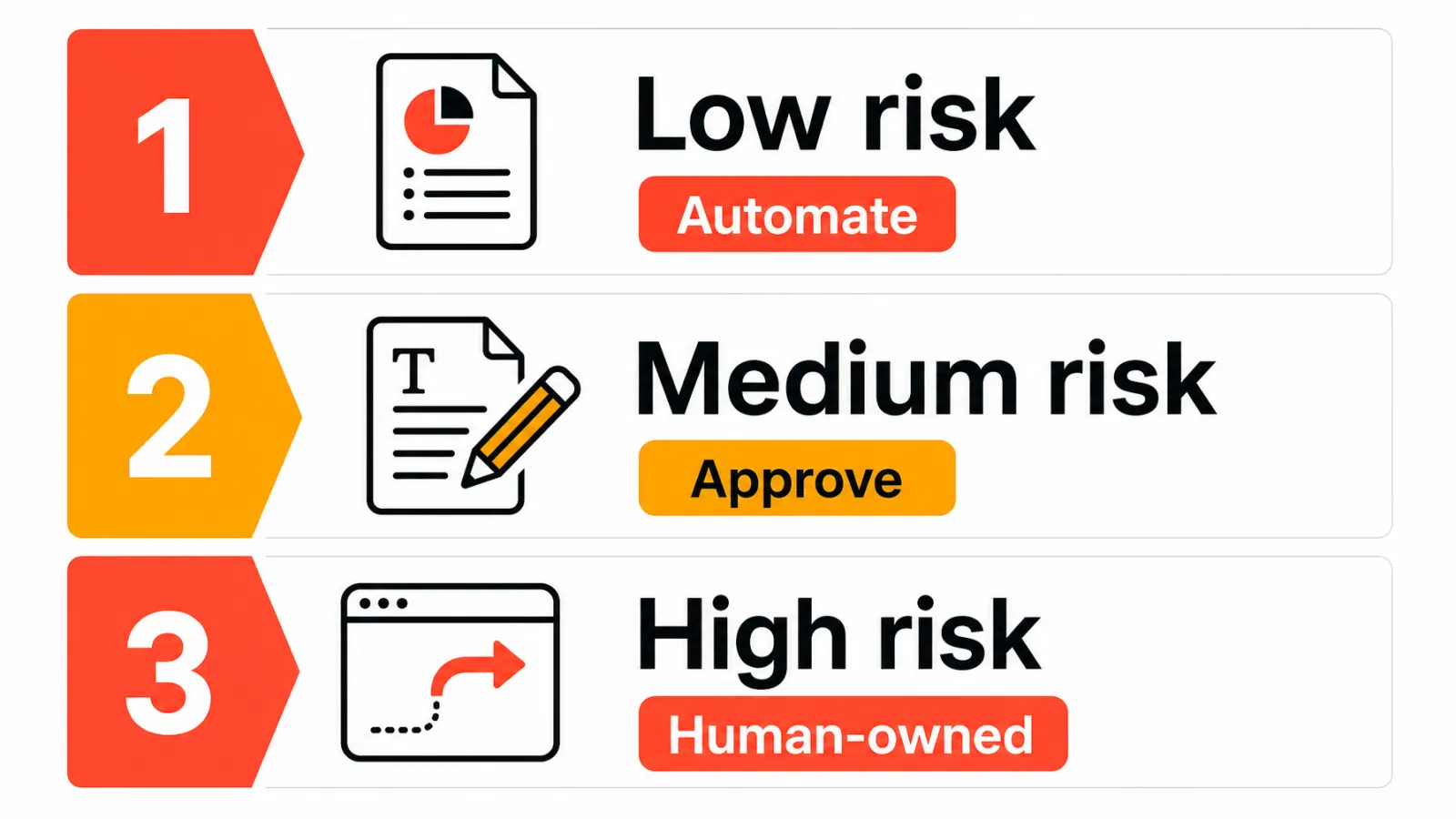
A simple risk ladder helps:
Low risk, automate: reporting, issue detection, and data collection
Medium risk, approve: draft preparation, internal-link suggestions, and refresh recommendations
High risk, human-owned: redirects, canonical changes, legal, medical, or pricing claims, and direct publishing
Is agentic SEO safe to run without human approval?
It is safer to use agentic SEO with human approval for decisions that affect published claims, URLs, redirects, or brand reputation. Low-risk, reversible tasks can run with lighter review, but log them anyway. Low-value pages published at scale create the policy risk, not the use of AI itself.
How to Build an Agentic SEO Workflow
Start with one narrow, reversible workflow instead of automating the whole site. Each step ends with a short checklist.
Define the outcome, scope, and success signals
Pick one outcome, such as refreshing pages that are losing clicks. Write down what's in scope and what the agent must never touch.
One goal, one content type
Success signals chosen before launch
A stop condition: when the agent pauses or returns evidence instead of acting
Connect the right data sources and tools
An agent is only as good as its inputs. Typical sources include Google Search Console, analytics, SERP and keyword data, CMS access, and your brand guidelines.
Verified Search Console property
Read-only access first
Written brand and claim rules
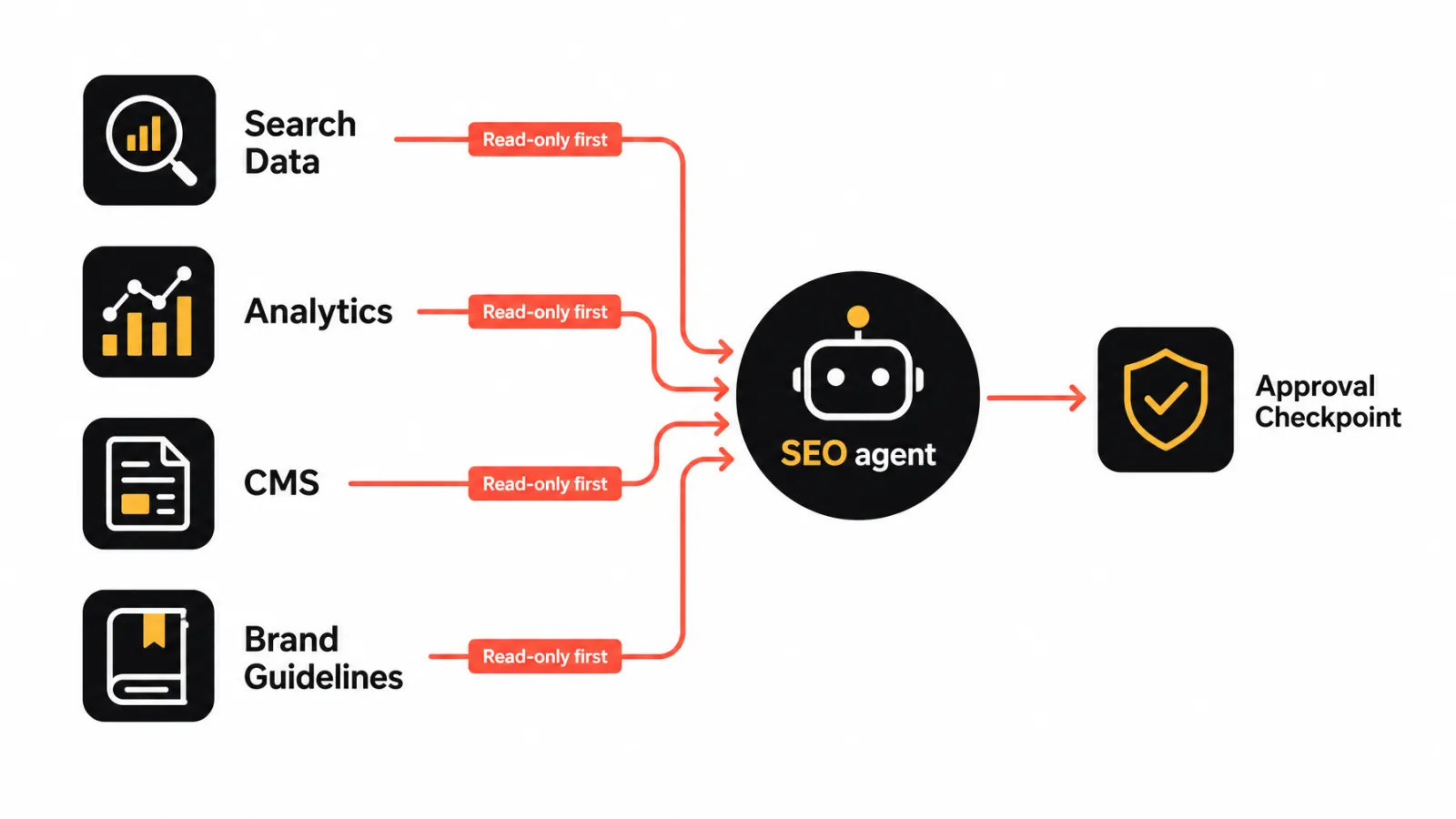
Set permissions, approval rules, and rollback points
Give the least access that gets the job done, then widen it as trust builds.
Approval required before publishing
Version history or rollback available
An audit log of every action
For a lean team or an agency, a simple approval matrix is enough. Here's one way to map it:
Action | Risk tier | Who approves | Rollback |
|---|---|---|---|
Pulling Search Console and SERP data | Low | No approval; logged | Not needed |
Reporting and issue alerts | Low | No approval; spot-check weekly | Not needed |
Internal-link suggestions | Medium | Editor | Remove the links in the CMS |
Content refresh drafts | Medium | Editor or account lead | Restore the previous version |
New article drafts | Medium | Editor, plus a fact check | Unpublish or revert |
Title and meta description changes | Medium | SEO lead | Restore the previous metadata |
Publishing to the CMS | High | A named owner (client sign-off for agencies) | Unpublish and restore from version history |
Redirects and canonical changes | High | SEO lead, never automatic | Revert the rule and recheck in Search Console |
Pricing, legal, or medical claims | High | The subject owner | Correct and republish |
Start every action one tier stricter than you think it needs, then relax it only once the logs show the agent is reliable.
Validate outputs and measure the next action
Check the evidence before you check the results. Then measure on four levels and keep them separate:
Workflow metrics: tasks completed, approval rate, errors caught
SEO metrics: impressions, clicks, and indexing in Search Console
Business metrics: leads, trials, revenue
Third-party AI visibility estimates: useful for direction, not official Google data
Rankings, AI citations, and traffic aren't interchangeable outcomes.
Frequently Asked Questions About Agentic SEO
What is agentic SEO?
Agentic SEO is the use of AI agents to run connected SEO tasks with people approving risky decisions. It's an industry term, not an official Google category.
How is agentic SEO different from SEO automation?
Traditional SEO automation follows fixed rules and triggers. Agentic SEO adds goal-driven sequencing, data-based adjustments, and handoffs to people, while still relying on deterministic checks where they fit.
Does agentic SEO replace SEO professionals?
No. Agents can handle repetitive investigation and drafting, but strategy, factual accuracy, brand judgment, and final approval still need experienced people.
What SEO tasks can AI agents automate?
Agents can handle data collection, opportunity detection, brief preparation, internal-link suggestions, audit checks, and reporting. Drafting, refreshes, and publishing preparation work best with approval.
Can an AI SEO agent publish content without approval?
It can if you allow it, but I wouldn't recommend that by default. Keep approval in place for published claims, URLs, redirects, and brand-sensitive pages.
Does agentic SEO guarantee better rankings?
No. Google says third-party tools can't guarantee ranking success. Agentic SEO can make execution more consistent, but rankings depend on content quality, competition, and search systems.
How does agentic SEO relate to GEO?
GEO is an industry term for earning visibility in generative AI answers. Google frames generative AI search optimization as part of SEO, so agentic workflows can support both.
What data does an AI SEO agent need?
It needs reliable inputs: Search Console data, site and CMS access, keyword and SERP data, brand guidelines, and approval rules. Weak inputs produce weak recommendations.
How should a team measure agentic SEO?
Track workflow metrics, search metrics, and business outcomes separately. Use Search Console for Google data, and treat third-party AI citation counts as estimates.
Is agentic SEO the future of SEO?
It's likely to become a standard way of running repeatable SEO work, not a replacement for SEO itself. As AI search adds more surfaces to monitor, connected workflows matter more. But adoption will follow trust: teams will widen agent permissions only as fast as approvals, logs, and rollbacks prove reliable.
What does it cost to start with agentic SEO?
The main cost is setup, not software. You need a verified Search Console property, clean data, written brand and claim rules, and someone to review approvals. Starting with one narrow, reversible workflow keeps the cost low and shows whether wider automation is worth paying for.
Choosing What to Automate First
Here's how I'd sort the work before handing any of it to an agent:
Automate first: repetitive, reversible, checkable tasks such as scheduled reporting, issue detection, data collection, content brief preparation, and internal-link suggestions.
Use agent assistance with approval: topic selection, content drafting, technical prioritization, refresh recommendations, and publishing preparation.
Keep human control: strategy, factual claims, legal or regulated content, pricing, redirects, canonical changes, brand positioning, final publication, and any claim about rankings or AI citations.
Your next step is practical: pick one narrow workflow, such as refreshing pages that are losing clicks. Define its inputs and stop conditions, run it manually once, and review the evidence before you schedule it. An agent earns more permissions the same way a new hire does: by showing its work.
That's the model we built Keytomic's SEO automation platform around: research, planning, drafting, publishing, and visibility tracking connected in one workflow, with your team approving anything that goes live.